
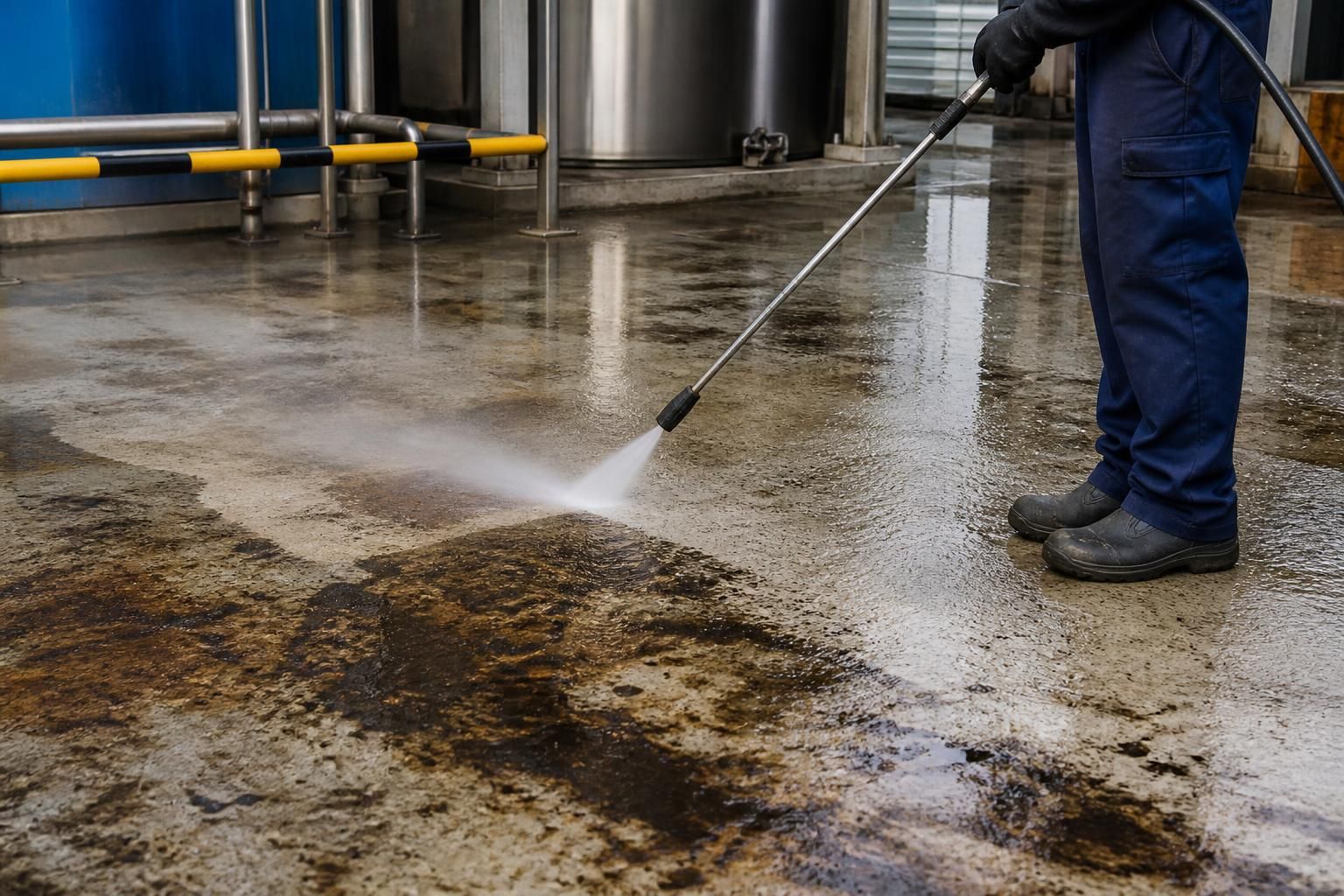
What are the specific cleaning methods best suited for addressing various types of stains on concrete floors?
The best concrete floor stain cleaning method depends on the contaminant: hot-water pressure washing or steam cleaning suits grease and oil, targeted degreasers tackle embedded deposits, acidic treatment can remove rust and mineral staining, and specialist biocidal cleaning is appropriate for mould, algae and organic marks. Ink, paint and graffiti generally require solvent or chemical treatment followed by controlled pressure washing, with the method selected after assessing the concrete, stain depth, drainage and surrounding surfaces.
The most suitable concrete floor stain cleaning method depends on the contaminant, how deeply it has penetrated, the condition of the concrete and the surrounding environment. Hot-water pressure washing and steam cleaning are generally effective for oil, grease and traffic film; alkaline degreasers help break down embedded fats and hydrocarbons; rust and mineral deposits may need a carefully controlled acidic treatment; and mould, algae and other organic staining are best treated with a biocidal cleaner followed by appropriate rinsing. Paint, ink and graffiti usually require a targeted solvent or coating remover, with pressure washing used only when it can be carried out without damaging the slab or spreading the contamination.
Professional cleaning should begin with identifying the stain rather than applying the strongest available chemical. The surface is inspected for porosity, cracks, joints, previous sealers, coatings and drainage restrictions. A small test area can then establish whether the proposed chemical and agitation method will remove the mark without lightening the concrete unevenly, exposing aggregate or affecting adjacent materials. The cleaning system should also account for pedestrian safety, nearby vehicles, equipment, walls, landscaping and the lawful collection and disposal of contaminated water.
Oil, diesel and hydrocarbon stains
Fresh oil and diesel should be contained quickly so the liquid does not migrate through porous concrete. Absorbent materials can remove surface contamination before a professional applies a suitable alkaline degreaser. Agitation helps the cleaner reach the pores, while hot-water pressure washing or steam cleaning emulsifies and lifts the residue. Steam is particularly useful where reduced water use, controlled application or detailed cleaning around plant and equipment is important.
Old hydrocarbon marks may need repeated degreasing, dwell time and mechanical agitation rather than a single high-pressure pass. Increasing pressure alone can drive oil further into the slab, damage weak concrete and spread contaminated wash water. Where staining has penetrated deeply, cleaning can substantially improve the appearance and safety of the floor, but it may not restore an untreated slab to a completely uniform colour. A suitable sealer applied after the surface has dried can make future oil removal easier, provided the concrete is suitable and the coating is compatible with the site’s use.
Grease, fat and food residues
Grease from kitchens, food production areas, workshops and service yards responds best to an alkaline degreaser combined with hot water, steam or controlled pressure washing. The cleaning solution must be given enough contact time to break down the fatty deposit, but it should not be allowed to dry on the floor. Heavily soiled areas may require scraping or vacuum recovery before wet cleaning.
In food-related premises, the cleaning method must be compatible with hygiene procedures and must not leave chemical residues. Floor falls, drains and interceptors should be considered before work begins. Wastewater containing grease should be recovered and handled in accordance with site procedures and relevant environmental requirements rather than discharged indiscriminately.
Rust and iron staining
Rust marks are commonly caused by metal storage, reinforcing steel close to the surface, plant, shelving or water carrying iron deposits. A specialist rust remover or controlled acidic treatment can dissolve the iron staining more effectively than detergent or pressure alone. The treatment should be selected for the concrete and applied only to the affected area where practical.
Acidic products can etch cement paste, alter the appearance of the slab and corrode nearby metalwork. They require careful dilution, controlled dwell time, thorough rinsing and suitable neutralisation where necessary. Protective measures are important around painted lines, glazed surfaces, drainage components and other acid-sensitive materials. If rust is emerging from cracks or reinforcement, cleaning will improve the mark but will not correct the underlying structural or corrosion problem.
Limescale, efflorescence and mineral deposits
White, chalky deposits may be efflorescence, which occurs when dissolved salts move through concrete and dry at the surface. Other deposits may be limescale or mineral build-up from hard water. Light deposits can sometimes be removed with brushing and a suitable mildly acidic cleaner, while more established deposits need controlled chemical treatment and rinsing.
The source of the moisture should be investigated where deposits return. Persistent dampness, leaks or water movement can cause recurring staining even after an effective clean. Acid should not be used without testing, particularly on polished, coloured, sealed or decorative concrete, because it can permanently change the finish.
Mould, mildew, algae and other organic staining
Organic growth on external slabs, shaded walkways, loading areas and damp industrial floors is best treated with a suitable biocidal or fungicidal cleaner. The product breaks down the biological contamination, after which brushing, low-pressure washing, steam cleaning or controlled rinsing can remove the residue. The method should be chosen according to the surface condition and the risk of spreading spores or contaminated water.
Cleaning alone will not prevent regrowth where water remains on the concrete. Improving drainage, reducing shading where possible, repairing leaks and maintaining joints can form part of the follow-up plan. Biocidal products must be used in accordance with their instructions, with appropriate protection for people, plants, watercourses and adjacent surfaces.
Tyre marks, rubber deposits and traffic film
Tyre marks are often a combination of rubber transfer, road grime and heat-bonded residue. A traffic-film or alkaline cleaner with mechanical agitation and hot-water pressure washing is normally more effective than cold water alone. Steam cleaning can be useful for detailed work around barriers, ramps, dock levellers and other areas where water control is important.
Excessive pressure can leave an irregular pattern or remove weak surface material, particularly on older concrete. Cleaning should therefore be carried out in a controlled sequence, with the operator keeping the nozzle and temperature appropriate for the slab and avoiding prolonged treatment in one place.
Paint, ink and graffiti
Paint and graffiti removal requires identification of the coating, its age and the type of substrate beneath it. A graffiti or coating remover may soften the marking before low- or medium-pressure rinsing, hot-water cleaning or gentle mechanical agitation lifts it. Solvent-based products may be appropriate for some inks and paints, but they can spread dissolved colour, damage sealers and affect plastics, painted metal or nearby rendered surfaces.
On porous concrete, the first cleaning pass may remove the visible surface mark while leaving pigment in the pores. Further localised treatment may be necessary. Abrasive techniques can remove stubborn coatings, but they also remove a small amount of the concrete surface and should not be used routinely where the slab’s texture, markings or safety characteristics must be preserved. Wastewater and dissolved paint residues should be contained and recovered where required.
Food, drink and organic spills
Tea, coffee, soft drinks and food residues can leave tannin, sugar or coloured organic deposits. Prompt removal with a suitable detergent and hot water is usually sufficient. Older or darker marks may need a targeted oxidising or alkaline treatment after testing. The product must be selected carefully on coloured, polished or sealed concrete, as aggressive chemicals can create a lighter patch around the original stain.
Battery acid, chemical and unknown stains
Unknown spills should not be treated with an untested chemical. Battery acid and other corrosive substances may have already attacked the cement paste, so the immediate priority is isolation, identification, appropriate personal protective equipment and safe containment. Specialist advice may be needed before any neutralisation or washing takes place.
For chemical stains, the cleaning method depends on the substance, its concentration, the length of contact and whether the concrete has been etched. Cleaning may remove discolouration, but it cannot reverse chemical damage, surface softening or loss of aggregate. Where the spill is hazardous, the site’s emergency and waste-management procedures take priority over cosmetic cleaning.
How the method is selected
A professional assessment considers the stain type, age and depth; the concrete’s strength and finish; the presence of coatings or sealers; drainage and wastewater controls; and the risks to people, vehicles, equipment and adjacent materials. The least aggressive method capable of achieving the required result is normally preferred. This may involve dry removal first, targeted chemical application, dwell time, brushing or rotary agitation, steam or hot-water cleaning, controlled rinsing and recovery of the wastewater.
High pressure is not automatically the most effective option. Steam can loosen grease and biological residue with more controlled water use, while pressure washing can provide efficient coverage on robust external slabs. Degreasers and other chemicals improve removal of particular contaminants, but they must be compatible with the concrete and managed to prevent runoff. Abrasive cleaning is reserved for coatings or deposits that cannot be removed safely by chemical and water-based methods.
After cleaning, the floor should be inspected for remaining residue, slippery films, uneven appearance and damage to joints or surface texture. It should be allowed to dry before deciding whether a stain has been fully removed or whether the concrete needs further treatment. For high-traffic commercial and industrial floors, a maintenance plan combining prompt spill response, routine sweeping, periodic deep cleaning and, where appropriate, compatible sealing will help prevent stains becoming embedded and reduce future cleaning disruption.
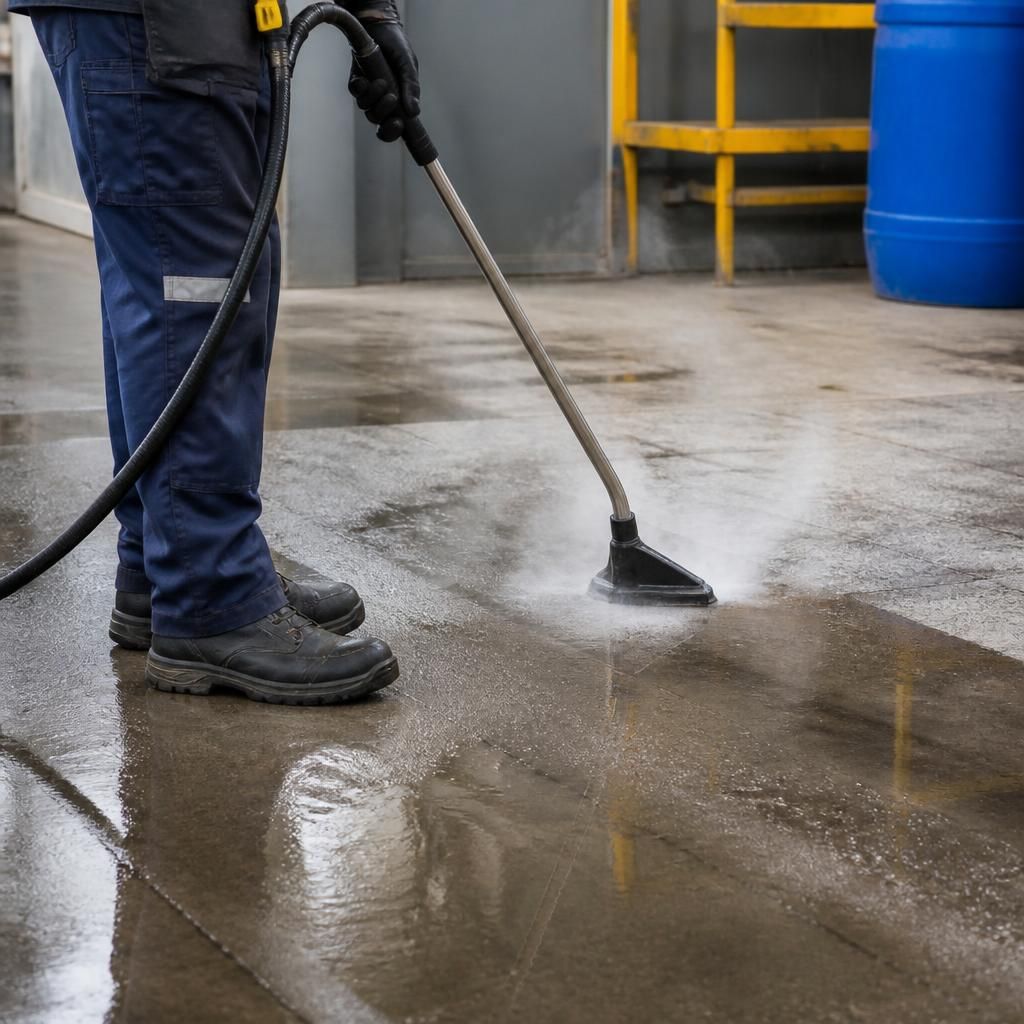
Concrete floor stain cleaning should begin with identifying the contaminant and testing the least aggressive suitable method. A targeted degreaser with hot water is appropriate for oil and grease, while rust or mineral deposits may require carefully controlled acidic treatment. Testing a small area first helps confirm compatibility with the concrete, sealers, nearby metalwork and drainage arrangements before wider cleaning takes place.