
What are the benefits of steam cleaning concrete floors compared to other methods?
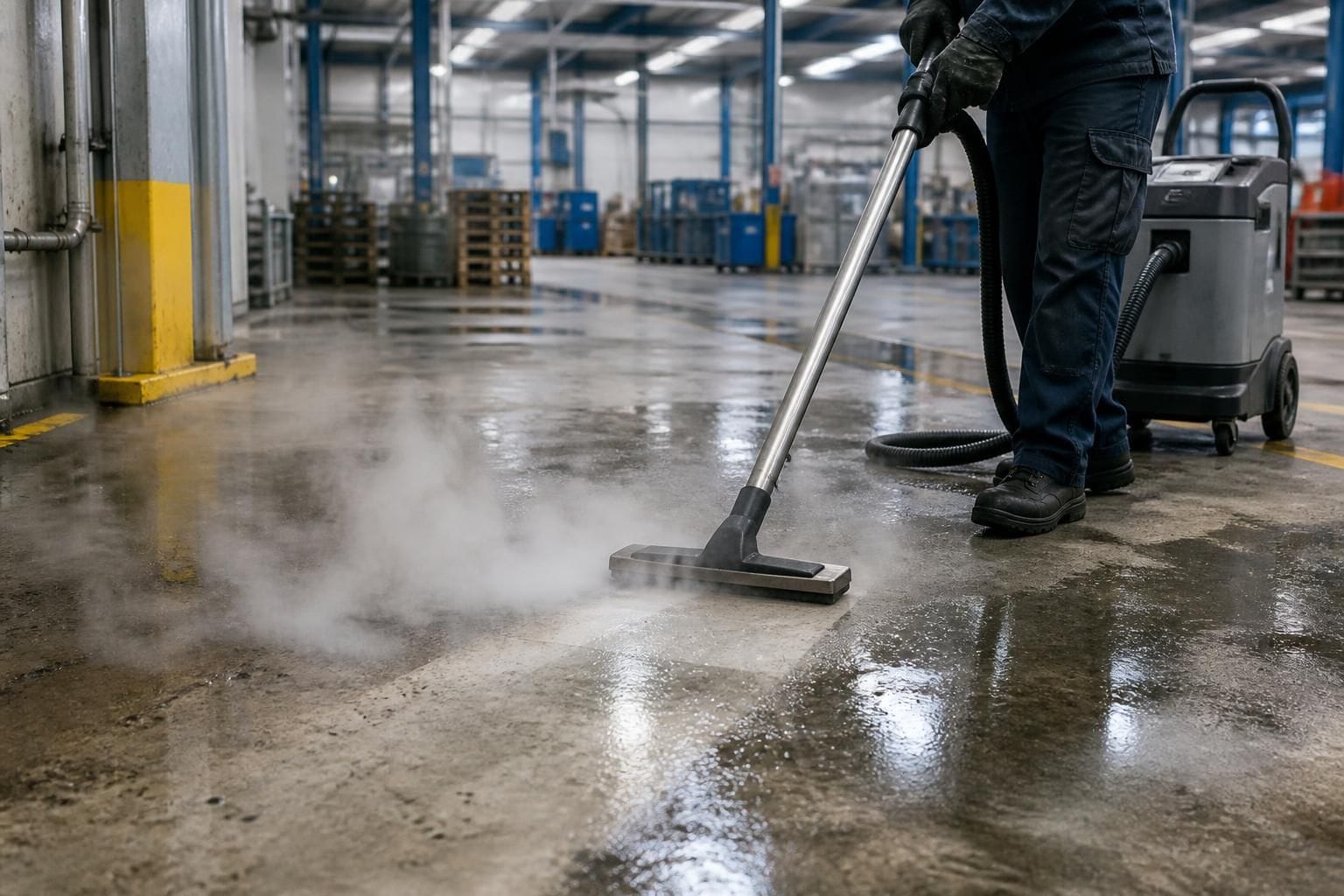
Steam cleaning concrete floors uses high-temperature vapour to loosen embedded dirt, grease and biological residues with less water and fewer chemicals than many pressure-washing or chemical-cleaning methods. It can provide deeper cleaning, reduce slip risks from residue and minimise runoff, making it well suited to industrial and commercial floors when the surface and contamination are assessed correctly.
Steam cleaning concrete floors can provide a deeper, more controlled clean than conventional pressure washing, chemical treatment or manual scrubbing. High-temperature vapour softens grease, oil, ingrained dirt and biological residues so they can be removed with less water and, in many situations, fewer cleaning chemicals. This makes steam cleaning particularly useful for commercial and industrial floors where hygiene, slip resistance, presentation and controlled wastewater management are important.
The most suitable method still depends on the condition and finish of the concrete, the type of contamination and the surrounding environment. Steam cleaning is not automatically the right solution for every floor, but it offers several practical advantages when the surface has been assessed correctly.
More effective removal of greasy and ingrained contamination
Steam reaches a high temperature at the point of application. The heat helps break down oils, grease, food residues, tyre marks and other deposits that may resist cold-water washing or basic mechanical scrubbing. It can also soften dirt held in the pores and texture of unfinished concrete, allowing it to be lifted rather than simply spread across the surface.
Pressure washing relies mainly on water volume and impact. It can be highly effective for loose dirt and heavy external soiling, but it may be less precise on indoor floors or around vulnerable fixtures. Steam applies heat and moisture in a more targeted way, which is useful in warehouses, workshops, plant areas, loading bays and service environments where greasy contamination is a recurring problem.
Less reliance on chemical products
Heat can reduce the need for strong degreasers, disinfectants and other chemical agents. This may be beneficial where chemical exposure needs to be controlled, where residues could affect subsequent operations or where the site has strict environmental procedures.
Using fewer chemicals does not mean that chemicals are never required. Some oil deposits, mineral staining, paint residues or specialist contaminants may need a suitable treatment product. A professional cleaning approach should select the mildest effective chemical, apply it according to the manufacturer’s instructions and remove the residue properly rather than assuming steam alone will resolve every stain.
Reduced water use and easier wastewater control
Steam systems use water to create vapour rather than delivering the larger volumes associated with many pressure-washing applications. The result can be less standing water, faster drying and less wastewater to collect and manage. This is particularly useful inside occupied premises, near electrical equipment or in areas where drainage is limited.
Reduced water use does not remove the need for responsible water management. Contaminated runoff from industrial floors can contain oil, grease, cleaning agents or other pollutants. Wastewater should be contained, collected and disposed of in accordance with the site’s procedures and applicable environmental requirements. Steam cleaning can make this process more manageable, but it should not be treated as a substitute for proper runoff control.
Improved hygiene and odour control
The heat produced by steam can help loosen and remove organic residues, bacteria-supporting deposits, mould-related soiling and unpleasant odours. This can support a more hygienic surface in food-related areas, waste-handling locations, public facilities and industrial workplaces.
Steam cleaning should not be described as a guaranteed sterilisation process. The result depends on the equipment, temperature at the surface, contact time, contamination level and the thoroughness of the removal process. Where a site has specific hygiene requirements, the cleaning method should form part of a documented cleaning procedure rather than being selected on temperature alone.
Lower risk of residue-related slipperiness
Some chemical cleaners leave a film if they are over-applied or not rinsed sufficiently. Excess water can also move grease across a floor, leaving a slippery layer when it dries. Steam cleaning can reduce both issues by using a smaller volume of water and helping to emulsify greasy deposits for removal.
However, steam does not correct every cause of a slippery floor. Polished concrete, worn coatings, damaged surfaces and deeply embedded oil may still require mechanical treatment, extraction or a suitable coating repair. The floor should be inspected after cleaning, and any remaining contamination or surface defect should be addressed before the area returns to normal use.
Less disruption to commercial operations
Because steam cleaning can leave less water behind than conventional washing, the cleaned area may become usable sooner, subject to the site assessment and ventilation. It can also reduce the need to move large amounts of wastewater through a building. This is valuable where cleaning must be completed around vehicles, machinery, stock, staff or members of the public.
The work still requires appropriate preparation. Operators may need to isolate the area, protect electrical points, remove loose debris, provide ventilation and use warning signs or barriers. Steam can also create heat, vapour and temporary visibility issues, so access controls remain important.
How steam compares with other cleaning methods
- Pressure washing: usually provides greater water impact and is well suited to heavy external dirt, loose deposits and large open areas. Steam is often more controlled and better suited to greasy or hygiene-sensitive contamination, particularly where excessive runoff is a concern.
- Chemical cleaning: can be effective for specific stains, scale and heavy grease, but requires careful product selection, contact time, rinsing and disposal. Steam may reduce chemical dependence, although some deposits still need a compatible treatment product.
- Mechanical scrubbing: is useful for routine maintenance and broad floor areas. Steam can improve the removal of softened grease and residues from textured or difficult-to-reach areas, but scrubbing may still be needed for large-scale agitation and recovery.
- Dry sweeping or vacuuming: removes loose debris but cannot deal with bonded grease, staining, biological residue or ingrained dirt. Steam is a deeper cleaning process rather than a replacement for routine housekeeping.
Important limitations and preparation
Concrete is porous, and steam cannot always remove staining that has penetrated deeply into the slab. Rust, efflorescence, paint, tyre marks and old oil may need different techniques. Excessive heat or moisture may also affect some sealers, coatings, joint materials or poorly bonded repairs. Sealed, polished and decorative concrete should be tested in an inconspicuous area before full treatment.
A suitable professional process normally includes identifying the concrete finish, testing the contamination, selecting the appropriate steam pressure and temperature, protecting nearby assets, cleaning in manageable sections and recovering loosened residue. The floor should then be checked for remaining slip hazards, moisture and damage before it is reopened.
Overall, steam cleaning is most beneficial when a concrete floor needs thorough removal of grease, dirt or biological residues with controlled water use and limited chemical reliance. It is a practical alternative to more aggressive or wetter methods, but the best result comes from combining steam with the right pre-treatment, agitation, extraction and maintenance plan for the specific floor.
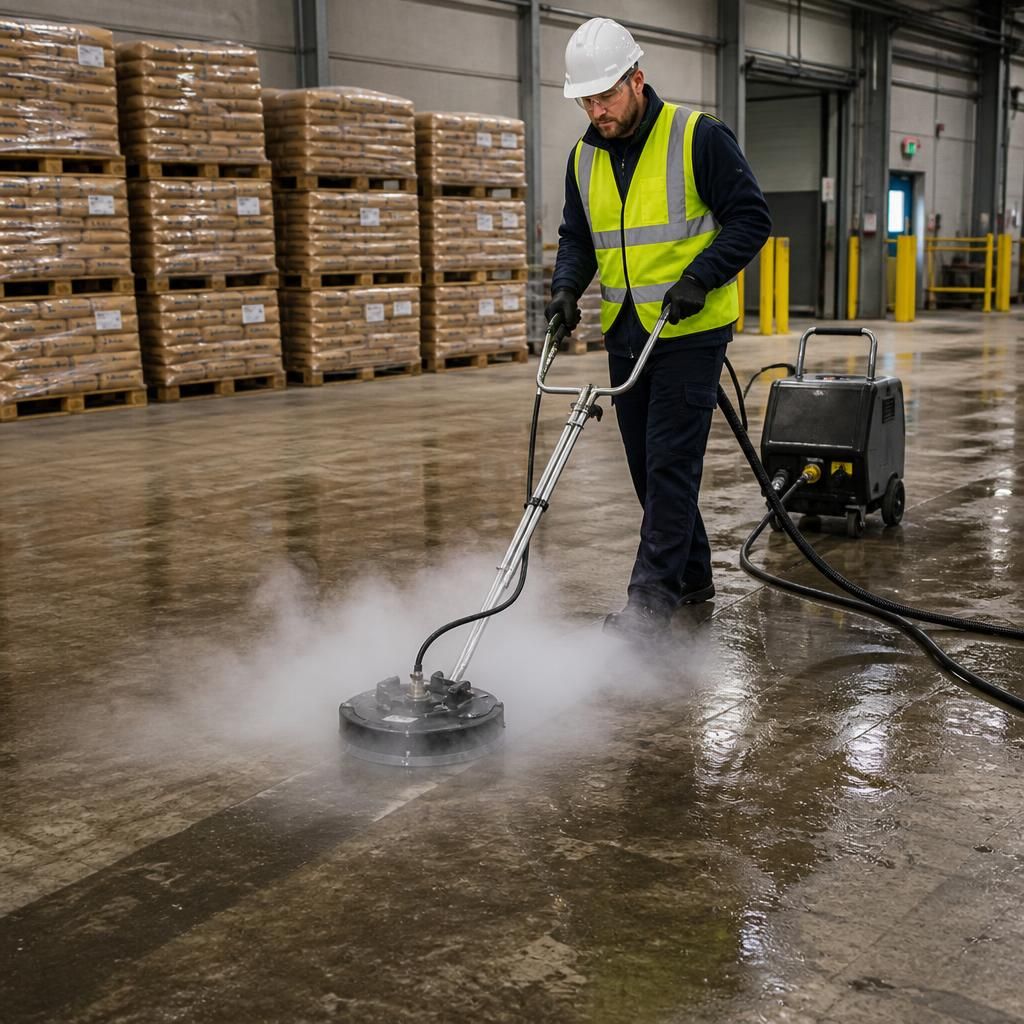
Steam cleaning concrete floors uses high-temperature vapour to loosen grease, ingrained dirt and biological residues while using less water than many pressure-washing methods. This can make it easier to control wastewater and reduce the amount of standing water left on the surface.
The process can also limit chemical residue and help emulsify greasy deposits for removal, supporting safer, cleaner floors in warehouses, workshops, loading bays and other commercial areas. It is not suitable for every stain or floor finish, so the concrete, contamination and any sealers or coatings should be assessed before treatment.
Arrange a professional steam cleaning assessment for your concrete floors
Arrange a professional steam cleaning assessment for your concrete floors to confirm whether the method is suitable for the surface, contamination and surrounding environment. Contact Encanto Exterior Cleaning to plan the appropriate treatment and wastewater controls.