
How often should industrial concrete floors be professionally cleaned?
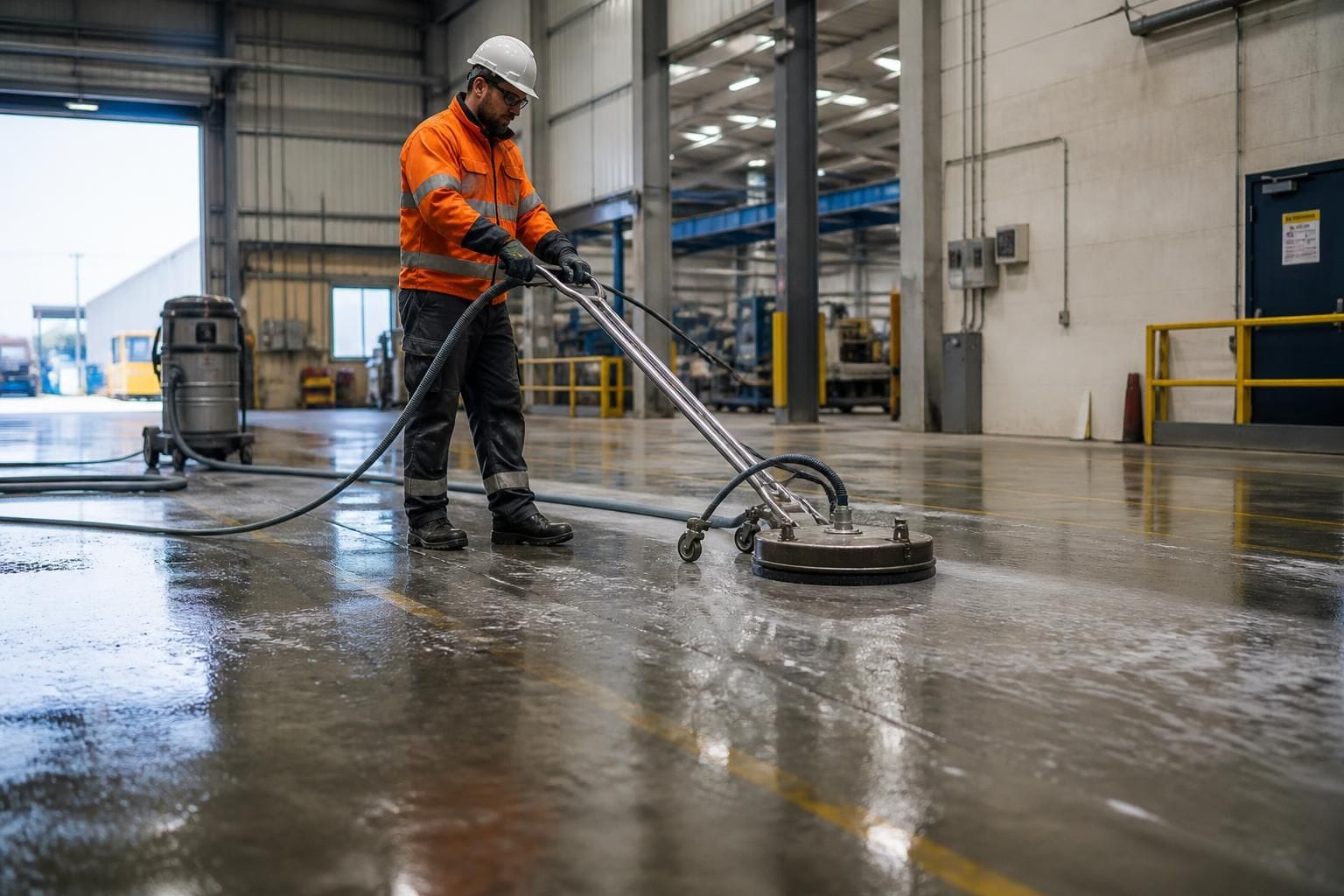
Industrial concrete floors should usually receive a professional deep clean every three to six months, with more frequent cleaning where there is heavy traffic, food handling, oil, chemical residue or slip risk. A site-specific schedule should also include routine sweeping and spill removal, with the frequency adjusted after assessing the floor’s use, contamination and condition.
Industrial concrete floors should usually receive a professional deep clean every three to six months. This is a practical starting point rather than a fixed rule: floors exposed to heavy traffic, oil, food residues, chemical contamination, dust or increased slip risk may need professional cleaning more frequently, while lightly used areas may require it less often. Routine sweeping, vacuuming and spill removal should take place between deep-cleaning visits.
The correct schedule depends on how the floor is used, what contaminants are present and whether the surface is sealed, painted, coated or bare. A warehouse with forklift traffic has different requirements from a food-processing area, engineering workshop, distribution centre or car park. A site-specific assessment is therefore more reliable than applying the same interval to every building.
Factors that influence cleaning frequency
- Traffic levels: Frequent movement of forklifts, pallet trucks, vehicles and pedestrians can embed dirt into the concrete and create tyre marks, abrasion and polished pathways.
- Type of contamination: Oil, grease, hydraulic fluid, rubber deposits, food residue, dust, mud and chemical films each require appropriate treatment. Oily or sticky contamination generally needs more frequent intervention than loose dust.
- Slip and hygiene risks: Areas near loading bays, production lines, waste facilities, kitchens and entrances can become hazardous quickly, particularly when moisture combines with grease or fine dust.
- Floor condition: Cracks, open pores, damaged coatings and uneven surfaces retain contamination and may need more careful or regular cleaning than sound, sealed concrete.
- Operational requirements: A premises with strict housekeeping, audit or hygiene requirements may need scheduled cleaning even when the floor appears reasonably clean.
- Weather and location: External entrances, yards and loading areas bring in water, grit, road salt and mud, especially during wet or cold weather.
Routine cleaning and professional cleaning serve different purposes. Staff or facilities teams should remove loose debris and deal with spills promptly, using procedures suitable for the substance involved. This helps prevent contamination from being walked or driven across the floor. Professional cleaning provides a more thorough treatment using equipment and methods capable of lifting embedded grime, degreasing the surface and recovering dirty water where required.
For many industrial premises, a planned deep clean every three to six months is suitable when the floor is maintained consistently between visits. A shorter interval may be appropriate for food-related operations, workshops, garages, manufacturing areas, waste-handling zones and busy distribution facilities. High-risk areas may also benefit from targeted cleaning between full-floor visits, such as cleaning around machinery, entrances, loading points and spill-prone workstations.
Visible dirt is not the only indication that a floor needs attention. Schedule a review when surfaces become noticeably slippery, odours persist, dust is being redistributed by vehicles, tyre marks become difficult to remove, stains are spreading, or staff are repeatedly reporting contamination. A floor that looks acceptable under normal lighting may still hold oil films or fine residues that affect traction and hygiene.
The cleaning method should match the floor and the contamination. Pressure washing can remove substantial soil from suitable areas, provided water management and drainage are properly controlled. Steam cleaning can loosen grease and residue while using less chemical product, although it must be applied with care around electrical equipment, joints and moisture-sensitive areas. Mechanical scrubbing, suitable detergents, extraction and controlled rinsing may be combined where this provides better recovery and a safer result. Aggressive cleaning or unsuitable chemicals can damage coatings, increase surface porosity or move contaminants into drains, so the process should be planned before work starts.
Professional cleaning should also be coordinated with site safety requirements. The area may need to be isolated, warning signs displayed and access controlled until the floor is safe to use. Spill response, wastewater handling and chemical selection should reflect the site’s risk assessments and relevant environmental controls. Cleaning around machinery, racking or elevated areas may require additional access planning.
The most effective approach is to review the floor after each scheduled clean and adjust the interval according to actual soiling, complaints, slip observations and operational changes. If production increases, a new process introduces oil or chemicals, or a previously sealed floor starts to deteriorate, the cleaning plan should be revised rather than waiting for the next routine visit. This keeps the floor safer, reduces the build-up of damaging contaminants and helps preserve its concrete coating or finish over the long term.
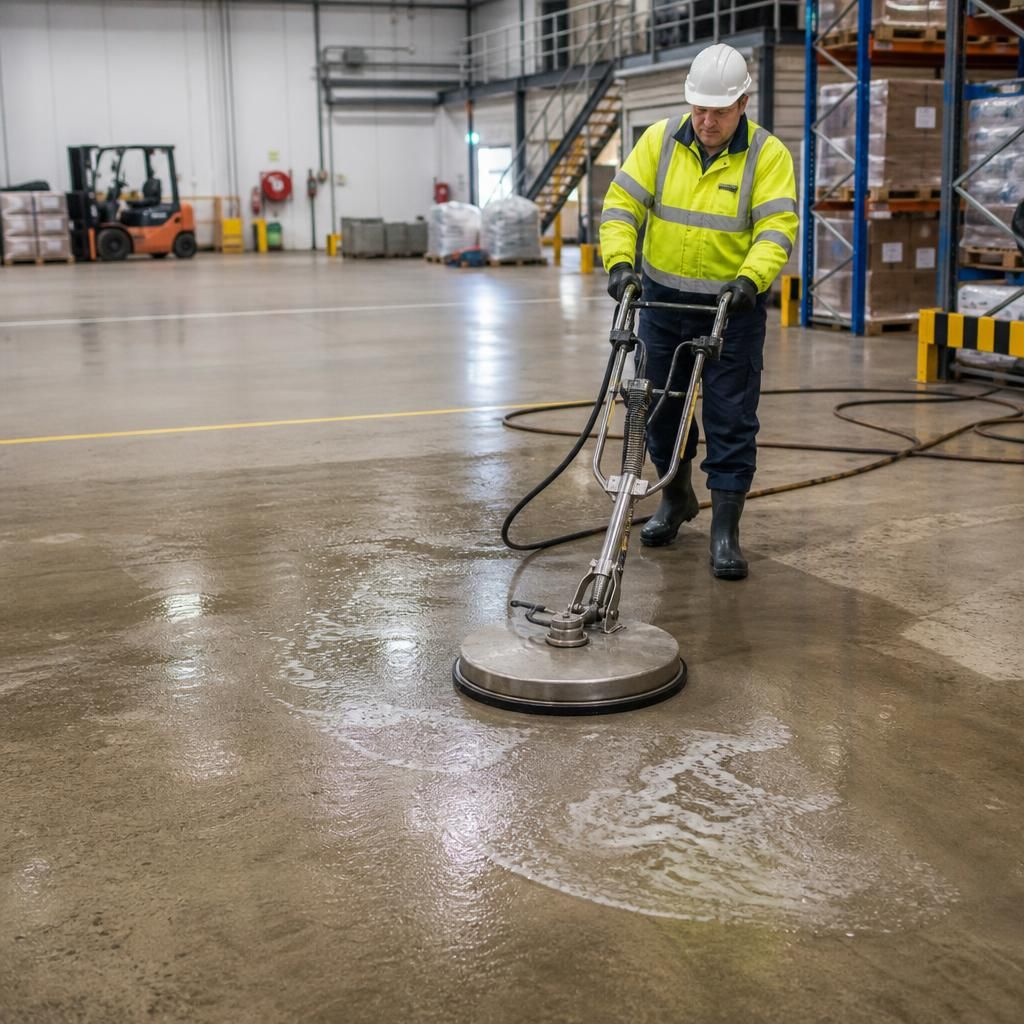
Industrial concrete floors should generally receive a professional deep clean every three to six months, but the correct interval depends on traffic, contamination and the floor’s condition. Busy warehouses, workshops, food-handling areas and loading bays may need more frequent cleaning where oil, grease, dust, mud or chemical residue can build up.
Between professional visits, remove loose debris routinely and deal with spills immediately. Review the schedule if the floor becomes slippery, develops persistent odours, shows spreading stains or produces visible dust under vehicle traffic. A site-specific plan helps target high-risk areas, protect coatings and maintain safe, hygienic working conditions without cleaning lightly used areas more often than necessary.