
How does the choice of cleaning equipment and techniques impact the effectiveness and safety of concrete floor cleaning?
The right cleaning equipment and technique improve concrete floor cleaning by matching water pressure, temperature, cleaning agents and access methods to the surface, so dirt and stains are removed without damaging the concrete or surrounding finishes. Correct selection also controls slip risks, wastewater, dust, noise and operator exposure, helping keep commercial and industrial sites safe during and after cleaning.
The choice of cleaning equipment and technique directly affects how thoroughly a concrete floor is cleaned, how well the surface is preserved and how safely the work can be completed. Professional cleaning should match water pressure, temperature, flow rate, cleaning chemicals, agitation, vacuum recovery and access equipment to the concrete’s condition, finish and type of contamination. Using excessive pressure or an unsuitable chemical may cause surface damage, while insufficient agitation or recovery can leave residues, stains and slip hazards behind.
Surface assessment comes first. Before selecting equipment, the contractor should inspect the concrete for its age, porosity, surface hardener, sealant, paint, joints, cracks, drainage arrangements and previous repairs. A smooth sealed warehouse floor requires a different approach from porous external concrete, textured loading-bay paving or a heavily trafficked car park. The assessment should also identify the contamination, such as general soil, oil, tyre marks, food deposits, algae, cement residue, rust or graffiti. A small test area helps confirm that the proposed pressure, temperature and cleaning agent will remove the contamination without changing the appearance or damaging adjacent finishes.
Water pressure affects both cleaning power and surface safety. Higher pressure can remove firmly bonded dirt, moss, loose coatings and some deposits from robust concrete. However, excessive pressure can expose aggregate, erode a weak or weathered surface, widen defects, drive water into joints and damage sealants or nearby painted areas. It can also spread contaminated water and create additional spray. Lower-pressure washing is often more appropriate for delicate, aged or coated surfaces, particularly where the aim is to remove surface dirt without disturbing the finish. The correct setting is determined by the substrate and contamination rather than by choosing the highest available pressure.
Water flow and recovery are equally important. Adequate flow helps carry loosened material away, while controlled flow limits unnecessary water use and flooding. Recovery equipment, such as wet vacuums or integrated surface cleaners, removes dirty water from the floor rather than allowing it to migrate into drains, doorways or neighbouring work areas. This improves the final result and reduces slip risks, staining and environmental contamination. On sites where wastewater cannot enter surface-water drainage, recovery and suitable disposal arrangements are essential.
Temperature changes how quickly contamination breaks down. Hot water can soften grease, oil, food residues and some industrial deposits, reducing the amount of mechanical force required. Steam cleaning uses heat with comparatively low water volume and can be useful where controlled cleaning, reduced saturation or hygienic treatment is required. It is not automatically suitable for every concrete floor: heat may affect certain sealants, coatings, adhesives or joints, and it may not remove heavy deposits without additional agitation or a compatible detergent.
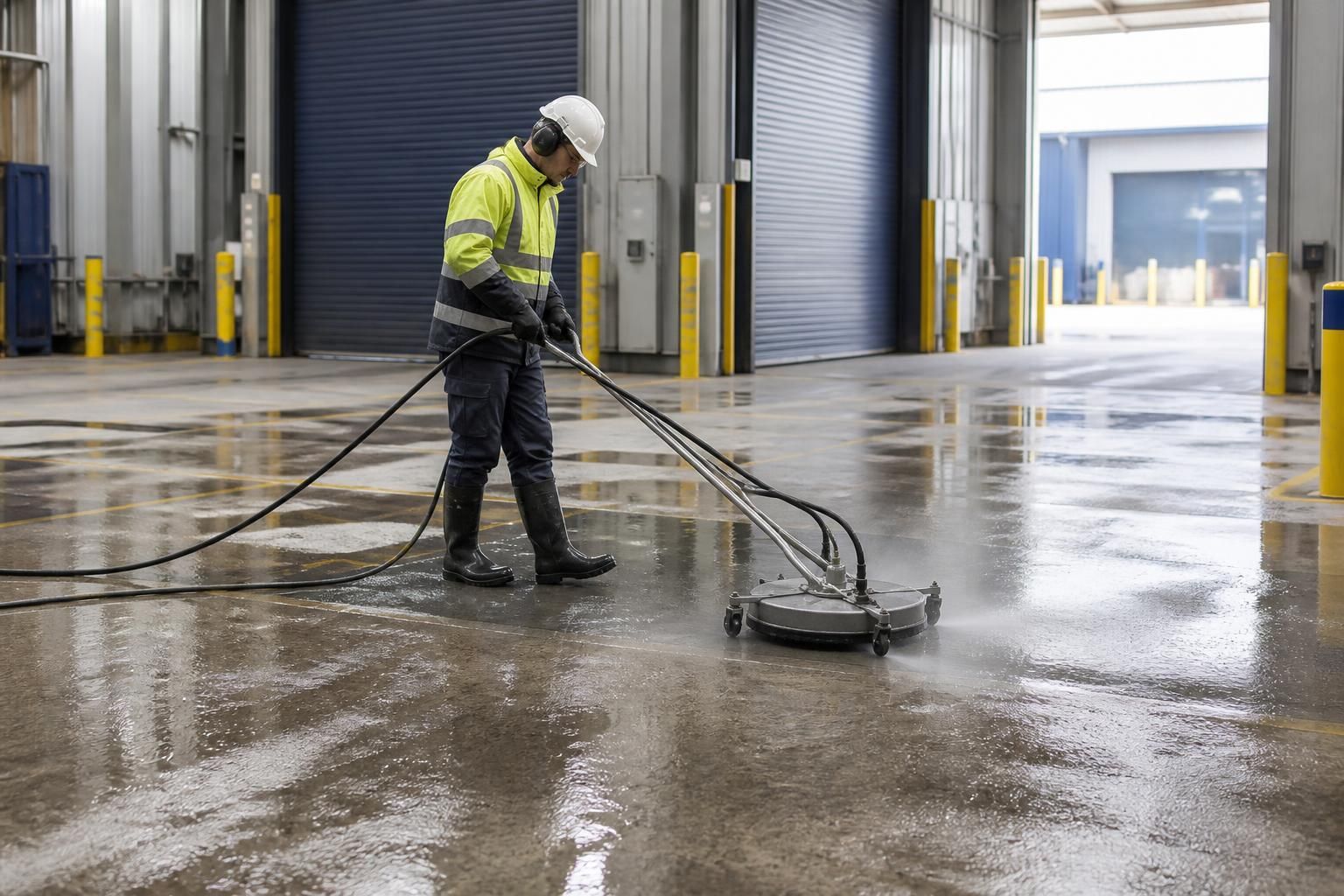
Mechanical agitation improves consistency. Rotary surface cleaners distribute water and cleaning action across a defined area, helping reduce striping and uneven results compared with using a lance alone. Brushes, pads and rotary scrubber-driers can work detergent into textured or porous concrete and remove loosened soil efficiently. The brush or pad must be selected carefully; an overly aggressive grade may mark a coated floor or polish an area unevenly, while a soft brush may not provide enough action on embedded contamination. Scrubber-driers are particularly useful on internal industrial floors because they apply solution, agitate the surface and recover dirty water in one controlled process.
Cleaning chemicals must be matched to the stain and the concrete. Alkaline detergents are commonly useful for oils, grease and general organic soil, whereas acidic products may be considered for certain mineral deposits or cement residues. Acidic products can etch concrete, attack cement-based joints, corrode metal and damage surrounding materials, so they require careful assessment, dilution and controlled application. Solvent-based products may be unsuitable in occupied or poorly ventilated areas and can affect coatings or sealants. Chemicals should be used in accordance with the product instructions and relevant COSHH assessment, with suitable controls for storage, handling, ventilation, rinsing and disposal.
The technique should reflect the type of contamination.
- Oil and grease: use an appropriate degreaser, allow sufficient dwell time, agitate the surface and recover the emulsified residue. Repeated controlled treatment may be safer and more effective than one aggressive pressure wash.
- Tyre marks and traffic film: use a compatible detergent with mechanical agitation or a controlled rotary-cleaning process. A test area is important on sealed or painted floors.
- Algae, moss and organic growth: remove loose growth, apply a suitable treatment where required and wash without forcing material into joints or drainage channels. The underlying moisture or drainage issue may also need attention.
- Cement, mortar and mineral deposits: use mechanical removal or a carefully selected specialist treatment only after checking the concrete and adjacent materials. Acid should never be treated as a universal solution.
- Graffiti and paint: identify the coating and substrate first. Low-pressure methods, steam, specialist removers or controlled abrasion may be appropriate depending on the paint and the presence of a sealant.
Equipment selection also affects operator and site safety. Pressure-washing spray can cause injury, propel debris and create noise, mist and flying contaminants. Operators need appropriate training, protective clothing, eye and hearing protection, footwear with reliable slip resistance and respiratory protection where the risk assessment identifies airborne dust, aerosols or chemical vapour. Hoses and power cables should be routed to prevent trips, and work areas should be segregated with suitable signage or barriers while the floor is wet.
Dust control is particularly important when dry brushing, grinding, shot blasting or other abrasive methods are considered. These techniques can remove coatings or surface contamination effectively, but they may generate respirable dust and alter the concrete profile. Wet methods, local extraction and suitable respiratory controls should be selected according to the equipment and material being removed. Abrasive cleaning should not be used simply because pressure washing has not been properly matched to the problem.
Access equipment must be proportionate to the task. Cleaning around walls, elevated structures or high-level concrete areas may require a mobile elevating work platform, scaffold or other access system. The equipment must be suitable for the ground conditions, working height, reach and water supply, with controls for falling objects, overspray and exclusion zones. Where practical, ground-based systems or extended-reach tools can reduce work-at-height exposure. Access planning is part of the cleaning method, not an afterthought.
Site conditions determine when and how cleaning should take place. Internal floors may need ventilation and controlled drying, while external work can be affected by rain, frost, temperature and wind. Cleaning should be planned around vehicle and pedestrian movements, production activities, electrical equipment and the availability of safe drainage. A floor that looks clean while wet may reveal remaining staining or residues once dry, so the result should be inspected after recovery and drying. Any detergent residue should be rinsed or removed as appropriate to prevent a slippery film.
The safest and most effective process is therefore a controlled sequence: inspect the surface, identify the contamination, test the proposed method, protect adjacent areas, apply the correct chemical if needed, agitate at an appropriate level, rinse or steam-clean, recover wastewater, inspect the dry result and record any defects or limitations. This approach avoids over-cleaning and makes it easier to distinguish removable dirt from permanent staining, etching, wear or damage within the concrete.
For commercial and industrial premises, the cleaning specification should also consider ongoing maintenance. Regular lower-intensity cleaning can prevent oil, grit and organic matter becoming embedded, reducing the need for aggressive restoration later. A planned maintenance schedule can define suitable equipment, chemical controls, wastewater arrangements, drying requirements and inspection points for each area of the site. This protects the concrete, maintains safer working conditions and produces more consistent results than treating every visit as an isolated pressure-washing job.
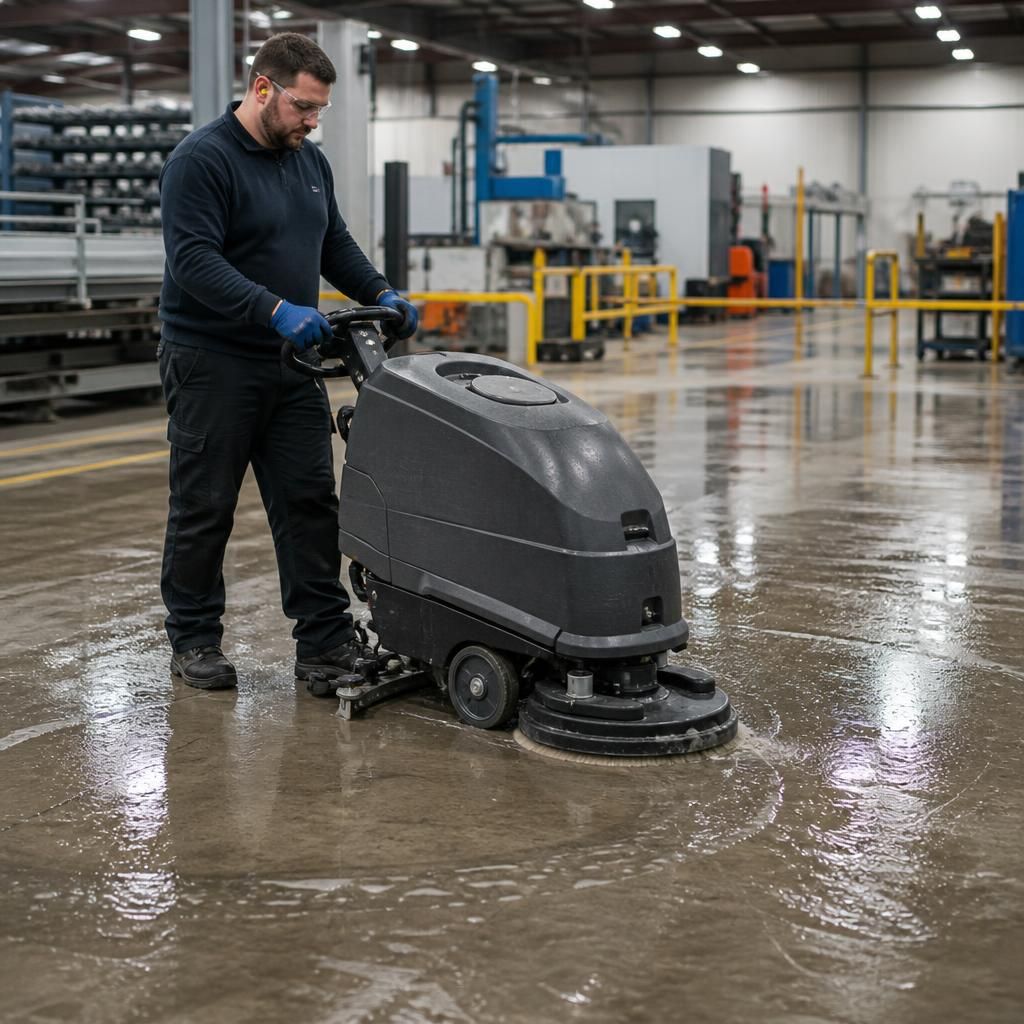
Equipment selection affects both the cleaning result and the risks created during the work. A rotary surface cleaner or scrubber-drier can provide more even agitation and recover dirty water effectively, while excessive pressure or abrasive equipment may erode weak concrete, damage coatings and create hazardous dust. The method should therefore be tested on a small area first, with pressure, temperature, detergent strength and brush type adjusted to suit the floor. Wet floors should be isolated from pedestrians and vehicles until wastewater has been recovered and the surface is clean, residue-free and safe to use.
Arrange a concrete floor cleaning assessment
Arrange a concrete floor cleaning assessment with Encanto Exterior Cleaning to identify the most effective equipment, techniques and safety controls for your site. We can review the surface, contamination, access requirements and wastewater arrangements before recommending a suitable cleaning plan.