
Can concrete floor cleaning remove graffiti effectively?
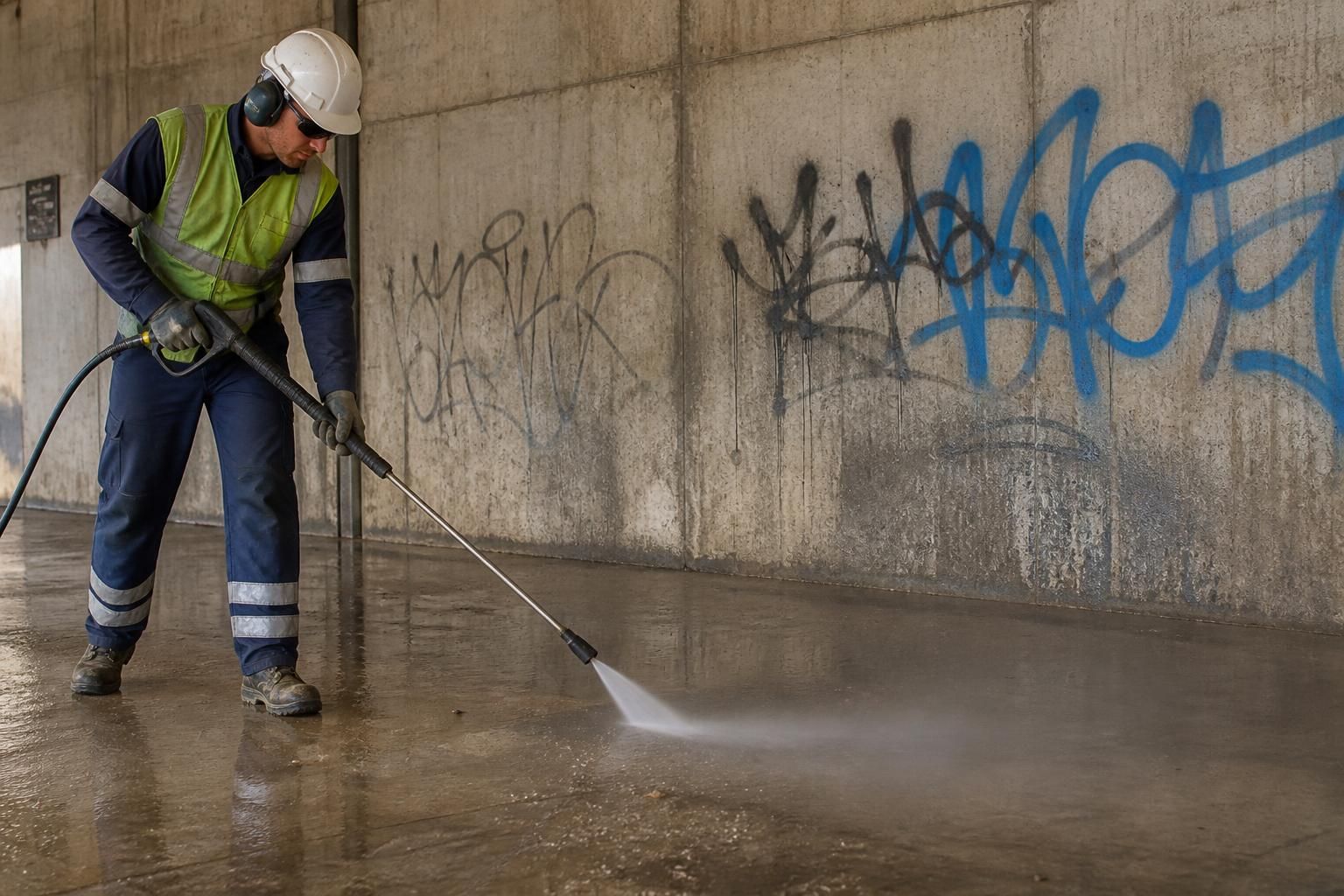
Yes, professional concrete floor cleaning can remove most graffiti effectively, using techniques such as pressure washing, steam cleaning or specialist treatments selected for the paint type and concrete surface. Porous or deeply embedded graffiti may require several treatments, and careful cleaning is essential to avoid spreading the paint or damaging the concrete.
Professional concrete floor cleaning can remove most graffiti effectively, provided the cleaning method is matched to the paint, ink, concrete condition and surrounding environment. Pressure washing, steam cleaning, chemical graffiti removers and controlled abrasive techniques may all be suitable, but porous concrete often needs more than one treatment because paint can penetrate below the surface.
Graffiti is not a single type of contamination. Aerosol paint, masonry paint, marker ink and bitumen-based products respond differently to cleaning. The age of the marking, the number of coats applied and whether the concrete has been sealed will also affect the result. A professional assessment helps identify the safest method before work begins.
Pressure washing is commonly used on robust external concrete floors, yards, service areas and car parks. The operator controls the water pressure, nozzle, distance and cleaning angle to break down the paint without unnecessarily damaging the concrete surface. Excessive pressure can remove the cement-rich surface layer, leave visible striping or force contaminated water into nearby drains, so it should not be treated as a simple high-pressure task.
Steam cleaning uses high-temperature water to soften paint and lift contamination with less reliance on aggressive pressure or chemical products. It can be useful where the concrete is more sensitive, where chemical use needs to be limited, or where the surrounding area requires a controlled cleaning process. Steam may not remove every deeply absorbed coating on its own, particularly from heavily weathered or unsealed concrete.
Specialist graffiti removers can dissolve or loosen particular paint types before rinsing or extraction. The product must be compatible with the concrete and any nearby coatings, sealants, painted lines or drainage systems. Strong chemicals applied incorrectly may discolour the surface, leave residues or spread dissolved paint across a wider area. Product selection, dwell time and thorough rinsing are therefore important.
Where paint has penetrated deeply, a combination of treatments may be required. This can involve applying a suitable remover, agitating the surface, steam cleaning or pressure washing, and repeating the process after the concrete has dried. On some floors, complete removal may not be possible without causing more damage than the graffiti itself. The objective is to achieve the cleanest practical result while preserving the integrity and safe use of the floor.
A typical professional process includes:
- Inspecting the concrete, graffiti and surrounding surfaces.
- Identifying likely paint or ink characteristics and checking for sealants or existing damage.
- Completing a discreet test patch to confirm the method and likely finish.
- Protecting adjacent walls, doors, vehicles, equipment and pedestrian areas.
- Applying the selected cleaning treatment in a controlled manner.
- Collecting or managing contaminated wastewater in line with site and environmental requirements.
- Rinsing, inspecting and, where appropriate, repeating the treatment.
- Discussing sealing or an anti-graffiti coating if the area is vulnerable to repeat marking.
Concrete condition is a major factor in the final appearance. Newer, dense or sealed concrete generally releases paint more readily than old, porous or cracked concrete. Graffiti may also leave a shadow or ghosting effect after the visible paint has been removed, particularly where pigments have soaked into the surface or where the surrounding concrete has weathered unevenly. Further cleaning may reduce this contrast, but aggressive treatment can create a larger lighter patch.
Cleaning should also account for site safety. Wet floors can become slippery, spray can affect nearby electrical equipment and high-pressure water can create airborne droplets or debris. Commercial and industrial premises may need controlled access, temporary exclusion zones and work scheduled around vehicles, deliveries or pedestrian traffic. A suitable method statement and risk assessment should be used for more complex sites.
For external areas, wastewater containing paint particles, detergents or chemical residue must not be allowed to enter surface-water drainage without proper consideration. The cleaning team should use appropriate containment, recovery or filtration measures where required and follow the site’s drainage arrangements. This is particularly important at industrial premises, construction sites, loading areas and public locations.
Once the graffiti has been removed, a suitable anti-graffiti coating can make future incidents easier to manage. These coatings create a sacrificial or more resistant surface, depending on the product, so subsequent markings can often be removed with less aggressive treatment. The coating must be compatible with the concrete and applied only after the surface is clean, dry and sufficiently sound.
In practical terms, professional concrete floor cleaning is usually effective for fresh and surface-level graffiti, while old, layered or deeply absorbed markings require more careful treatment and may leave some residual staining. A site inspection and test clean provide the most reliable indication of the expected result. For premises in Birmingham, the West Midlands and elsewhere in the UK, Encanto Exterior Cleaning can assess the concrete, select an appropriate cleaning approach and plan the work around operational, safety and environmental requirements.
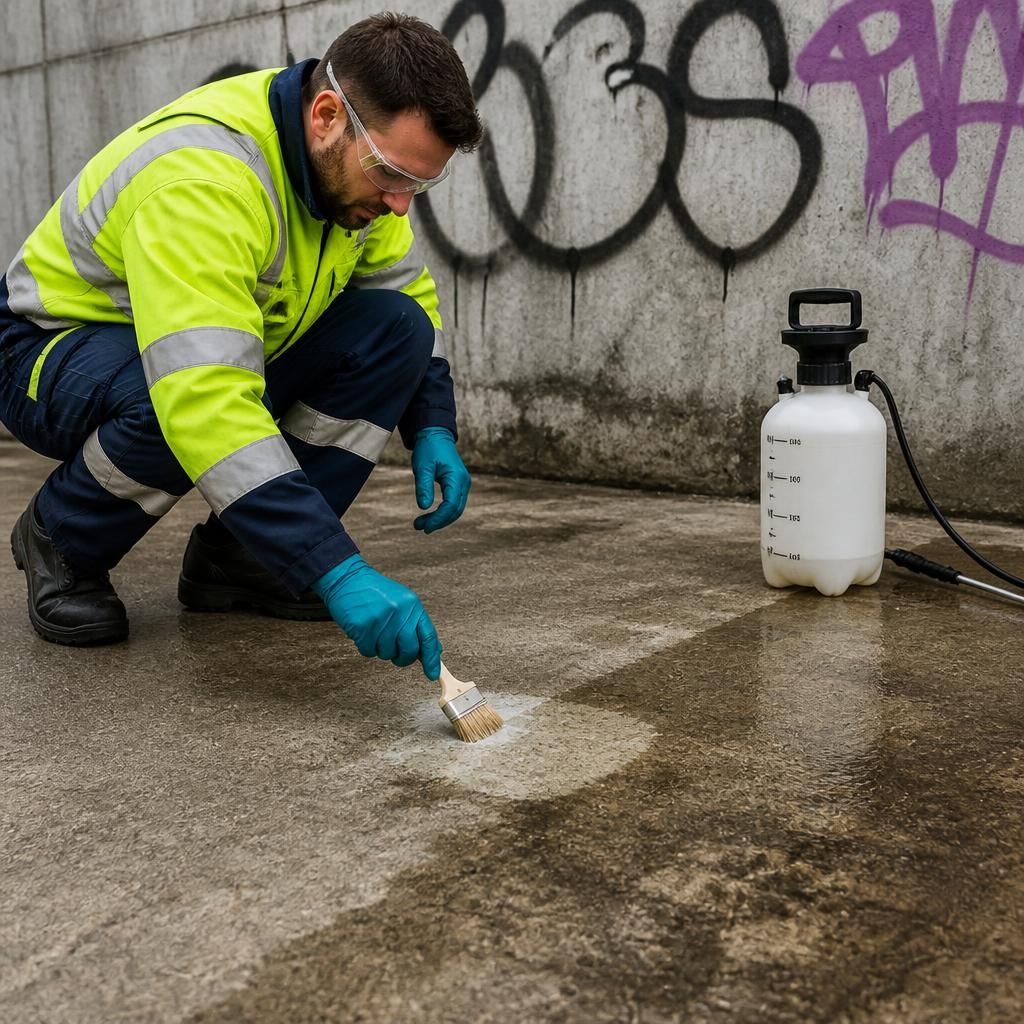
Concrete floor cleaning can remove graffiti effectively when the treatment is matched to the paint and the condition of the concrete. A discreet test patch shows whether pressure washing, steam cleaning or a specialist graffiti remover will lift the marking without damaging the surface.
This check is particularly important on old, porous or unsealed concrete, where paint may have penetrated below the surface and left ghosting after cleaning. The aim is to remove as much of the graffiti as possible while preserving the concrete, avoiding visible cleaning marks and controlling contaminated wastewater.