
What specific cleaning techniques do you employ for car park and forecourt surfaces, and how do they address different types of flooring materials?
We assess the surface first, then use controlled pressure washing, steam cleaning and suitable detergents to remove dirt, oil, tyre marks, algae and chewing gum without damaging the finish. Concrete and block paving can usually tolerate targeted pressure cleaning, while tarmac requires lower pressure and careful treatment to avoid loosening the surface or aggregate.
We match the cleaning technique to the surface material, its condition and the type of contamination present. Our usual approach combines a site assessment, controlled pressure washing, steam cleaning, targeted detergents and appropriate recovery of wastewater. This allows us to remove general traffic film, oil, fuel residues, tyre marks, algae, moss, chewing gum and ingrained dirt while reducing the risk of surface damage, loose aggregate, disturbed jointing or water penetration.
Before cleaning, we inspect the car park or forecourt to identify the flooring material, drainage points, damaged areas, surface coatings and contamination hotspots. We also consider vehicle and pedestrian access, nearby buildings, electrical equipment and the direction in which wash water could travel. Oil and fuel residues are treated differently from organic growth or chewing gum, so identifying the contamination first helps us select the right combination of pressure, temperature, agitation and detergent.
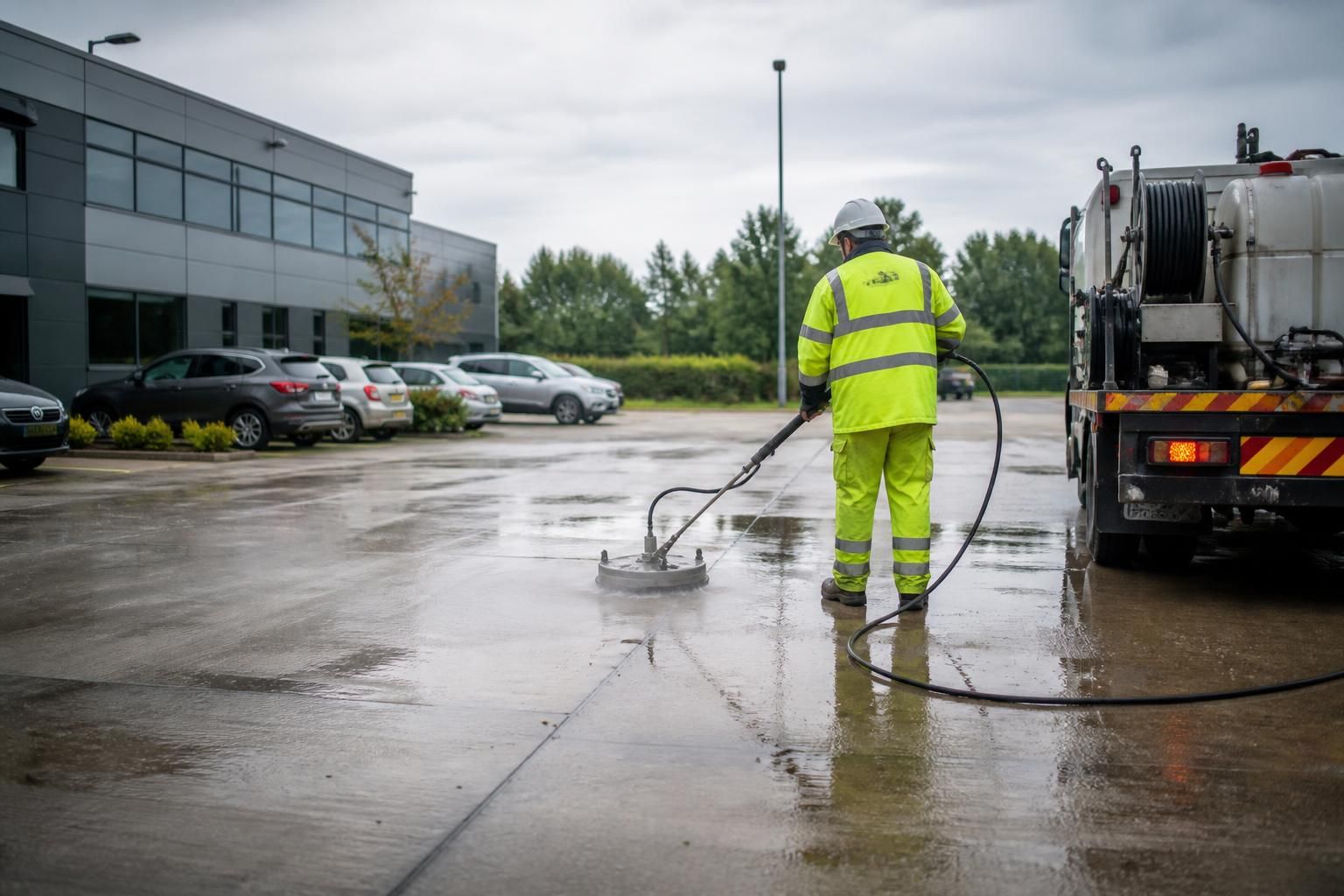
Concrete generally responds well to controlled pressure washing, particularly where the surface has a sound, reasonably uniform finish. We use a suitable surface-cleaning attachment or controlled lance work to remove dirt, tyre deposits, algae and general traffic film evenly across the area. Oil and fuel contamination normally requires a compatible degreasing treatment before rinsing, because pressure alone may spread the residue rather than remove it. Heavily marked sections may need repeated treatment or slower, more targeted cleaning.
Concrete can have a painted, sealed or otherwise treated finish, and these surfaces need a more cautious method than uncoated concrete. We reduce the cleaning intensity where necessary and test a discreet area first. Excessive pressure or unsuitable chemicals can strip coatings, expose the substrate or create visible differences between cleaned sections. Where concrete is cracked, spalled or already deteriorating, we take account of its condition rather than treating it as a sound surface.
Tarmac and asphalt require particular care because the binder and aggregate can be affected by excessive pressure, heat or aggressive agitation. We normally use a lower-pressure approach than for robust concrete, with the lance kept at a suitable distance and the cleaning pattern controlled to avoid loosening aggregate or marking the surface. Detergents can help break down oil, diesel and hydraulic-fluid contamination before a careful rinse. Deep staining may not disappear completely where the contaminant has penetrated the asphalt, and we distinguish between removable surface deposits and permanent discolouration.
Freshly laid, weathered or damaged tarmac is assessed before work begins. Areas with loose chippings, open joints, potholes or failed repairs may need local maintenance before they can be cleaned safely. We avoid directing concentrated pressure into defects, edges or joints, as this can worsen existing deterioration. On forecourts, where fuel contamination is more likely, the cleaning plan also accounts for the location of drains and the need to prevent contaminated wash water entering surface-water systems.
Block paving and concrete paving slabs can usually be cleaned with controlled pressure washing, but the joints need protection. We work across the surface in a consistent pattern to lift dirt, algae, moss and tyre marks while avoiding unnecessary erosion of the jointing material. Where joint sand has been removed or was already loose, the surface may require re-sanding after it has dried and any necessary repairs have been completed. We do not assume that every paving installation has the same joint construction, so the method is adjusted to suit the condition and layout.
For block paving affected by weeds or organic growth, mechanical removal and targeted treatment may be used alongside pressure cleaning. This helps address contamination in the joints rather than simply washing the visible growth across the surface. Efflorescence, which appears as a pale mineral deposit on some paving, may need a different treatment from ordinary dirt and is assessed separately. Care is also taken around kerbs, drainage channels, tactile paving and areas where paving has started to move.
Resin-bound and resin-based surfaces need a gentler approach because aggressive pressure, heat or chemicals can affect the resin or loosen the aggregate. We use low-pressure cleaning where appropriate, with controlled rinsing and a compatible detergent selected for the contamination. A test area is particularly important on these finishes, as the surface appearance and binder condition can vary. We avoid methods that could expose the underlying substrate, disturb the aggregate or leave a patchy finish.
Oil, grease and fuel residues are handled through containment, pre-treatment and controlled rinsing rather than relying on pressure alone. We apply a suitable degreaser where the surface and surrounding environment allow, agitate or dwell it as required, then remove the broken-down residue using an appropriate cleaning method. The process is planned around drainage and wastewater controls, particularly on forecourts and sites connected to surface-water drainage. We do not deliberately wash contaminated water into drains without considering the site’s drainage arrangements and applicable environmental requirements.
Chewing gum, tar and localised deposits are treated as spot contaminants. Steam cleaning is often useful because heat softens the deposit, allowing it to be lifted with less aggressive mechanical action. The surrounding surface is protected by limiting the treatment area and selecting a technique appropriate to the material. Tyre marks may respond to detergent-assisted agitation and controlled pressure, while algae and moss are treated with methods designed to remove both the growth and the slippery residue it leaves behind.
After cleaning, we inspect the surface for remaining staining, disturbed joints, missed edges and any areas requiring further attention. We also check that access routes, kerbs and drainage points have been left clear. Where a surface is particularly vulnerable or already damaged, we explain the practical limitations of cleaning and identify any repair, re-sanding or sealing work that may be needed separately. The result is a cleaning method based on the actual flooring material and site conditions, rather than applying the same pressure and chemical treatment to every car park or forecourt.
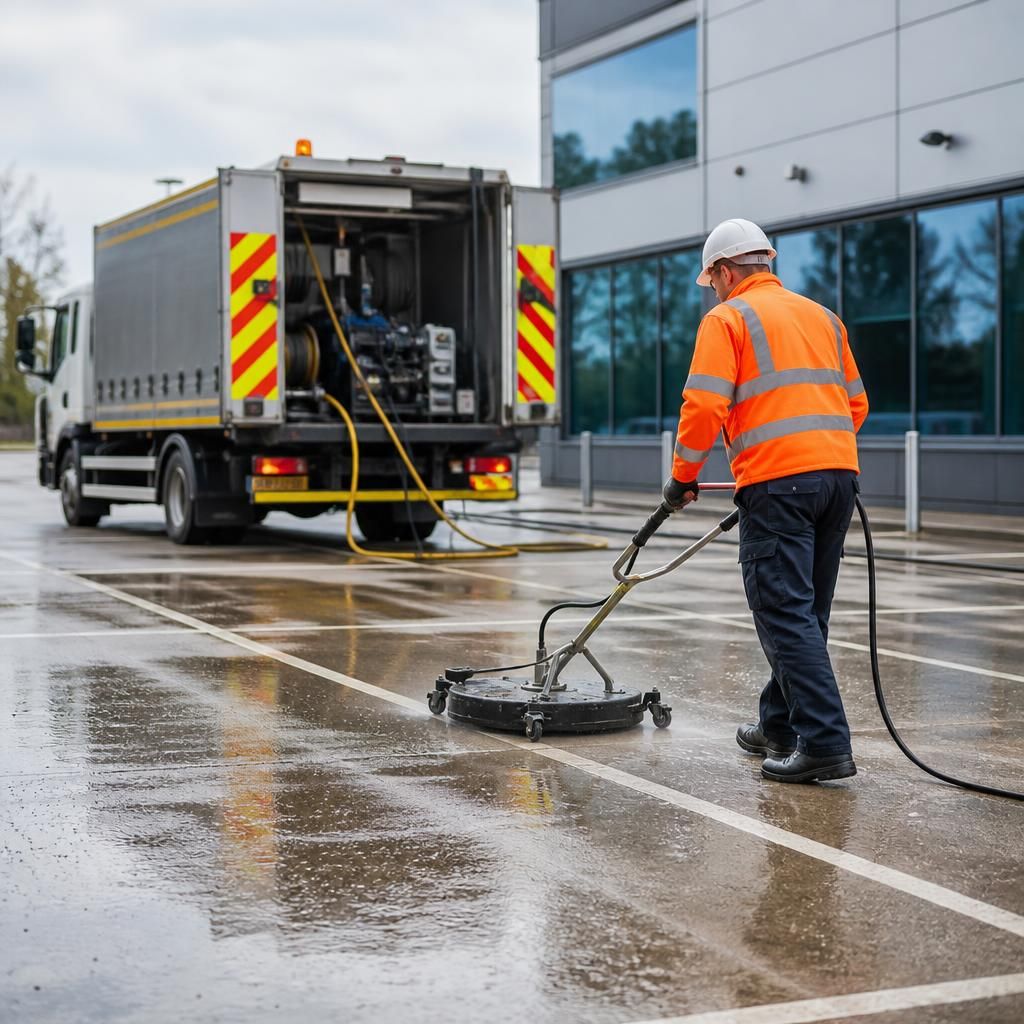
Surface-specific cleaning means adjusting pressure, heat, detergents and rinsing methods to suit the flooring material and its condition. Concrete can usually withstand controlled pressure washing, whereas tarmac, resin-bound surfaces and older paving require gentler treatment to prevent loose aggregate, disturbed joints or damage to the finish.
We test vulnerable or coated areas first and treat contamination according to its type. Degreasers help break down oil and fuel residues, steam can lift chewing gum and tar, and controlled pressure removes traffic film, algae and moss. This approach cleans the surface effectively while preserving its structure and directing contaminated wash water towards the site’s agreed recovery or drainage arrangements.