
What equipment is used for car park and forecourt floor cleaning?
Car park and forecourt floor cleaning typically uses industrial pressure washers, hot-water or steam-cleaning equipment, rotary surface cleaners, scrubber dryers, wet vacuums and water-recovery systems. The equipment is selected according to the surface material, level of oil and dirt, drainage arrangements, access requirements and the need to keep vehicle or pedestrian areas safe during cleaning.
Professional car park and forecourt floor cleaning uses a combination of industrial pressure washers, hot-water or steam-cleaning equipment, rotary surface cleaners, scrubber dryers, wet vacuums and water-recovery systems. The equipment is selected for the surface material, type of contamination, drainage arrangements, available access and whether the area must remain partly operational during the work.
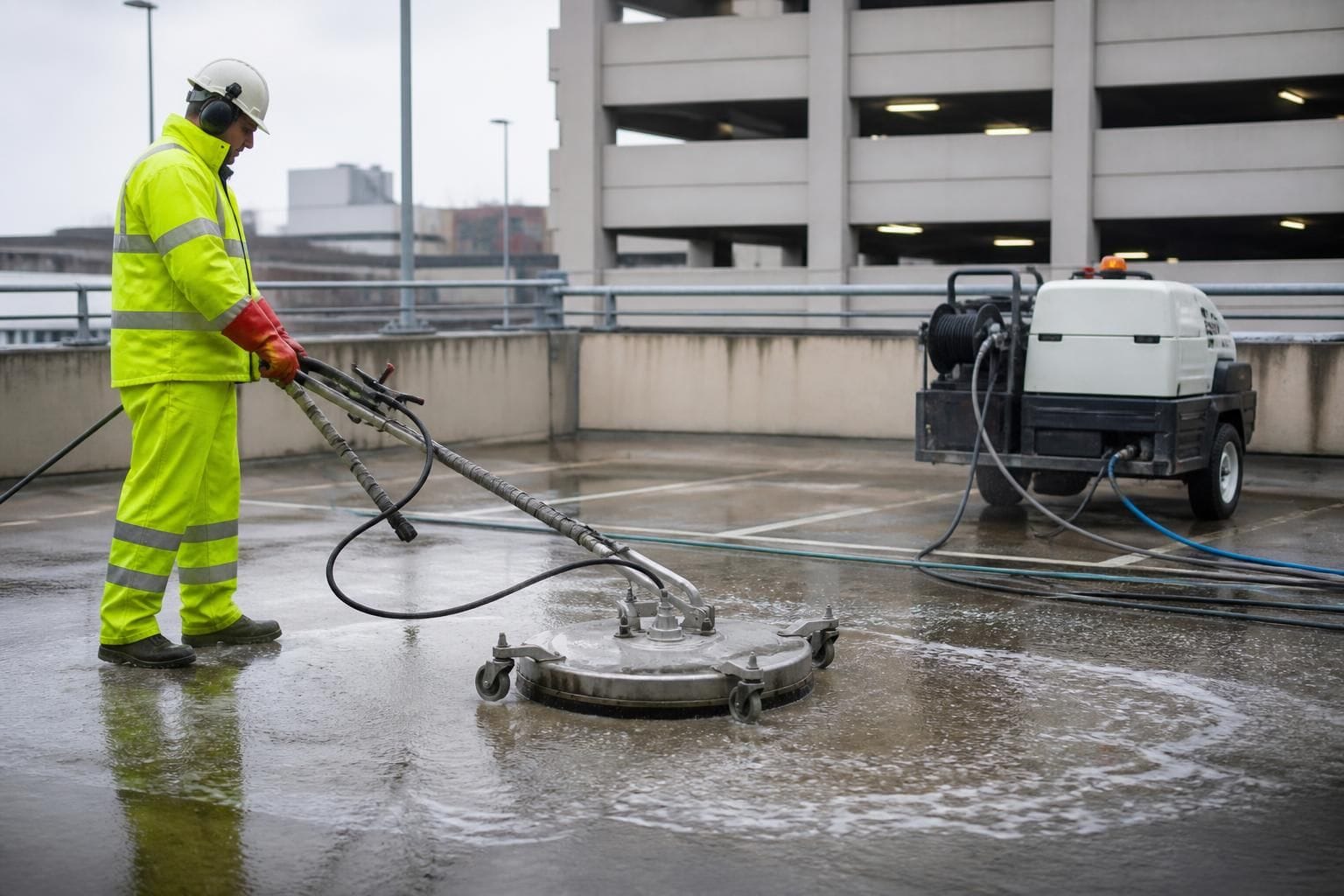
Industrial pressure washers are used to remove general dirt, road film, algae, tyre marks and ingrained deposits from robust surfaces such as concrete, tarmac and block paving. They deliver substantially greater cleaning power than domestic machines and can be configured with different water temperatures, pressures and flow rates. The correct setting matters: excessive pressure can damage weak concrete, dislodge jointing material, strip coatings or force water into cracks and building edges.
Pressure washing is normally carried out with controlled passes rather than an unrestricted lance. This produces a more even finish and helps prevent dirty water being spread across already-cleaned areas. Lances and adjustable nozzles may be used for kerbs, edges, drainage channels and difficult details, while broader cleaning heads are more suitable for open floor areas.
Hot-water pressure washers are particularly useful on forecourts and car parks affected by oil, grease, fuel residue and traffic film. Heated water softens oily contamination and improves the action of suitable detergents, reducing the need to rely solely on high pressure. This can be valuable where the surface needs thorough cleaning without aggressive mechanical treatment.
Steam-cleaning equipment uses high-temperature steam or very hot water at a comparatively controlled flow. It is suited to targeted treatment of stubborn oil marks, chewing gum, embedded grime and sensitive areas where excessive water use would be undesirable. Steam can also help clean around bollards, fuel islands, drainage covers and other fittings that are difficult to treat efficiently with a large surface-cleaning head.
Temperature and pressure are adjusted to suit the substrate. Coated concrete, resin systems, painted markings and older paving may require a gentler approach than uncoated, sound concrete. A test area is useful when the condition or construction of the surface is uncertain.
Rotary surface cleaners enclose rotating spray bars beneath a protective cover. They distribute water evenly across a wide area and help prevent the streaking or splash associated with using a lance alone. These machines are effective for large concrete slabs, paved areas and other relatively even surfaces, particularly where a consistent appearance is required.
Surface cleaners are not suitable for every location. Uneven block paving, deep joints, damaged surfaces and tight edges may still need lance work or manual treatment. Operators also need to control the speed of travel and overlap between passes so that one section is not cleaned more heavily than another.
Scrubber dryers combine rotating brushes or pads, cleaning solution and suction. They scrub the floor mechanically, then recover the loosened dirt and liquid in the same pass. This makes them useful for smooth concrete, resin, sealed surfaces and indoor or covered car park areas where rapid drying and controlled water use are important.
Different brushes and pads can be selected according to the floor finish and level of soiling. Soft or medium brushes may be appropriate for routine maintenance, while more intensive pads can address heavier deposits where the surface permits. Scrubber dryers are less effective on deeply uneven ground, loose aggregate or heavily contaminated surfaces that first require pressure washing and degreasing.
Wet vacuums and water-recovery equipment collect dirty water after pressure washing, detergent application or spill treatment. Recovery is especially important where contaminated water could enter surface-water drains, pass beyond the site boundary or create a slip hazard. Vacuum systems can remove standing water from low points, kerb lines, loading areas and around drainage channels.
Recovered water may need to be contained, filtered or disposed of through an appropriate foul-water route, subject to site arrangements and local requirements. It should not be allowed to enter a surface-water system simply because a drain is nearby. The cleaning plan should identify drainage points and specify how oil, sediment and cleaning residues will be controlled before work begins.
Oil-treatment and detergent application equipment includes measured dosing systems, pump sprayers, foaming equipment and low-pressure applicators. These tools help apply a suitable cleaning product evenly to oil, grease, algae or traffic film before agitation and rinsing. Product choice depends on the contamination and substrate; a treatment suitable for unsealed concrete may be inappropriate for painted markings, resin, natural stone or areas close to vegetation.
Detergents should be used only where they add a clear cleaning benefit, at the correct dilution and with appropriate precautions. Operators consider product safety information, contact time, runoff control and the requirements of the site. Mechanical action, hot water and recovery can often reduce the amount of chemical treatment needed.
Manual tools and specialist attachments remain important even on large projects. Stiff brushes, scrapers, detail nozzles and narrow cleaning heads are used around kerbs, columns, barriers, wheel stops, drainage grilles, fuel pumps and other obstructions. Gum-removal tools or hot-water attachments may be used for isolated deposits without treating the whole area more aggressively than necessary.
Access and safety equipment supports safe work around vehicles, pedestrians and operating facilities. This may include barriers, cones, warning signs, hose ramps, spill-control materials, lighting and temporary exclusion zones. Where equipment must be moved across a busy site, the work is planned in sections so that hoses, cables, wet surfaces and machinery do not create avoidable trip or vehicle hazards.
For larger or restricted sites, compact machines may be chosen to pass through access points or work between parked vehicles. Battery-powered or lower-noise equipment can be considered for enclosed areas, sensitive premises or cleaning outside normal operating hours. Equipment is also checked for leaks, electrical safety, guarding and suitable operator controls before use.
The most effective setup is therefore rarely a single machine. A typical project may use a pre-treatment sprayer for oil, a rotary surface cleaner for the main floor, a lance for edges, a scrubber dryer for final recovery and a wet vacuum for low points. The combination is adjusted after assessing the floor, contamination, weather, drainage and traffic arrangements, allowing the area to be cleaned thoroughly while protecting the surface and controlling wastewater.
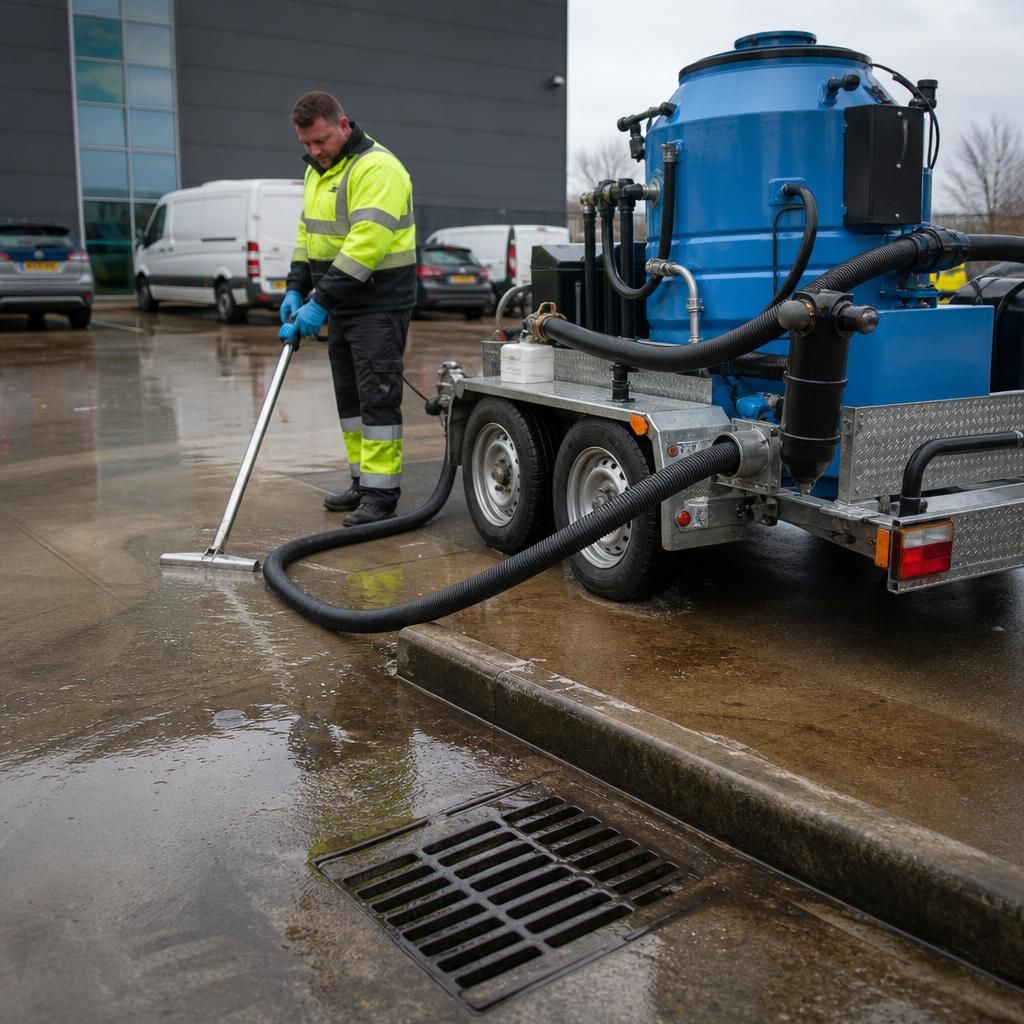
Water-recovery equipment collects dirty water produced during pressure washing, detergent treatment and spill cleaning. Wet vacuums, recovery tanks and filtration equipment help prevent oily residues, sediment and cleaning chemicals from spreading across the site or entering surface-water drains.
This equipment is particularly important around drainage channels, kerbs, low points and fuel areas. The cleaning plan identifies where recovered water will be contained and how it will be handled through an appropriate disposal route, while barriers and warning signs help keep wet areas safe until the surface has dried.