
What are the environmental benefits of professional car park cleaning?
Professional car park cleaning helps reduce the release of oil, fuel residues, tyre particles, litter and other pollutants into surface-water drainage systems. Controlled cleaning methods also use water, detergents and waste-disposal processes more responsibly, helping protect local waterways while maintaining a safer, cleaner site.
Professional car park cleaning benefits the environment by removing oil, fuel residues, tyre particles, sediment, litter and other contaminants before they are washed into surface-water drains. When cleaning is planned and carried out with suitable equipment, the process can also reduce unnecessary water use, control detergent application, recover dirty wastewater and prevent pollutants from spreading across the site.
Pollution prevention is the main environmental benefit. Car parks and forecourts collect contaminants from vehicles, including hydrocarbons, brake dust, rubber particles, grit and leaked fluids. Rain can carry these materials into gullies and drainage channels. Where drainage connects to a surface-water system, the pollutants may ultimately reach streams, rivers or ponds. Professional cleaning removes the build-up from the hard surface and manages the resulting wastewater instead of allowing rainfall to distribute it gradually.
Cleaning does not remove the need to repair leaking vehicles, maintain drainage systems or use suitable spill-response procedures. It is one part of a wider pollution-control plan. However, regular removal of accumulated contamination reduces the quantity of material available to enter drainage during heavy rain.
Controlled wastewater management helps protect drainage and waterways. A professional contractor should assess the site before work begins, identify drain locations and consider the type of contamination present. Depending on the surface, drainage arrangement and local requirements, methods may include drain protection, vacuum recovery, collection of slurry and controlled disposal of wastewater. Dirty water should not simply be pushed into an unsuitable drain, onto soft landscaping or towards a watercourse.
Where a car park has oil separators, interceptors or other drainage controls, these should be considered during planning. Cleaning can disturb settled material within or around drainage infrastructure, so the work must be managed carefully and any collected waste handled through appropriate disposal arrangements. The correct approach depends on the site and the nature of the waste; professional advice should be obtained where contamination is significant or hazardous.
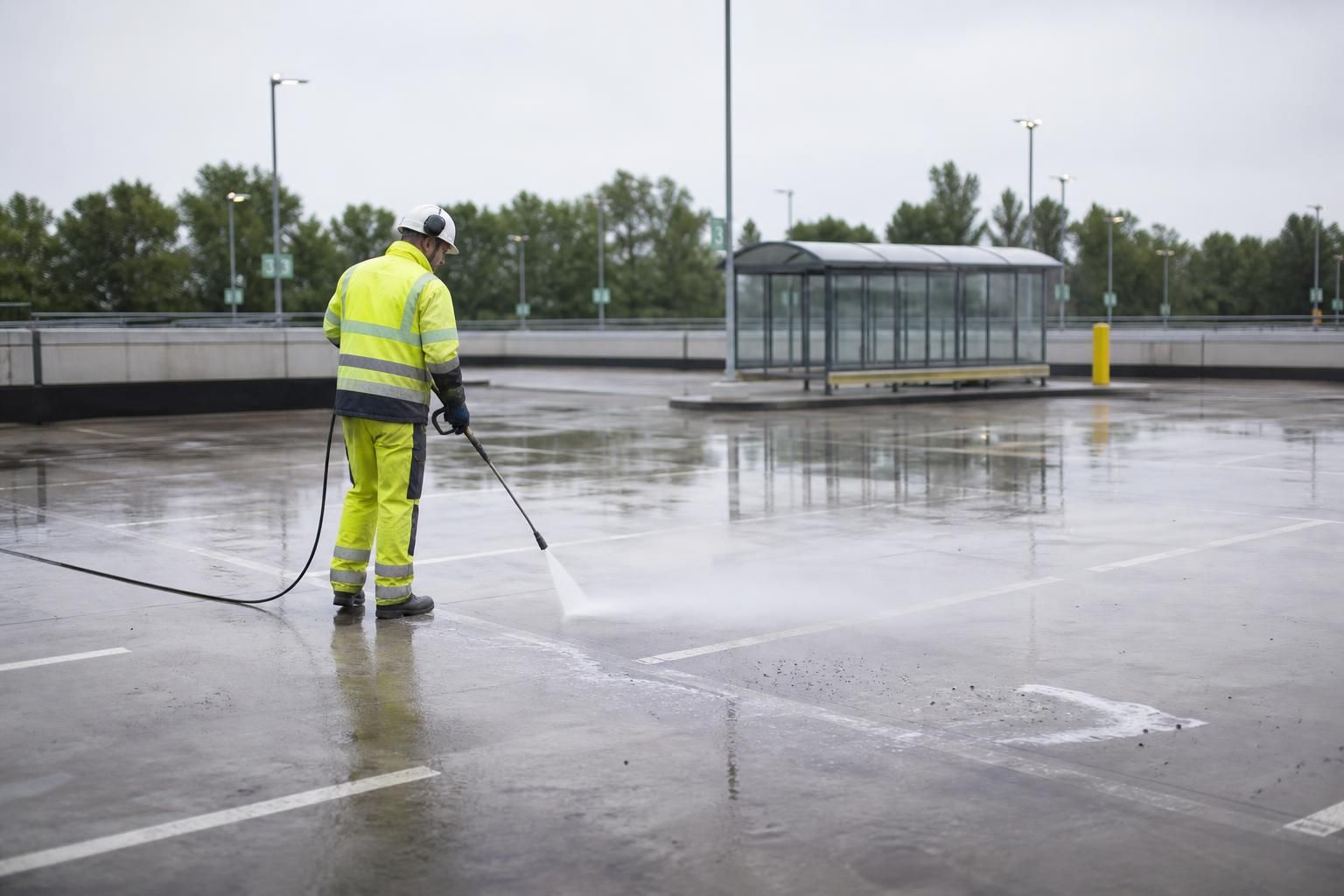
Efficient equipment can reduce water consumption. Pressure washing and steam cleaning systems apply water in a controlled way rather than relying on unrestricted flows from a hose. The most suitable method depends on the flooring material, level of soiling, access, drainage and the need to protect markings or coatings. Using the lowest effective pressure, an appropriate nozzle and a targeted cleaning pattern can remove contamination without excessive water use.
Water efficiency also comes from preparation. Sweeping or removing loose litter and debris before washing reduces the amount of material entering the wastewater stream. Treating oil spots directly, rather than applying strong chemicals across the whole surface, can limit detergent use. On some surfaces, steam cleaning may reduce the need for chemical products, although the method must still be selected according to the contamination and finish.
Responsible detergent selection reduces chemical impact. Detergents and degreasers can improve the removal of oils, grease and traffic film, but they should be used only where necessary and in accordance with the product instructions. A suitable contractor will select products that are appropriate for the surface and contamination, apply them at a controlled concentration and prevent concentrated chemicals from entering drainage systems. Environmentally preferable products are not automatically harmless, so their use still requires proper containment and disposal.
Removing litter and sediment supports healthier site drainage. Leaves, silt, packaging and other debris can block gullies and create contaminated sludge. Clearing these materials as part of the cleaning process helps drainage operate as intended and reduces the risk of polluted standing water after rainfall. Collected debris should be separated where practical and disposed of through suitable waste channels rather than being swept into roadways or planted areas.
Regular cleaning can extend the service life of hard surfaces. Oil, algae, moss, grit and other deposits can contribute to staining, slippery conditions and surface deterioration. Removing them helps preserve concrete, block paving, tarmac, resin-bound finishes, coated floors and other hard-standing materials. Extending the usable life of an existing surface can reduce the environmental impact associated with premature repairs, resurfacing, material production and construction activity. Cleaning must still be carried out carefully, as excessive pressure or unsuitable chemicals can damage joints, coatings and surface texture.
Professional cleaning can also support more efficient maintenance. A planned service identifies recurring oil leaks, blocked drainage points, damaged surfacing and areas where water is pooling. Addressing these issues early can prevent repeated contamination and avoid more disruptive remedial work. Cleaning records may also help facilities teams demonstrate that pollution risks are being monitored and managed.
The environmental outcome depends on the cleaning method and site controls. A sustainable service is not defined by pressure washing alone. Before work starts, the contractor should consider:
- the type and condition of the surface;
- the source and nature of the contamination;
- the location and destination of drainage;
- weather conditions, particularly rainfall and wind;
- the quantity of water and cleaning products likely to be required;
- how wastewater, sludge and solid waste will be contained and disposed of; and
- how pedestrian and vehicle movements will be managed without spreading contamination.
For customers arranging commercial or industrial car park cleaning, it is reasonable to ask how runoff will be controlled, which cleaning products will be used, where recovered waste will go and whether the work plan accounts for the site’s drainage system. Cleaning should be postponed or adapted where weather conditions would make containment unreliable.
In practical terms, professional car park cleaning reduces environmental risk by preventing pollutants from accumulating, limiting their movement during rainfall, using water and chemicals more carefully, and managing recovered waste responsibly. The strongest results come from combining suitable equipment, experienced operators, drainage awareness and a planned maintenance schedule rather than treating cleaning as an uncontrolled wash-down.
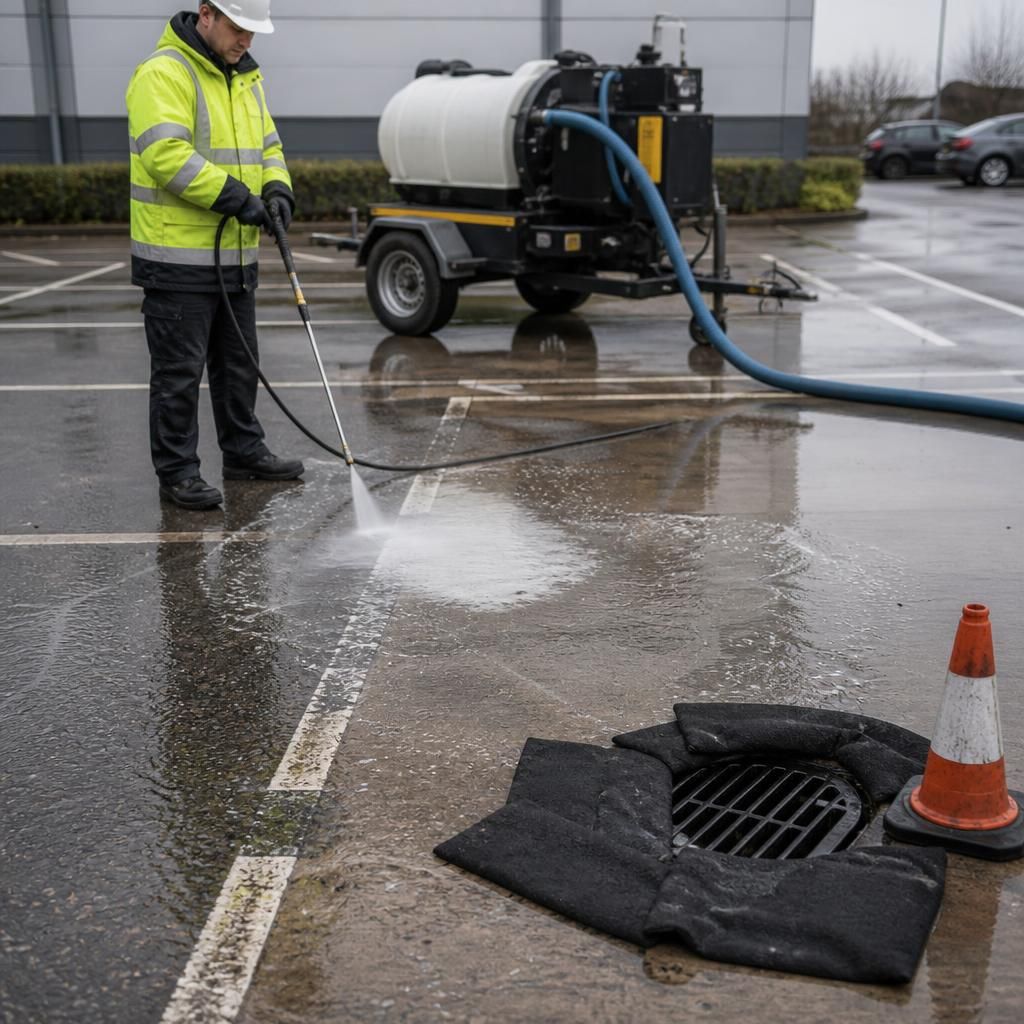
One of the main environmental benefits of professional car park cleaning is controlled management of polluted runoff. Oil residues, fuel, brake dust, tyre particles and sediment can be carried into surface-water drains when rain falls on a contaminated surface.
Professional cleaning methods can include protecting drains, applying water and cleaning products selectively, recovering dirty water and arranging appropriate disposal of sludge and collected debris. This prevents contaminants from being spread across the site or discharged into unsuitable drainage. The work should also be planned around weather conditions, surface type and the destination of the drainage system.