
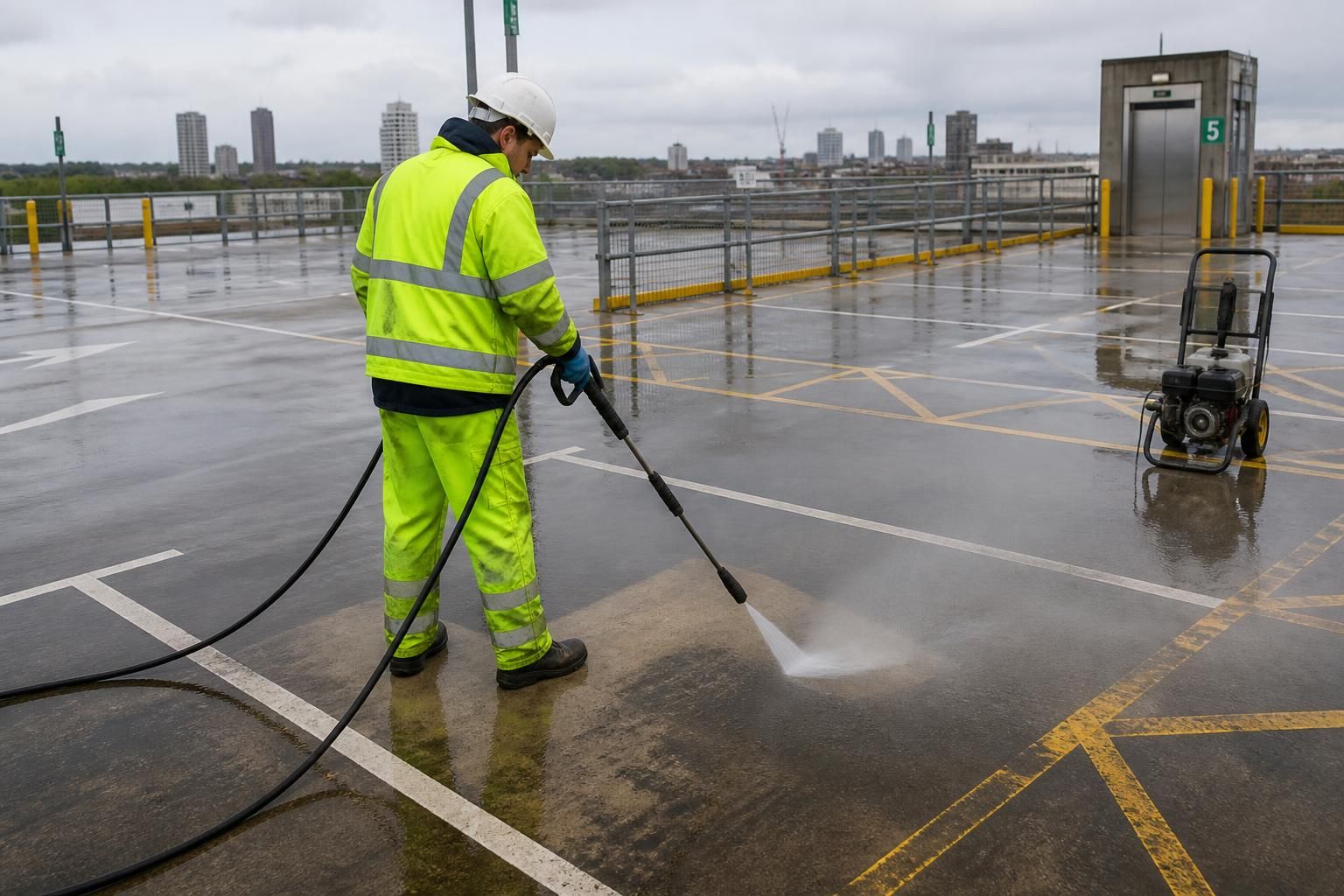
What are the benefits of regular car park and forecourt floor cleaning?
Regular car park and forecourt floor cleaning removes oil, fuel, dirt, chewing gum, algae and other contamination before it becomes a safety or maintenance issue. It helps reduce slip and trip risks, protect surface condition, improve kerb appeal, support environmental compliance and maintain a professional appearance for visitors, staff and customers.
Regular car park and forecourt floor cleaning improves safety, protects the surface, supports environmental compliance and maintains a professional appearance. It removes accumulated oil, fuel, grease, road dirt, algae, chewing gum, litter residue and other contamination before these materials create slip hazards, block drainage or contribute to surface deterioration.
Improved safety for pedestrians and vehicles
Oil and fuel deposits can make concrete, asphalt, block paving and other hard surfaces slippery, particularly when wet. Algae, moss and organic debris can have a similar effect in shaded or poorly drained areas. Professional cleaning removes these deposits more effectively than routine sweeping, reducing the likelihood of slips, trips and loss of vehicle traction.
Cleaning also makes defects and hazards easier to identify. Once surface contamination has been removed, potholes, damaged paving, worn markings, cracked concrete, raised covers and drainage problems are more visible and can be dealt with before they become more serious.
Protection of car park and forecourt surfaces
Oil, fuel, hydraulic fluid, de-icing residue and general grime can remain in the surface if they are not treated properly. Over time, contamination may discolour paving, weaken joints, affect surface coatings and contribute to deterioration around heavily trafficked areas. Pressure washing, steam cleaning and suitable cleaning treatments help remove deposits while allowing the method to be matched to the condition and material of the floor.
Regular cleaning does not repair structural damage or prevent normal wear, but it can form an important part of planned maintenance. It also helps reveal areas that require sealing, re-marking, resurfacing or local repair, making it easier to plan remedial work rather than responding only after a failure.
Better kerb appeal and customer perception
A clean car park or forecourt is often the first part of a premises that visitors, customers, contractors and staff see. Removing dark tyre marks, fuel staining, chewing gum, litter residue and organic growth creates a more orderly appearance and helps the site reflect the standards of the business operating from it.
This is particularly important at retail premises, petrol stations, offices, industrial estates, managed developments and public facilities. Clean floors, clear access routes and well-maintained markings make the site easier to navigate and reduce the impression that maintenance has been neglected.
Reduced drainage and pollution risks
Loose dirt, silt, leaves, oil and other debris can collect around gullies, channels and kerb lines. If this material is allowed to build up, it may restrict drainage and increase the risk of standing water during wet weather. Cleaning helps keep these areas clearer, although drainage systems may need separate inspection and maintenance where silt or blockages are present.
Forecourt and car park cleaning also needs to control dirty water responsibly. Run-off containing oil, fuel or cleaning chemicals should not be allowed to enter surface-water drains or the wider environment without appropriate treatment or disposal. A competent contractor will assess the site, select suitable cleaning products and use recovery or containment measures where required by the surface and the contamination present.
More effective maintenance of markings and site features
Traffic lines, disabled parking symbols, directional arrows, loading bay markings and pedestrian crossings are easier to see when they are not covered by dirt and tyre deposits. Cleaning can improve their visual definition, although faded or damaged markings may still require repainting.
Removing contamination from around bollards, kerbs, barriers, wheel stops, signage bases and drainage channels also supports wider site maintenance. These features can then be inspected more easily for impact damage, corrosion, movement or other defects.
Lower risk of avoidable repair and disruption
Planned cleaning helps identify contamination and surface defects before they require extensive intervention. Early attention may reduce the need for aggressive treatments, major repairs or prolonged closure of parking and refuelling areas. It can also help facilities teams coordinate cleaning with line marking, landscaping, drainage work and other planned maintenance.
Cleaning is not a substitute for repairing failed surfaces, treating persistent leaks or investigating recurring contamination. If oil or fuel continues to reach the floor from defective vehicles, plant or equipment, the source should be corrected as well as the affected area being cleaned.
More hygienic and manageable working areas
Car parks and forecourts collect material from vehicles, deliveries, weather and foot traffic. Regular removal of this build-up reduces the amount of loose dirt being transferred into buildings, reception areas, shops and workplaces. It can also make routine sweeping and inspection more effective between professional cleaning visits.
For sites handling deliveries, waste, plant or construction traffic, a planned cleaning programme is particularly useful because contamination can accumulate quickly and may be spread across wider areas.
Practical benefits of a planned cleaning programme
- Contamination can be assessed and treated according to its type, severity and location.
- Cleaning can be scheduled around opening hours, deliveries, refuelling and peak vehicle movements.
- High-risk areas such as entrances, exits, payment points, turning areas, loading bays and fuel islands can receive targeted attention.
- Surface condition, drainage and markings can be checked as part of a wider maintenance review.
- Cleaning records can support internal maintenance planning and demonstrate that foreseeable housekeeping risks are being managed.
The most suitable interval depends on vehicle and foot traffic, the type of contamination, drainage, exposure to shade and weather, the surface material and the operational requirements of the site. A high-use forecourt or loading area may need more frequent attention than a lightly used private car park. Cleaning should also be arranged promptly after significant fuel or oil contamination, rather than waiting for the next routine visit.
For reliable results, the cleaning method should be selected after assessing the floor, contamination and drainage arrangements. Pressure washing, steam cleaning, rotary cleaning, detergent treatment and water recovery may be used in different combinations. The objective is not simply to make the surface look cleaner, but to remove contamination safely, protect the substrate and leave the area suitable for normal use.
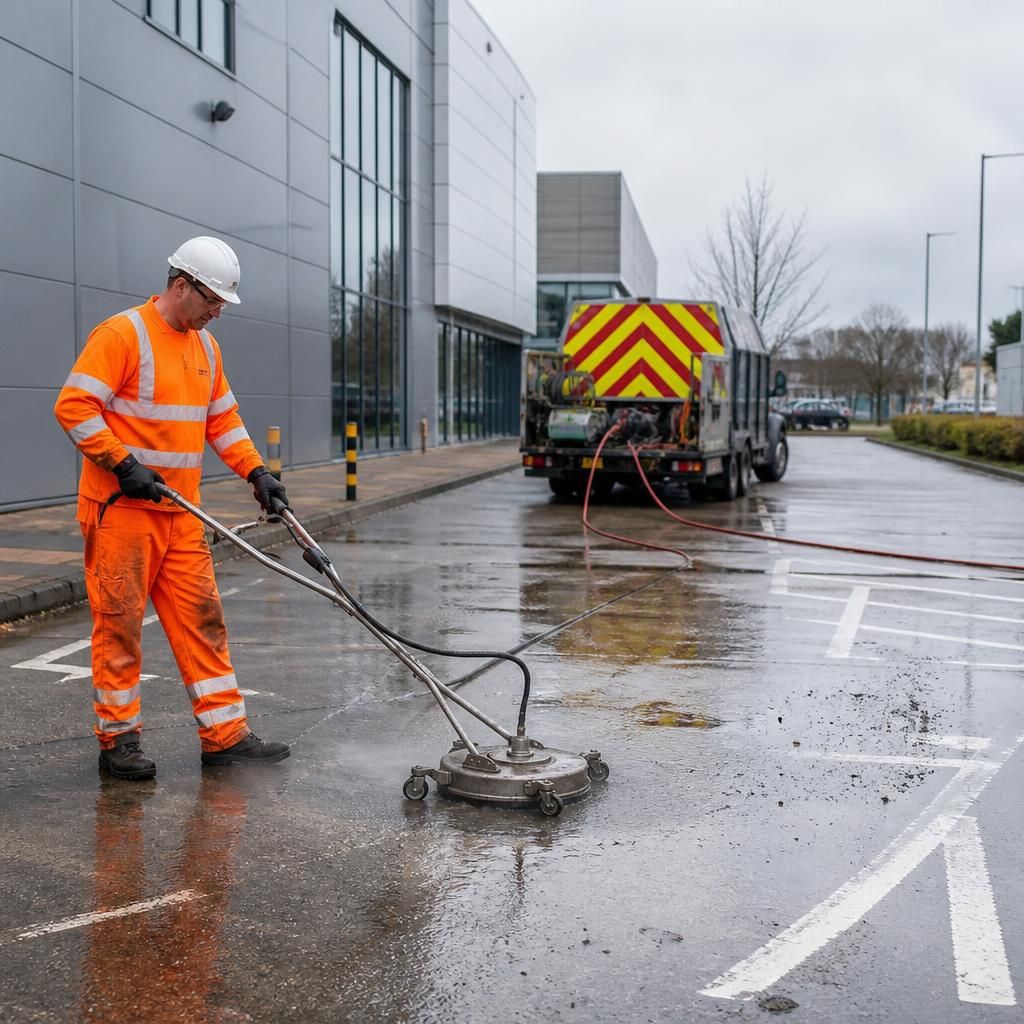
Regular car park and forecourt floor cleaning improves safety by removing oil, fuel, grease, algae, tyre deposits and other contamination that can reduce traction. These substances may make concrete, asphalt, block paving and coated surfaces slippery, particularly when wet or in areas with poor drainage.
Professional pressure washing, steam cleaning or rotary cleaning can treat contamination more thoroughly than routine sweeping, with the method selected according to the surface material and its condition. Cleaning also makes potholes, damaged paving, worn markings, raised covers and drainage issues easier to identify, so they can be assessed and repaired before causing greater disruption.
High-risk areas such as entrances, exits, turning points, payment areas, loading bays and fuel islands can receive targeted attention. Where oil or fuel contamination is present, dirty water should be contained and managed correctly to prevent pollutants entering surface-water drains.