
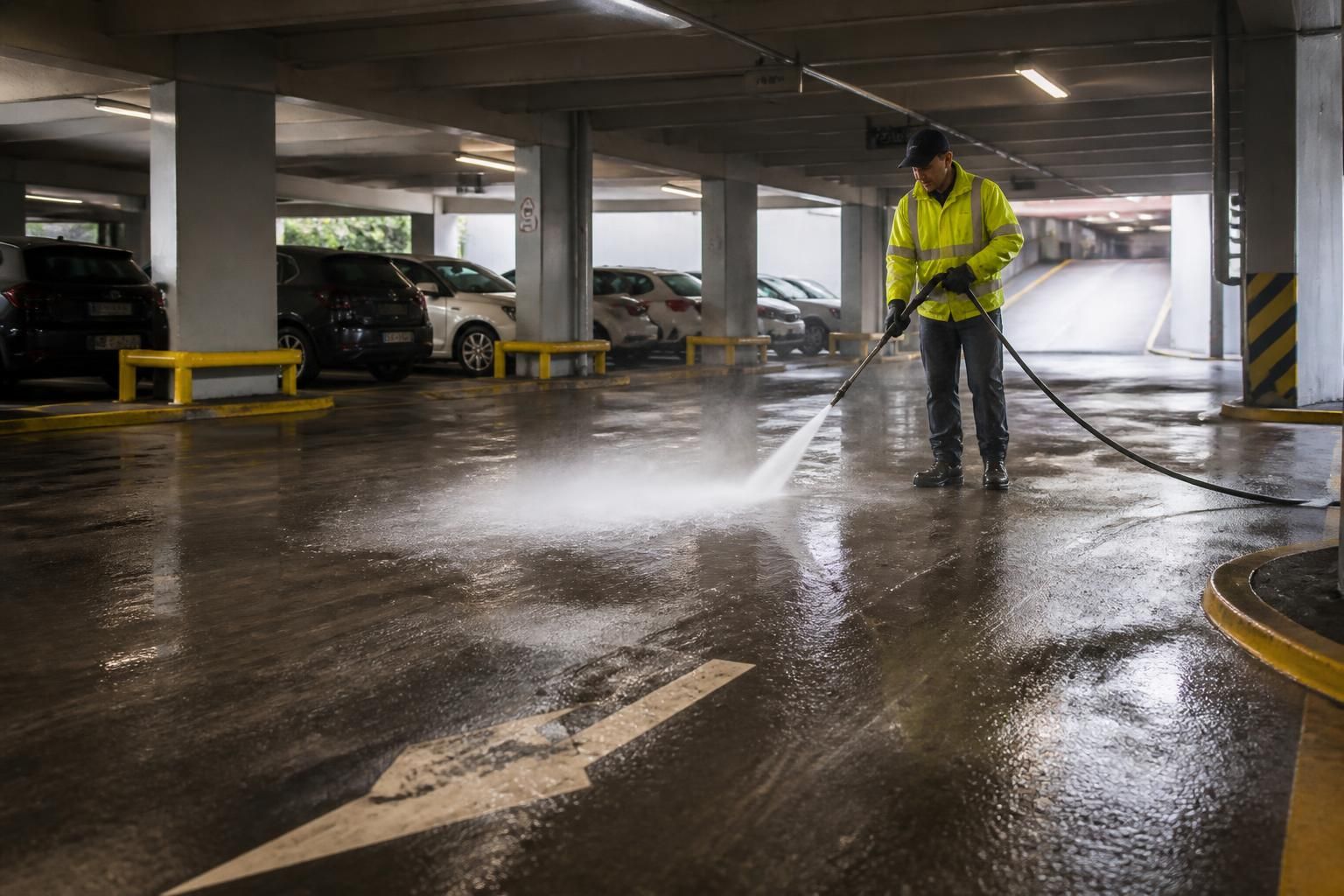
How often should car park and forecourt floors be professionally cleaned?
Most commercial car parks and forecourts should be professionally cleaned at least quarterly, with more frequent cleaning for busy sites, fuel stations, food retail areas or surfaces affected by oil, tyre marks, litter and heavy weathering. The ideal schedule should be adjusted after assessing traffic levels, surface condition, spill risk, drainage and the appearance and safety standards required.
Most commercial car parks and forecourts should receive professional cleaning at least quarterly. Busier sites, including petrol stations, retail parks, food outlets, transport facilities and multi-storey car parks, often require monthly or more frequent cleaning. The correct interval depends on vehicle and pedestrian traffic, the type and amount of contamination, drainage, weather exposure, surface material and the appearance and safety standards the site must maintain.
Professional cleaning should form part of a planned maintenance schedule rather than being arranged only when the surface looks heavily soiled. Routine cleaning removes accumulated oil, fuel residue, tyre marks, chewing gum, organic matter, litter staining and general grime before these contaminants become more difficult to remove or affect the surface. Regular maintenance can also make defects such as damaged surfacing, blocked drainage channels, loose aggregate or deteriorating line markings easier to identify.
A practical starting point for cleaning frequency is:
- Quarterly cleaning: suitable for many commercial car parks and forecourts with moderate traffic and limited contamination.
- Monthly cleaning: often appropriate for busy retail, office, residential, industrial or public car parks where dirt and vehicle deposits build up quickly.
- More frequent targeted cleaning: advisable for petrol stations, loading areas, food retail forecourts, taxi ranks and other locations exposed to regular oil, fuel, grease, food waste or heavy vehicle movements.
- Annual or periodic deep cleaning: useful for lower-traffic sites or as a planned intensive service alongside routine sweeping and spot treatment.
These intervals are guidelines, not fixed rules. A site assessment should determine whether the whole area needs cleaning at the same frequency or whether high-risk zones need a separate programme. For example, parking bays may only need periodic cleaning, while fuel islands, payment areas, entrances, loading points, turning circles and pedestrian routes may require regular targeted treatment.
Traffic levels are one of the main factors. Frequent vehicle movements create tyre deposits, dust, exhaust residue and abrasion. Heavy pedestrian use introduces litter, food contamination and chewing gum, while delivery vehicles can increase the risk of oil and hydraulic-fluid marks. A site serving several occupiers may need a more frequent schedule than a private staff car park, even if the two areas are similar in size.
The type of contamination also affects timing. Dry dust and loose litter can usually be removed through routine sweeping, but oil, diesel, grease and other fluid spills need prompt attention. Leaving petroleum-based contamination on concrete, block paving or tarmac can allow it to penetrate the surface and spread through vehicle movements or rainwater. Spill response should therefore take place as soon as the substance is identified, rather than waiting for the next scheduled clean.
Forecourts need particular attention because fuel residues can create slippery areas and may be carried across the surface by tyres. Cleaning must be controlled so that contaminants and wash water are collected and managed correctly. A professional service can select suitable detergents, pressure or steam settings and recovery methods according to the contamination and the drainage arrangements at the site.
Weather and seasonal conditions can change the required frequency. Rain can move dirt, oil and organic matter into low points and drainage channels, while winter conditions may leave salt deposits and traffic film. Wet leaves, moss and algae can become slip hazards in shaded or poorly drained areas. During warmer periods, dried-on stains and chewing gum may become more noticeable, particularly around entrances and pedestrian routes. Cleaning may need to be brought forward after severe weather, flooding, prolonged wet conditions or a period of heavy footfall.
The required standard of presentation is another consideration. A car park attached to a commercial property, retail destination or managed estate may need more frequent cleaning to maintain a consistent professional appearance. Sites with strict facilities-management requirements may also use inspection records, defect reporting and scheduled maintenance tasks to demonstrate that cleaning has been completed. Where customers, staff or members of the public use the area, maintaining clear, clean pedestrian routes and removing slippery contamination should take priority over appearance alone.
Surface type influences the cleaning approach as well as the frequency. Concrete can hold oil and embedded traffic film; block paving can collect dirt in joints; tarmac may be damaged by unsuitable pressure or aggressive treatment; and painted or coated surfaces may require lower-pressure cleaning and compatible products. Professional cleaning intervals should account for how quickly the particular surface becomes soiled and whether repeated cleaning could affect joints, coatings, sealants or line markings.
Between scheduled professional visits, the site team should remove litter, isolate and report spills, keep drainage grilles clear and record recurring problem areas. Small localised deposits can often be dealt with promptly, but routine in-house sweeping does not replace periodic deep cleaning. Professional equipment and recovery systems are needed to remove embedded contamination and manage wastewater safely, particularly across large areas.
Signs that the cleaning interval may be too long include persistent dark patches, visible tyre marks, slippery deposits, blocked gullies, staining around fuel or loading areas, strong odours, moss or algae growth and dirt being tracked into the building. Complaints from users, repeated spill incidents or a noticeable decline in the appearance of the surface are also reasons to review the schedule. Conversely, a lower-traffic site with good drainage and minimal contamination may not need intensive cleaning as often, provided inspections show that safety and presentation standards are being maintained.
For most sites, the most effective approach is a planned programme combining regular inspections, routine sweeping, prompt spill treatment and periodic professional pressure washing, steam cleaning or other appropriate surface cleaning. The frequency can then be adjusted according to site records and changing use. A professional assessment should consider the area, traffic pattern, contamination risks, surface construction, drainage, access requirements and any environmental controls before recommending a final schedule.
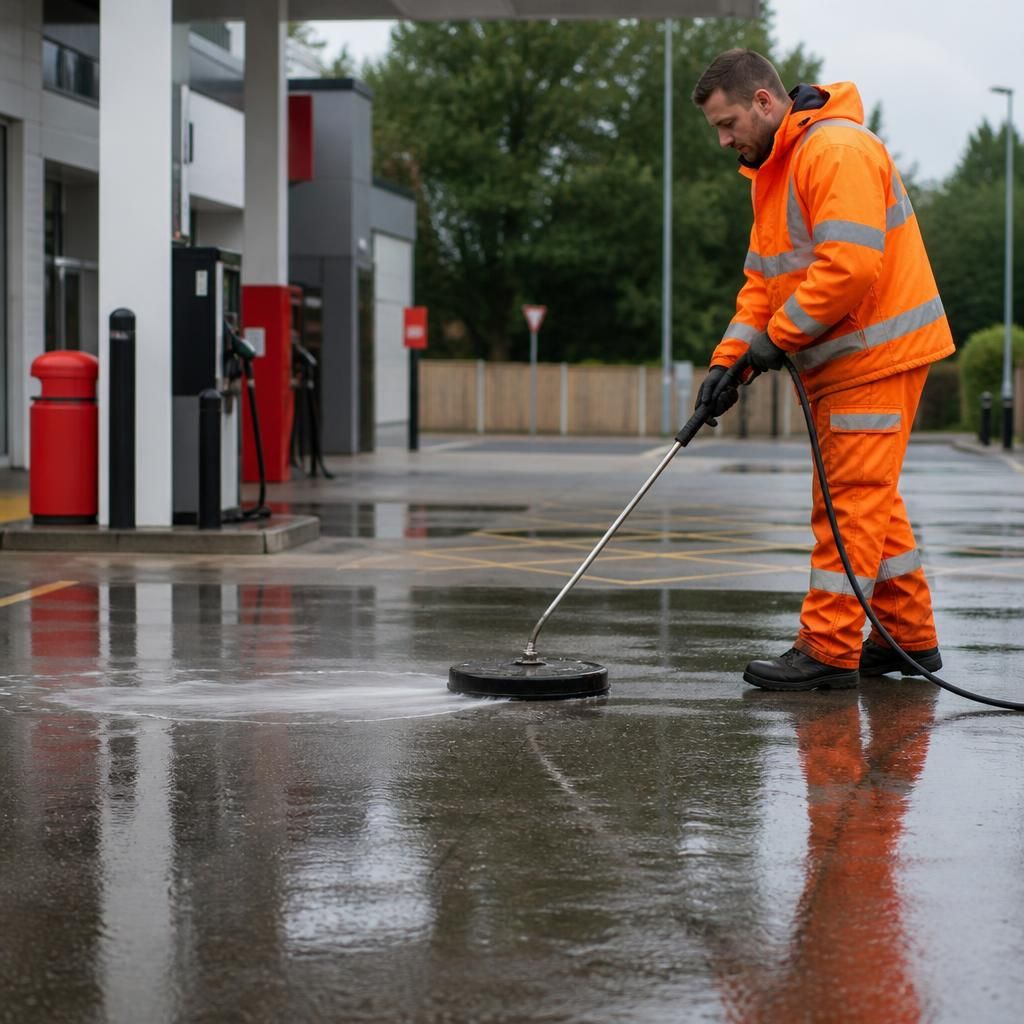
Professional cleaning frequency should be based on how quickly contamination builds up, rather than applying the same schedule to every part of a site. Many commercial car parks are suitable for quarterly cleaning, while busy forecourts, fuel islands, entrances, loading areas and pedestrian routes may need monthly or more frequent attention.
Routine inspections should identify oil and fuel deposits, tyre marks, slippery organic matter, blocked drainage and staining. Spills should be treated as soon as they are found, without waiting for the next scheduled visit. This targeted approach keeps high-risk areas safe while allowing lower-traffic parking bays to remain on a practical planned-maintenance cycle.