How do specialised cleaning services ensure compliance with environmental regulations when cleaning car park surfaces?
Specialised cleaning services ensure compliance by preventing contaminated wash water, oil, chemicals and debris from entering surface-water drains or the surrounding environment. They use appropriate detergents and pressure-washing methods, contain and recover wastewater, dispose of contaminated waste through authorised channels, and follow the site’s drainage and environmental requirements.
Specialised car park cleaning services ensure environmental compliance by controlling the entire cleaning process: identifying potential pollutants, preventing contaminated water from reaching surface-water drains, using suitable products and equipment, recovering wastewater and disposing of waste through authorised routes. The exact requirements depend on the site, drainage system, contaminants present and the UK nation in which the work takes place.
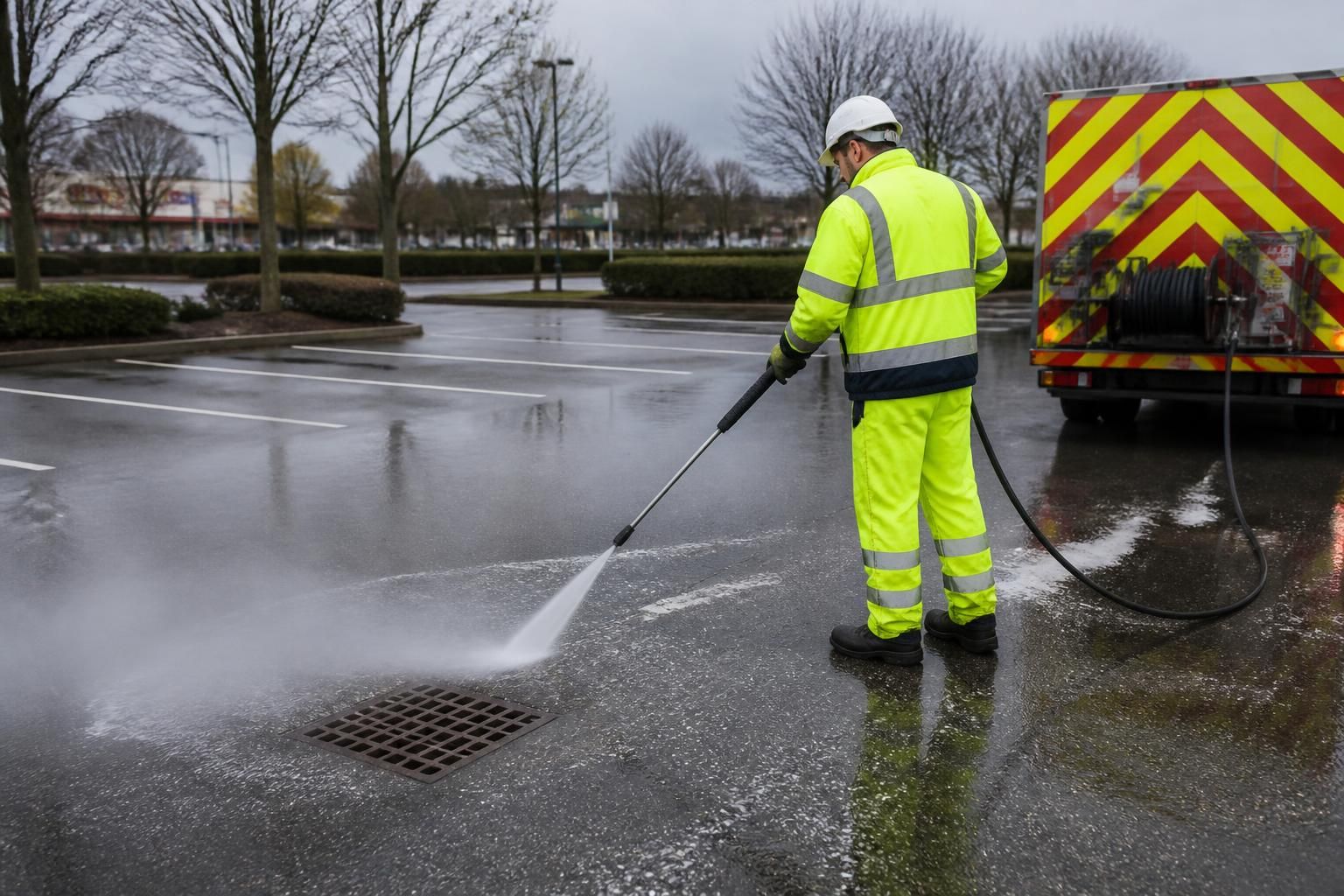
Car park surfaces can contain oil, diesel, fuel residues, brake dust, tyre deposits, grit, litter, silt and detergents from previous cleaning. If these materials are washed into a surface-water drain, they may enter a stream, river or other watercourse without treatment. Before work starts, the cleaning team should therefore review the site layout, identify drain types and outlets, check for nearby watercourses and confirm any restrictions imposed by the property owner, local authority or drainage operator.
- Surface-water drains usually discharge to the environment and must not receive contaminated wash water.
- Foul or combined drains may be connected to a treatment system, but a discharge of trade effluent may require permission or consent from the relevant sewerage undertaker.
- Private drainage systems may have their own treatment, storage or discharge conditions, which must be confirmed with the site operator.
A responsible contractor does not assume that a visible drain is suitable for wastewater. Drain covers, maps, dye testing or confirmation from the facilities manager may be needed where the drainage arrangement is unclear. Where a permitted discharge cannot be confirmed, wastewater should be contained and recovered rather than directed into a drain.
Cleaning methods are selected to remove contamination effectively while limiting environmental risk. Water pressure, temperature, flow rate, dwell time and detergent concentration can all be adjusted to suit the surface and the type of soiling. Steam cleaning or low-chemical methods may be appropriate for some oil and grime deposits, while mechanical agitation can reduce the amount of detergent needed. Products should be suitable for the intended surface and used in accordance with their safety data sheet and manufacturer’s instructions. More chemical product does not necessarily produce a better or safer result.
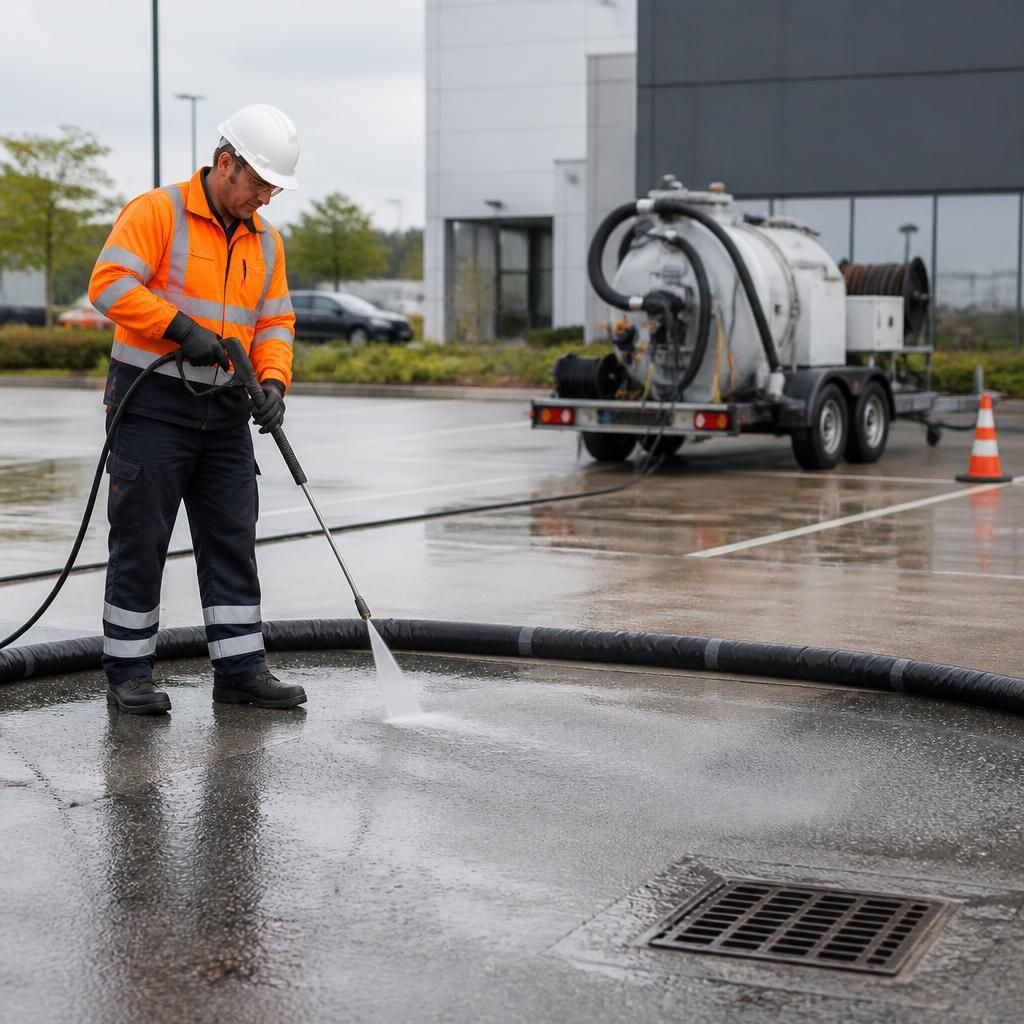
Before washing begins, operatives can protect vulnerable areas with drain mats, drain covers, temporary bunds, booms or other suitable barriers. These controls help prevent wash water travelling beyond the work area, although they must be selected and installed so that they do not create an unsafe trip or traffic hazard. Spill kits and absorbent materials should be available to deal with unexpected leaks, fuel residues or equipment failures.
Wastewater recovery is a key part of compliant car park cleaning. Specialist equipment can collect slurry, silt, oil-contaminated water and loosened debris using wet vacuums, recovery systems, tank units or other suitable equipment. The recovered material is kept separate where necessary, stored securely and transferred for appropriate treatment or disposal. Water should not be left to evaporate on the assumption that the remaining pollutants have disappeared; oils and solids may remain on the surface or be dispersed by later rainfall.
Waste is managed according to its contents and classification. Removed silt, absorbents, oil residues, disposable filters and contaminated solids may require different handling from uncontaminated litter or general debris. Contractors should follow the environmental duty of care, use suitable containers and keep waste secure during transport. Waste transfer documentation and consignment records should be retained where required, particularly when material is classified as hazardous waste. The correct classification depends on the contamination and applicable waste requirements, so it should not be assumed in advance.
Cleaning chemicals and fuels are also controlled under site procedures and relevant health, safety and environmental requirements. Operatives should use labelled containers, prevent spills during storage and decanting, and avoid mixing products that could create harmful reactions. COSHH assessments and safety data sheets help identify handling, storage, exposure and emergency-control requirements. Equipment should be checked for leaks before use, and any fuel-powered machinery should be positioned and operated to minimise the risk of fuel entering the drainage system.
Environmental compliance also depends on planning around weather and site activity. Heavy rain can overwhelm temporary containment and carry pollutants across the surface, so work may need to be postponed or divided into smaller controlled areas. Wind can spread light debris or cleaning products, while freezing conditions can create contaminated ice and slip risks. A competent contractor reviews the forecast, monitors conditions during the work and stops or changes the method if controls are no longer effective.
For larger or heavily contaminated sites, a written method statement should explain the proposed cleaning technique, drainage controls, wastewater recovery arrangements, chemical controls, waste route, emergency response and responsibilities. The plan should be coordinated with the client’s facilities, environmental, security and traffic-management procedures. It may also need to account for planned resurfacing, fuel deliveries, construction activity or public access.
If a spill or uncontrolled discharge occurs, the priority is to stop the source where it is safe to do so, protect nearby drains and watercourses, contain the material, recover contaminated liquids or solids and notify the responsible site contact. Significant pollution incidents may need to be reported to the appropriate environmental regulator. The regulator differs across the UK, so reporting arrangements should be confirmed for the location rather than relying on a generic procedure.
Evidence of good practice can include site surveys, risk assessments, COSHH assessments, method statements, chemical records, equipment checks, wastewater and waste records, disposal documentation and details of any discharge consent. These records allow the client to demonstrate how pollution risks were assessed and controlled. They also help identify recurring oil deposits, drainage defects or areas where preventative maintenance is needed.
For a planned car park or forecourt clean, the most useful information to provide is the site address, surface type, extent of oil or chemical contamination, drainage layout, access restrictions, nearby watercourses and any existing environmental procedures. This enables the cleaning approach and wastewater controls to be agreed before work begins, reducing the risk of an unsuitable discharge and helping the site meet its environmental responsibilities.