
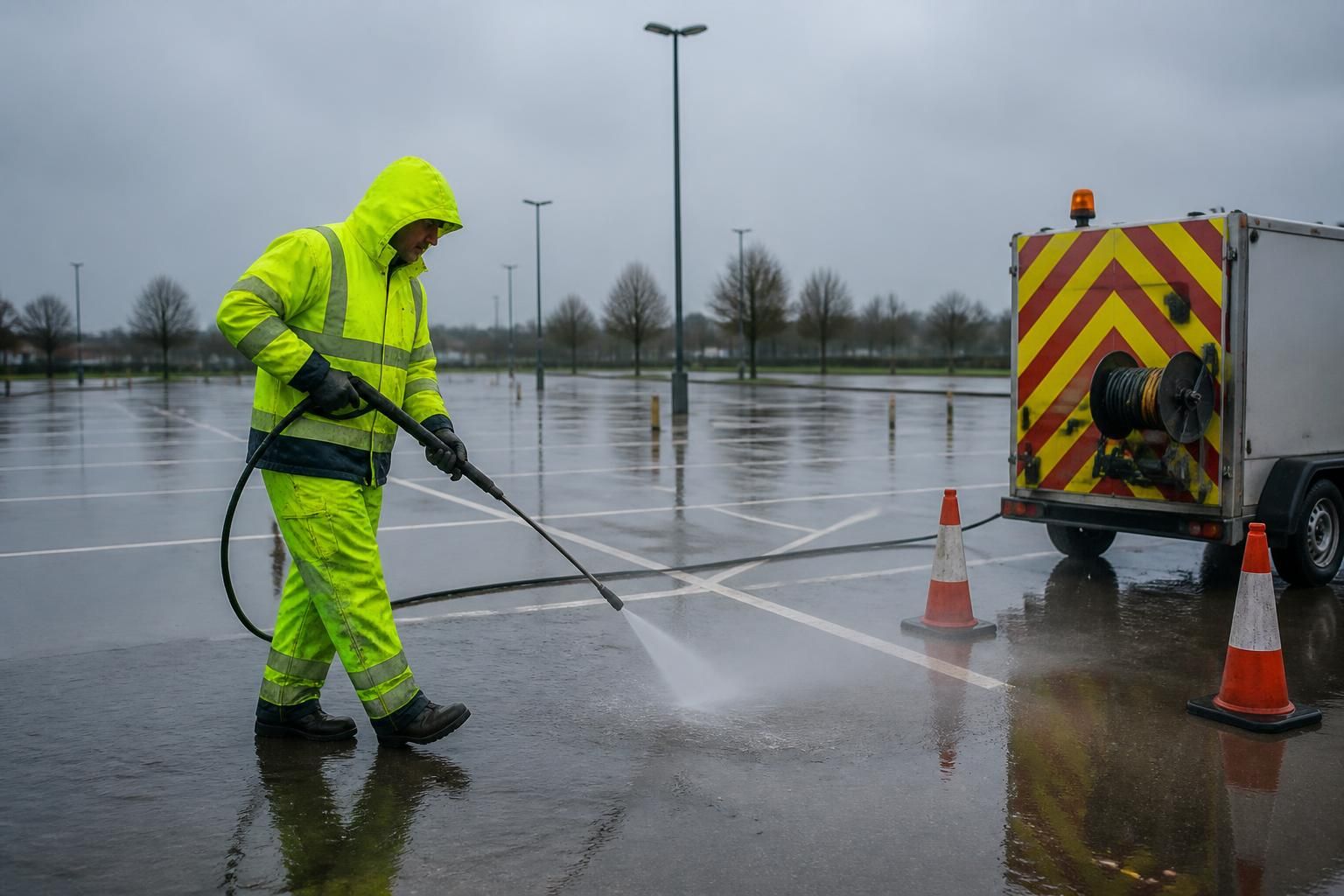
How can specialised cleaning services adapt their methods to address varying weather conditions that might affect the car park and forecourt cleaning process?
Specialised cleaning services adapt car park and forecourt cleaning to weather conditions by adjusting schedules, water temperature, pressure, detergents, drying methods and access arrangements. Rain, frost, low temperatures and extreme heat are assessed before work begins so surfaces can be cleaned safely, treated effectively and left suitable for vehicle and pedestrian use.
Specialist car park and forecourt cleaning is adapted to the prevailing weather by changing the work schedule, cleaning products, water temperature, pressure settings, drying methods and site controls. Before work begins, the surface condition and forecast are assessed so that rain, frost, low temperatures, heat, wind or snow do not compromise cleaning results, surface safety, drainage or the safe movement of vehicles and pedestrians.
Weather assessment before cleaning
Weather conditions affect more than whether a surface appears wet. Temperature, humidity, wind speed and the likelihood of further rain can influence detergent performance, drying time, water recovery and the risk of slips. The team also considers the type and condition of the surface, including concrete, asphalt, block paving, resin-bound areas, painted markings and forecourt finishes.
Cleaning may be rescheduled when conditions create an unacceptable risk or prevent the work from being completed properly. Where a planned visit can proceed, the cleaning method and site controls are adjusted to suit the conditions rather than applying the same process in every season.
Working in rain and wet conditions
Rain can dilute detergents, move loosened oil and dirt across the surface, and increase the risk of contaminated water entering unprotected drains. It can also make it more difficult to identify whether staining has been fully removed. On sites that remain suitable for cleaning, operatives can:
- Use cleaning products at a concentration and application method suited to the level of rainfall and the type of soiling.
- Work in manageable sections to prevent loosened contaminants being spread over adjoining areas.
- Use surface cleaners, wet vacuums or recovery equipment where appropriate to control dirty water.
- Protect or monitor drainage points and prevent contaminated runoff from reaching watercourses or areas outside the agreed work zone.
- Allow additional drying time and keep pedestrian or vehicle access restricted until the surface is safe.
Light rain does not always prevent cleaning, particularly where water recovery and traffic management can be maintained. Persistent or heavy rain may require the work to stop because it can overwhelm drainage controls, reduce detergent effectiveness and leave the finished surface unnecessarily hazardous.
Cold weather, frost and ice
Frost and sub-zero temperatures require particular care. Water left in surface pores, joints, hoses or cleaning equipment can freeze, while ice on a forecourt or car park creates an immediate slip and vehicle-control hazard. Cold conditions can also slow the action of detergents and extend drying times.
Depending on the forecast and surface condition, the cleaning team may delay the work until frost has cleared, use suitably heated water, alter the cleaning product, or reduce the amount of water applied. No process should leave a wet surface likely to freeze before it can dry. Access routes, slopes, pedestrian crossings and areas around entrances are checked carefully before the site is reopened.
Snow, compacted ice or heavy frost may need to be removed or managed as a separate safety issue before pressure washing takes place. De-icing materials are selected with consideration for the surface, nearby planting, drainage and any equipment or vehicles that could be affected.
Hot, dry and sunny conditions
High temperatures and direct sunlight can cause water and detergents to evaporate before they have had enough contact time. This can result in detergent marks, uneven cleaning or rapid drying of loosened dirt. To reduce these risks, operatives may:
- Clean shaded areas first or work during cooler parts of the day.
- Divide large areas into smaller sections so products do not dry on the surface.
- Adjust dilution, dwell time and rinsing methods in line with the surface and the product instructions.
- Use appropriate water temperature and pressure rather than relying on excessive pressure to compensate for rapid drying.
- Check painted lines, jointing materials, sealants and vulnerable finishes for signs of heat-related softening or deterioration.
Extra water is not automatically the best solution in hot weather. It can increase runoff and prolong the time before the site is suitable for use. Controlled application and effective recovery are generally more important than simply increasing water volume.
Wind and changing conditions
Strong wind can carry spray, detergent and loosened debris towards entrances, parked vehicles, roads, neighbouring premises or pedestrians. It can also make pressure-washing equipment and access equipment more difficult to operate safely. In these conditions, the work area may be reduced, screens or additional exclusion zones may be used, and spraying may be avoided near vulnerable areas. Elevated work is subject to separate access-equipment and wind restrictions, so façade, canopy and high-level cleaning may need to be rearranged even when ground-level cleaning can continue.
Protecting surfaces and maintaining safety
Weather-based changes are made alongside normal checks for oil, fuel, chewing gum, algae, tyre deposits, moss, loose aggregate and damaged concrete or paving. Pressure, heat and chemical selection are matched to the material so that a wet or weathered surface is not damaged. Particular attention is given to slopes, ramps, pedestrian routes, service-station islands, loading areas and areas where oil contamination may remain slippery after washing.
Temporary barriers, warning signs and agreed vehicle-management arrangements help separate the cleaning area from live traffic. Where a customer needs the site to remain operational, the work can be phased around deliveries, peak use, opening hours or individual parking zones. The area is inspected as it dries, and any remaining standing water, visible residue or safety concern is dealt with before handover.
Managing water and environmental conditions
Weather can change how quickly dirty water travels across a site, so runoff controls are reviewed throughout the work. Rainfall, gradients, drain locations and the condition of drainage infrastructure are considered when choosing where to start and how much of the surface to open at once. Recovering contaminated water where required helps prevent oil, detergent and suspended dirt from being carried into unsuitable drainage systems.
For year-round maintenance, the most reliable approach is to plan cleaning around suitable weather windows, retain flexibility in the programme and communicate any change in timing promptly. This allows the cleaning method to be selected for the actual conditions on site, leaving car parks and forecourts clean, controlled and ready for safe use without compromising the surface or the surrounding environment.
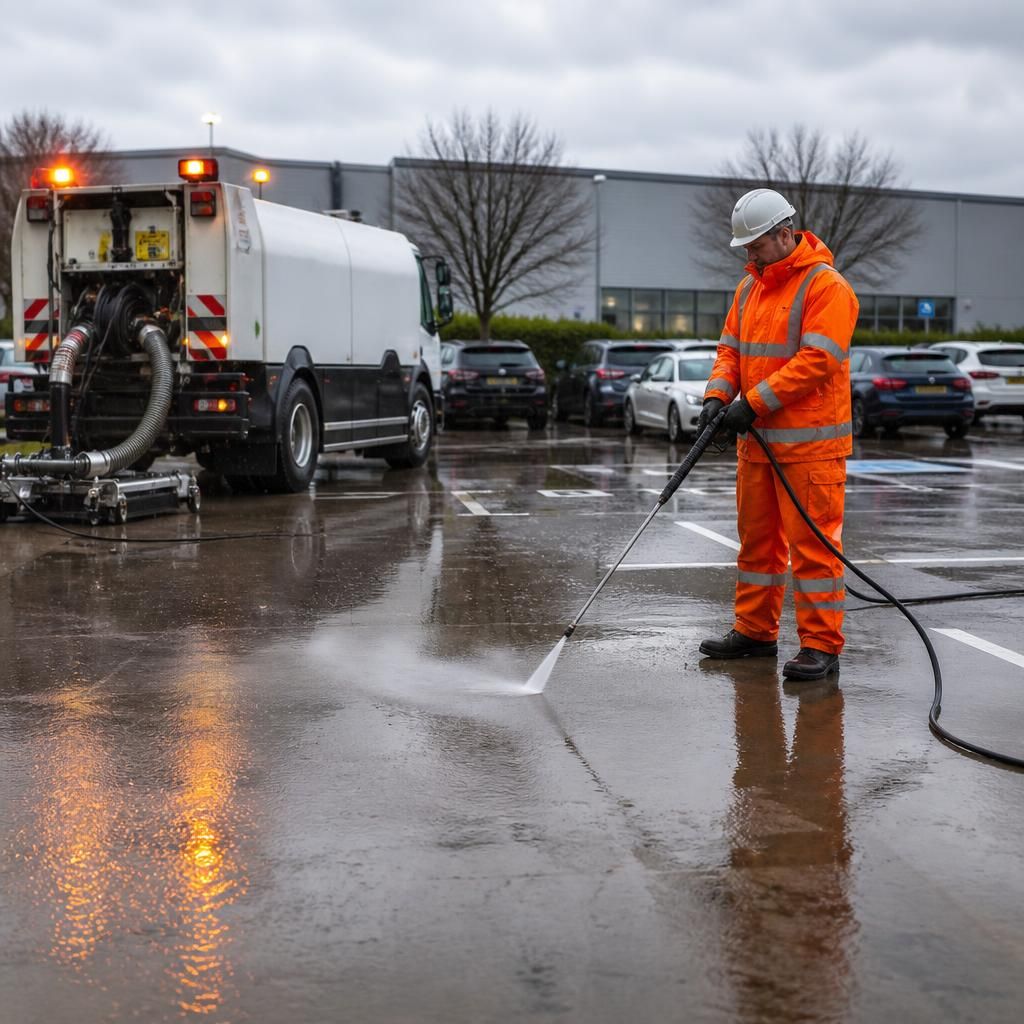
Rain can affect car park and forecourt cleaning by diluting detergents, spreading loosened oil and dirt, and increasing the risk of contaminated water entering unsuitable drains. Before proceeding, the cleaning team assesses rainfall, surface gradients, drainage points and the level of vehicle and pedestrian activity.
Where conditions remain suitable, the area is cleaned in controlled sections using appropriate detergent application and water-recovery methods. Heavy or persistent rain may require the work to be paused or rescheduled, as effective cleaning, runoff control and safe drying cannot be guaranteed. The surface is checked before access is restored, with barriers retained until standing water, residue and slip risks have been addressed.