How does commercial pressure jet washing differ from residential pressure washing?
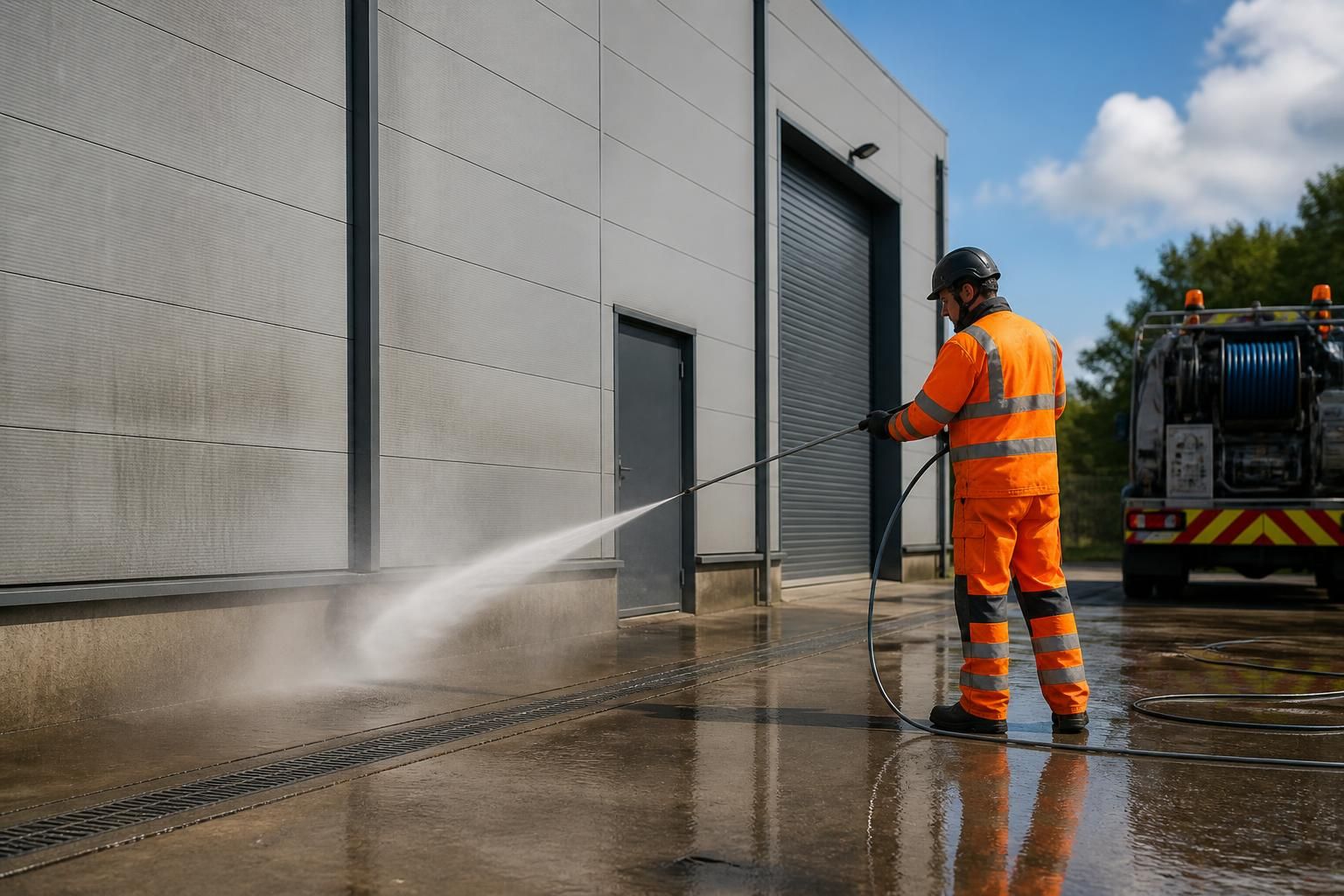
Commercial pressure jet washing uses more powerful, specialised equipment and controlled methods to clean larger areas and heavier contamination than residential pressure washing. It also requires greater attention to site safety, access, surface protection, wastewater management and business continuity, particularly at industrial and public-facing premises.
Commercial pressure jet washing differs from residential pressure washing mainly in scale, equipment, risk management and the level of planning required. Commercial work is designed for larger areas, heavier or more varied contamination, complex surfaces and premises that often need to remain safe and operational. Residential pressure washing is usually more limited in area and scope, with simpler access, lower site risk and fewer requirements for controlling wastewater or coordinating with other activities.
Equipment is selected for sustained, controlled performance
Commercial contractors use professional pressure washing systems capable of operating for extended periods and covering substantial areas efficiently. The equipment may provide higher water flow, adjustable pressure, heated water or steam, specialist surface-cleaning attachments and systems for recovering or controlling wastewater. The aim is not simply to use the highest possible pressure. Pressure, temperature, flow rate, cleaning agents and the distance from the surface must be matched to the material and contamination.
Residential machines are often suitable for occasional cleaning of patios, driveways, garden walls and other domestic surfaces. They may not provide the consistency, reach or endurance needed for a large façade, car park, warehouse floor or heavily soiled service yard. Using unsuitable equipment on a commercial surface can create uneven results, extend the work and increase the risk of damage.
Commercial sites present greater scale and operational demands
A commercial cleaning project may involve extensive façades, cladding, roofs, loading areas, car parks, forecourts, paved surroundings or industrial floors. These areas may contain traffic film, oil, grease, algae, moss, construction residue, soot, chewing gum or graffiti. Contamination can also be more deeply embedded because of vehicle movements, manufacturing processes, weather exposure and continuous public use.
Large areas require a planned sequence of work. A suitable method may include an initial inspection, preparation, application of a detergent or treatment, controlled rinsing, spot treatment and a final check. Sections may need to be isolated and cleaned progressively to prevent dirty water spreading onto areas that have already been completed. Commercial equipment and trained operatives help maintain a consistent standard across the whole site rather than producing isolated clean patches.
Surface assessment is particularly important
Commercial premises commonly contain several materials in close proximity, including brickwork, stone, concrete, blockwork, render, metal cladding, coated panels, glass, tarmac and paving. Each surface reacts differently to pressure, heat, water and cleaning chemicals. A method that is appropriate for concrete may be unsuitable for aged masonry, painted cladding or a delicate façade coating.
Before work begins, the surface should be assessed for its condition, coating, joints, defects, previous repairs and areas where water could enter. A test clean in an inconspicuous location can help confirm the appropriate pressure and treatment. Where a surface is weathered or fragile, soft washing, steam cleaning or a lower-pressure approach may be safer than high-pressure rinsing. This controlled approach is one of the main differences between professional commercial cleaning and using a domestic machine without a detailed assessment.
Access and height create additional requirements
Commercial buildings often include high façades, roof edges, canopies, signs, atriums and difficult-to-reach elevations. Cleaning these areas may require telescopic equipment, elevated work platforms, scaffold access or other access systems, depending on the building and the task. Access must be planned around ground conditions, overhead obstructions, nearby traffic, pedestrians and the position of the cleaning equipment.
Residential work can also involve height, but commercial projects are more likely to require formal access planning and coordination with the site manager. Operatives must be competent in the equipment they use, and work at height must be assessed and carried out using suitable controls. The cleaning method should minimise unnecessary access wherever a ground-based system can achieve the required result safely.
Health, safety and public protection are more complex
Commercial pressure jet washing can create several hazards, including high-pressure water, slippery surfaces, flying debris, electrical equipment, vehicle movements, falling material and exposure to cleaning products. There may also be employees, visitors, members of the public or contractors working nearby. A commercial work plan should identify these risks and set out controls before cleaning starts.
Typical controls may include segregating the work area, using warning signs and barriers, arranging a safe route for pedestrians, managing vehicle movements, wearing suitable personal protective equipment and checking the location of electrical or other vulnerable services. The cleaning team may also need to coordinate with the responsible person on site so that deliveries, production, access routes and emergency arrangements are not compromised.
Wastewater and environmental controls matter on commercial sites
Pressure washing produces wastewater containing dirt and, depending on the site, oils, detergents, paint residues, biological growth or other contaminants. It should not be allowed to flow uncontrolled into surface water drains, neighbouring property or public areas. Commercial work therefore requires consideration of drainage, water recovery, containment and disposal arrangements before cleaning begins.
Where contamination presents a risk, the work may require bunding, drain covers, wet vacuums, collection systems or a controlled discharge route. The correct approach depends on the surface, the substances being removed and the site drainage system. Responsible planning also helps reduce water use by selecting appropriate equipment and avoiding unnecessary repeated rinsing.
Timing and business continuity influence the method
Residential cleaning can often be arranged around the occupier’s convenience. Commercial premises may need cleaning outside trading hours, during a planned shutdown or in sections so that the site can continue operating. The timing must account for drying time, pedestrian safety, vehicle access, weather conditions, noise and the activities of other contractors.
A commercial contractor should agree the work area, sequence, access arrangements and completion standard with the client before starting. For properties with regular footfall or vehicle movements, this may include temporary exclusion zones and a handover inspection. Planned maintenance can also identify recurring contamination before it becomes more difficult or expensive to remove.
The cleaning objective is broader than appearance
Residential pressure washing is often commissioned to improve the appearance of a home or garden surface. Commercial jet washing can support several additional objectives, including maintaining safe walkways, removing slip hazards, preserving façade and roof materials, preparing surfaces for repair or decoration, meeting site presentation standards and maintaining a professional environment for staff and visitors.
Cleaning can also form part of a planned maintenance programme. Removing organic growth, traffic film and accumulated deposits at appropriate intervals may help prevent contamination from becoming established. It does not replace repairs or specialist treatment where a surface is damaged, but it can help the client identify defects such as failed joints, cracked coatings, blocked drainage or deteriorating masonry.
Commercial cleaning is not always carried out at higher pressure
A common misconception is that the commercial approach is simply to use more pressure. Excessive pressure can damage mortar joints, coatings, soft stone, timber, render and paving. It can drive water behind cladding or into vulnerable construction details, and may leave visible striping or etching on some materials.
Professional commercial cleaning is instead based on selecting the least aggressive method that will achieve the required result. Depending on the surface, this may involve hot-water pressure washing, steam cleaning, low-pressure chemical treatment, rotary surface cleaning, soft washing or careful manual work. High-pressure cleaning is appropriate for some robust surfaces and contaminants, but it must be controlled and tested rather than applied as a default.
When choosing between a domestic and commercial service
A commercial service is appropriate where the work involves a business, public, industrial or multi-occupancy site; extensive areas; high-level access; difficult contamination; specialist surfaces; wastewater concerns; or the need to maintain safe operations during the work. It is also the more suitable option where records, risk assessments, method statements, insurance and coordination with a site contact are required.
For a small, straightforward domestic area with clear access and light contamination, a residential pressure washing service may be sufficient. However, a domestic machine or general-purpose approach should not be used on a commercial site without considering the surface, access, safety and environmental requirements. The correct service is determined by the conditions and risks of the project, not just by the amount of pressure available.
In practice, commercial pressure jet washing combines cleaning equipment with site assessment, surface protection, access planning, safety controls, wastewater management and operational coordination. That broader process is what allows commercial and industrial premises to be cleaned effectively while reducing disruption and protecting the building, its occupants and the surrounding environment.
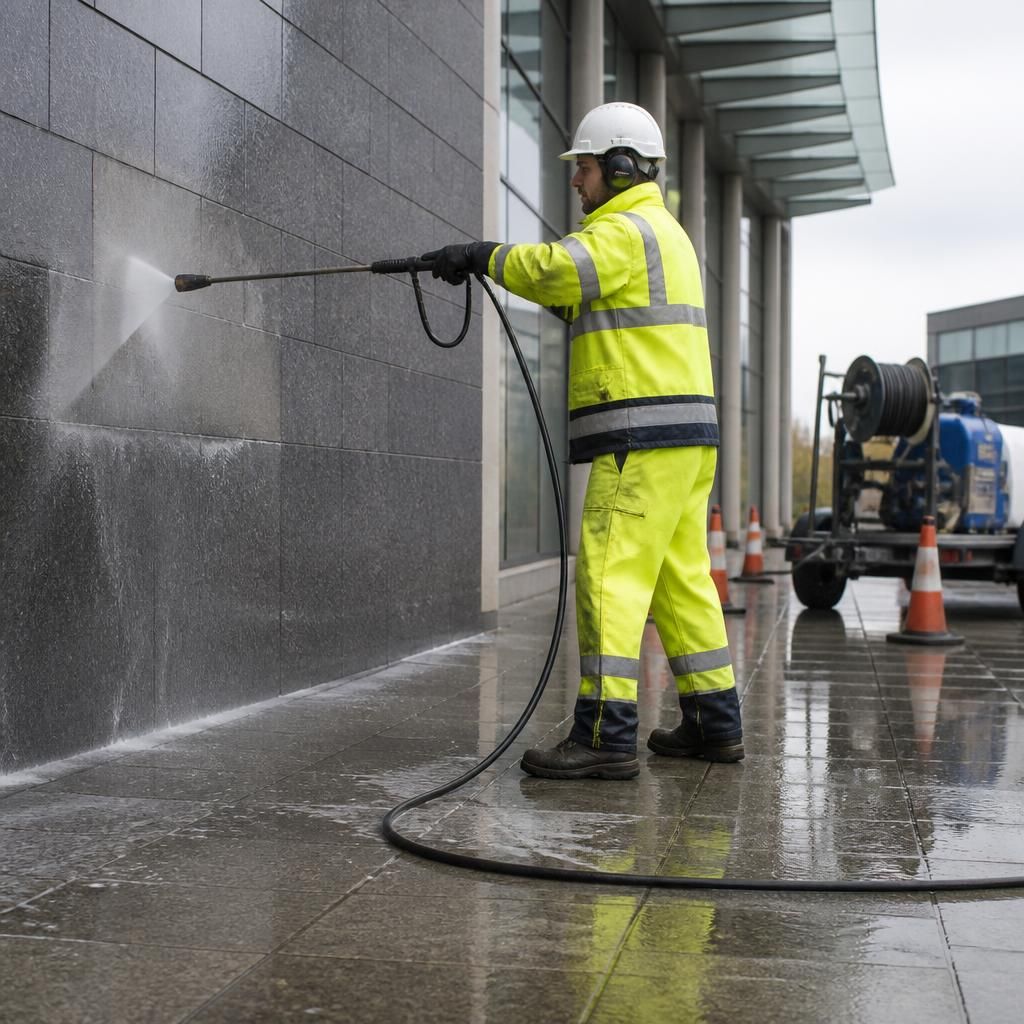
The main difference between commercial and residential pressure washing is the level of control required. Commercial jet washing uses professional equipment and planned methods to clean larger areas, heavier contamination and mixed surfaces without causing damage or disrupting the site.
Before work starts, the cleaning method should be matched to the material, access conditions and surrounding activities. This may involve adjustable pressure, heated water, steam cleaning, surface-cleaning attachments, wastewater recovery and temporary segregation of the work area. A commercial approach therefore considers more than appearance; it also protects façades, paving, workers, visitors and drainage systems while keeping the premises operational wherever possible.
Arrange a commercial pressure jet washing assessment
Arrange a commercial pressure jet washing assessment to review your surfaces, access requirements, contamination and site operating conditions. We can recommend a suitable cleaning method and plan the work around safety, wastewater control and business continuity.
For a free quote & consultation
Contact usAccreditations