How can commercial pressure jet washing improve the longevity of building exteriors?
Commercial pressure jet washing improves the longevity of building exteriors by removing dirt, algae, moss, pollutants and other contaminants that can retain moisture and accelerate the deterioration of façades, cladding, roofs, paving and other surfaces. When the correct pressure, temperature and cleaning method are used, it helps prevent staining, surface breakdown and costly premature repairs while supporting regular maintenance.
Commercial pressure jet washing can improve the longevity of building exteriors by removing contaminants that hold moisture against surfaces, encourage biological growth and accelerate staining, corrosion or material breakdown. When the pressure, water temperature, nozzle selection and cleaning method are matched to the substrate, planned jet washing forms part of preventative maintenance rather than simply improving appearance.
How contamination causes deterioration
External surfaces are continually exposed to rainfall, traffic emissions, airborne dust, bird deposits, organic debris and changing temperatures. On façades, roofs, cladding, paving and other hard surfaces, these contaminants can form a layer that retains moisture and provides a suitable environment for algae, moss, mould and lichen. Repeated wetting and drying can then leave staining, weaken surface finishes and increase the likelihood of frost-related damage where water enters pores, joints or small cracks.
Some deposits are also chemically aggressive. Atmospheric pollution and organic matter can contribute to soiling and surface discolouration, while bird fouling and other residues may attack coatings or create hygiene concerns. On metal cladding and external plant areas, persistent moisture and contaminated deposits can contribute to corrosion, particularly where protective coatings have already been damaged.
Removing moisture-retaining deposits
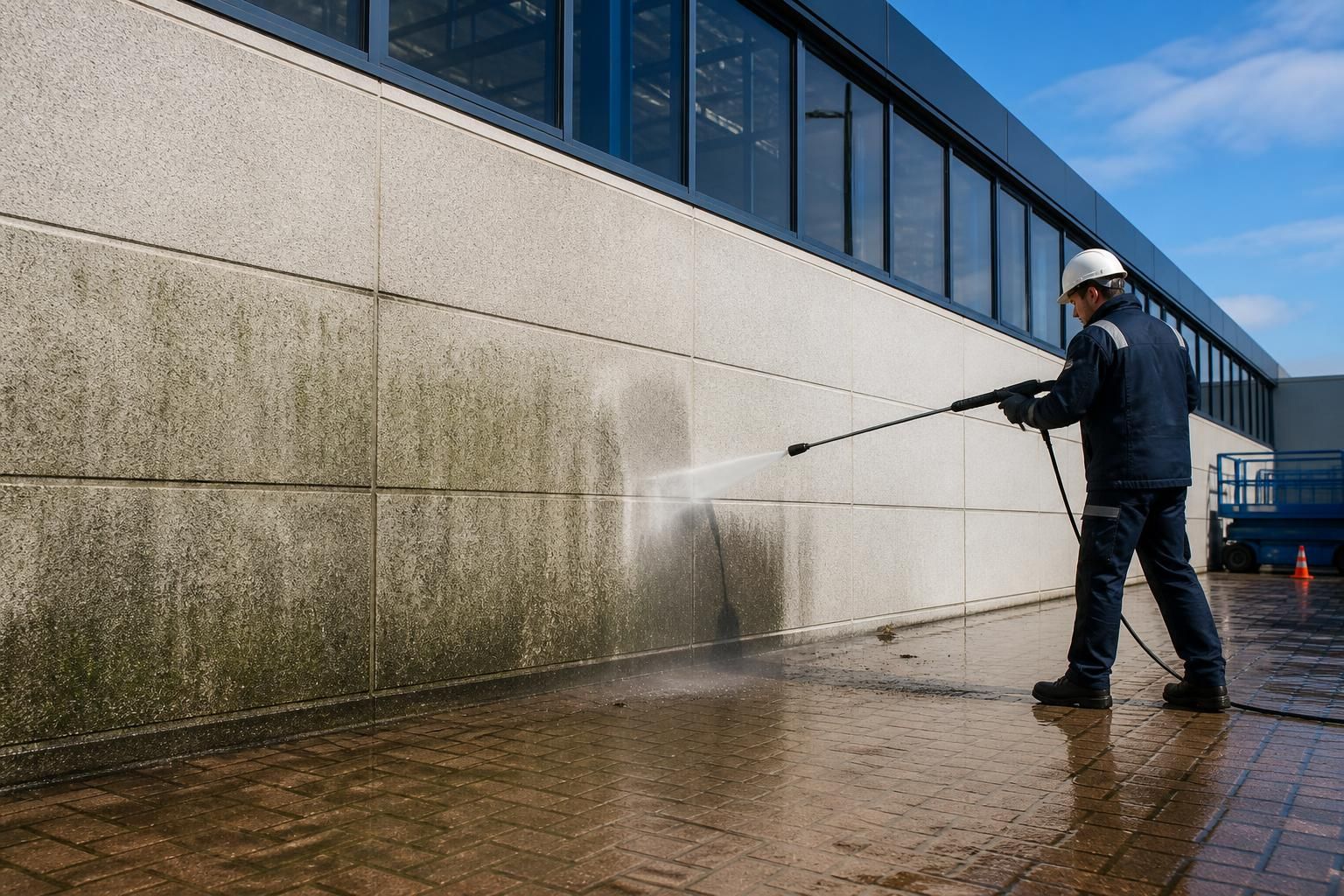
Pressure jet washing removes loose and bonded dirt from the surface and from areas such as joints, channels, steps and drainage routes. Clearing these deposits allows surfaces to dry more effectively after rainfall and reduces the conditions that support moss, algae and mould growth. This is particularly important around roof edges, parapets, walkways, loading areas and shaded elevations where natural drying is limited.
Cleaning drainage routes can also help prevent water from backing up or flowing across areas where it may cause staining and deterioration. Jet washing is not a substitute for repairing defective gutters, flashing, seals or drainage systems, but it can reveal these defects and ensure that avoidable blockages do not add to the problem.
Protecting different exterior materials
The benefit depends on using a method appropriate to the material. Concrete, block paving and robust masonry may tolerate a more intensive clean, whereas rendered finishes, painted surfaces, older brickwork, timber and some cladding systems require greater control. Excessive pressure can remove pointing, open existing defects, damage coatings or force water behind panels and seals. A professional assessment therefore considers the age, condition, porosity and construction of the surface before work begins.
On masonry and paving, controlled cleaning can remove contaminants that contribute to surface erosion and slippery conditions. On roofs, it can reduce moss and organic accumulation that retain water and obstruct drainage, provided the roof covering, fixings and access requirements are assessed first. On façades and cladding, the objective is to remove soiling without stripping protective finishes or affecting joints. Low-pressure washing, soft washing, steam cleaning or detergents may be more suitable than high-pressure water for sensitive areas.
Reducing the need for premature repairs
Regular exterior cleaning makes it easier to identify deterioration at an early stage. Once dirt, biological growth and staining have been removed, defects such as cracked masonry, failed sealant, loose pointing, damaged coatings, blocked drainage and corrosion are more visible. Addressing these issues promptly can prevent local defects from developing into larger areas of water ingress or structural and cosmetic damage.
Cleaning also helps maintain protective finishes. Coatings and sealants cannot perform effectively when buried beneath heavy contamination or biological growth. Jet washing does not restore a failed coating, but it provides a clean surface for inspection and, where appropriate, subsequent repairs or re-coating. Cleaning before remedial work can therefore improve the preparation of the surface and help maintenance teams plan work more accurately.
Supporting safer, more usable premises
Algae, moss, grease and ground-in dirt can make external walkways, ramps, steps, service yards and car parks slippery. Removing these deposits can improve surface grip and reduce avoidable slip hazards, although the condition of the underlying surface and the effectiveness of any drainage must also be considered. Cleaning around entrances, loading areas and shared access routes can support safer day-to-day use and help maintain the required standard of the premises.
Where contamination may contain hazardous substances, such as oil residues, bird fouling or industrial deposits, the work should be planned with appropriate containment, personal protective equipment and wastewater controls. The cleaning method must protect occupants, visitors, nearby vehicles, landscaping and adjacent properties as well as the surface being cleaned.
Why planned maintenance is more effective than occasional cleaning
A planned cleaning schedule allows the frequency and method to reflect the building’s location, use, materials and exposure. Premises beside busy roads, industrial operations, trees or coastal environments may accumulate contamination more quickly than sheltered buildings. High-traffic areas and shaded elevations may also need more frequent attention than lightly used elevations.
Routine cleaning is generally easier to control than allowing heavy deposits to build up. Established moss, lichen, oil, carbon staining and embedded grime may require additional treatment, repeated passes or a different cleaning system, increasing the risk of damage if the operator attempts to remove everything with excessive pressure. A maintenance programme can combine visual inspections, targeted cleaning and minor remedial works before deterioration becomes extensive.
Using the correct process
An effective commercial jet-washing process normally begins with a site assessment. This should identify the substrates, existing defects, sensitive areas, access constraints, drainage arrangements and the type of contamination present. A small test area can help confirm whether the selected pressure, temperature, detergent and nozzle are suitable before wider cleaning takes place.
During the work, operators should control spray distance and angle, protect vulnerable joints and openings, and avoid directing water into vents, electrical equipment, seals or building interiors. Run-off should be managed in accordance with the nature of the contaminants and local requirements. After cleaning, the surface should be inspected for remaining deposits, newly exposed defects and any areas requiring repair or further treatment.
Commercial pressure jet washing cannot prevent every form of deterioration, and it should not be used to conceal structural defects or replace repairs. Its longevity benefits are greatest when it is integrated with inspections, effective drainage, sound coatings, timely repairs and suitable access and safety controls. Used in this way, it helps keep exterior surfaces cleaner, drier and easier to maintain, supporting the service life of façades, cladding, roofs, paving and associated external areas.
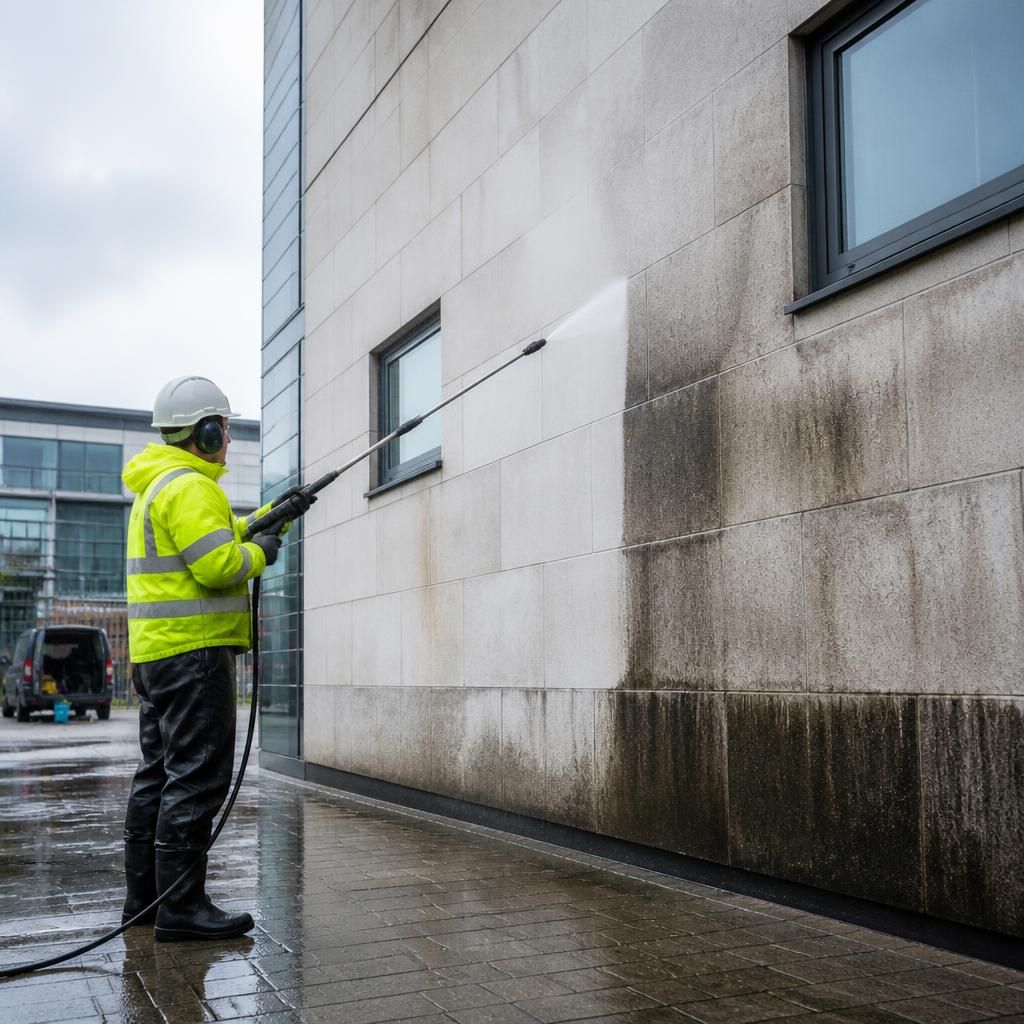
Commercial pressure jet washing supports longer-lasting building exteriors by removing moisture-retaining dirt, algae, moss, pollution and other deposits before they contribute to staining, surface breakdown or corrosion. Keeping façades, cladding, roofs, paving and drainage routes clean helps surfaces dry more effectively and makes developing defects easier to identify.
The cleaning method must match the material and its condition. Controlled pressure, suitable water temperature and the correct nozzle can remove contamination without damaging pointing, coatings, seals or vulnerable finishes. Where high-pressure water is unsuitable, low-pressure washing, steam cleaning or a carefully selected detergent may provide safer results. Regular planned cleaning is generally more effective than allowing heavy deposits to become established, helping reduce avoidable repairs and maintain the serviceable condition of the exterior.
Arrange a commercial exterior cleaning assessment
Arrange a commercial exterior cleaning assessment to identify contamination, surface risks and the most suitable jet-washing method for your building. We can help plan cleaning that supports the long-term condition of your façades, cladding, roofs and external areas.
For a free quote & consultation
Contact usAccreditations