
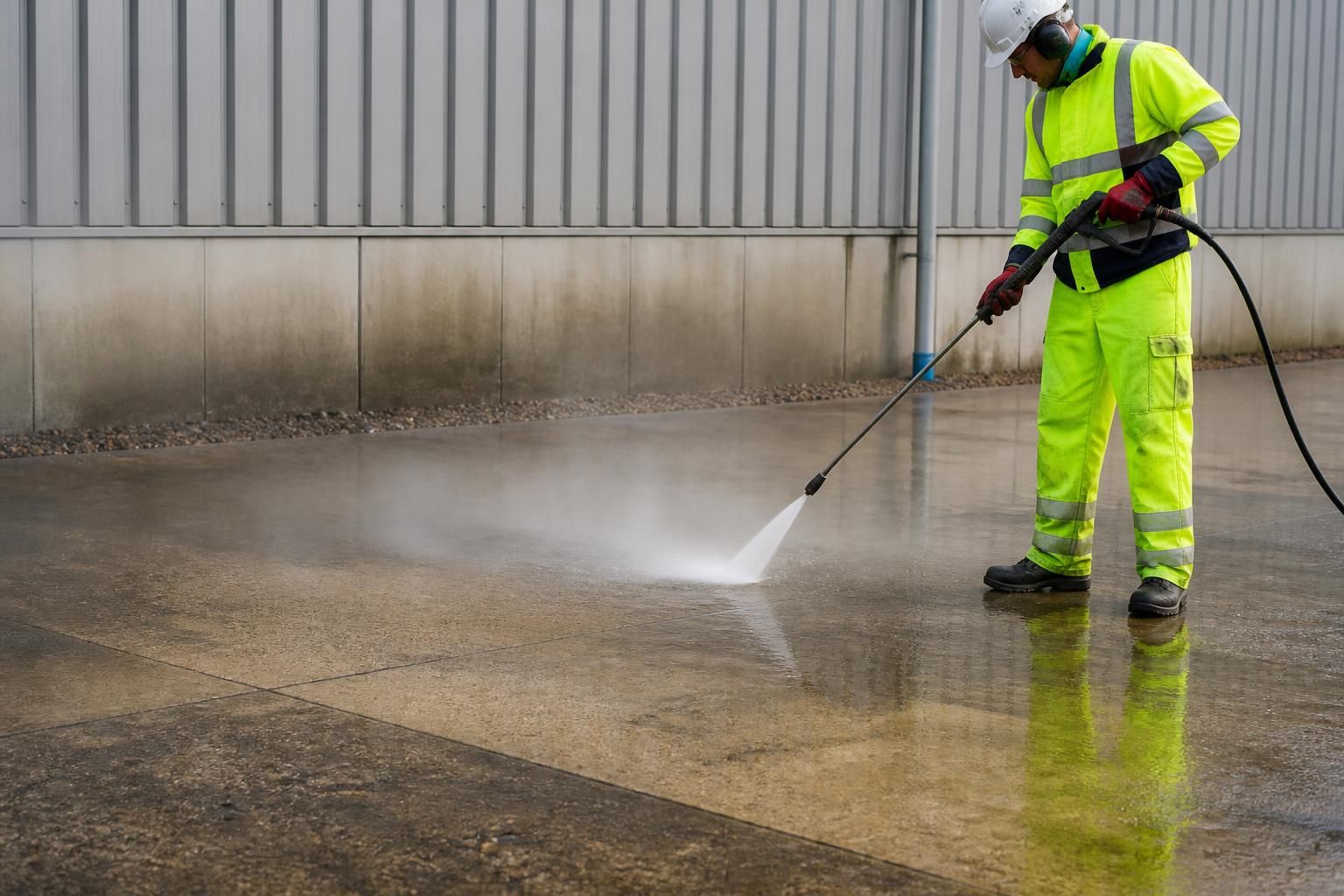
What surfaces are best suited for high pressure cleaning?
High pressure cleaning is best suited to durable, hard surfaces such as concrete, asphalt, paving, stone and some metal cladding, where controlled water pressure can remove ingrained dirt, algae, oil and surface deposits effectively. Pressure, temperature and nozzle selection must be adjusted to the material and its condition, as aged masonry, coatings, sealants and delicate finishes can be damaged by excessive force.
High pressure cleaning is best suited to hard, sound and water-resistant surfaces that can tolerate controlled mechanical force. Concrete, asphalt, many types of paving, robust natural stone and selected metal surfaces usually respond well because pressure can remove ingrained dirt, algae, oil residues, traffic film and other deposits more effectively than light washing alone. The correct pressure, water temperature, flow rate, nozzle and working distance must still be selected for the material and its condition.
Concrete and cement are among the most suitable surfaces for high pressure cleaning. The method can remove tyre marks, moss, algae, mud, oil staining and general dirt from paths, yards, loading areas, service roads, car parks and industrial floors. Sound concrete normally tolerates thorough cleaning, although older or poorly finished slabs may have a weak surface layer that can be eroded by excessive pressure. Joints, cracks and damaged edges also require care.
Asphalt and tarmac can often be cleaned effectively, particularly where the surface has accumulated mud, organic growth or surface debris. Lower pressure and suitable wide-angle nozzles are generally preferable to aggressive concentrated jets, as excessive force can disturb loose aggregate, damage worn areas or remove binder from degraded asphalt. Oil contamination may also require a suitable degreasing treatment and controlled collection of wash water rather than pressure alone.
Block paving, concrete paving and kerbs are well suited to pressure cleaning when the blocks and joints are in sound condition. Cleaning can restore the appearance of pedestrian areas, courtyards, entrances and vehicle-access surfaces by removing weeds, algae, soil and traffic deposits. Operators should avoid unnecessarily disturbing jointing material and should check whether any paving has a fragile surface finish, loose blocks or areas of settlement before work begins.
Natural stone can be suitable, but the result depends on the type, age and finish of the stone. Dense materials such as some granite and hard sandstone may withstand carefully controlled cleaning, while softer, weathered or porous stone can suffer surface wear, pitting or water penetration. Limestone, delicate sandstone and historic masonry should be assessed individually. A low-impact test area is useful for confirming that the chosen method will remove the deposit without altering the stone’s colour or texture.
Metal cladding, steelwork and other robust metal surfaces may also benefit from high pressure cleaning where they have accumulated dust, bird fouling, algae, traffic film or industrial deposits. The main risks are coating failure, corrosion, forced water penetration behind joints and damage to seals or insulation. Pressure should be reduced around laps, fixings, vents, electrical fittings and damaged paintwork. Cleaning alone will not correct corrosion or failing coatings, so these conditions should be recorded before work starts.
Some roofs and roof coverings can be cleaned with controlled pressure, particularly robust commercial roof surfaces that have been assessed as structurally sound. However, roof cleaning requires additional consideration of access, fall protection, drainage and the risk of driving water beneath laps or seals. Fragile, aged, coated or easily damaged coverings are often better treated with a lower-pressure or soft-washing approach. The safest method is determined by the roof material rather than by the level of visible dirt.
High pressure cleaning is generally less suitable for timber, painted or rendered finishes, delicate brickwork, old mortar, glass, fragile tiles, damaged coatings and surfaces with open joints or concealed cavities. A powerful jet can strip paint, expose aggregate, scar soft materials, force water into a building or worsen existing defects. These surfaces may require steam cleaning, low-pressure washing, a specialist detergent or manual treatment instead.
Surface condition is as important as surface type. Before cleaning, the area should be checked for cracks, spalling concrete, loose aggregate, failed sealants, open joints, corrosion, unstable paving, flaking coatings and drainage restrictions. The nature of the deposit also matters: algae and soil may respond well to pressure, whereas oil, chewing gum, paint, cement residue and biological staining may need pre-treatment, heat or a different cleaning process.
- Use a test area: confirm the effect on the material, coating and colour before cleaning the full surface.
- Match the equipment to the substrate: adjust pressure, temperature, flow, nozzle pattern and distance rather than relying on maximum pressure.
- Work systematically: use consistent passes and avoid holding the jet in one position, particularly on joints, edges and coated surfaces.
- Protect surrounding areas: shield doors, windows, vents, signage, electrical equipment, vehicles, planted areas and pedestrian routes.
- Control run-off: prevent silt, oil, detergents and contaminated water from entering surface-water drains or neighbouring premises.
- Review the finish: check for remaining staining, disturbed joints, exposed defects or areas requiring sealing, repairs or further treatment.
For commercial and industrial premises, the most reliable results come from choosing the cleaning method after inspecting the substrate and the deposit. Durable concrete, asphalt, paving and selected stone or metal surfaces are usually strong candidates for high pressure cleaning, while aged, coated, porous or damaged materials need a more controlled approach. Where the surface is uncertain, a professional assessment and test clean help prevent avoidable damage and establish a suitable maintenance method.
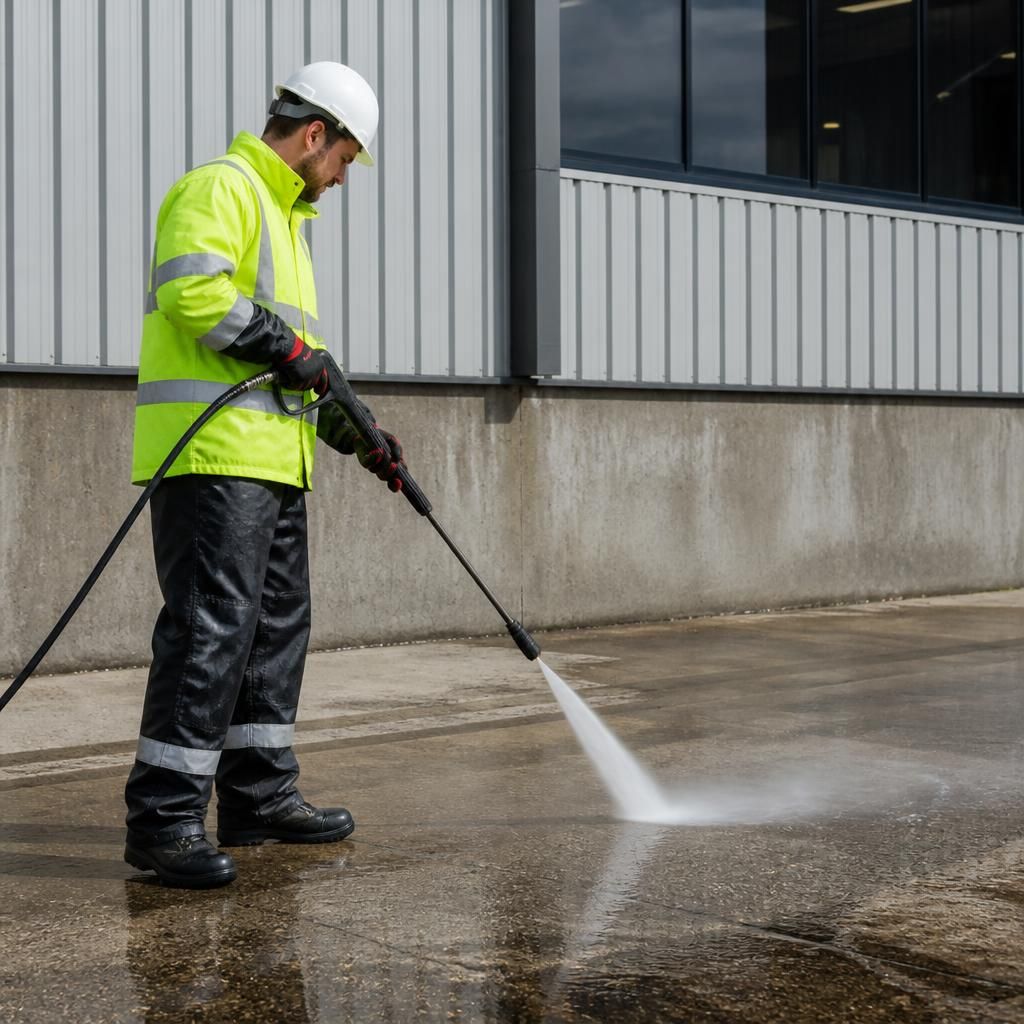
Durable, sound surfaces such as concrete, asphalt, block paving and robust stone are generally best suited to high pressure cleaning. These materials can usually withstand controlled water pressure to remove algae, mud, traffic film, oil residues and other ingrained deposits, provided the pressure, nozzle and working distance are matched to their condition.
A test area should always be completed before full cleaning, particularly on aged, porous, coated or weathered surfaces. This confirms that the chosen method removes the deposit without eroding the material, disturbing joints or damaging the finish.