
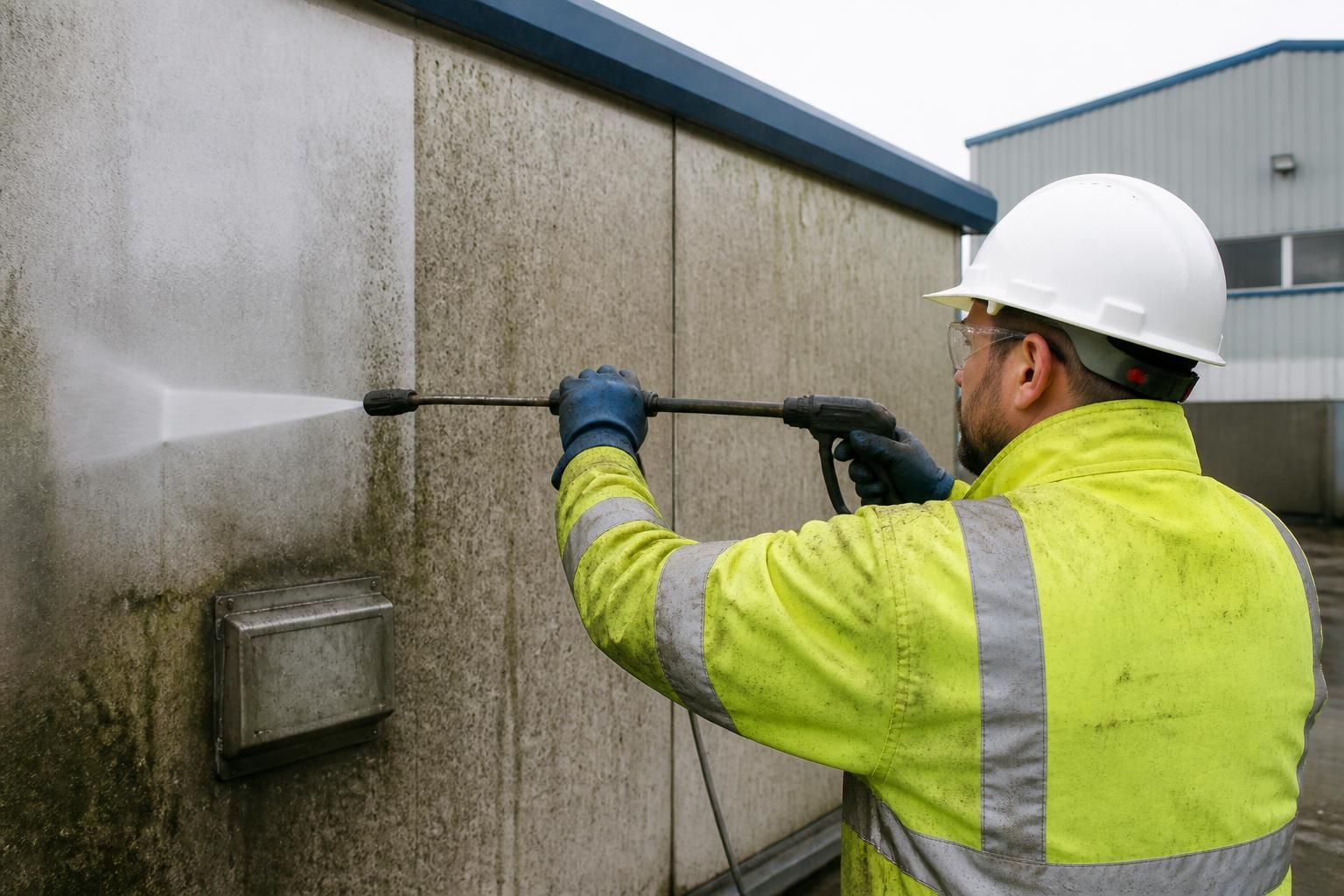
What specific surfaces or materials should be avoided when using high pressure cleaning?
High pressure cleaning should generally be avoided on fragile, porous or easily damaged surfaces, including soft wood, rendered finishes, loose mortar, aged brickwork, natural stone, delicate roof materials, glass, and electrical equipment. Where these materials are present, use a lower-pressure setting, wider nozzle, greater working distance or a safer method such as soft washing or steam cleaning.
High pressure cleaning should be avoided, or used only under tightly controlled conditions, on surfaces that are soft, porous, deteriorated, thinly coated, poorly bonded or vulnerable to water penetration. Common examples include soft timber, painted and rendered finishes, loose mortar, aged brickwork, delicate natural stone, some roof coverings, glass, building seals and electrical equipment. The correct approach is to assess the material and its condition first, then select a lower-pressure method, wider nozzle, greater working distance or alternative treatment where necessary.
Soft wood and timber
High pressure can strip protective coatings, raise the grain and force water into timber. This may leave the surface uneven and increase drying time, particularly where boards, fascias or external structures are already weathered. Softwood cladding, timber fencing and older painted wood should normally be cleaned with a controlled low-pressure wash, a suitable detergent and gentle agitation. Any loose paint or decayed sections should be identified before cleaning rather than blasted away indiscriminately.
Render, stucco and painted finishes
Rendered walls and painted façades can be damaged if the coating is weak, cracked or poorly bonded. High pressure may remove sound paint alongside dirt, enlarge existing cracks or drive water behind the finish. It can also leave visible cleaning marks where the nozzle is moved unevenly. A test area should be completed first, with pressure kept as low as practicable. Soft washing or steam cleaning is often more appropriate for delicate render, masonry paint and older coatings.
Old brickwork and loose mortar
Sound, modern brickwork can often tolerate carefully controlled pressure, but aged or fragile brick faces may be eroded by aggressive cleaning. The greater risk is often the mortar: strong jets can remove the surface of joints, open gaps and dislodge already loose material. Water entering weakened joints can then contribute to damp-related problems or frost damage. Older façades should be inspected for spalling bricks, open joints, previous repairs and friable surfaces before any pressure washing takes place.
Natural stone
Natural stone is not one uniform material. Harder stones may withstand controlled cleaning, while softer or more porous stone can scratch, pit or absorb water. Limestone, sandstone and certain heritage surfaces require particular care, especially where the face is weathered or has a historic finish. High pressure can also damage pointing and alter the appearance of the stone. Low-pressure cleaning, steam cleaning or a specialist conservation method may provide better control.
Roof coverings and waterproofing systems
Pressure washing is unsuitable for many roof materials, including fragile tiles, slate, aged felt, membranes and some coated metal systems. The jet can crack or dislodge tiles, remove protective granules, damage laps and force water beneath the covering. It may also affect roof-mounted insulation, sealants and flashing. Roof cleaning should begin with an inspection of the covering, pitch, access arrangements and drainage. In many cases, a low-pressure biocidal treatment, soft washing process or manual removal is safer than direct high pressure.
Glass, glazing seals and delicate frames
Glass can be scratched by grit carried in the water stream, while concentrated pressure may damage seals, beads, gaskets and surrounding frames. Water can also enter through failed seals or poorly protected joints. Windows, curtain walling and glazed doors should be cleaned with a suitable low-pressure method, keeping the jet away from edges, vents and seals. A pressure washer should not be used to compensate for poor access or heavy deposits on glazing.
Electrical equipment and building services
High pressure must not be directed at live electrical components, external sockets, distribution boxes, lighting units, sensors, communication equipment or exposed cabling. Water can penetrate housings and connections even when the equipment appears weather-resistant. Isolate or protect vulnerable equipment where appropriate, and use a controlled cleaning method around it. Particular care is needed on commercial premises with plant, solar installations, ventilation equipment and service compounds.
Damaged coatings, joints and sealed interfaces
Surfaces may appear robust but still be unsuitable for aggressive cleaning if they contain failed sealant, open joints, delaminated coatings or previous impact damage. High pressure can lift edges and spread water behind cladding, panels or façade systems. Before cleaning, check expansion joints, panel laps, flashing, vents, vents covers, door thresholds and other points where water could enter. Any defects should be recorded and, where necessary, repaired before cleaning.
Asphalt, tarmac and resin-bound surfaces
Hard paving and concrete are generally more tolerant of pressure than delicate materials, but worn asphalt, tarmac and resin-bound surfacing can still be marked or loosened. A narrow nozzle held too close can remove the surface binder or expose aggregate. Drainage channels and joints may also be damaged. Use a broad spray pattern and controlled technique, and reduce the intensity where the surface is aged, cracked or undergoing repair.
How to decide whether pressure is suitable
- Identify the material, surface finish and age before choosing equipment.
- Check for cracks, loose areas, failed pointing, peeling coatings, corrosion and water-entry points.
- Carry out a small test clean in an inconspicuous area and allow the result to dry before proceeding.
- Start with the lowest effective pressure, the widest suitable fan and the greatest practical distance.
- Keep the nozzle moving rather than concentrating the jet in one place.
- Protect glazing, vents, electrical equipment, occupants, vehicles and nearby drainage points.
- Use soft washing, steam cleaning, manual brushing or other specialist methods where pressure could alter or damage the surface.
Pressure washing is therefore not automatically unsuitable for every delicate material, but the margin for error is much smaller. A professional assessment should consider the substrate, its condition, the type of contamination and the consequences of water entering the construction. Where a surface cannot be confirmed as sound, the safer option is to use a gentler method and increase cleaning time or chemical dwell time rather than increase pressure.
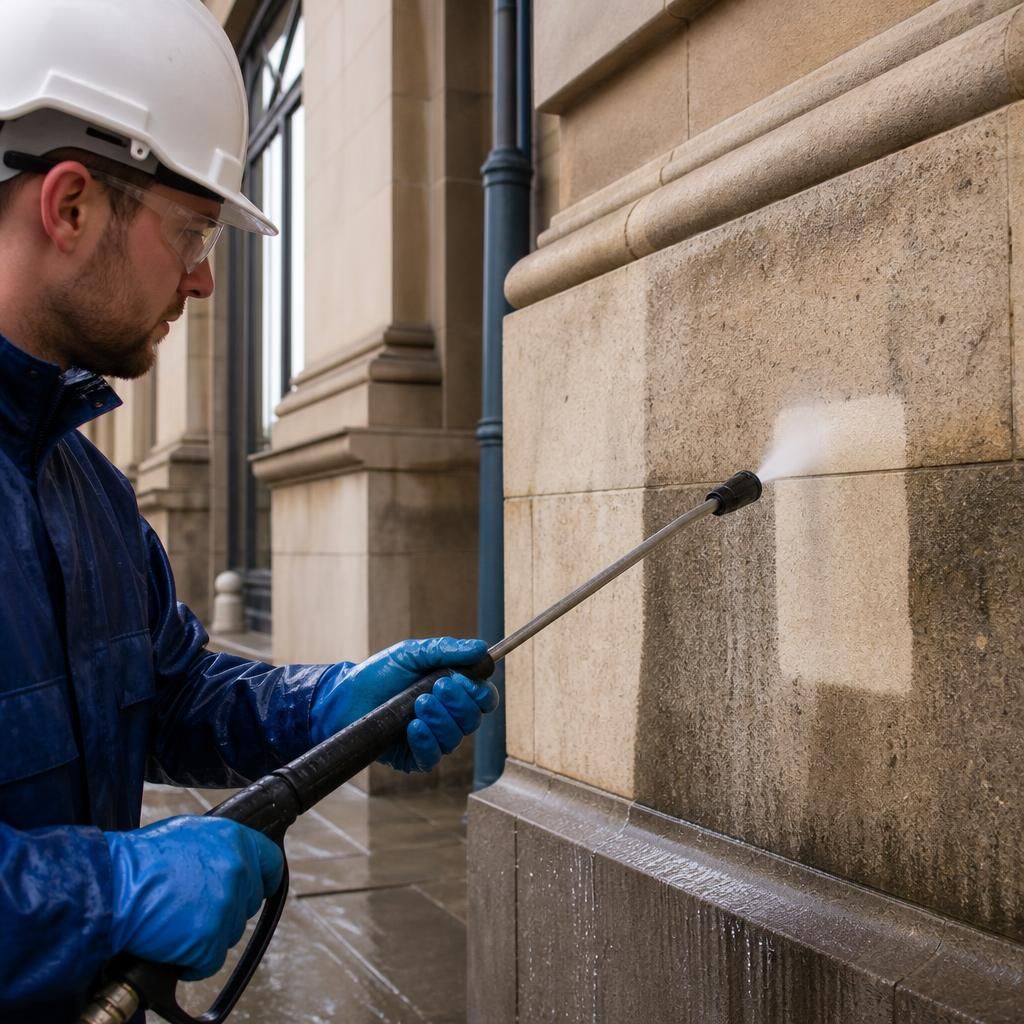
High pressure cleaning should not be applied until the surface material and its condition have been checked. A small test area reveals whether the coating, pointing, sealant or substrate can withstand the chosen method without marking, lifting or allowing water behind the surface.
Begin with the lowest effective pressure, a wide spray pattern and a greater working distance. Allow the test area to dry before assessing the result, as water penetration, staining and coating failure may not be immediately visible. If the surface remains vulnerable, use soft washing, steam cleaning or manual cleaning instead of increasing pressure.