
What safety precautions should be taken during high pressure cleaning to protect both operators and surrounding environments?
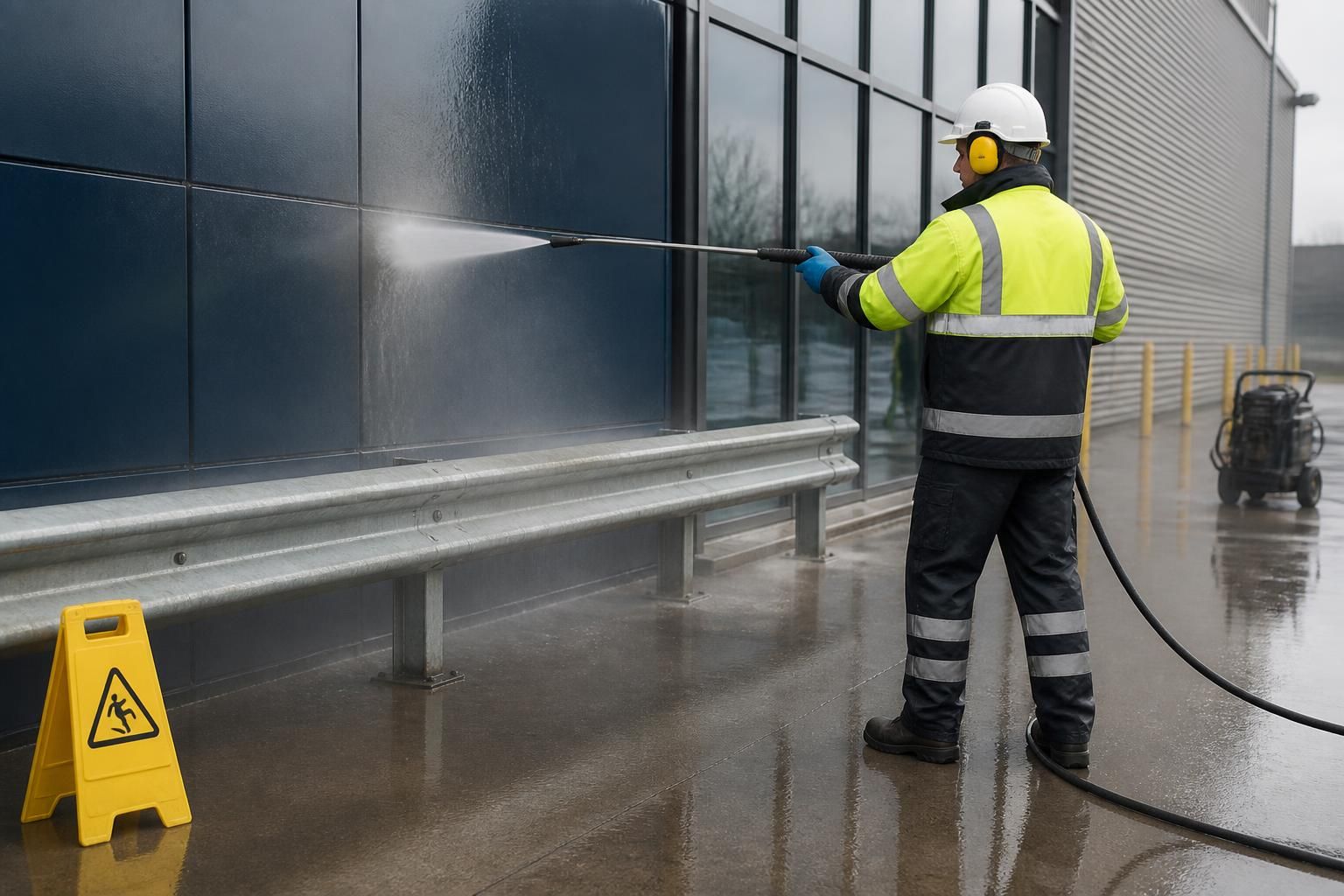
High pressure cleaning requires a documented risk assessment, suitable operator training and personal protective equipment, including eye and hearing protection, waterproof clothing, gloves and slip-resistant footwear. Operators should isolate the work area, control spray and debris, check surfaces and equipment before use, protect people, vehicles and drainage systems, and manage wastewater responsibly to prevent injury, property damage and environmental contamination.
High pressure cleaning should be carried out under a documented risk assessment and method statement, with trained operators, suitable personal protective equipment, controlled access and responsible wastewater management. These precautions reduce the risk of injection injuries, slips, flying debris, hearing damage, electric shock, property damage and contamination of drains or watercourses.
Assess the site before work begins. Identify the surface, contamination, access arrangements, nearby people and vehicles, overhead services, electrical equipment, drainage points and any areas vulnerable to water penetration. The assessment should consider risks from traffic, work at height, unstable ground, poor weather, chemicals, biological contamination and falling or dislodged materials. Where substances such as oil, mould treatment products, paint residues or cleaning chemicals are present, the relevant COSHH assessment and control measures should be followed.
The planned controls should be recorded in a clear method statement. This should specify the equipment, operating pressure, nozzle selection, cleaning chemicals, exclusion zones, access equipment, emergency arrangements and wastewater controls. The method must be reviewed if site conditions change, for example when hidden damage is found, pedestrians cannot be diverted or weather makes the work unsafe.
Use competent operators and suitable equipment. Personnel should understand the particular pressure washer, hose connections, trigger controls, lance handling, nozzle reaction forces and emergency shut-down procedure. Before use, inspect the pump, hoses, couplings, trigger gun, lance, nozzles, guards and electrical leads. Damaged or leaking components should be removed from service rather than temporarily repaired. Equipment should be maintained and inspected in line with the manufacturer’s instructions and applicable workplace safety requirements.
- Never point a lance at another person, animal, vehicle or unprotected electrical installation.
- Do not bypass safety devices or leave a live pressure washer unattended.
- Release pressure before changing a nozzle, disconnecting a hose or carrying out maintenance.
- Keep hoses routed safely to prevent trip hazards, crushing and damage from vehicles.
- Use the lowest pressure and least aggressive nozzle that will achieve the required result.
High pressure water can cut skin, drive contaminated water into tissue and cause serious injection injuries that may initially appear minor. Operators should keep both hands on the equipment where appropriate, maintain stable footing and avoid directing the jet towards themselves or other people. Any suspected injection injury requires urgent medical assessment, even if the wound is small.
Wear task-appropriate PPE. This will normally include eye or face protection, hearing protection, waterproof or water-resistant protective clothing, suitable gloves and slip-resistant safety footwear. Additional protection may be required for chemical application, contaminated surfaces, abrasive residues, falling debris or work at height. PPE must be compatible with the equipment and substance being used; waterproof clothing alone does not protect against a high pressure jet.
Establish a clearly marked exclusion zone around the work area. Use barriers, warning signs and a banksman or site marshal where pedestrians, deliveries or vehicle movements cannot be fully separated. Keep members of the public, unprotected workers and vulnerable building occupants away from spray, mist, noise, debris and wet surfaces. Protect nearby vehicles, windows, doors, ventilation intakes, machinery and stored materials from overspray and loosened contamination.
Control work at height and access risks. Ladders are not a substitute for a suitable access system when the operator needs to use a pressure lance for extended periods or with significant reaction force. Use properly selected and inspected platforms, towers, scaffolds or powered access equipment, and follow the access equipment manufacturer’s requirements. Secure equipment and tools, prevent falling objects and avoid directing water towards people or areas below. Operators using powered access equipment need the appropriate training and site controls.
Water and electricity require particular care. Keep electrical connections, extension leads and powered equipment away from standing water and spray wherever possible. Use suitable residual current protection, weatherproof connections and equipment designed for the working environment. Do not clean electrical apparatus or installations unless they have been isolated and the method has been confirmed as safe by a competent person.
Noise, spray and aerosols should also be controlled. Hearing protection may be necessary for the operator and other people who remain within the affected area. Use screens, reduced pressure or alternative methods where spray could enter occupied spaces, affect neighbouring premises or carry contaminants. If bird fouling, mould, faecal matter or other biological hazards are present, avoid creating unnecessary aerosol and follow the appropriate hygiene, containment and disposal procedures.
Protect drains, soil and watercourses. Prevent dirty water, sediment, oil, paint, chemical residues and concrete slurry from entering surface-water drains or nearby streams. Identify drainage before starting, use drain covers, bunding, berms, wet vacuums or collection systems where appropriate, and separate contaminated wastewater from clean run-off. Collected water and solid residues should be disposed of through an authorised route in accordance with site requirements and relevant environmental rules. Never assume that a surface drain leads to a treatment works.
Choose cleaning products carefully and use them only at the stated dilution and application rate. Store chemicals securely, prevent spills and keep safety data available on site. Do not mix products unless the manufacturer specifically permits it. Rinse-down water should be controlled so that it does not damage landscaping, corrode adjacent materials or contaminate soil and drainage systems.
Finally, stop the work if conditions become unsafe. Heavy rain, lightning, high winds, freezing conditions, poor visibility, unstable surfaces, unexpected public access or equipment failure can all require the operation to be paused. A controlled handover and final inspection should confirm that hoses, barriers, residues and standing water have been removed, surfaces are safe to use and wastewater has been managed correctly. These controls should be applied alongside the relevant UK workplace safety, environmental and access-at-height requirements for the site.
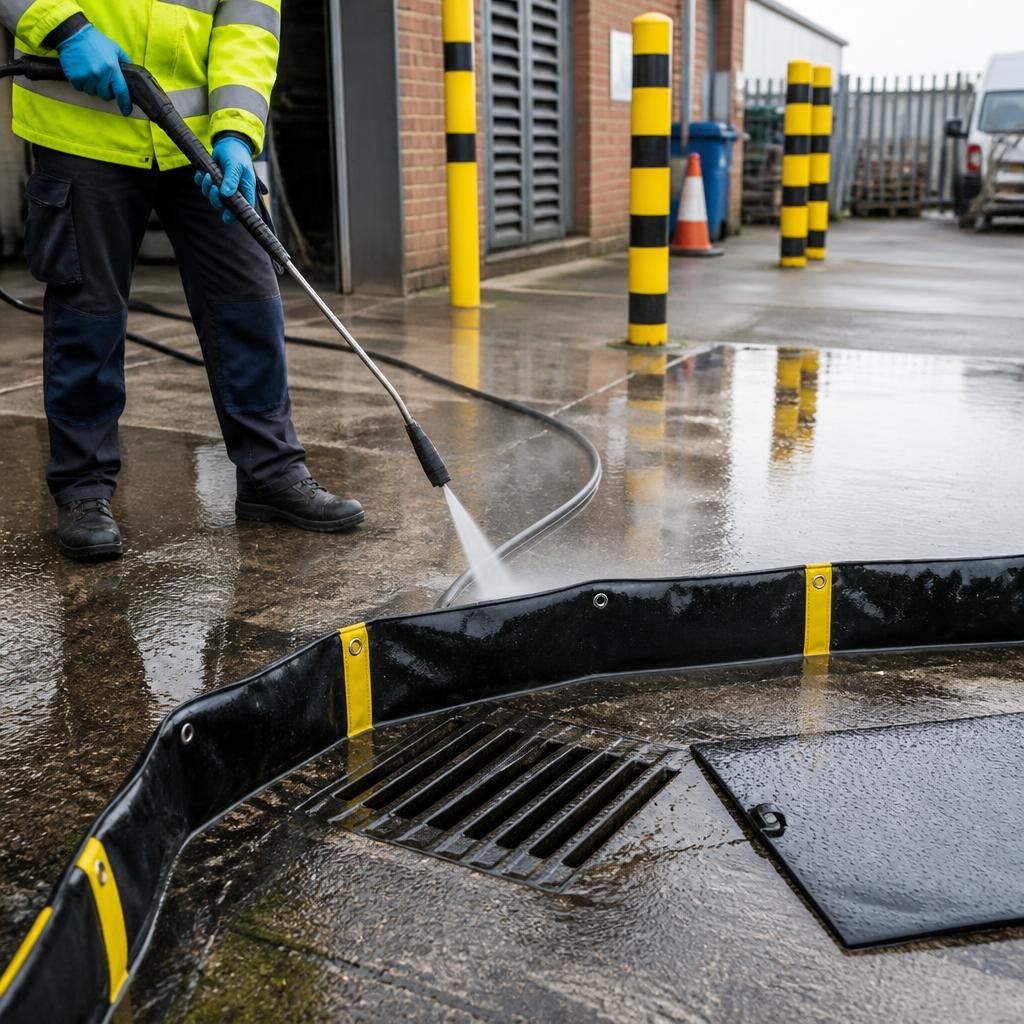
Controlling wastewater is a key high pressure cleaning precaution because dirty water can carry oil, paint, sediment, chemicals and biological contamination into surface-water drains, soil or nearby watercourses. Before work starts, identify drainage points and decide how run-off will be contained, collected and disposed of.
Use drain covers, bunding, wet vacuums or suitable collection systems where necessary, and keep contaminated water separate from clean rainwater. Do not assume a surface-water drain leads to a treatment works. Solid residues and collected wastewater should be handled through an authorised disposal route, while nearby vehicles, entrances, landscaping and ventilation intakes should be protected from spray and overspill.