
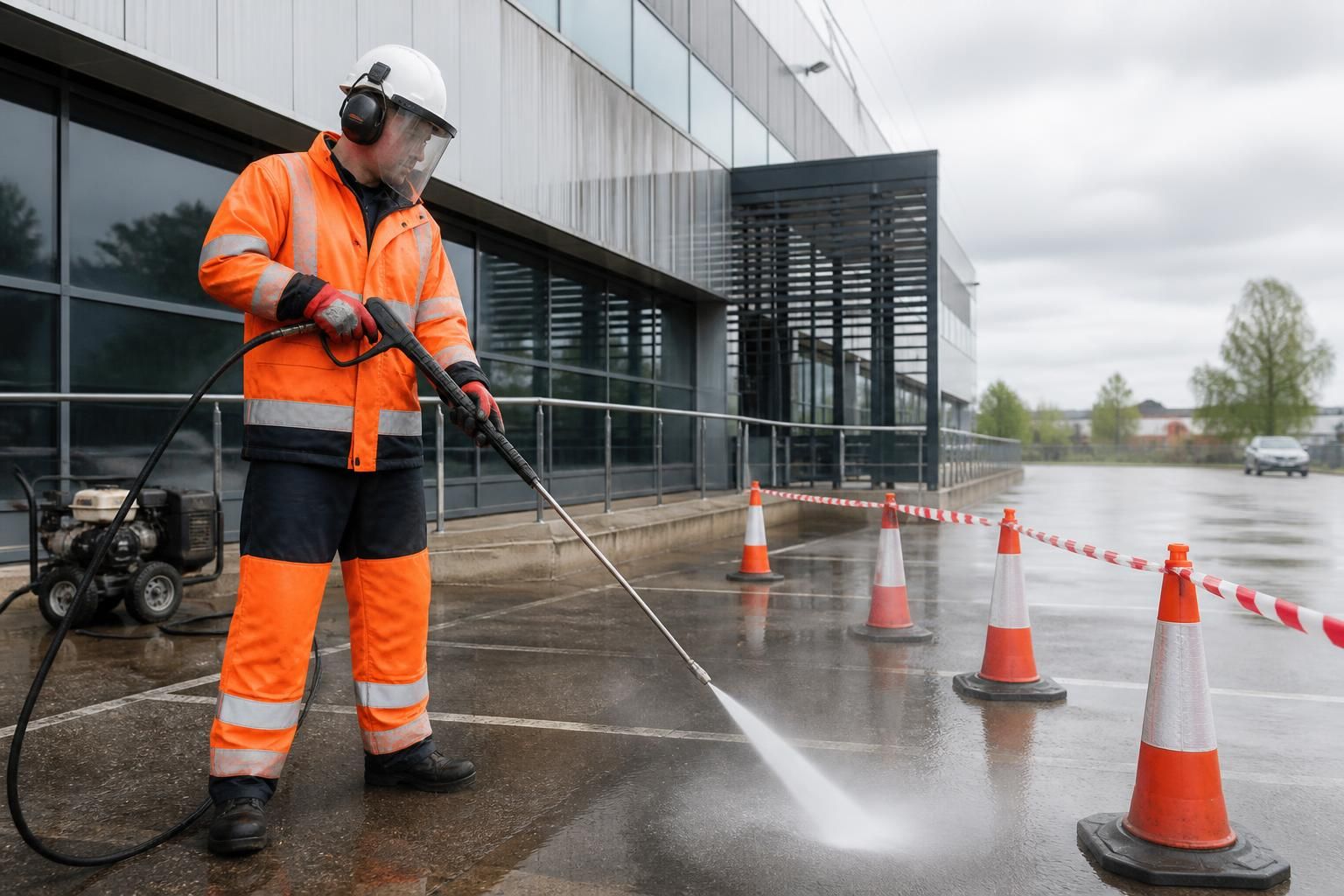
What safety measures should be taken during high pressure cleaning?
High pressure cleaning requires a site-specific risk assessment, trained operators, pre-use equipment checks and appropriate PPE, including eye, hearing, hand and protective footwear where necessary. Operators should control pressure and spray direction, isolate electrical hazards, keep people clear with barriers and signage, and manage water, chemicals and runoff to protect surrounding surfaces and the environment.
High pressure cleaning should be carried out under a site-specific risk assessment and method statement, by trained operators using inspected equipment, suitable personal protective equipment (PPE), controlled spray techniques and effective exclusion zones. The main safety objective is to prevent injuries from high-energy water jets, flying debris, slips, chemicals, noise, electrical hazards and uncontrolled access, while also protecting the building and surrounding environment.
Complete a site assessment before work starts
Inspect the area and identify hazards before connecting the pressure washer. The assessment should consider pedestrians, vehicles, nearby businesses, access routes, fragile surfaces, overhead services, electrical installations, drainage, water sources, plant and weather conditions. Agree the cleaning method, pressure range, nozzle selection, access arrangements, working sequence and runoff controls in the method statement. Reassess the work if conditions change, such as increased wind, poor visibility, unexpected surface damage or the discovery of hazardous materials.
Where the work involves access equipment, lifting equipment, chemical products or a particularly hazardous environment, the controls should reflect the relevant UK health and safety requirements. Operators should follow the site rules and only use equipment for which they have been trained and authorised.
Use appropriate PPE
- Safety goggles or a suitable full-face visor to protect against spray, grit, paint fragments and cleaning products.
- Hearing protection where noise from the pump, jet, surface or surrounding operations could damage hearing.
- Water-resistant protective clothing or coveralls appropriate to the pressure, temperature and chemicals being used.
- Chemical-resistant gloves where detergents, biocides, degreasers or other treatment products are involved.
- Protective footwear with slip-resistant soles, toe protection where required and suitable waterproofing.
- Head protection and additional high-visibility clothing where there is a risk from overhead objects, vehicles or construction activity.
- Respiratory protection where the risk assessment identifies harmful mist, dust, mould or chemical vapour that cannot be adequately controlled by other means.
PPE is a final line of defence, not a substitute for controlling the jet, isolating hazards and keeping unauthorised people away. It must be maintained, correctly fitted and replaced when damaged or contaminated.
Inspect the pressure cleaning equipment
Before use, check the pressure washer, pump, hoses, lance, trigger, couplings, seals, guards and nozzles. Look for cuts, bulges, exposed reinforcement, loose connections, leaks and signs of wear. Confirm that the hose is correctly rated for the operating pressure and temperature, and that safety devices such as trigger controls and pressure relief systems function correctly. Do not use makeshift repairs, damaged hoses or incompatible fittings.
Position the machine on stable ground with adequate ventilation. Keep fuel, exhaust gases and hot components away from combustible materials and ensure that petrol or diesel equipment is not used where exhaust fumes could accumulate. Electrical equipment, extension leads and residual current protection should be suitable for the environment, protected from water and checked before use. Equipment inspections and maintenance should be recorded where required by the risk assessment or company procedures.
Control the water jet and cleaning method
Begin with the lowest effective pressure and a suitable nozzle, then increase control settings only when the surface and surrounding conditions have been confirmed. Keep the lance pointed away from people, animals, vehicles, glazing, vents and unprotected equipment. Never direct the jet at skin, clothing, footwear or another person, even briefly. A high pressure jet can penetrate skin and cause serious internal injury without appearing severe at first.
Maintain a stable stance, keep both hands on the lance where necessary and avoid working above shoulder height if the reaction force cannot be controlled. Be aware that the lance can kick back when the trigger is opened and that the operator may lose balance on wet or uneven ground. Release the trigger before changing nozzles, clearing a blockage, moving the machine or carrying out maintenance, and isolate the water and power supply before disconnecting components.
Use the correct technique for the material being cleaned. Excessive pressure or heat can damage masonry joints, render, coatings, cladding, timber, seals, membranes and painted surfaces. Test an inconspicuous area where the substrate or coating is uncertain, and stop if cracking, etching, delamination, water penetration or unexpected colour loss occurs.
Establish a secure exclusion zone
Use barriers, cones and clear warning signs to separate the work area from pedestrians, residents, customers and other contractors. Assign a banksman or spotter where vehicles, restricted visibility or public access makes this necessary. Do not rely solely on warning signs in busy areas. Control gates, doors and access routes so that people cannot walk into the spray or trip over hoses and cables.
Plan hose and cable routes to prevent trip hazards, pinch points and damage from vehicles. Use suitable ramps or overhead routing where required, while ensuring that routes remain accessible and do not create a separate hazard. Keep the working area tidy and remove debris as cleaning progresses. Wet surfaces should be clearly identified, and access should remain restricted until they are safe to walk on.
Manage electrical, traffic and structural hazards
Identify electrical equipment, sockets, lighting, temporary supplies and overhead lines before spraying. Isolate or shield vulnerable installations and maintain a safe separation distance. Water must not be directed towards live electrical equipment or allowed to collect where it could create an electrical risk. If isolation is not certain, stop work and obtain confirmation from the responsible person.
On commercial sites, coordinate with the client about deliveries, forklifts, plant and vehicle movements. Use a traffic management plan where the cleaning operation affects a car park, loading area, public pavement or road. Check that access platforms, scaffolds, roofs and other surfaces can support the equipment and operator, and prevent water or debris from falling onto people or property below.
Handle cleaning chemicals safely
Read the product label and safety data sheet before mixing or applying any detergent, disinfectant, biocide or degreaser. Follow the specified dilution, contact time, storage and disposal requirements. Do not mix products unless the manufacturer expressly permits it, as incompatible chemicals can produce dangerous reactions or gases. Use suitable gloves, eye protection and respiratory controls where identified by the assessment.
Keep containers labelled, sealed and secured against unauthorised access. Protect nearby plants, glazing, metals, vehicles and painted finishes from overspray. Provide clean water and suitable first-aid arrangements for accidental contact, and know the procedure for dealing with a spill. Operators should report symptoms such as eye irritation, breathing difficulty or chemical burns immediately and seek medical assistance where appropriate.
Control runoff, waste and environmental impact
Prevent dirty water, oil, paint residue, silt and chemical solution from entering surface-water drains, watercourses or neighbouring premises unless discharge has been assessed and authorised. Identify drain locations before starting and use drain covers, bunding, temporary collection, wet vacuum recovery or other suitable controls. Separate clean water from contaminated wastewater where practical, and arrange disposal through an appropriate route.
Use the minimum water and chemical quantity needed for the task. Stop work if runoff escapes the controlled area, reaches a sensitive location or could cause pollution. Protect soil, planting, stored materials and occupied areas from spray and splash, and follow the client’s site environmental procedures.
Consider weather and working conditions
Wind can carry spray, chemicals and debris beyond the intended work area, while rain can increase slip risks and make runoff difficult to control. Cold conditions may create ice, and poor light can conceal surface defects or hazards. Suspend or alter the work when weather conditions prevent safe control of the jet, access equipment, visibility or wastewater. Ensure operators can take suitable breaks and remain able to maintain safe control of the equipment.
Prepare for incidents and finish safely
Keep first-aid equipment, emergency contact details and communication methods available. Everyone involved should know how to stop the pump, isolate power and water, report an injury, contain a spill and summon assistance. High pressure injection injuries require urgent medical assessment, even when the wound looks minor. Report defects, near misses and property damage, and preserve relevant information for review.
At completion, isolate and depressurise the equipment before cleaning, moving or storing it. Inspect hoses and attachments for damage, remove barriers only when surfaces and access routes are safe, confirm that drains and surrounding areas are clear, and leave the site free from standing water and debris. A documented handover should identify any surface defects, residual slip risk, restricted areas or further maintenance required.
For commercial and industrial work, these controls should be adapted to the premises rather than treated as a generic checklist. The responsible contractor and site manager should confirm the risk assessment, equipment suitability, operator competence, access controls, chemical controls and wastewater arrangements before work begins.
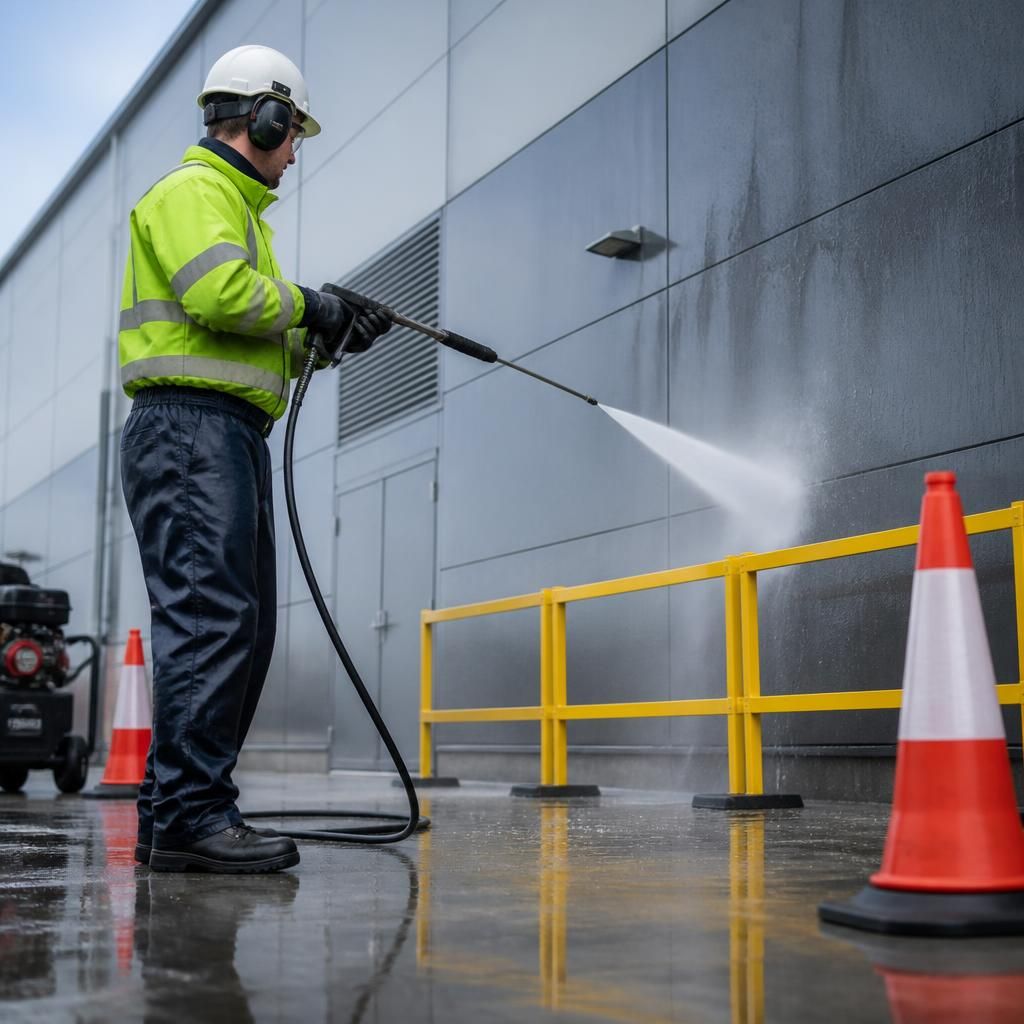
High pressure cleaning safety depends on controlling the water jet, protecting the operator and keeping other people outside a clearly marked exclusion zone. A high-energy jet can cause serious injection injuries, propel debris and create slippery surfaces, even when the work appears straightforward.
- Complete a site-specific risk assessment before work begins.
- Inspect the pump, hoses, lance, trigger, couplings and nozzle for damage or leaks.
- Wear suitable eye, hearing, hand, body and slip-resistant foot protection.
- Keep the lance pointed away from people, animals, glazing, electrical equipment and vulnerable surfaces.
- Use barriers and warning signs, control hose routes and prevent access until wet surfaces are safe.
Operators should release the trigger and depressurise the system before changing nozzles, clearing blockages or disconnecting equipment. Any suspected high pressure injection injury requires urgent medical assessment, even if the visible wound seems minor.
Discuss Your High Pressure Cleaning Safety Requirements
Discuss your high pressure cleaning safety requirements with our team before work begins, including site access, exclusion zones, electrical hazards, chemical use and wastewater controls. We can help confirm the appropriate method statement and precautions for your premises.