
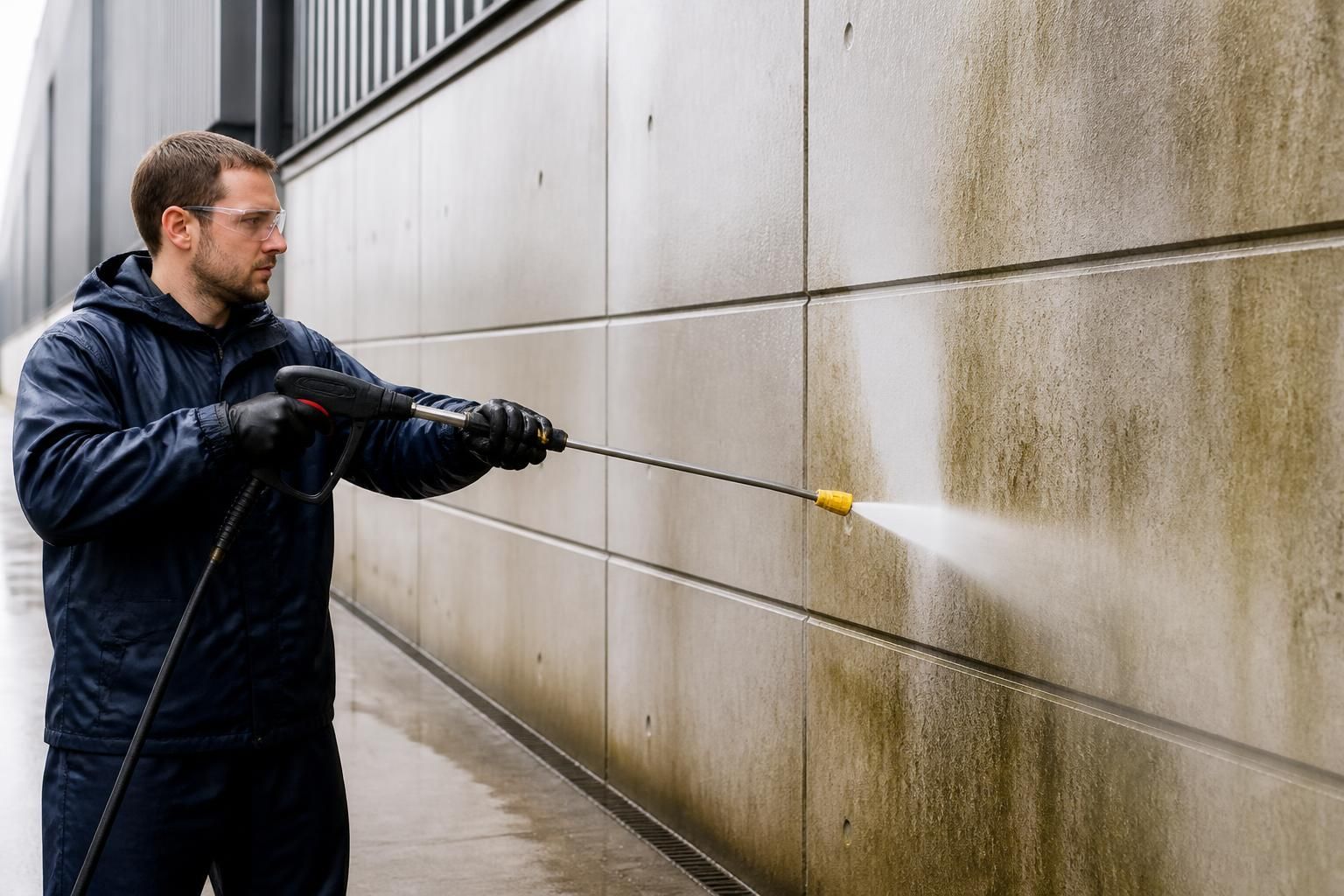
What factors should be considered when choosing the right pressure setting and nozzle type for high pressure cleaning?
Choosing the correct pressure setting and nozzle depends on the surface material, the type and severity of soiling, the required cleaning distance, and the risk of causing damage. Start with the lowest effective pressure, select a nozzle that provides suitable coverage and control, and test an inconspicuous area before cleaning the full surface.
The correct pressure setting and nozzle type are determined by the surface, the condition of the soiling, the cleaning distance, the equipment being used and the risk of damage. The safest approach is to use the lowest pressure and least aggressive nozzle that will remove the contamination effectively, then increase the cleaning action only when testing shows it is necessary.
Pressure should not be considered in isolation. Cleaning performance also depends on water flow, temperature, dwell time, the distance between the nozzle and surface, and whether a suitable detergent is being used. A high-pressure setting is not automatically the most effective option. Excessive pressure can damage coatings, force water into joints and cavities, strip pointing, erode softer materials and spread contaminated wash water.
Assess the surface before selecting a setting
Identify the material, its condition and any vulnerable features before work begins. Concrete, dense brickwork and some hard paving can generally tolerate more pressure than painted surfaces, render, natural stone, timber, roof materials or aged masonry. However, even robust materials may be damaged if the pressure is concentrated in one small area or applied too closely.
- Check for loose coatings, cracked joints, failed sealants, open pores and previous repairs.
- Identify sensitive details such as window seals, vents, electrical fittings, expansion joints, membranes and drainage points.
- Establish whether the surface has a protective coating that could be lifted or dulled by aggressive cleaning.
- Consider the age and condition of the material, not only its nominal strength.
Surfaces with uncertain construction or visible deterioration should be treated conservatively. A test clean in an inconspicuous location can show whether the chosen method changes the colour, texture, gloss or integrity of the surface.
Match the cleaning action to the soiling
Different contaminants require different treatment. Loose dust, mud and general debris may need only moderate pressure and a broad spray pattern. Oil, traffic film, biological growth, ingrained dirt, cement residue and old coatings may require a combination of controlled pressure, detergent, heat, agitation or specialist treatment rather than simply increasing the pressure.
Grease and oil can respond better to heated water and an appropriate degreasing product. Algae, moss and organic staining may need a treatment stage followed by controlled rinsing. Cementitious deposits must be approached carefully because aggressive mechanical cleaning can mark the underlying surface. Graffiti removal also requires consideration of both the paint and the substrate; a nozzle or setting suitable for dense concrete may be unsuitable for brick, render or a coated façade.
Choose the nozzle for coverage and control
The nozzle controls the shape and concentration of the water jet. A wide-angle fan nozzle distributes the cleaning force over a larger area and is usually easier to control on broad surfaces. It reduces the likelihood of creating stripes or concentrated impact marks, although it may require more passes or a slower working speed.
A narrower fan produces more concentrated cleaning action for stubborn deposits and defined areas. It must be used with greater care because the force is focused over a smaller surface area. The closer the nozzle is held, the greater the impact at the surface, so a narrow pattern should not be used casually on fragile or coated materials.
A zero-degree or pinpoint jet concentrates the water into a very small area. This can cause rapid surface damage, remove pointing or create visible lines, and should generally be avoided for routine façade and paving work unless a competent operator has identified a specific, controlled application. Rotary or spinning nozzles can improve productivity on suitable hard surfaces by moving a concentrated jet across the area, but they can leave circular marks or damage softer materials if used incorrectly.
Low-pressure detergent nozzles and rinse nozzles serve different purposes from high-pressure cleaning nozzles. Detergent application normally requires even coverage and sufficient dwell time, while rinsing requires enough flow to carry loosened soil and cleaning product away without forcing water into the building fabric.
Consider the working distance and movement
The stated pressure at the machine is not the same as the impact reaching the surface. Hose length, nozzle condition, water flow and working distance all affect performance. Bringing the nozzle closer increases the intensity of the jet, while moving it farther away spreads the force and gives a softer result.
Operators should keep the nozzle moving at a consistent speed and maintain a controlled distance rather than holding the jet in one place. Start farther from the surface, use a broad pattern and approach gradually during testing. Work in even passes, normally keeping the spray directed away from vulnerable edges, joints, openings and completed sections where dirty runoff could cause re-soiling.
Use the lowest effective pressure
Begin with a conservative setting and increase it in small, controlled stages only if the soiling is not being removed. If additional cleaning power is needed, consider whether changing the nozzle, reducing the working distance slightly, improving water temperature, allowing detergent to dwell or using mechanical agitation would be safer than raising pressure.
The machine should be operated within the limits specified for the pump, hose, lance and nozzle. A worn or partially blocked nozzle can alter the spray pattern and increase the risk of uneven cleaning. Equipment should therefore be inspected before use, with particular attention to nozzle wear, hose condition, trigger controls and pressure regulation.
Test, inspect and adjust
Testing should cover a representative section containing the same material and type of soiling as the main work. Inspect the test area after rinsing and, where relevant, after it has dried. Look for colour change, etching, raised fibres, disturbed pointing, coating failure, water penetration and differences in texture or sheen.
If the result is too aggressive, use a wider spray pattern, increase the working distance, reduce the pressure or change to a gentler process. If the result is ineffective, do not immediately select the most powerful nozzle. Check whether the contamination needs pre-treatment, whether the nozzle is blocked or worn, and whether the surface is being cleaned at a suitable angle and speed.
Account for access, surroundings and runoff
Pressure selection must also reflect the working environment. On elevated façades, enclosed areas or locations near pedestrians, vehicles and neighbouring properties, a more controlled spray and lower-pressure approach may be necessary. Wind can carry mist and loosened contaminants, while excessive water can enter doorways, vents, roof edges and service penetrations.
Protect adjacent surfaces and isolate vulnerable areas before cleaning. Plan where dirty water will flow and ensure that detergents, oil, paint residue and other contaminants are contained and disposed of in accordance with site and environmental requirements. The correct nozzle is therefore the one that achieves the required result while keeping overspray, runoff and substrate disturbance under control.
For commercial and industrial work, the final selection should be recorded as part of the method statement or cleaning plan. It should identify the surface, the selected nozzle, the operating approach, any detergent or heat requirement, the test-cleaning outcome and the controls for people, property and wastewater. This creates a repeatable process for large areas and helps prevent operators from compensating for poor technique by using unnecessarily high pressure.
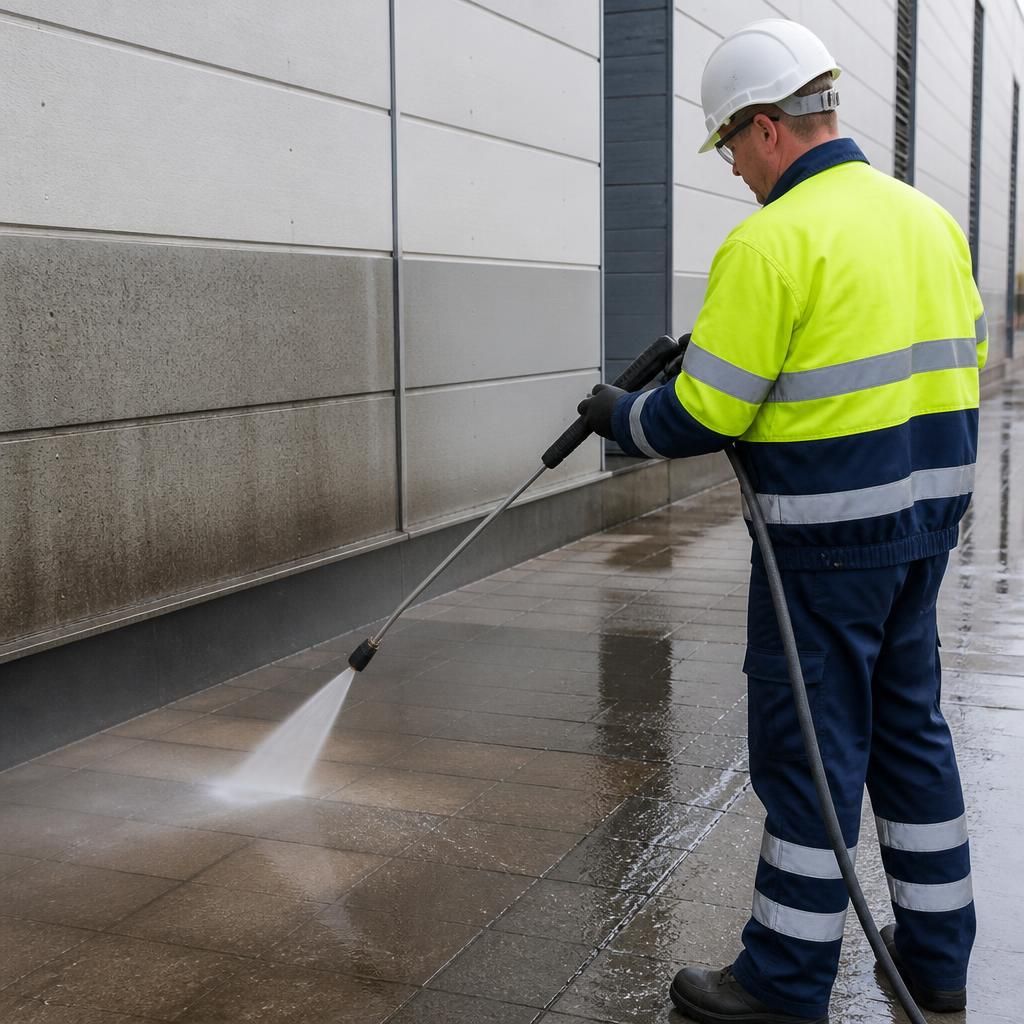
The nozzle determines how widely the water is distributed and how concentrated its impact will be on the surface. A wide-angle fan nozzle is generally the safer starting point for façades, paving and other broad areas because it provides more even coverage. Narrower fan patterns concentrate the cleaning action and should be reserved for localised, stubborn deposits on materials known to tolerate the treatment.
Always test the chosen nozzle and pressure on an inconspicuous area before starting the main clean. Keep the lance moving at a consistent speed and distance, then inspect the surface after rinsing and drying. If the test shows marking, etching, coating loss or disturbed joints, use a wider pattern, increase the distance or reduce the pressure. Rotary and pinpoint nozzles require particular caution, as their concentrated action can damage softer, aged or coated materials.
Arrange a Professional Pressure Cleaning Assessment
Arrange a professional pressure cleaning assessment so the surface, contamination, pressure setting and nozzle type can be evaluated before work begins. Encanto Exterior Cleaning can recommend a controlled, suitable cleaning method for your Birmingham, West Midlands or UK site.