
What equipment is typically used in high pressure cleaning for commercial properties?
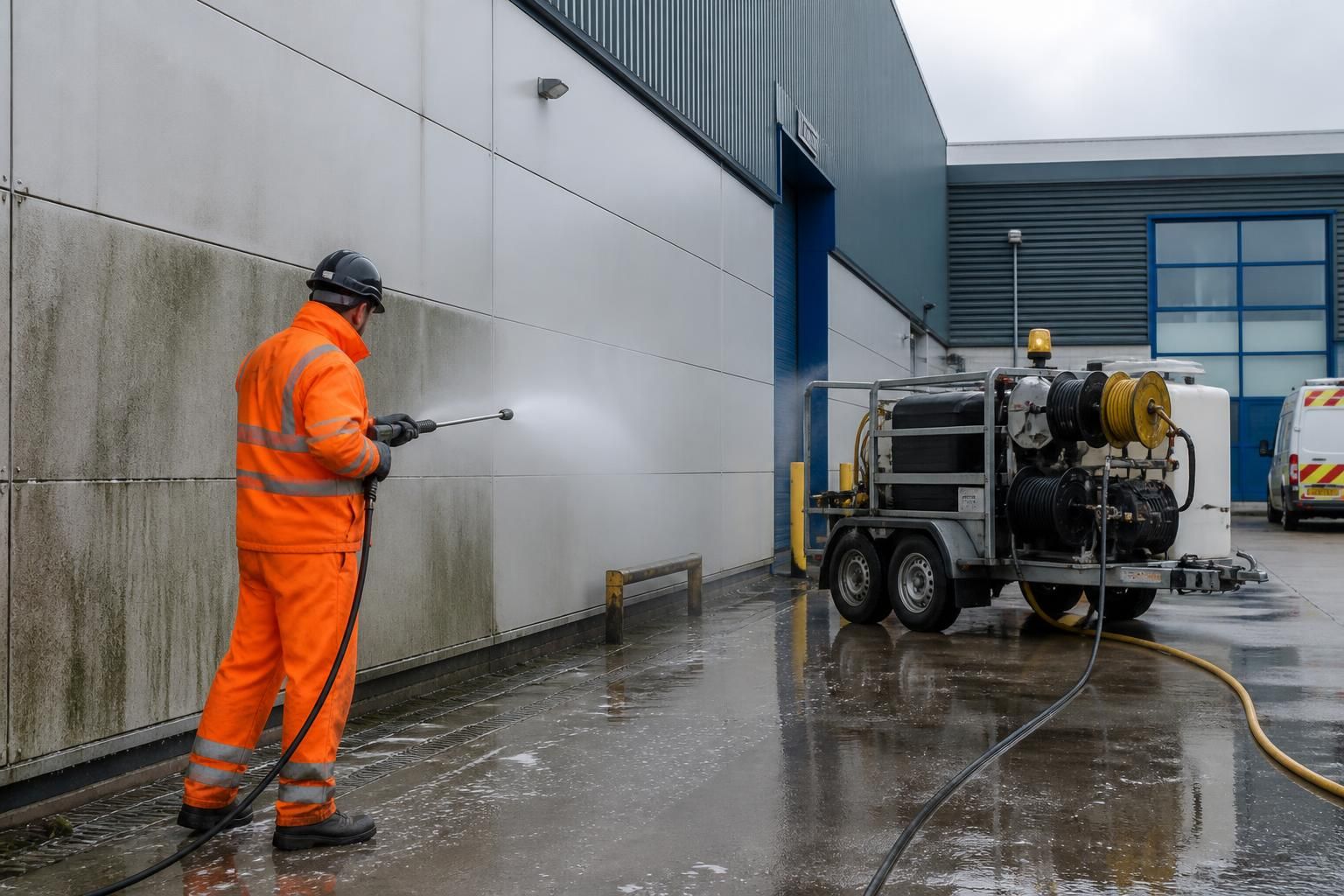
Commercial high pressure cleaning typically uses industrial pressure washers with adjustable pressure controls, specialist nozzles, long-reach hoses and surface-cleaning attachments. Depending on the building and task, contractors may also use hot-water or steam systems, water tanks, wastewater recovery equipment and access equipment such as lifts or telescopic poles.
Commercial high pressure cleaning typically uses industrial pressure washers with adjustable pressure controls, specialist nozzles, long-reach hoses and surface-cleaning attachments. The equipment is selected according to the surface, level of soiling, water availability, access requirements and how wastewater will be managed. Larger or more complex sites may also require hot-water or steam systems, water tanks, recovery equipment and powered access platforms.
Industrial pressure washers
The pressure washer is the main piece of equipment. Commercial machines are designed for sustained use and provide more consistent water flow than domestic units. They may be configured as:
- Cold-water pressure washers for general dirt, dust, mud, algae and loose deposits on suitable hard surfaces.
- Hot-water pressure washers for oil, grease, traffic film and other residues that respond better to heat.
- Steam-cleaning systems for delicate or sensitive areas where controlled heat and lower water use are more appropriate than very high pressure.
- Electric or diesel-powered machines, selected according to the availability of power and the size and location of the work area.
Professional equipment should allow the operator to control both pressure and flow. This is important because maximum pressure is not automatically the safest or most effective setting. A competent operator matches the output to the material, coating and type of contamination to reduce the risk of etching, surface damage or water penetration.
Nozzles and spray lances
Nozzles determine the shape, concentration and impact of the water jet. Common options include fan nozzles for broad cleaning, more concentrated nozzles for localised deposits and low-pressure nozzles for rinsing or applying cleaning solutions. Rotary or turbo nozzles can help remove stubborn deposits from robust masonry and concrete, but they require careful control and are not suitable for every surface.
Operators may use adjustable lances, extension lances and telescopic poles where additional reach is needed. These tools can improve access to façades, cladding and high-level details from the ground, although they must be used with appropriate control to prevent overspray and uneven cleaning.
Surface-cleaning attachments
Flat surface cleaners use a rotating spray bar inside a protective cover. They are commonly used on large areas of concrete, block paving, loading yards, forecourts, car parks and other hard surfaces. Compared with an exposed lance, a surface cleaner can produce a more uniform finish and help contain spray, reducing the risk of streaks and unnecessary overspray.
Other attachments may include gutter-cleaning tools, drain and pipe-cleaning jets, lance extensions, angled wands and specialist brushes. The attachment is chosen according to the geometry of the area and the nature of the deposit rather than used as a standard addition to every job.
Hoses, reels and water-supply equipment
Commercial cleaning requires high-pressure hoses, hose reels, couplings, filters and suitable inlet protection. Long hose runs can help keep machinery in a safe position while allowing the operator to work around a building, but the hose must be rated for the operating conditions and protected from vehicles, sharp edges and pedestrian traffic.
Where the site supply is limited, interrupted or unsuitable for the required work, contractors may use clean-water tanks or bowsers. Water-management equipment can provide a controlled supply and reduce disruption to the client’s operations. Backflow protection and suitable filtration may also be needed to protect the machine and the site water system.
Detergent and chemical application systems
Some deposits are removed more effectively with a compatible cleaning agent, particularly oils, biological growth, traffic film and certain atmospheric residues. Pressure washers may use downstream injectors, foaming systems or separate dosing equipment to apply the product evenly before rinsing.
Any chemical must be selected for the specific surface and used in accordance with its safety and environmental instructions. The operator should control run-off, prevent contact with plants and drainage systems where necessary, and ensure that residues are rinsed or recovered appropriately. High pressure does not remove the need for correct preparation and chemical handling.
Wastewater recovery and drainage controls
On commercial and industrial sites, managing dirty water is as important as removing the dirt. Depending on the location and contaminants present, equipment may include drain covers, bunds, wet vacuums, sump pumps, water-recovery systems, collection mats and filtration units.
Recovery equipment helps prevent contaminated water entering surface-water drains, neighbouring land or public areas. It is particularly relevant when cleaning oil-stained surfaces, loading bays, car parks, industrial premises or areas where cleaning chemicals have been used. The appropriate disposal route depends on the type of contamination and the site’s drainage arrangements.
Access equipment
High-level cleaning may require mobile elevated work platforms, scissor lifts, boom lifts, scaffold towers or other access systems. Telescopic poles can sometimes provide a safer ground-based alternative for suitable façades and glazing, but they are not a substitute for proper access planning where close inspection or precise cleaning is required.
Access equipment must be suitable for the ground conditions, working height, reach and surrounding hazards. Operators need to consider overhead services, fragile roofs, traffic routes, wind conditions, exclusion zones and the additional reaction force created by the water jet. Access and cleaning equipment should be planned as one system rather than treated as separate tasks.
Safety and protective equipment
Personal protective equipment is selected according to the pressure, water temperature, cleaning chemicals and contamination involved. It may include waterproof protective clothing, gloves, eye and face protection, safety footwear, hearing protection and respiratory protection where a risk assessment identifies a need.
Site-control equipment is also essential. Barriers, cones, warning signs, hose ramps and exclusion zones help separate the work area from pedestrians, vehicles and other contractors. For higher-risk work, the cleaning plan should address electrical hazards, falling objects, slips, flying debris, hidden services and the safe isolation of nearby equipment.
Inspection and supporting equipment
Before work begins, contractors may use inspection lights, moisture checks, scrapers, brushes and test-cleaning tools to assess the surface and confirm the chosen method. Test areas are particularly useful on painted façades, coated cladding, masonry, stone and surfaces with existing deterioration.
After cleaning, the team may use wet vacuums, squeegees and absorbent materials to leave access routes safe and remove standing water. Equipment should be inspected, maintained and stored correctly, with hoses, nozzles, pumps, electrical connections and safety devices checked before use.
The correct commercial setup is therefore a combination of equipment rather than a single powerful machine. A suitable pressure washer, controlled nozzle, appropriate attachment, safe access method and effective wastewater plan will generally produce a better and more reliable result than simply increasing pressure. For each project, the equipment should be confirmed against the building materials, contamination, site restrictions and required finish before cleaning starts.
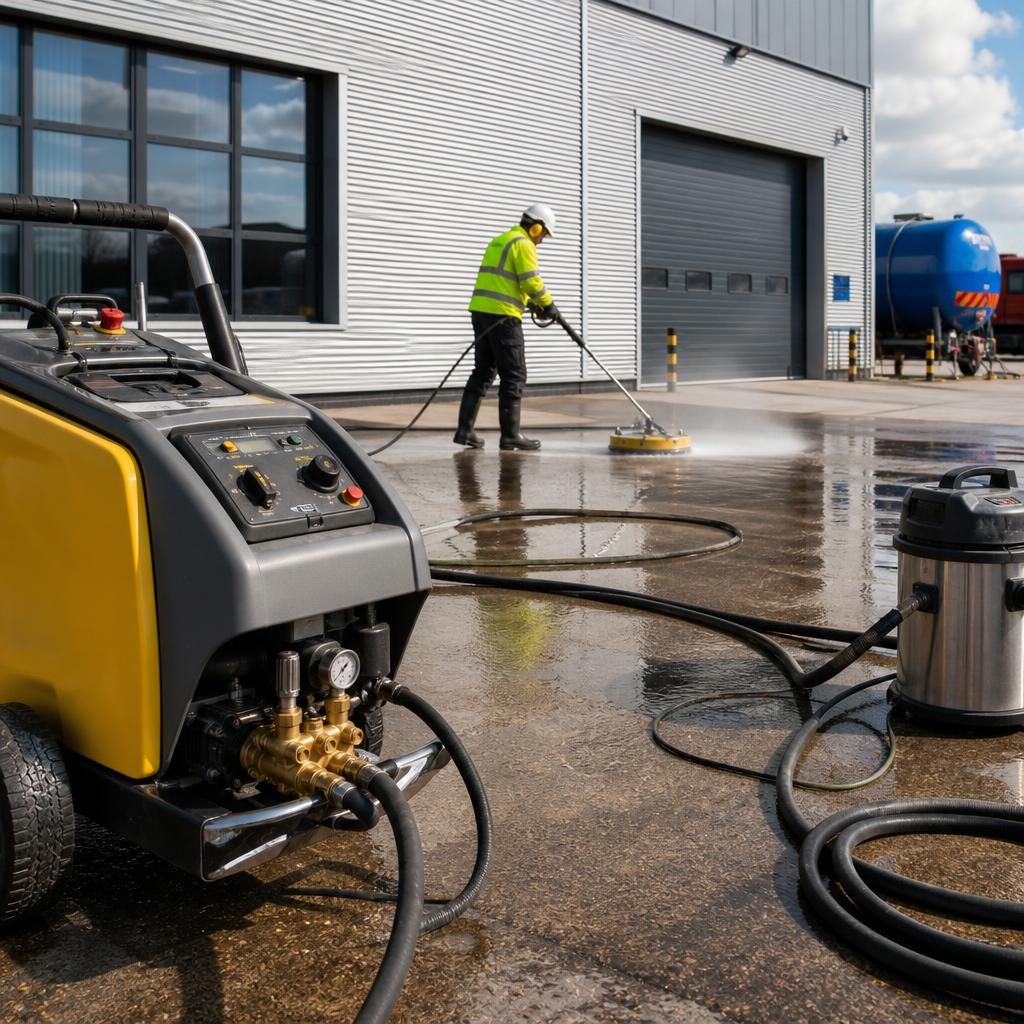
Commercial high pressure cleaning relies on a coordinated system of equipment rather than a pressure washer alone. The machine, hose, nozzle and surface-cleaning attachment must be matched to the material, contamination and area being cleaned.
For large hard surfaces such as car parks, loading yards and forecourts, a flat surface cleaner helps produce an even finish while reducing uncontrolled spray. High-pressure hoses, extension lances and water tanks support work across larger sites, while wet vacuums, drain covers and collection systems help control dirty water and prevent contaminated run-off entering unsuitable drainage.
Where cleaning takes place at height, telescopic poles or powered access equipment may be required. The correct choice depends on the building’s height, ground conditions, nearby traffic, overhead hazards and the reaction force of the water jet. This equipment should be planned alongside the cleaning method so the work remains controlled and safe.
Discuss the right equipment for your commercial cleaning project
Discuss your commercial cleaning project with Encanto Exterior Cleaning so we can assess the surfaces, access requirements, water supply and wastewater controls involved. We will help identify the most suitable equipment and cleaning method for the site.