
What are the environmental impacts of high pressure cleaning?
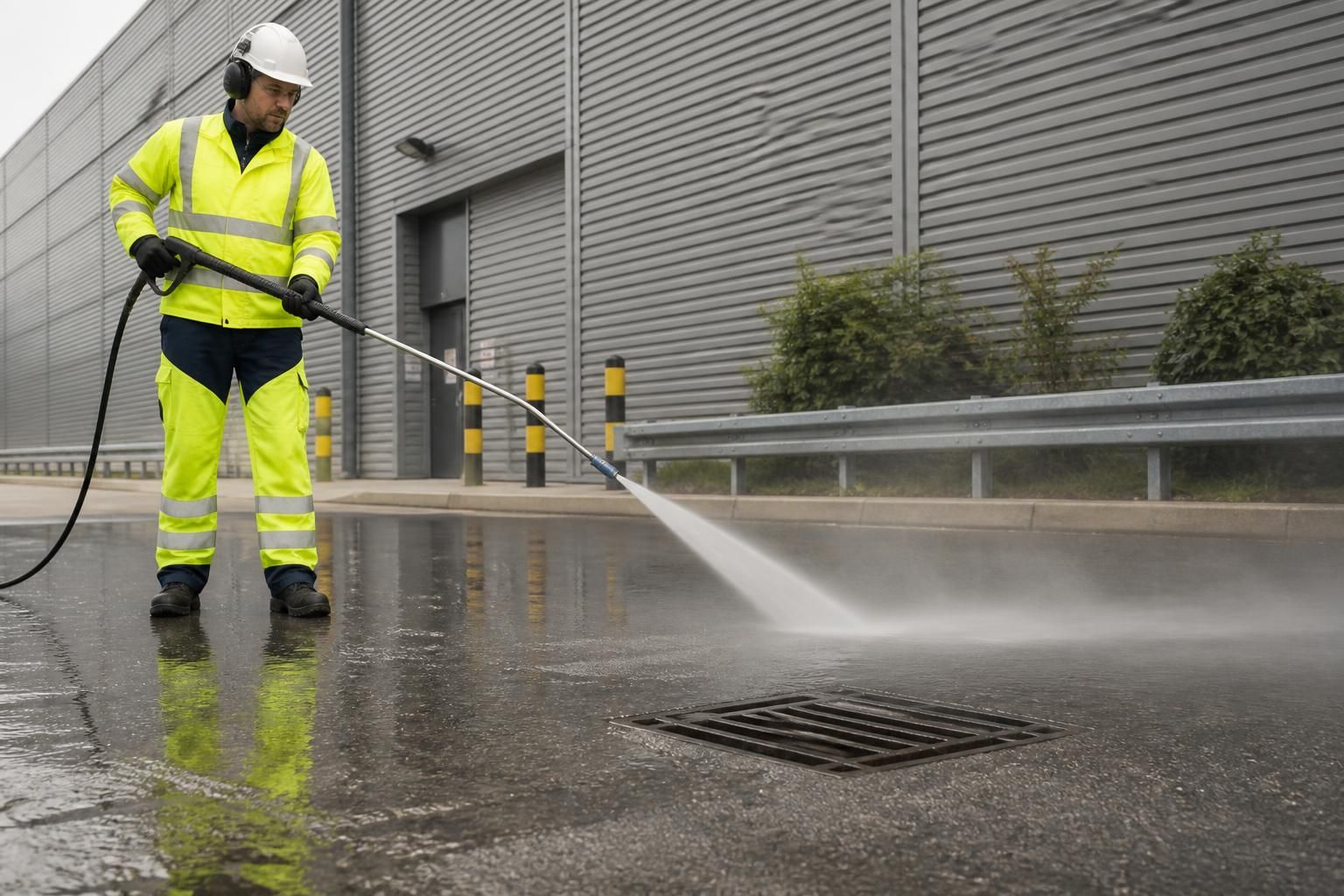
High pressure cleaning can affect the environment through water consumption, energy use, noise and contaminated runoff carrying dirt, oils, chemicals or microplastics into drainage systems. Responsible methods—using controlled pressure, efficient equipment, suitable detergents and proper runoff containment—help reduce pollution while achieving effective exterior cleaning.
High pressure cleaning can affect the environment through water consumption, energy use, noise, surface disturbance and contaminated runoff. The main environmental risk is not the pressure itself, but the material removed from a surface and where the resulting wastewater goes. Dirt, oils, heavy metals, old coatings, cleaning chemicals, biological growth and microplastics can be carried into surface-water drains, soil or watercourses if the work is not properly controlled.
When planned and carried out responsibly, high pressure cleaning can reduce these impacts. Selecting the appropriate pressure, using efficient equipment, limiting water flow, choosing suitable cleaning agents and containing or treating runoff all help to protect the building, surrounding land and local drainage system.
Water consumption
Water use is one of the most visible environmental considerations. High pressure equipment can clean effectively because the force of the water removes contamination more efficiently than an uncontrolled hose, but water can still be wasted through excessive flow, prolonged rinsing, repeated passes or unsuitable nozzle selection. Cleaning a large façade, roof, car park or paved area can therefore create a significant volume of wastewater if the method is not carefully managed.
Responsible contractors assess the level and type of contamination before work begins. They use the lowest effective pressure and flow, target the affected areas rather than washing unnecessarily, and avoid leaving equipment running when it is not in use. Where appropriate, recovery systems or controlled collection methods can reduce the volume of water entering the drainage network. Water reuse may also be possible for certain stages of a project, provided that the recovered water is suitable for the intended application and does not spread contamination.
Polluted runoff and drainage
Runoff is often the most important environmental issue on commercial and industrial sites. Pressure cleaning can mobilise oil, fuel residues, rubber deposits, silt, paint particles, rust, algae, bird fouling, detergents and other pollutants. If this water enters a surface-water drain, it may pass with little treatment into a stream, river or other watercourse. Discharging contaminated water onto soil can also affect vegetation and create a pathway into groundwater.
Foul-water and surface-water drainage systems serve different purposes, and wastewater should never be directed to a drain without confirming that the discharge is permitted and appropriate. On higher-risk sites, the cleaning plan may require drain covers, bunding, temporary barriers, wet vacuums, pumps, settlement tanks, filtration or off-site disposal. The correct approach depends on the contamination, site drainage, local requirements and the receiving system. Wastewater containing oil, chemicals or hazardous residues may need specialist handling rather than ordinary drainage.
Cleaning chemicals
Pressure alone is not always sufficient for oil, organic growth, staining or ingrained deposits, so a detergent, biocide, degreaser or other treatment may be used. These products can increase the environmental impact if they are over-applied, allowed to enter drains or rinsed into nearby soil and planting. Some treatments can affect aquatic organisms, vegetation, soil quality or the performance of wastewater treatment systems.
Environmental control starts with choosing a product that is suitable for the surface and the contamination. The product should be used at the lowest effective concentration, applied only where required and allowed the correct contact time. Operatives should follow the product safety data and label instructions, prevent overspray, protect sensitive areas and collect or neutralise residues where necessary. A product described as biodegradable is not automatically safe to discharge directly into a watercourse.
Energy use and emissions
Pressure washers require energy to heat or pump water. Diesel- or petrol-powered equipment can produce exhaust emissions and noise, while electrically powered machinery has no exhaust emissions at the point of use but still has an environmental footprint associated with electricity generation. Steam cleaning can require additional energy to heat water, although its lower water requirement may be beneficial for some applications. The most suitable method depends on the surface, contamination, access arrangements and the need for hot water or steam.
Energy use can be reduced by selecting equipment that is correctly sized for the work, maintaining pumps and burners, avoiding unnecessary heating, minimising idle time and planning hose and access arrangements efficiently. Where site conditions allow, electric equipment can reduce local exhaust emissions and may be preferable near entrances, ventilation intakes or occupied premises. Equipment selection should consider the whole process rather than treating pressure, steam or hot water as environmentally superior in every situation.
Noise, spray and disturbance
High pressure cleaning can create significant noise, particularly when diesel-powered machinery, surface cleaners or multiple units are used. Noise can disturb building users, neighbours, wildlife and nearby operations. Fine spray can also spread residues, detergents or biological material beyond the work area, while overspray may affect vehicles, electrical equipment, ventilation systems, planting and sensitive façades.
Controls include scheduling noisy work appropriately, using maintained equipment, limiting unnecessary operating time, creating exclusion zones and selecting attachments that control spray. Operatives should assess wind direction and weather conditions before starting and stop or adapt the work if spray cannot be contained. Protecting nearby drains, vegetation, pedestrians and occupied areas is part of environmental control as well as site safety.
Removal of coatings, fibres and particles
Cleaning can release fragments of paint, render, sealant, roofing material, cement, mortar and other surface coatings. Older buildings may contain substances that require additional assessment before cleaning. Aggressive pressure can also damage a substrate, create more loose material or remove protective finishes that then require replacement. On façades and roofs, the waste may include moss, lichen, nesting material or accumulated pollutants.
A pre-cleaning survey helps identify fragile materials, previous coatings, defective joints and areas where pressure could cause damage. Testing a small inconspicuous section allows the cleaning method to be adjusted before wider work begins. Where coatings or debris may be hazardous, the material should be assessed and managed under the applicable health, safety and waste requirements rather than simply washed away.
Waste and resource efficiency
Collected sludge, filters, absorbents, damaged coating fragments and empty chemical containers must be managed as waste. The classification depends on what the material contains. Allowing sludge to dry on site or placing contaminated solids in general waste can create avoidable pollution and compliance problems.
Good planning reduces waste by using accurate chemical quantities, reusable protection where practical and filtration or settlement equipment suited to the task. Recovered solids should be stored securely and transferred through an appropriate waste route. Cleaning also has a potential resource benefit: maintaining cladding, paving, roofs and other building elements can help prevent premature replacement, but this benefit is lost if cleaning causes surface damage that requires additional materials or repairs.
How environmental impacts are controlled on a commercial site
- Inspect the surface, surrounding area, drainage layout and likely contaminants before work starts.
- Choose the least aggressive effective method, pressure, temperature, flow rate and nozzle pattern.
- Use cold water, hot water, steam or detergent only where the condition being treated justifies it.
- Protect surface-water drains and prevent dirty water from reaching soil, planting or watercourses.
- Contain, recover, filter, settle or dispose of wastewater according to its contamination and the site requirements.
- Use detergents and treatments sparingly, following the relevant safety and environmental instructions.
- Control overspray, noise, dust and access around occupied premises, vehicles and neighbouring properties.
- Inspect the cleaned surface afterwards to confirm that the method has not removed coatings, damaged joints or created additional waste.
For industrial estates, construction sites, public areas and large commercial premises, the environmental controls should be included in the method statement and risk assessment. The plan should identify the cleaning method, products, drainage arrangements, runoff controls, waste route, equipment and response procedure for an accidental spill. Site-specific requirements may also involve the building manager, principal contractor, local authority or water and drainage provider.
High pressure cleaning is therefore not inherently environmentally harmful, but it is not environmentally neutral either. Its impact depends on the pressure and flow used, the energy source, the substances removed and the way water and waste are controlled. A properly assessed and contained cleaning operation uses only the necessary resources, prevents contaminated runoff and protects both the surface being cleaned and the surrounding environment.
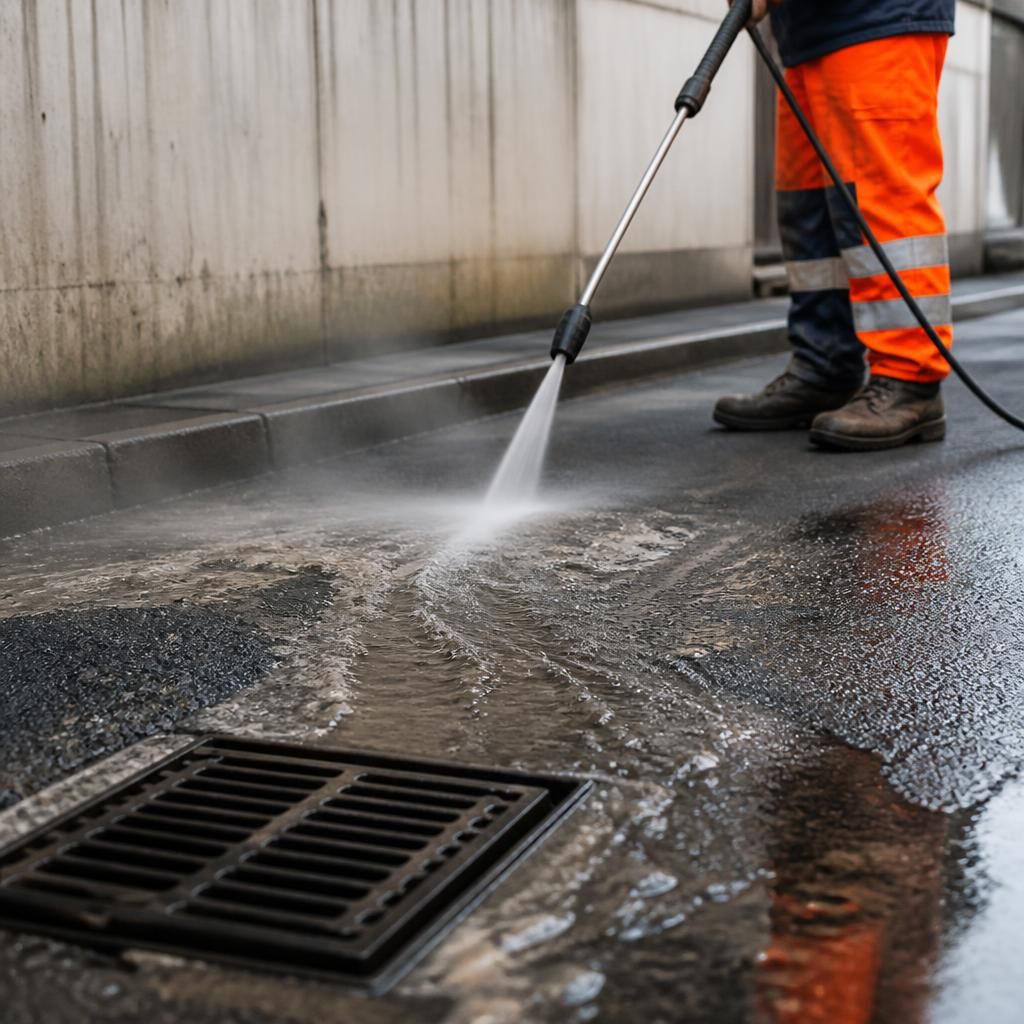
The main environmental risk of high pressure cleaning is contaminated runoff: water can carry oil, silt, detergents, paint particles, biological growth and other residues into surface-water drains, soil or nearby watercourses. The pressure itself is not usually the pollutant; the concern is what has been removed from the surface and where the wastewater goes.
Responsible control starts with checking the site drainage and identifying likely contaminants before cleaning begins. Surface-water drains should be protected, dirty water contained or recovered, and collected wastewater filtered, settled or disposed of through an appropriate route. Detergents and degreasers should be used only where necessary and at the lowest effective concentration, with overspray prevented from reaching planting, vehicles or occupied areas.
These measures reduce pollution while allowing façades, roofs, paving and industrial surfaces to be cleaned effectively. The correct controls depend on the surface, the contamination and the drainage arrangements, so runoff management should form part of the method statement rather than being treated as an afterthought.