
What surfaces are best suited for steam jet washing?
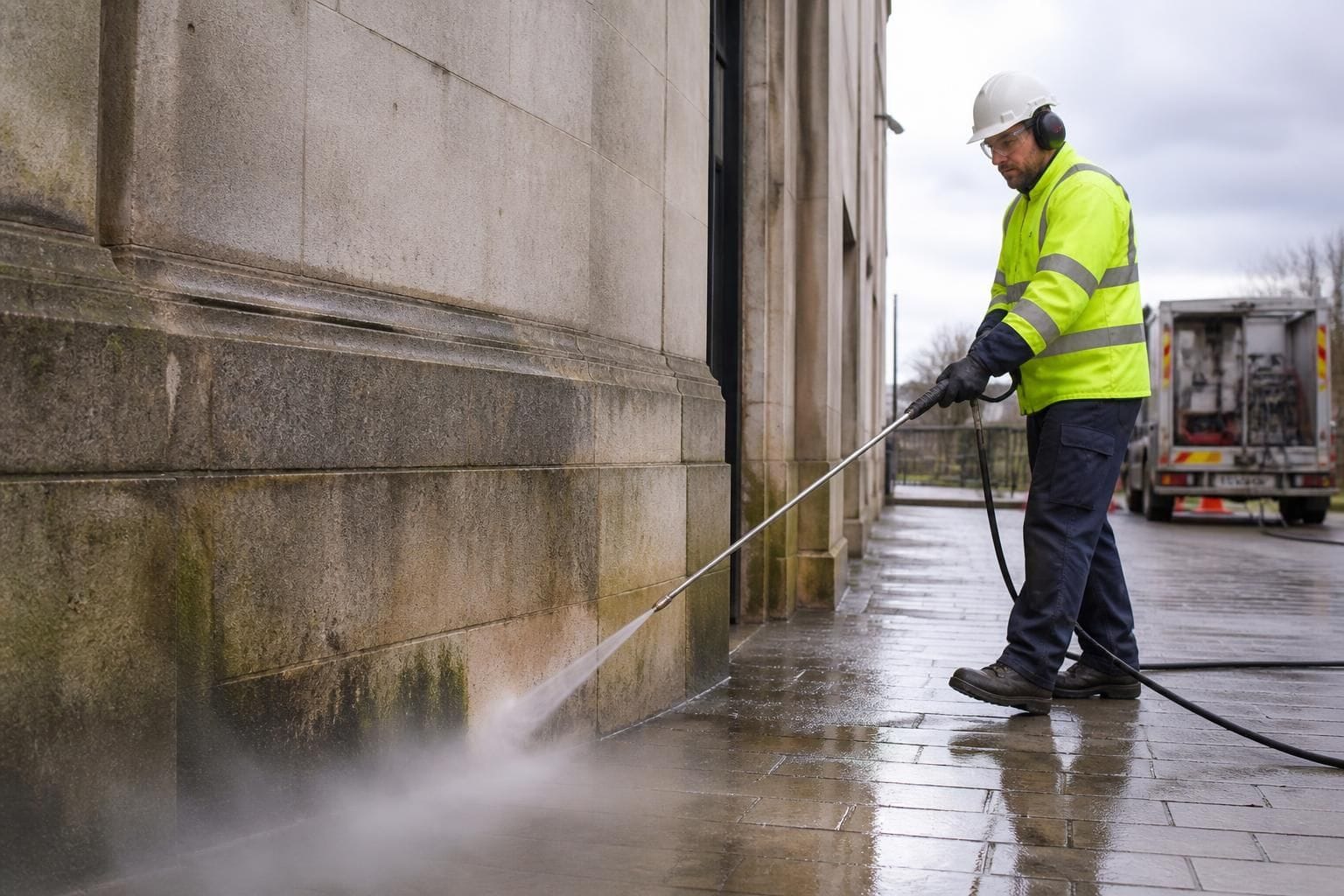
Steam jet washing is best suited to robust exterior surfaces such as brickwork, stone, concrete, paving, tarmac, masonry façades, metal cladding and some roofs, where low-pressure heat can remove dirt, algae, grease and coatings with limited water use. Surface condition, age, coatings and joints must be assessed first, as delicate render, timber, damaged masonry and heat-sensitive finishes may require a different cleaning method or a controlled test patch.
Steam jet washing is best suited to durable, non-porous or moderately porous exterior surfaces that can tolerate controlled heat and low water pressure. Common applications include brickwork, natural stone, concrete, paving, tarmac, masonry façades, metal cladding and selected roof surfaces. The method can loosen algae, moss, traffic film, grease, atmospheric staining, bird fouling and some surface coatings while using less water than conventional high-pressure cleaning. Suitability still depends on the condition of the surface, its age, previous treatments, joints and any painted or sealed finish.
Brickwork and masonry façades are often well suited to steam jet washing, particularly where the main problem is soot, organic growth, pollution staining or general dirt. The combination of heat and controlled pressure can soften deposits without relying on aggressive mechanical force. This is useful on commercial buildings, boundary walls, schools, public buildings and other masonry structures where retaining the appearance of the substrate is important.
Older or weathered brickwork needs more careful assessment. Soft or friable bricks, open mortar joints, previous frost damage and areas of spalling may be affected by even relatively low-pressure cleaning. Steam should not be used to compensate for structural defects. Loose mortar, cracked bricks and unstable sections should be identified first, and a test patch should be completed in an inconspicuous area to check for colour change, surface loss or movement of the joints.
Natural stone can also respond well to steam cleaning, although different stone types have different levels of porosity and hardness. Granite, some types of sandstone, limestone and other architectural stone may be cleaned effectively when the temperature, pressure and working distance are controlled. Steam is particularly useful for removing biological growth and ingrained surface dirt from façades, steps, paving and retaining structures.
Stone should never be treated as a single uniform material. Soft limestone, delicate sandstone, polished finishes, historic masonry and stone with previous repairs may mark or erode if cleaned too aggressively. Calcium-based deposits, rust staining and old coatings may also require a separate treatment rather than additional heat or pressure. The cleaning approach should therefore be selected after identifying the stone and assessing its finish.
Concrete and paving are generally practical surfaces for steam jet washing. The method can remove algae, moss, chewing gum residue, oil-related grime, tyre marks and accumulated dirt from pedestrian areas, loading areas, service yards, car parks and access routes. It is useful where a surface needs cleaning without excessive water spreading across adjoining areas or entering drainage systems at an uncontrolled rate.
Concrete that is cracked, delaminated, heavily worn or exposed at the aggregate requires a lower-impact approach. Particular care is needed around expansion joints, jointing sand, drainage channels and repaired sections, as heat and pressure can dislodge weak material. Tarmac and asphalt can also be steam cleaned, but the surface must be stable and in sound condition. Excessive heat, prolonged dwell time or concentrated cleaning can soften aged bitumen or disturb loose areas, so the operator should adjust the equipment and keep the nozzle moving.
Metal cladding and coated panels are often suitable for controlled steam cleaning when the objective is to remove atmospheric dirt, algae, light grease and bird fouling. The low water volume can help limit run-off from large elevations, while the heat may reduce the need for strong detergents. This can be valuable on warehouses, retail units, industrial buildings and other commercial premises with extensive cladding.
The condition of the coating is critical. Powder-coated, painted, anodised and plastisol finishes can react differently to heat and pressure. Faded coatings, chalking, corrosion, exposed fixings and failed sealant should be identified before work begins. Steam cleaning will not repair corrosion or restore a coating that has already broken down. A test area should confirm that the finish does not discolour, blister, soften or lose its protective layer.
Roofing materials may be suitable where the roof covering is stable and the cleaning objective is the removal of organic growth or surface dirt. Certain metal roofs, concrete tiles and some robust roof coverings can be cleaned with a carefully controlled steam process. This can reduce the risk of forcing water beneath laps, flashings or vulnerable details compared with high-pressure washing.
Roof cleaning requires a separate assessment of the covering, fixings, seals, gutters and access arrangements. Fragile tiles, aged coatings, slate, deteriorated membranes and roofs with exposed insulation may not be appropriate for steam jet washing. The process must also account for falling debris, water management and safe access. Cleaning a roof surface is not suitable if the underlying issue is damaged waterproofing or defective drainage.
Steam jet washing is less suitable for delicate or heat-sensitive surfaces. These may include untreated timber, soft or damaged render, some painted finishes, flexible membranes, aged plastics, certain sealants and surfaces with loose laminates or decorative coatings. Heat can dry or distort some materials, while pressure can lift edges, remove weak finishes or drive moisture into defects. Delicate surfaces may be better served by a soft-washing, low-pressure or specialist conservation method, depending on the material and contamination.
Glass and glazed surfaces are not normally the primary target for steam jet washing, even though surrounding frames, sills and hard surfaces may be suitable. Heat shock, damaged seals and existing scratches need to be considered. The same applies to signage, electrical equipment, ventilation components and areas where water or heat could enter behind panels. These items should be protected or excluded from the cleaning area.
Surface condition is as important as surface type. A sound concrete slab may tolerate steam well, while cracked concrete in the same area may not. Likewise, a robust brick façade can contain weak mortar, failed repairs or concealed damage. Before cleaning, the area should be checked for cracks, loose material, staining that may indicate corrosion or water ingress, failed sealants, biological growth in joints and previous coatings.
A controlled test patch is an essential part of responsible steam cleaning. It allows the operator to confirm the appropriate pressure, temperature, nozzle distance and working speed before treating the full area. The test should be reviewed after the surface has dried, since some marks, colour changes and moisture effects are not immediately apparent. It should also establish whether the existing finish is being cleaned or removed, particularly where the appearance of a façade or cladding system must remain consistent.
The most suitable surface is therefore not simply the hardest one. It is a stable substrate whose condition, finish and surrounding details have been assessed, with a cleaning method matched to the type of contamination. Steam jet washing can be highly effective for robust façades, paving, concrete, tarmac, cladding and selected roofs, but vulnerable materials should be treated with a different system where heat or pressure could cause damage.
For a commercial or industrial site, the assessment should also cover access, drainage, nearby vehicles, pedestrians, sensitive equipment and the handling of removed contaminants. This ensures the cleaning method is appropriate not only for the surface itself but for the whole working environment.
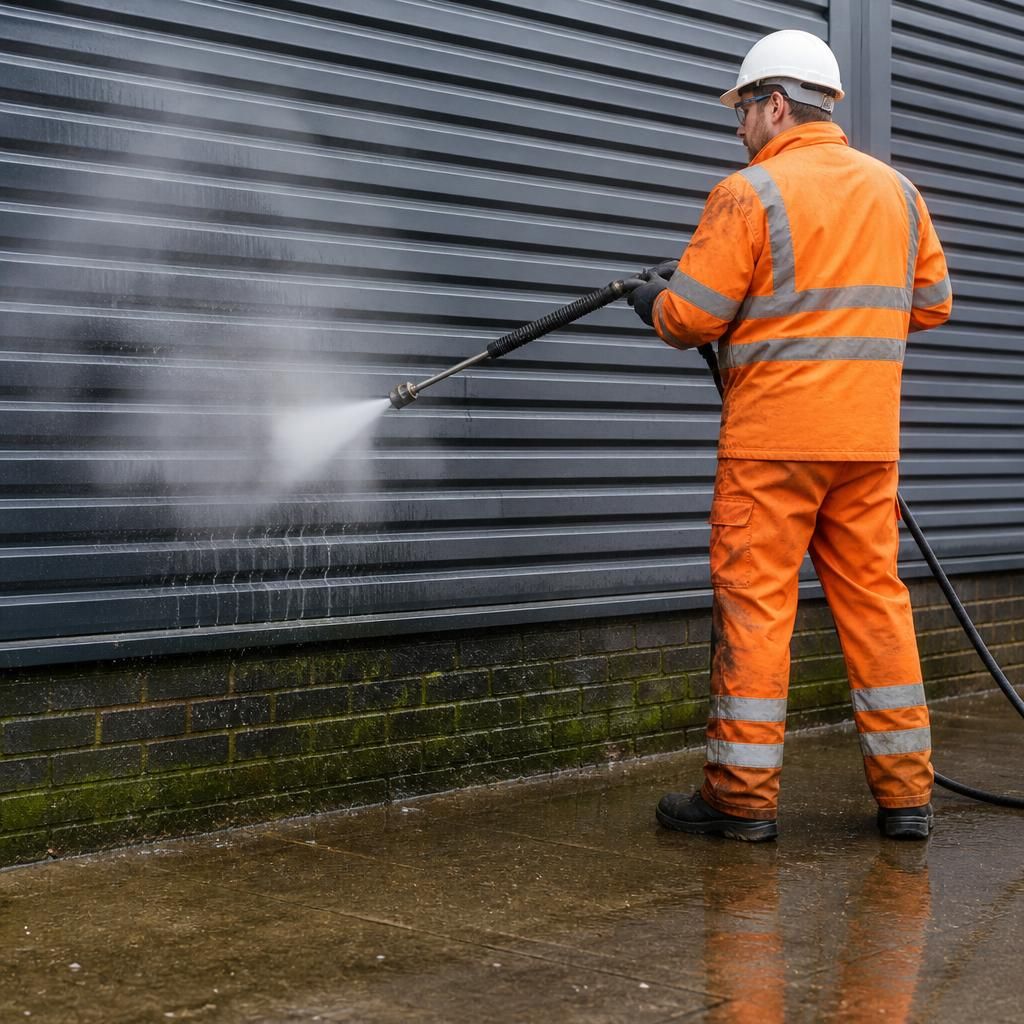
Steam jet washing is best suited to stable exterior surfaces such as sound brickwork, natural stone, concrete, paving, tarmac and suitable metal cladding. Controlled heat loosens algae, grime, grease and atmospheric staining while low water pressure reduces the risk of forcing water into joints or damaging the substrate.
Suitability depends on more than the material itself. Cracks, loose mortar, failed coatings, corrosion, soft areas and previous repairs must be checked before cleaning. A discreet test patch helps confirm the correct temperature, pressure and nozzle distance, while showing whether the finish remains intact once the surface has dried.
Request a Steam Jet Washing Surface Assessment
Request a steam jet washing surface assessment to confirm whether your brickwork, paving, cladding, roof or other exterior surface is suitable for this method. We will review its condition, finish and surrounding details before recommending the safest cleaning approach.