
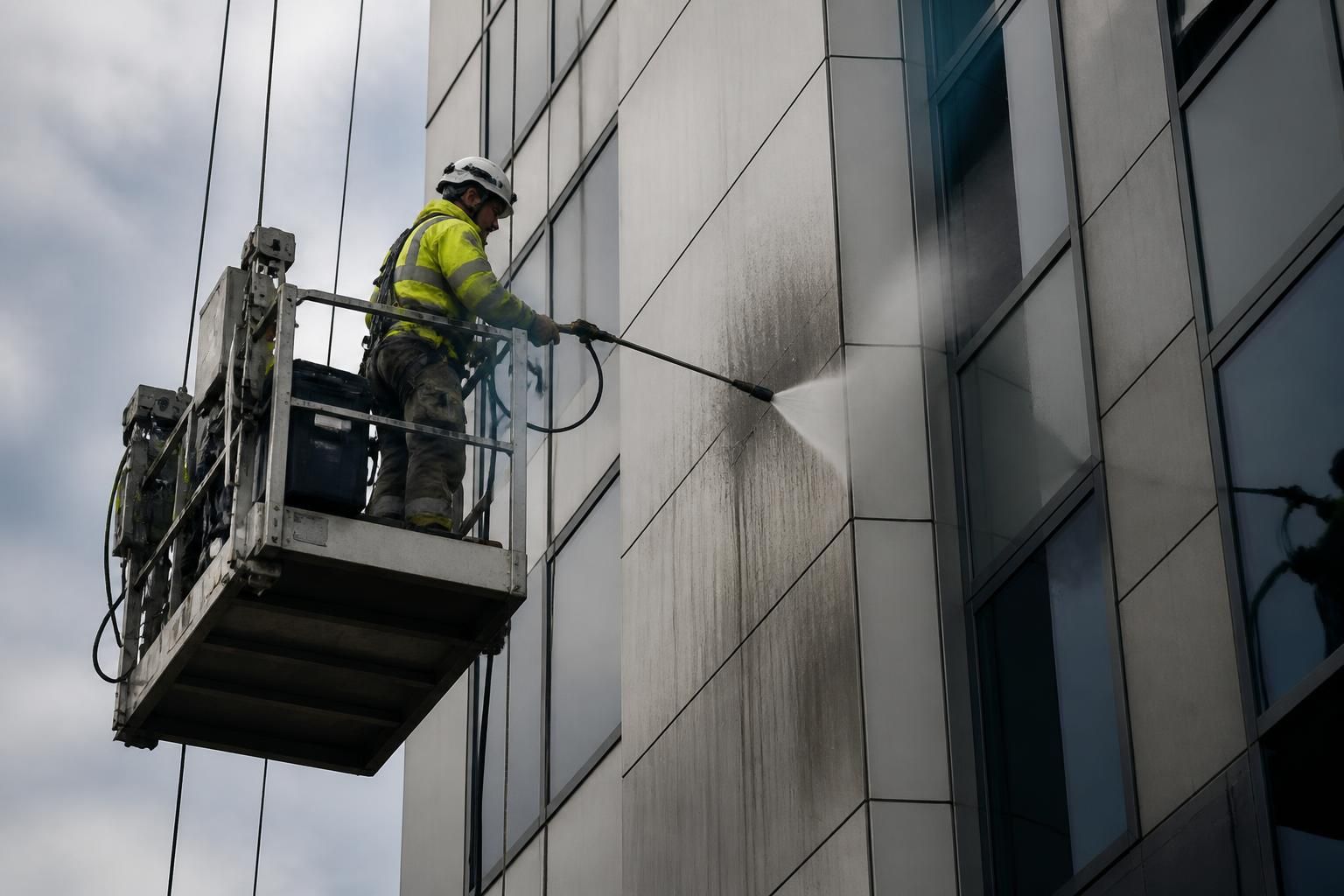
What should I look for in a professional steam jet washing service for high-rise buildings?
Look for a specialist with proven high-rise experience, trained operatives, suitable access equipment, comprehensive insurance, and documented risk assessments and method statements. They should also inspect the façade and surface materials beforehand, control water and run-off, use appropriate steam pressures and temperatures, and provide a clear quotation and maintenance recommendation.
A suitable high-rise steam jet washing service should combine proven façade-cleaning experience with competent access teams, appropriate equipment, documented safety controls and a clear understanding of the building materials. The contractor should inspect the property before quoting, explain the proposed cleaning method, and provide evidence that the work can be completed safely without damaging the façade, disturbing occupants or allowing contaminated water to enter the drainage system.
Check the contractor’s high-rise experience
High-rise cleaning requires more than general pressure-washing experience. Ask whether the contractor has worked on buildings with similar height, façade design, access restrictions and surface materials. Relevant experience may include cladding, glazed areas, masonry, render, concrete, roofs, balconies and difficult-to-reach elevations.
A competent contractor should be able to explain how the building will be surveyed, how operatives will reach each elevation, how equipment will be positioned, and how pedestrians, vehicles and building users will be protected. They should also be prepared to provide suitable examples of previous commercial or industrial work without disclosing confidential client information.
Expect a proper site survey before work starts
Steam jet washing should not be selected solely because it is effective on one area of a building. The contractor should assess the substrate, coatings, joints, sealants, windows, vents, electrical fittings, drainage routes and any areas of existing deterioration. They should identify loose materials, failed pointing, cracked render, damaged cladding and vulnerable finishes before cleaning begins.
A professional survey should also consider the source of staining. Organic growth, traffic film, atmospheric deposits, cement residue, oils and graffiti may require different techniques. Where the surface or coating is uncertain, a small test area should be cleaned and inspected before the full elevation is treated.
Verify competence, training and insurance
High-rise work involves significant risks, particularly when steam equipment is used from elevated platforms, suspended access systems or other specialist equipment. Ask for details of operative training, access-equipment competence and supervision arrangements. The contractor should select equipment that is appropriate for the building and ensure it is inspected and maintained.
They should also hold suitable public liability and employers’ liability insurance, with cover appropriate to the scale and risks of the work. Where specialist access systems are used, the planning should address equipment inspection, rescue arrangements and emergency response rather than relying on the operator to deal with problems as they arise.
Request detailed risk assessments and method statements
For high-rise steam cleaning, risk assessments and method statements should be specific to the building and proposed operation. Generic documents that do not address the site layout, access method or façade condition are not sufficient. The documentation should cover:
- work at height and fall prevention;
- access equipment selection, inspection and operation;
- hot water, steam, hoses and pressurised equipment;
- falling objects, splash and overspray;
- pedestrian and traffic management at ground level;
- wind, rain, temperature and other weather limits;
- protection of windows, vents, doors, lighting and electrical installations;
- water run-off, drainage and environmental controls;
- communication between operatives, site management and building occupants; and
- emergency, rescue and incident-reporting procedures.
The contractor should be willing to explain these controls to the responsible person on site and revise them if conditions change.
Confirm that the steam system is suitable for the façade
Steam jet washing is not a single fixed process. Temperature, pressure, flow rate, nozzle selection, dwell time and operator technique all affect the result. A reputable service should explain how these settings will be controlled for each material rather than presenting high heat or high pressure as a universal solution.
Delicate coatings, aged sealants, painted surfaces and some types of render can be affected by excessive heat, pressure or prolonged treatment. The contractor should use the lowest effective setting, maintain a suitable working distance and avoid directing steam into joints, openings or areas where water could penetrate. A test clean is particularly important where the façade has an unknown coating or a history of repairs.
Ask how water and run-off will be managed
High-rise cleaning can generate considerable run-off, even where steam uses less water than conventional pressure washing. The contractor should identify where water will travel and how it will be contained, diverted, collected or discharged. Run-off containing dirt, biological growth, paint residue, oils or cleaning products must not be allowed to enter surface-water drains without suitable consideration.
The plan should also protect entrances, occupied areas, neighbouring properties, landscaping, vehicles and sensitive ground-level surfaces. Where cleaning takes place above public areas, the contractor should use suitable exclusion zones, screening or other controls to prevent people being exposed to falling debris, spray or equipment.
Check the access and logistics plan
High-rise projects can involve rope access, mobile elevated work platforms, scaffold, cradles or other specialist systems. The right solution depends on the façade, building structure, ground conditions, available anchor points, obstructions and the areas requiring treatment. The contractor should explain why the selected access method is suitable and how it will be set up without obstructing emergency routes or normal site operations.
Consider how hoses, steam generators, water supplies and electrical connections will be brought to the work area. The plan should address manual handling, trip hazards, equipment security, deliveries, storage and daily start-up and shutdown procedures. If the building remains occupied, the contractor should agree arrangements for notifying tenants, isolating areas and keeping entrances operational.
Look for a clear, properly scoped quotation
A professional quotation should state the elevations and surfaces included, the proposed cleaning process, access arrangements, preparation and protection works, water management, waste disposal and any exclusions. It should distinguish between cleaning and remedial work, since failed sealants, damaged coatings, cracked masonry or loose render may need a separate repair plan.
Be cautious of a quotation based only on an approximate area or a brief visual inspection. High-rise pricing can be affected by access complexity, working restrictions, façade condition, water collection, traffic management and the need for repeat visits. The contractor should identify assumptions and explain what could change the scope before work begins.
Establish quality checks and completion records
Agree how the finished work will be inspected. This may include test panels, elevation-by-elevation checks, photographs, records of areas that could not be reached and notes on stains that require specialist treatment rather than further steam cleaning. Cleaning should not be judged solely by whether every mark disappears, particularly where staining has penetrated a coating or the substrate is already damaged.
Completion information should record the surfaces treated, products or treatments used, access limitations, defects identified and any recommendations for repair or future maintenance. These records help the building manager plan remedial work and demonstrate that the façade has been inspected responsibly.
Ask about aftercare and planned maintenance
A reliable contractor should advise how to preserve the result and reduce recurring staining. Recommendations may include routine façade inspections, prompt removal of new graffiti, clearing gutters and drainage channels, repairing failed joints, addressing sources of dampness and scheduling periodic low-impact cleaning.
The most suitable service is therefore not simply the one offering the fastest clean or the highest operating pressure. Choose a specialist that can demonstrate relevant high-rise competence, plan access and run-off in detail, test the cleaning method on the actual façade, protect people and property, and provide transparent records and aftercare advice. These checks give you a practical basis for appointing a contractor that can deliver a controlled, safe and appropriate steam jet washing programme.
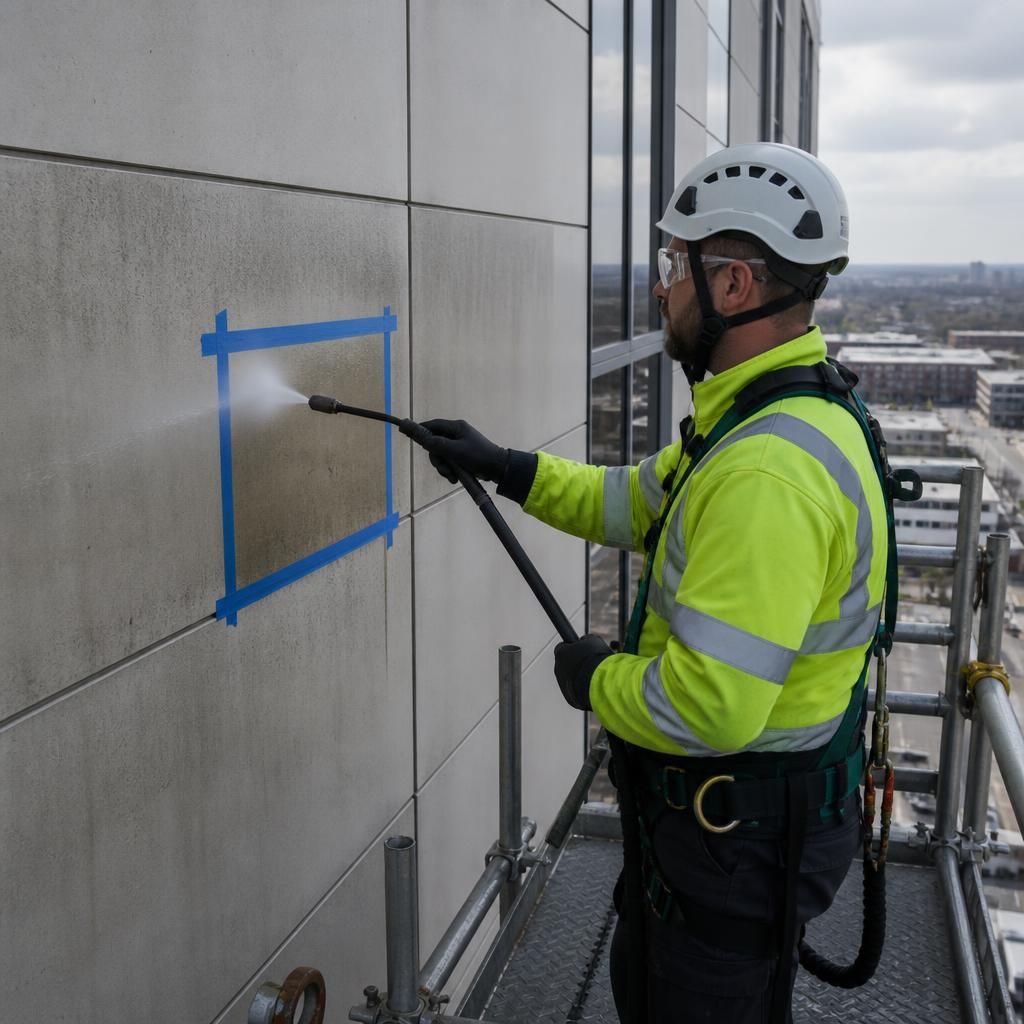
A high-rise steam jet washing service should inspect and test the façade before full-scale cleaning begins. The contractor should identify the substrate, coatings, sealants, joints, windows, vents and existing defects, then use a small test area to confirm that the selected temperature, pressure and working distance remove soiling without damaging the surface.
This assessment should also establish how operatives will access each elevation, protect occupants and pedestrians, and control water run-off. A clear record of the test area and any defects found provides a useful reference for agreeing the cleaning method and checking the finished work.