
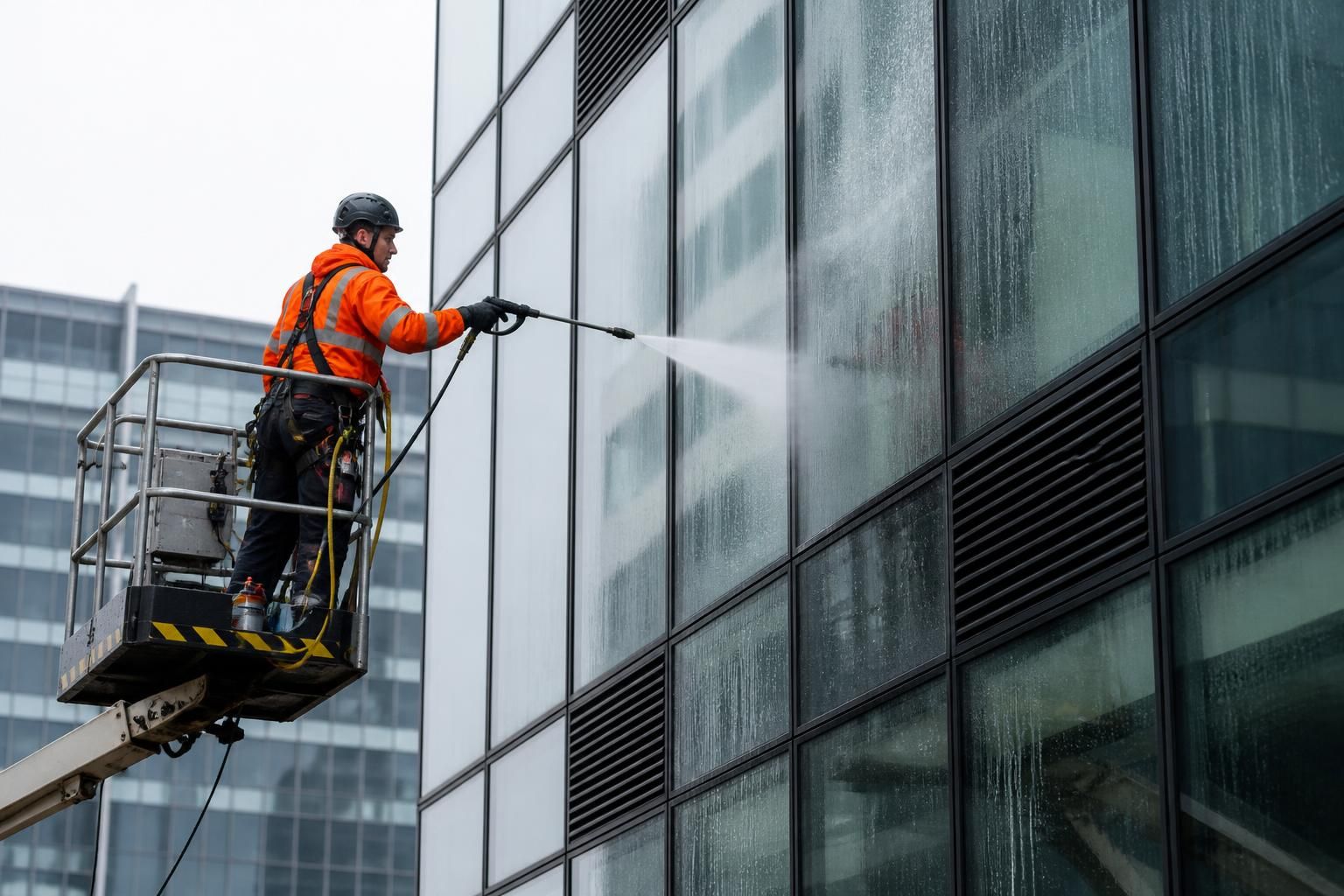
What safety measures are crucial when conducting steam jet washing on high-rise building exteriors?
High-rise steam jet washing requires a documented risk assessment, competent operatives, suitable access equipment, and controls for pressurised steam, falling objects, water and electrical hazards. Workers should use appropriate PPE, secure the work area below, inspect equipment, and follow a site-specific method statement and emergency plan.
Safe steam jet washing on high-rise building exteriors depends on controlling work at height, pressurised steam, falling objects, water run-off, electrical risks and changing weather conditions. The work should be planned through a site-specific risk assessment and method statement, then carried out by trained, competent operatives using inspected access equipment, suitable personal protective equipment (PPE) and a controlled exclusion zone at ground level.
Complete a thorough risk assessment before work starts. The assessment should consider the building’s height and construction, façade materials, access arrangements, nearby roads and footpaths, occupants, members of the public, overhead services, fragile surfaces and the likely route of water and debris. It should identify who may be harmed, set out control measures and explain how the work will be stopped or adapted if conditions change. A method statement should then describe the cleaning sequence, equipment, communications, emergency arrangements and responsibilities of everyone involved.
Use suitable access equipment and inspect it properly. The safest method may involve a powered access platform, suspended access system, scaffold, mobile tower or specialist rope access, depending on the building and task. Access equipment must be selected for the location, working height, load, reach and surface conditions. It should be installed, operated and inspected by competent people, with edge protection, harnesses, lanyards or other fall-prevention systems used where required. Lifting equipment and accessories should be examined in line with applicable legal requirements, including the Lifting Operations and Lifting Equipment Regulations (LOLER) where relevant.
Rope access should only be undertaken by operatives with appropriate training, equipment and rescue capability. A second line, suitable anchor arrangements and a practical rescue plan are essential; relying solely on the emergency services is not an adequate site rescue strategy. For platforms, scaffolds and other systems, operators should follow the manufacturer’s instructions and check that outriggers, anchors, guardrails and gates are correctly positioned before use.
Control the hazards created by steam and pressure. Steam jet equipment can cause serious burns, eye injuries and injection-type injuries if the jet contacts skin or penetrates clothing. Operatives should never point the lance at another person, use it to clear clothing or gloves, or place hands near the nozzle to check flow. Hoses, couplings, lances, trigger controls and safety devices should be checked before each use, and damaged or leaking equipment should be isolated and removed from service. The operator should maintain a stable position, keep both hands under control of the equipment where appropriate and avoid sudden movements that could affect balance on an elevated platform.
Pressure should be set to the lowest effective level for the surface and cleaning objective. Steam cleaning is not automatically safe simply because it uses less water than some pressure-washing methods. Heat and pressure can damage coatings, sealants, pointing, membranes, glazing seals and vulnerable fixings. A controlled test area should be completed first, with the result checked for surface damage, staining, water penetration and unwanted changes to the finish.
Wear task-appropriate PPE. This will normally include protective footwear with suitable grip, gloves that provide thermal and mechanical protection, eye or face protection, protective clothing and hearing protection where noise levels require it. Head protection is important where there is a risk of falling tools, fittings, debris or material from the façade. PPE must be compatible with the access system and should not create additional snagging, visibility or movement hazards. Where respiratory protection is considered, the selection should reflect the substance being disturbed, such as biological growth, dust or existing coatings, and should be supported by a suitable assessment and face-fit arrangements where applicable.
Prevent objects from falling. Tools and accessories used at height should be secured, and loose items should be removed from ledges, parapets and work platforms before cleaning begins. The façade should be checked for unstable masonry, loose cladding, damaged render, glazing fragments and poorly fixed signs or fittings. A clearly marked exclusion zone should be established below the work area, with barriers and warning signs positioned far enough away to account for falling materials and spray. A banksman or ground-level supervisor may be needed to control pedestrians, vehicles and deliveries, particularly around entrances, pavements and busy service areas.
Manage water, run-off and contamination. Steam jet washing can create slippery surfaces, reduced visibility and uncontrolled discharge. Drainage points should be identified before work, and run-off should be contained or diverted where it could enter buildings, public areas, electrical installations or surface-water systems. The team should check whether dirt, old coatings, oils, biological growth or graffiti residues could contaminate the water. Any required consent, filtration, collection or disposal arrangements should be agreed with the client and relevant site representatives before cleaning starts. Wet walkways should be isolated, signposted and cleaned or dried as the work progresses.
Control electrical and building-service risks. Electrical equipment, temporary supplies, lighting, alarms, CCTV, access-control systems and façade-mounted services must be identified and protected from steam and water. Connections should be kept away from wet areas, and equipment should be suitable for the site conditions. Operatives should not direct steam towards electrical fittings, vents, open windows or unsealed penetrations. The client or building manager should confirm whether any systems need to be isolated, covered or monitored during the work, with isolation carried out only by an authorised competent person.
Monitor weather and environmental conditions. High winds can affect platforms, suspended systems, hoses and the trajectory of steam and debris. Rain, ice, poor visibility, lightning and extreme temperatures can also make access equipment or walking surfaces unsafe. Work should follow the operating limits of the access equipment and be paused when conditions exceed those limits or prevent safe communication and control. The method statement should explain who has authority to stop the work and how the area will be left secure during a suspension.
Use clear communication and site controls. The ground team and elevated operatives should have reliable communication, agreed signals and a clear procedure for stopping the pump or steam supply. The work area should be coordinated with building occupants, other contractors and the client’s responsible person. Windows, doors and ventilation openings may need to be closed, while occupants should be informed about access restrictions, noise, run-off and the planned working areas.
Prepare for foreseeable emergencies. The emergency plan should cover a fall, suspension trauma, burn, eye injury, equipment failure, hose rupture, loss of communication, sudden weather deterioration and a person becoming trapped on an access system. It should identify first-aid arrangements, access for rescuers, site addresses and contact details, equipment isolation points and the method for recovering an operative from height. First-aid supplies should be suitable for the work, including arrangements for treating burns and flushing eyes, while serious injuries require prompt medical attention.
Before leaving each area, the team should isolate and depressurise equipment safely, remove barriers only when the surface and surroundings are safe, check for residual hazards and report damage or defects. A completion record should note the areas cleaned, any surface concerns, equipment issues, incidents, near misses and recommendations for future maintenance. For high-rise work, these controls are not optional extras: they are the basis for protecting operatives, the public, the building fabric and everyone using the site.
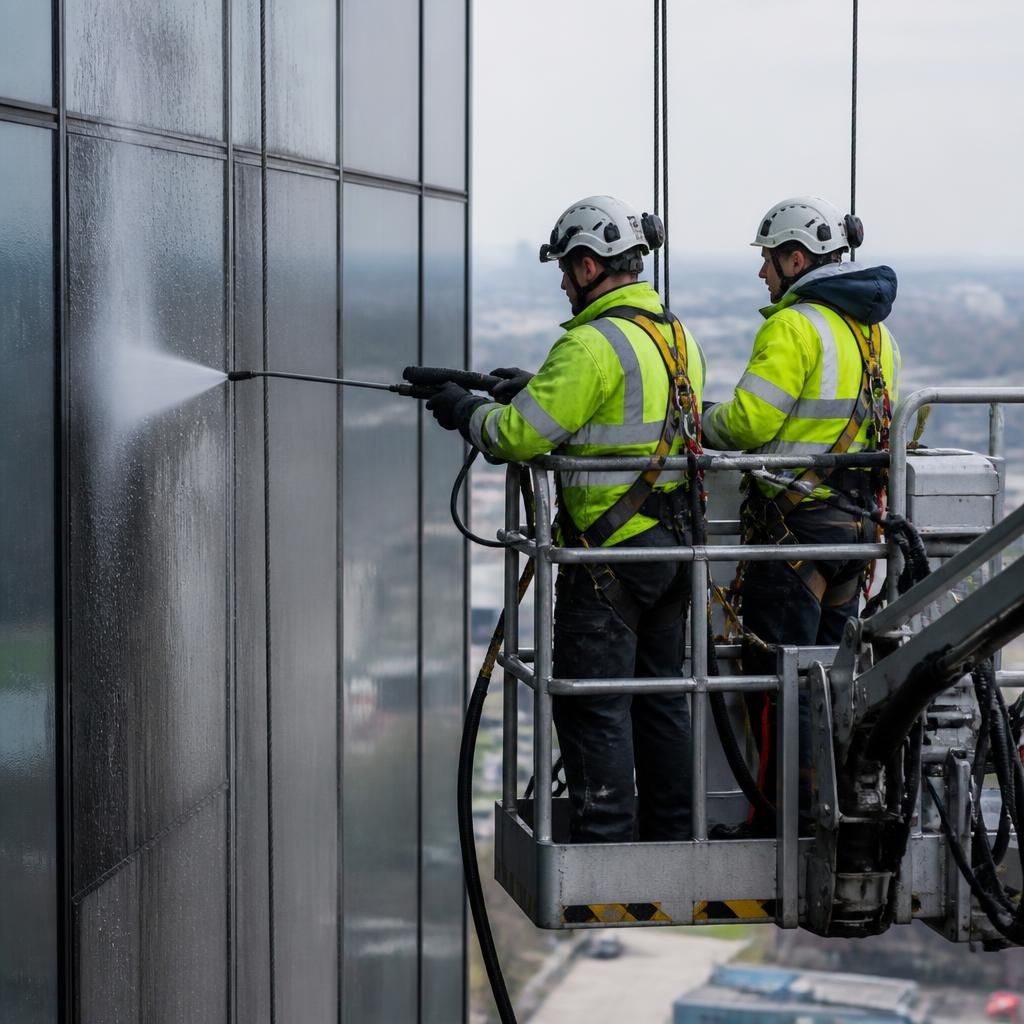
Safe high-rise steam jet washing depends on selecting and inspecting the correct access system before work begins. Powered access platforms, suspended access equipment, scaffolding and rope access each have different operating limits, anchorage requirements and rescue procedures. The choice should reflect the building’s height, façade design, working position, surface conditions and the weight and movement of hoses and equipment.
Access equipment must be operated by trained, competent personnel and checked before use. Guardrails, gates, anchors, harnesses, lanyards, hoses and communication systems should be secure and suitable for the task. Rope access requires independent attachment points, a second line and a practical rescue plan; relying solely on the emergency services is not an adequate arrangement. Work should stop if wind, rain, poor visibility or equipment defects make the system unsafe.