
What maintenance is required after steam jet washing?
After steam jet washing, inspect the cleaned surfaces for remaining staining, damage, failed sealant and areas requiring repair, then allow them to dry fully before applying any protective coating or carrying out remedial work. Ongoing maintenance should include routine inspections, prompt removal of new dirt, organic growth or graffiti, and checks to drainage, joints and vulnerable finishes so problems do not develop between scheduled cleans.
Maintenance after steam jet washing involves checking the cleaned area, allowing surfaces to dry fully, completing any necessary repairs or protection, and establishing a routine inspection and cleaning plan. Steam jet washing removes accumulated dirt, organic growth, pollutants and some staining, but it does not correct defective joints, damaged coatings, failed sealants, blocked drainage or underlying moisture problems.
Inspect the surfaces after cleaning
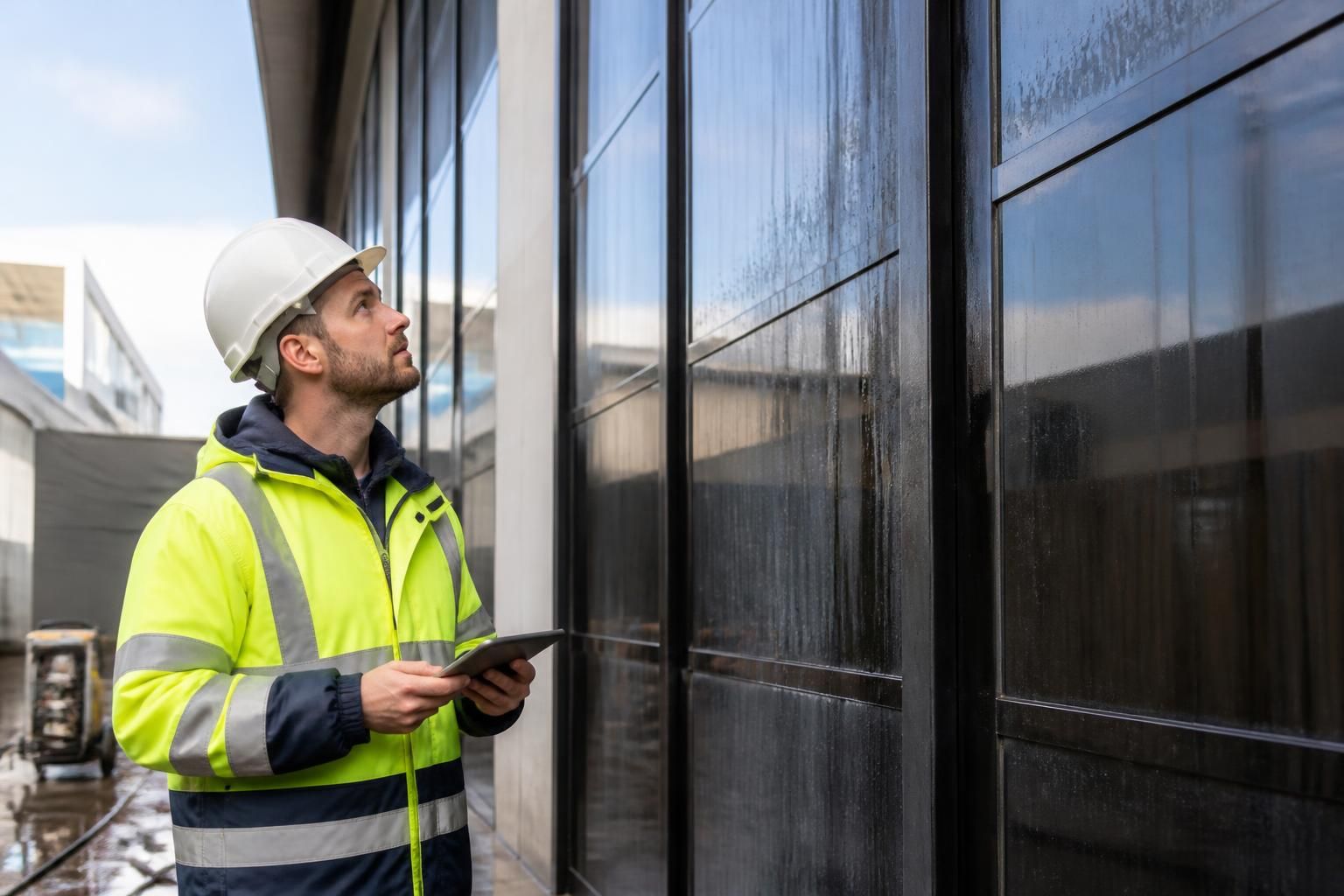
Once the work is complete, inspect the façade, cladding, paving, roof areas or other treated surfaces in good lighting. Look for remaining staining, areas that have not cleaned uniformly, exposed defects, loose finishes, failed pointing, cracked sealant and damage that may have been hidden by dirt. A post-clean inspection is also an opportunity to identify deterioration that requires a separate repair rather than further washing.
Where appropriate, record the condition with photographs and note the location of defects. This provides a useful maintenance record and helps distinguish pre-existing damage from issues that develop later. Any concerns should be raised before applying coatings, carrying out repairs or returning the area to normal use.
Allow the surface to dry properly
Surfaces should be given sufficient time to dry before sealing, painting, repointing or carrying out other remedial work. Drying time depends on the material, weather, shade, ventilation, surface porosity and the amount of water used during cleaning. Trapped moisture can affect adhesion, cause blistering or discolouration, and prevent repair materials from performing as intended.
Do not assume that a surface is dry simply because it appears dry externally. Porous masonry, joints, roof materials and textured coatings can retain moisture below the surface. The contractor or coating manufacturer may recommend moisture checks before protective treatments are applied.
Complete repairs and protective treatments
Steam jet washing should be followed by repairs identified during the inspection. These may include renewing failed sealant, repairing damaged pointing, replacing loose or broken finishes, treating corrosion, reinstating protective coatings or addressing defects around windows, doors and service penetrations. Repairs should use materials compatible with the existing surface and should not be used to conceal continuing water ingress or structural movement.
A protective treatment may be suitable for some masonry, paving, cladding or other porous materials, but it should not be applied automatically. The product must be compatible with the substrate, existing coatings and intended appearance. Application should follow the manufacturer’s requirements for surface preparation, weather conditions and drying. A small test area is advisable where appearance, absorption or compatibility is uncertain.
Check drainage and surrounding details
Cleaning can expose or dislodge debris around gutters, outlets, channels, gullies and surface drains. These should be checked and cleared so that wash water and rainfall can drain correctly. Inspect downpipes, overflow routes, thresholds and joints for blockages or leaks, particularly where water could reach occupied areas or electrical equipment.
Also check nearby landscaping, street furniture, loading areas and access routes. Remove any remaining slurry, loosened debris or cleaning residue before it dries and becomes difficult to remove. Where wash water has entered a drainage system, confirm that the area has been left clear and compliant with the site’s requirements.
Reinstate the site safely
Keep treated areas protected from unnecessary traffic until they are dry and safe for use. This is particularly important for pedestrian paving, ramps, stairs, entrances and car parks, where residual moisture can create a slip risk. Replace or remove signage, barriers and access equipment only after the responsible person has confirmed that the area can be reopened.
Check that doors, vents, grilles, lighting, signage and external equipment are clean, secure and operating correctly. Any masking or temporary protection used during the work should be removed carefully, without damaging newly cleaned or repaired surfaces.
Set an ongoing inspection routine
Regular inspections help prevent the cleaned appearance from deteriorating and allow minor defects to be addressed before they become costly problems. The inspection should consider:
- New dirt, traffic film, oil deposits or bird fouling.
- Algae, moss, lichen or other organic growth, especially in shaded and damp areas.
- Fresh graffiti or adhesive residue that needs prompt removal.
- Blocked gutters, gullies, channels and drainage outlets.
- Cracks, open joints, failed sealant, loose panels or damaged coatings.
- Water staining, damp patches or signs of leaks around openings and roof details.
- Changes in slip resistance or surface condition on pedestrian and vehicle routes.
The frequency of inspections should reflect the building’s location, exposure, surface type, occupancy and risk. High-traffic premises, sites near busy roads, industrial environments, coastal locations and areas vulnerable to graffiti or organic growth generally need closer monitoring than sheltered premises.
Deal with new contamination promptly
Small areas of graffiti, bird fouling, spills and early organic growth are usually easier to remove before they weather or bond firmly to the surface. Use the agreed cleaning method for the material rather than repeating aggressive pressure or heat without assessment. A localised treatment may be more appropriate than cleaning an entire elevation, particularly where the surrounding surface has a protective finish or a different level of weathering.
Do not use unapproved chemicals, abrasive tools or domestic pressure washers on commercial façades, coated panels, historic masonry or delicate finishes. Incorrect follow-up cleaning can mark the surface, strip protection, force water into joints or create visible patches.
Maintain records and review the cleaning plan
Keep the completion details, inspection notes, photographs, repair records and any product information for protective treatments. These records help facilities teams monitor changes over time and plan future works without relying solely on visual memory. Review the maintenance plan when the building is altered, its use changes, new contamination appears or defects are found.
Steam jet washing is most effective as part of planned exterior maintenance rather than as a substitute for repairs or routine inspections. If staining returns unusually quickly, moisture appears, coatings fail or a surface changes after cleaning, arrange an assessment before carrying out further washing. The cause may be defective drainage, water ingress, pollution, biological growth or material deterioration, and treating the cause will usually provide a more durable result than repeated cleaning alone.
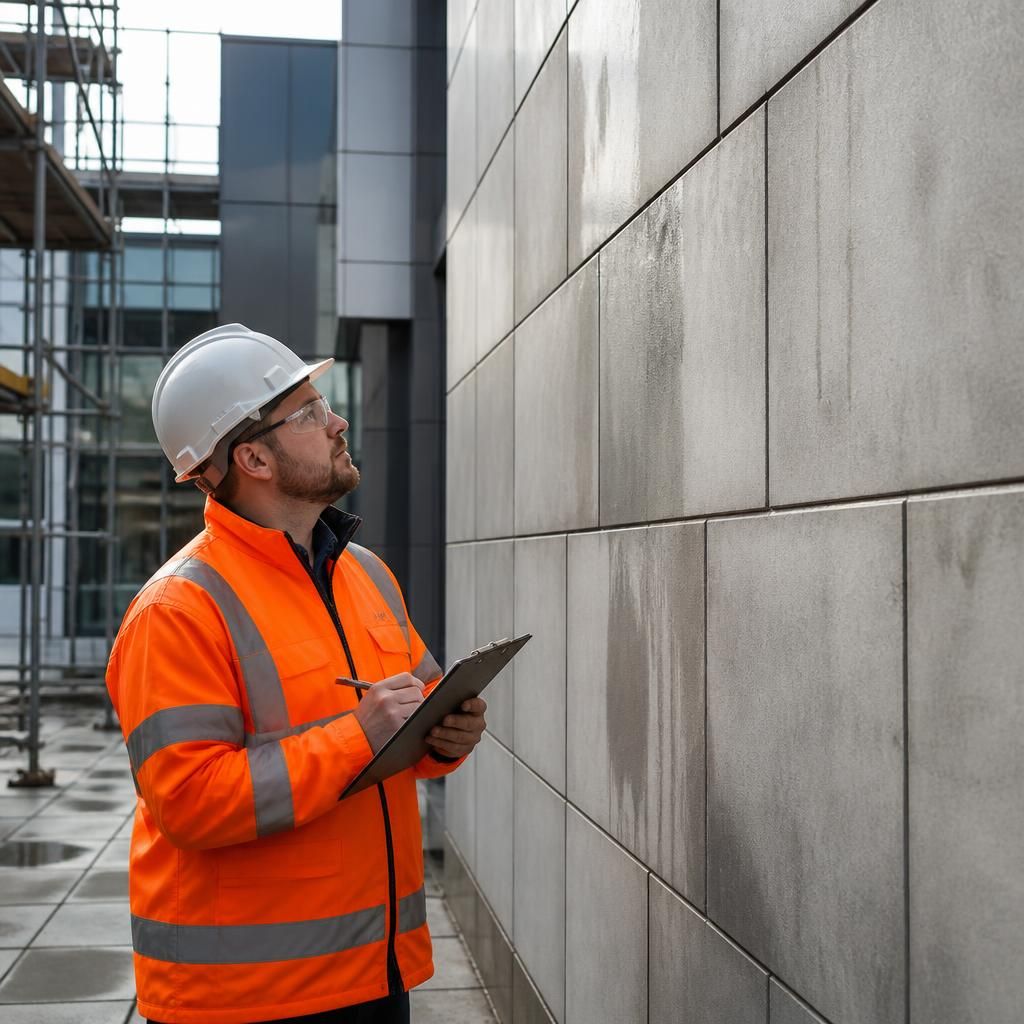
After steam jet washing, the cleaned surface should be inspected and allowed to dry fully before repairs, sealing or repainting begins. Moisture can remain within porous masonry, joints, roof materials and textured coatings even when the surface appears dry.
Check for remaining staining, loose finishes, failed sealant, cracked pointing, blocked drainage and defects previously hidden by dirt. Record any issues with photographs and complete compatible repairs before applying a protective treatment. Where adhesion or appearance matters, follow the coating manufacturer’s preparation requirements and carry out a small test area first.