
What are the environmental benefits of using steam jet washing over chemical-based cleaning methods for building exteriors?
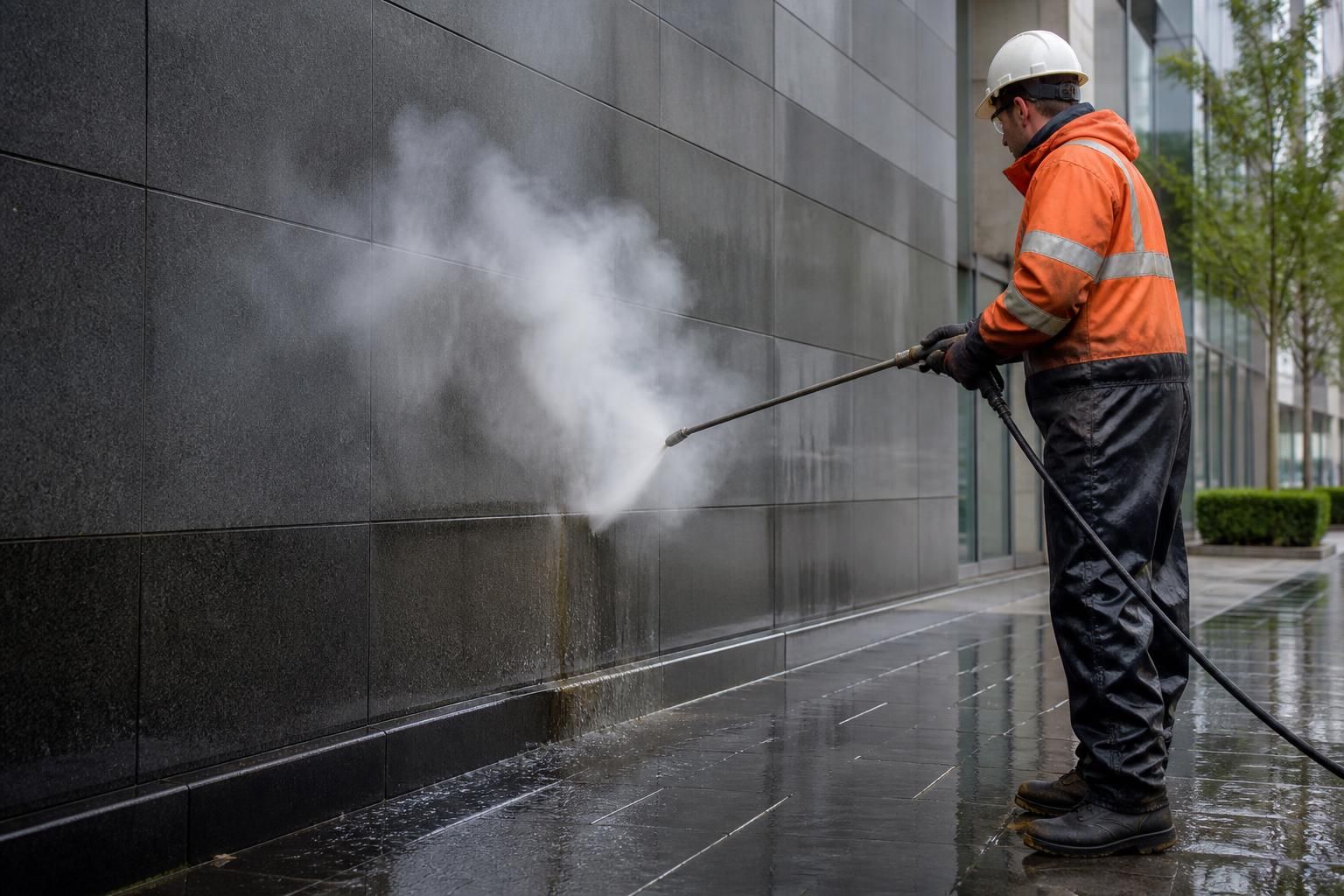
Steam jet washing can reduce the environmental impact of exterior cleaning by using less water and little or no chemical detergent, which helps limit contaminated runoff and the risk of harm to surrounding soil, drainage systems and vegetation. It can also remove dirt, grease, biological growth and some surface contaminants through heat and pressure alone, although suitable wastewater controls are still essential.
Steam jet washing can have a lower environmental impact than chemical-based exterior cleaning because it uses heat and controlled water pressure to remove many types of dirt, grease, biological growth and surface contamination, often without detergent. This can reduce chemical use, water consumption and the risk of polluted runoff, provided the work is planned properly and wastewater is contained and disposed of responsibly.
Reduced reliance on cleaning chemicals
Traditional exterior cleaning may rely on detergents, degreasers, biocides or other treatment products to loosen contamination. Steam jet washing can often achieve the required result using heated water and mechanical action instead. Removing or reducing chemical use helps limit the release of substances into surface water drains, soil, planted areas and nearby watercourses.
This is particularly relevant when cleaning façades, paving, car parks, loading areas and other hard surfaces where runoff can travel across a large area. It can also reduce the need to store, transport and handle chemical products on site. Chemicals may still be appropriate for specific contaminants or sensitive applications, but they should be selected and used only where necessary.
Lower risk of contaminated runoff
Runoff from exterior cleaning can contain detergent residues, oils, loosened dirt, heavy deposits, biological matter and other contaminants. Steam cleaning does not make wastewater harmless automatically, but using fewer chemicals can reduce the chemical load within that wastewater. The remaining residue still needs to be assessed, especially when cleaning areas exposed to vehicle fluids, industrial deposits, paint, fuel or other hazardous substances.
Professional cleaning should include a suitable runoff plan. This may involve drain covers, bunding, wet vacuums, collection systems, temporary diversion measures or controlled discharge arrangements. Wastewater must not be allowed to enter surface water drains or surrounding ground without confirming that the discharge is permitted and safe. Where contamination is likely, collected water may require treatment or disposal through an authorised route.
Potentially lower water consumption
Steam systems use heated water efficiently and can remove certain deposits with a lower flow rate than conventional high-volume pressure washing. The exact saving depends on the equipment, operating settings, surface condition, cleaning speed and whether rinsing is required. Steam jet washing is therefore not automatically more water-efficient in every application, but it can reduce water use when the method is matched to the contamination and the operator avoids unnecessary rinsing.
Using less water can reduce demand on the mains supply and decrease the volume of wastewater that must be collected, treated or transported. It can also make controlled cleaning more practical on sites where drainage is limited or where water use needs to be managed carefully.
Less disruption to soil, planting and surrounding habitats
Chemical overspray and contaminated runoff can affect grass, planted borders, soil organisms and aquatic environments. A low-chemical steam cleaning method can reduce these risks, particularly when operators use controlled application techniques and protect nearby vegetation. The cleaning area should still be isolated where necessary, as heat, displaced dirt, oils and biological residues may also cause harm if they reach sensitive areas.
Steam jet washing can also reduce the need for aggressive treatments on surfaces affected by algae, moss or other biological growth. However, removing growth does not always prevent it returning. Improving drainage, reducing persistent dampness and carrying out planned maintenance may be more environmentally responsible than repeatedly applying chemical treatments.
Lower chemical exposure during routine maintenance
Reducing the use of detergents and biocides can simplify site controls for building managers and contractors. It may reduce chemical storage requirements, packaging waste, product transport and the potential for spills. It can also reduce exposure risks for operatives and members of the public, although steam, hot water, pressure and contaminated residues still require robust safety controls.
Operators should continue to follow relevant risk assessments, product instructions and control measures. Where a chemical is required, the product should be proportionate to the task, applied at the correct concentration and prevented from entering drains or unprotected ground.
Energy use still needs to be considered
Steam equipment heats water, so it uses energy. The environmental advantage is not simply that steam is “chemical-free”; it comes from the overall balance between energy consumption, water use, chemical use, wastewater handling and the cleaning result. Efficient equipment, appropriate operating temperatures, well-maintained machinery and sensible work planning can help avoid unnecessary energy use.
A professional assessment should consider whether steam is suitable for the deposit and surface before work begins. Using a high-temperature process where a lower-impact method would achieve the same result is not efficient. Conversely, a controlled steam clean may avoid repeated chemical applications or extensive rinsing, making it the more suitable option over the full maintenance cycle.
Environmental controls remain essential
Steam jet washing should not be presented as an impact-free process. Heat and pressure can damage coatings, sealants, mortar joints, painted finishes or delicate materials if the settings are unsuitable. Damaged surfaces may then require replacement or additional treatment, creating avoidable environmental costs. A competent contractor should test an inconspicuous area, select suitable pressure and temperature settings, protect vulnerable features and monitor the result throughout the work.
Before cleaning a commercial or industrial exterior, the contractor should establish:
- what the surface is made from and whether it has existing coatings or treatments;
- which contaminants are present and whether they may be hazardous;
- where rinse water and loosened material could travel;
- how drains, planted areas, pedestrian routes and watercourses will be protected;
- whether wastewater can be discharged lawfully or must be collected;
- what method will use the least water, chemical and energy while achieving the required standard.
For UK commercial sites, wastewater management should be agreed with the relevant site representative and checked against applicable drainage, environmental and local authority requirements. The correct approach varies between a paved retail area, an industrial yard, a listed façade and a high-rise building, so a standard cleaning method should not be applied without a site assessment.
Overall, steam jet washing can be a more environmentally responsible choice than chemical-led cleaning for many building exteriors. Its main benefits are reduced detergent use, potentially lower water consumption and less risk of chemical-contaminated runoff. Those benefits depend on correct equipment selection, efficient operation, surface protection and proper wastewater control. The most sustainable method is the one that achieves the required clean with the least overall use of water, chemicals and energy, without transferring contamination to drains, soil or surrounding habitats.
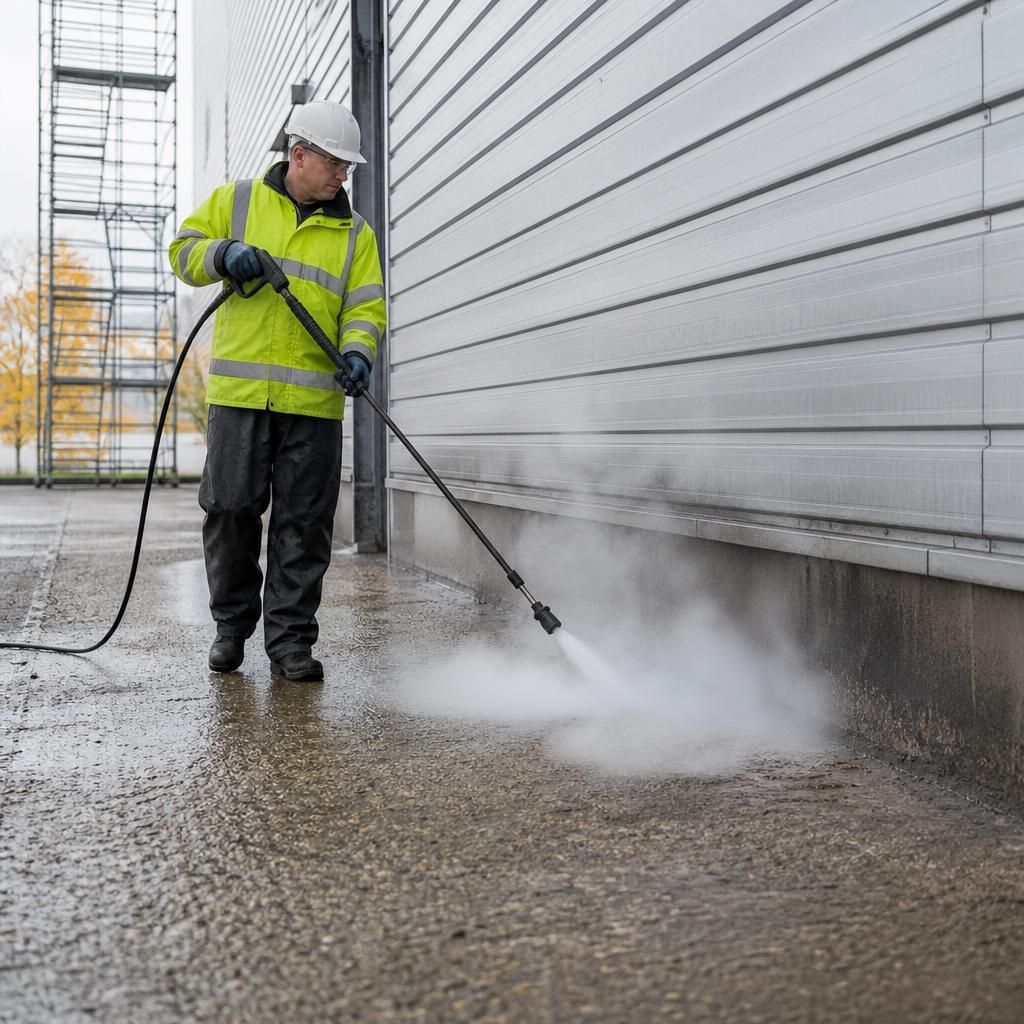
Steam jet washing can reduce the environmental impact of exterior cleaning by removing many deposits with heated water and controlled pressure, rather than relying on detergents, degreasers or biocides. Using fewer chemical products can reduce the risk of residues reaching planted areas, soil, surface water drains and nearby watercourses.
This does not make wastewater harmless automatically. Dirt, oils, biological matter and industrial contaminants may still be present, so professional cleaning should include suitable drain protection, runoff containment and lawful wastewater disposal. The most responsible approach is to use steam where it is suitable, minimise unnecessary rinsing and control all loosened material throughout the work.
Discuss Environmentally Responsible Steam Jet Washing for Your Building
Contact Encanto Exterior Cleaning to arrange an environmental assessment for your building exterior and identify the most suitable steam jet washing method. We can advise on chemical reduction, water use and responsible wastewater control before work begins.