
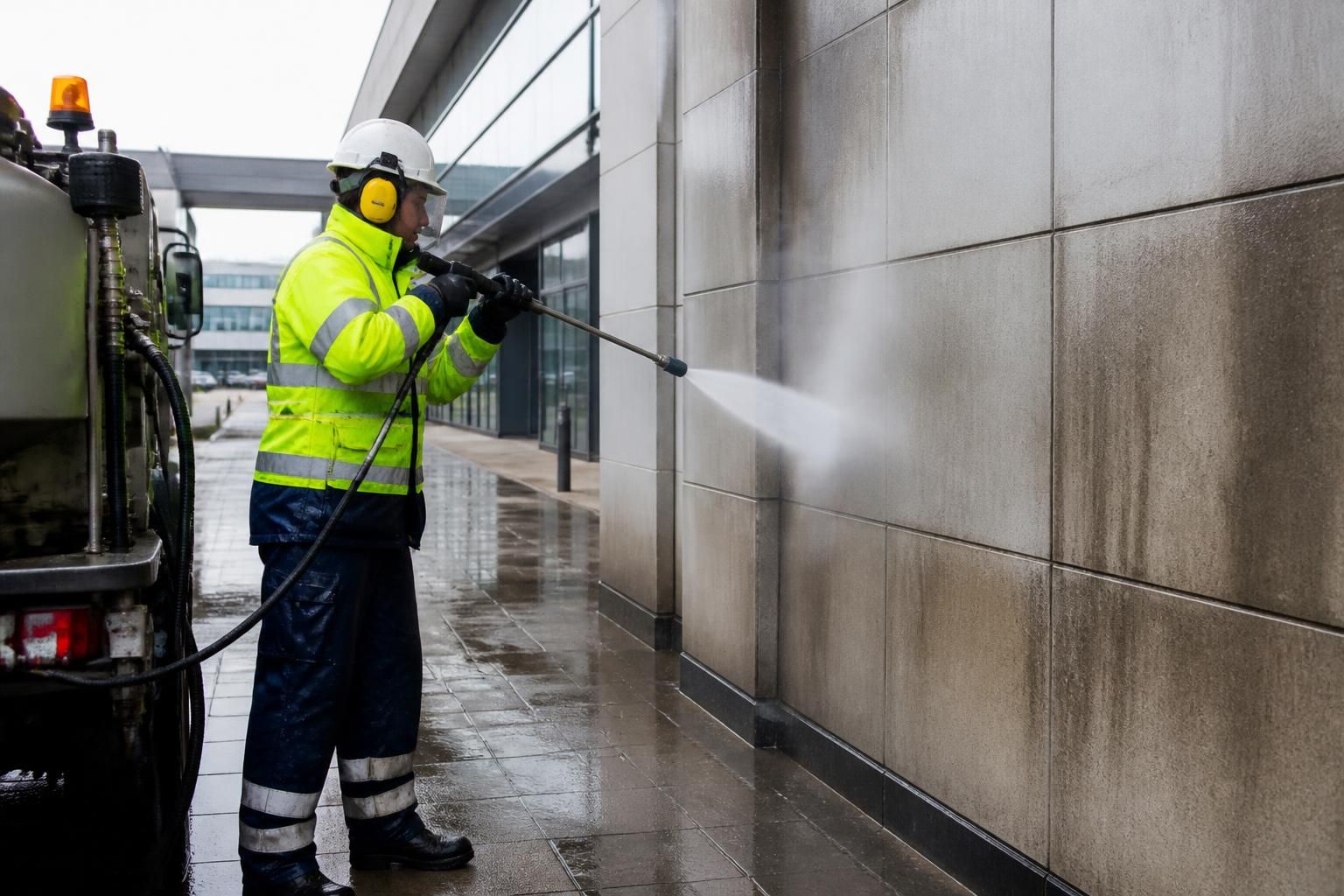
Is steam jet washing safe for all exterior surfaces?
Steam jet washing is safe for many exterior surfaces, but not all surfaces or conditions. The correct temperature, pressure and distance must be selected after assessing the material, coatings, condition and joints, as excessive heat or moisture can damage delicate paintwork, timber, sealants, aged masonry and some plastics.
Steam jet washing is safe for many exterior surfaces, but it is not suitable for every material or condition. Safety depends on the surface composition, its age and condition, existing coatings, the amount of heat and pressure applied, and the operator’s control of moisture and run-off. A professional assessment should take place before cleaning façades, cladding, paving, roofs or other external surfaces.
Steam cleaning uses heated water, usually with lower pressure than conventional pressure washing. The heat can soften oils, biological growth, chewing gum, traffic film, grease and some surface coatings, allowing them to be removed with less mechanical force. This can be advantageous on surfaces where high pressure might cause damage. However, heat and moisture can still affect vulnerable materials, particularly when the operator works too closely, leaves the jet in one place or allows water to enter joints and defects.
Surfaces that are often suitable include:
- Well-maintained brickwork and some types of masonry, where the mortar and surface are sound.
- Concrete paving, kerbs, loading areas and car parks, subject to checking for cracks, delamination and weak edges.
- Metal cladding and other robust, coated metal surfaces, provided the coating is firmly bonded and compatible with heat.
- Glass and some hard glazed surfaces, using suitable pressure, distance and handling methods.
- Stone surfaces that are stable and resistant to heat and moisture, following a test clean to confirm the method.
Suitability cannot be determined by the material name alone. Brick, stone, concrete and metal vary considerably in porosity, finish, coating and condition. A previously repaired façade, painted surface or weathered paving area may require a different approach from an otherwise similar surface elsewhere on the same building.
Greater care is needed with vulnerable or deteriorated materials. Aged masonry may have friable faces or weakened mortar joints that can be eroded by heat, water or even relatively low pressure. Natural stone can have open pores, mineral deposits, old sealers or finishes that respond unpredictably to hot cleaning. Timber can absorb moisture, swell, split or lose an existing coating, particularly where it is already weathered. Steam may also soften paint, stain finishes or protective treatments that the client intends to retain.
Painted, powder-coated and factory-finished surfaces should be checked for adhesion and compatibility before cleaning. Heat can blister, soften or discolour some coatings, while pressurised water can lift edges that are already failing. The same applies to render, painted façades and decorative finishes. If a coating is loose, chalking or cracked, cleaning may expose the underlying problem rather than resolve it.
Some plastics, membranes, sealants and rubber components are also heat-sensitive. Cladding trims, window seals, roof details, expansion joints and mastic may deform, soften or lose adhesion if exposed to concentrated heat. Insulated panels and composite materials require particular care around joints, fixings and damaged edges. The cleaning method should prevent water being driven behind panels or into the building envelope.
Roofing requires a separate assessment. Steam jet washing may be appropriate for some robust roof coverings, but it is not automatically safe for roof membranes, coated metal, fragile tiles, aged slates or areas with exposed insulation. Heat and moisture can affect waterproofing details, while pressure can dislodge tiles, damage laps or force water beneath the covering. Drainage routes, outlets, rooflights and vulnerable penetrations should be identified before work begins.
A competent cleaning process normally includes:
- Identifying the surface, finish, coating and likely contaminants.
- Inspecting for cracks, open joints, corrosion, delamination, loose coatings, failed sealants and other defects.
- Checking whether heat, moisture or cleaning run-off could affect adjacent materials, occupants, electrical equipment or drainage systems.
- Carrying out a discreet test clean using the lowest effective combination of heat, pressure and dwell time.
- Inspecting the test area after cleaning and, where relevant, after it has dried, before proceeding with the wider elevation or surface.
- Adjusting the nozzle, working distance, water flow and cleaning pattern to suit the material rather than using one setting throughout.
Keeping the nozzle moving is important. A concentrated jet held over one point transfers more heat and force to the surface and increases the risk of marking, erosion or coating failure. Edges, corners, joints and damaged areas should be treated more cautiously than sound open surfaces. Cleaning should also work with the surface rather than forcing water into gaps, vents, seals or façade penetrations.
Steam jet washing is not always the safest option simply because it uses less pressure than conventional pressure washing. Cold water at high pressure can cause mechanical damage, while hot water can cause thermal or moisture-related damage. In some cases, a soft wash, low-pressure rinse, dry method or manual treatment will be more appropriate. The correct choice depends on the contamination and the surface, not on the equipment alone.
Before work starts, confirm that the contractor will protect vulnerable adjacent areas, control run-off and use suitable access and safety procedures. High-level cleaning introduces additional risks from falling debris, overspray, hot water and wet surfaces, so exclusion zones and safe access arrangements may be necessary. Any suspected asbestos-containing material, hazardous coating or contaminated run-off should be identified and managed through the appropriate specialist process rather than treated as routine cleaning.
For commercial premises, the safest approach is a recorded site assessment, an agreed test area and a method statement that identifies surface-specific controls. Steam jet washing can provide effective, low-chemical cleaning for many robust exteriors, but it should never be treated as a universal solution. Where the material, coating or condition is uncertain, testing and conservative settings help protect the building while establishing whether steam cleaning is appropriate.
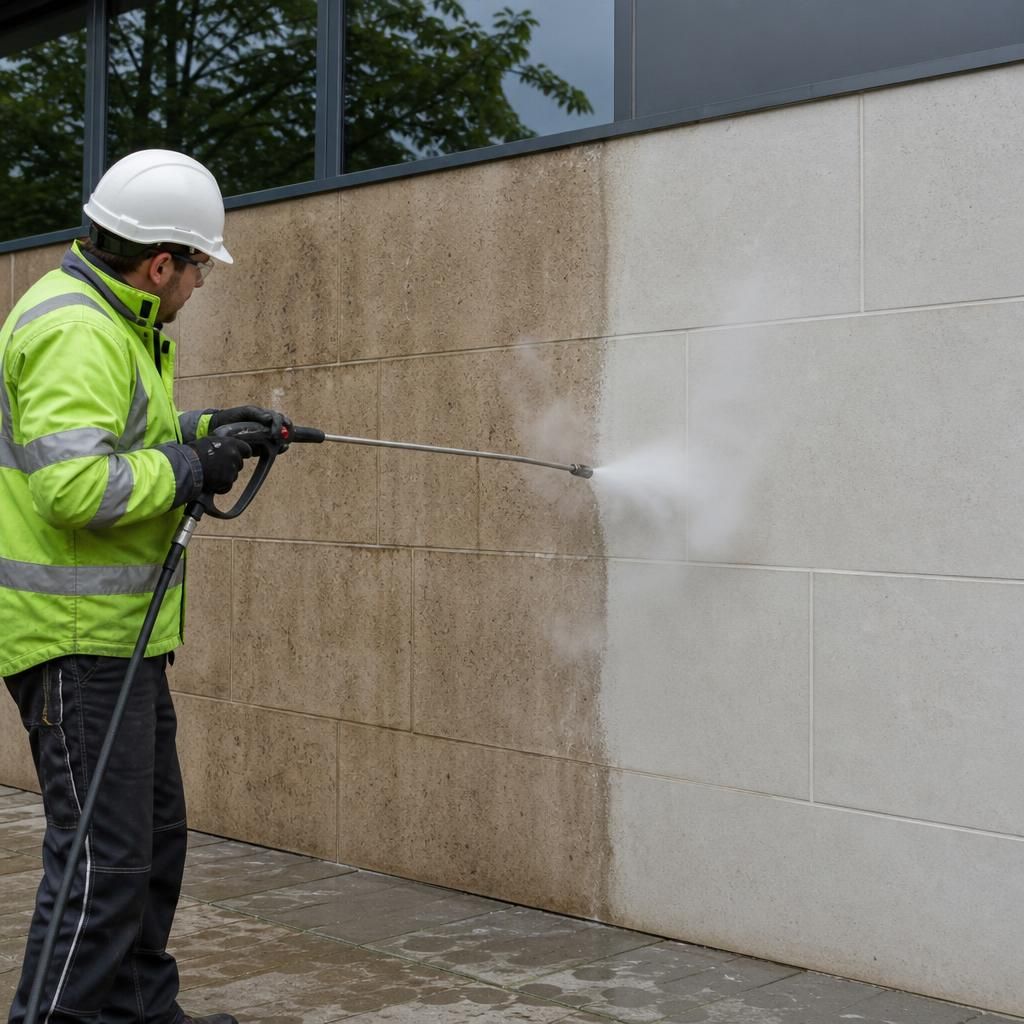
Steam jet washing is not automatically safe for every exterior surface. Its suitability depends on the material, coating, condition and the balance of heat, pressure, moisture and working distance used by the operator.
A discreet test clean should be completed before full-scale work, using the lowest effective settings. The area should be checked while wet and again after drying for changes such as coating softening, discolouration, surface erosion, swelling or water penetration. If the test reveals a risk, a lower-pressure rinse, soft wash or manual cleaning method may be more appropriate.