
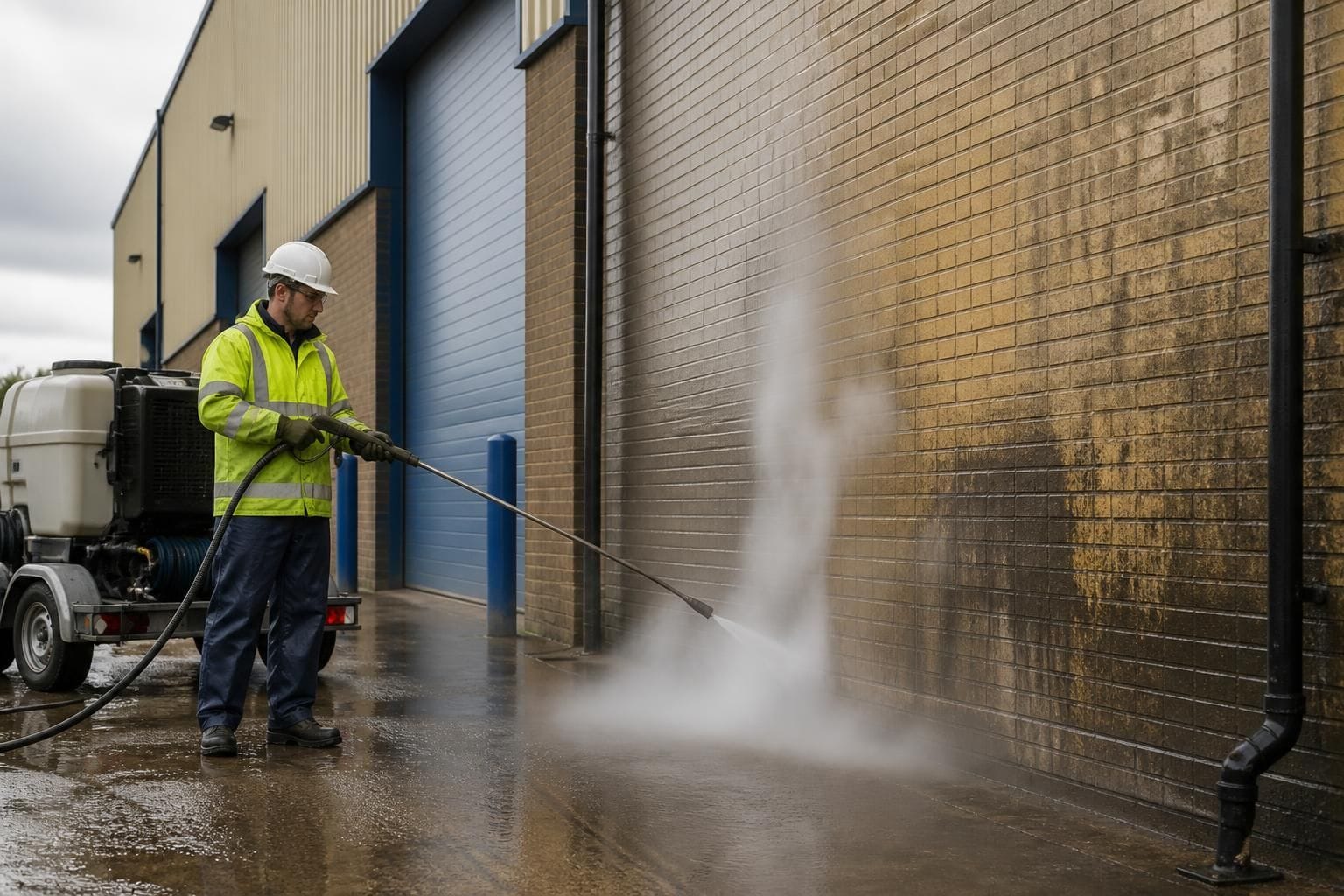
How does steam jet washing differ from traditional pressure washing?
Steam jet washing uses superheated water vapour at a much higher temperature and generally lower pressure, while traditional pressure washing relies primarily on a stronger, faster water jet to remove dirt. The difference means steam can sanitise and dissolve oil, grease, algae and some coatings with less water and reduced mechanical force, whereas pressure washing is often faster for robust surfaces and heavy loose debris.
Steam jet washing differs from traditional pressure washing mainly in the balance between heat, water volume and mechanical force. Steam jet washing uses very hot water or steam, usually delivered at comparatively lower pressure and lower flow, to soften, dissolve and lift contamination. Traditional pressure washing relies more heavily on the force of a faster, higher-volume water jet to dislodge dirt. Both methods can be effective, but the appropriate choice depends on the surface, the type of contamination and the condition of the building or site.
How the two cleaning methods work
Traditional pressure washing removes contamination through impact and water movement. The jet breaks the bond between dirt and the substrate, flushes away loose debris and can clean large, robust areas efficiently. It is particularly useful where the surface can tolerate mechanical force and where the main problem is surface dirt, mud, dust, moss or other loosely attached material.
Steam jet washing adds heat as the primary cleaning mechanism. The high temperature softens oils, grease, chewing gum, biological residues and some surface coatings, making them easier to remove without relying solely on pressure. Heat can also help loosen ingrained dirt from textured materials and reduce the need for detergents, although the cleaning process still requires proper control of temperature, pressure and dwell time.
Pressure and temperature
The most important practical difference is that pressure washing uses mechanical energy, while steam cleaning uses a greater proportion of thermal energy. A high-pressure system may remove contamination quickly from concrete or hard paving, but excessive pressure can drive water into joints, damage weak mortar, strip coatings or mark softer materials. Steam jet washing can achieve effective cleaning with less impact on the substrate, provided that the operator selects a suitable temperature and maintains a safe working distance.
Steam does not mean that pressure is irrelevant. Steam-cleaning equipment still produces a pressurised output, and poorly controlled work can damage paint, sealants, pointing, timber or vulnerable cladding. The term describes the heat and low-water-volume cleaning process rather than guaranteeing that every steam system is gentle on every surface.
Differences in water use and run-off
Steam jet washing generally uses less water than conventional high-flow pressure washing because it applies heat to a smaller volume of water. This can reduce the amount of run-off requiring collection and make the method useful where drainage capacity is limited. It does not remove the need for responsible wastewater management. Oil, silt, paint residue, detergents and biological contamination must still be prevented from entering surface-water drains or nearby watercourses.
Traditional pressure washing can produce substantial run-off, particularly on large façades, car parks and paved areas. The flow may be helpful when flushing away loose debris, but the cleaning plan should account for drainage, bunding, water recovery and disposal requirements. The final method should be selected with the site’s environmental controls and local drainage arrangements in mind.
Which method removes particular contamination?
- Oil and grease: Steam is often more effective because heat softens and mobilises oily residues. Pressure washing may still be suitable, but it can require a compatible detergent and careful control of contaminated run-off.
- Chewing gum and adhesive residues: The heat from steam can soften the material so it can be lifted with less aggressive scraping or pressure.
- Algae, moss and organic growth: Either method may remove visible growth. Steam can help detach and reduce biological contamination, but it does not replace ongoing maintenance or address conditions such as persistent damp and poor drainage.
- Loose mud, dust and general debris: Conventional pressure washing is often quicker on strong surfaces because the higher water flow rapidly flushes material away.
- Graffiti and paint: Steam may soften certain paints and reduce the need for chemicals, but success depends on the paint, substrate, age of the marking and any protective coating. Some graffiti requires a controlled combination of heat, low-pressure cleaning and a suitable remover.
- Efflorescence and mineral deposits: Neither method should be selected automatically. Deposits may need a carefully chosen treatment, and aggressive pressure can worsen damage to porous masonry or joints.
Suitability for commercial and industrial surfaces
Traditional pressure washing is commonly suitable for sound concrete, robust block paving, hard-wearing industrial floors, plant areas and other surfaces designed to withstand mechanical cleaning. It can be the more practical option for extensive loose contamination where speed and flushing capacity are important.
Steam jet washing is often considered for façades, architectural details, painted surfaces, cladding, stonework, loading areas and sites where grease or bonded contamination is the main concern. Its lower water use and reduced reliance on pressure can be advantageous around entrances, occupied premises and areas containing sensitive fixtures. However, lower pressure does not make a surface automatically suitable. Porous stone, friable brick, degraded mortar, failing coatings, timber and some composite materials may be vulnerable to heat, moisture or thermal shock.
Before work starts, the substrate should be assessed for existing defects, previous treatments, loose coatings, open joints and hidden services. A small test area helps establish whether the selected temperature, pressure, nozzle and cleaning pattern provide an acceptable result without discolouration, etching or water penetration.
Cleaning speed and finish
Pressure washing can cover large areas quickly where contamination is loose and the surface is durable. Steam jet washing may take longer when contamination has to be softened progressively or removed in controlled passes. The apparent speed of either method also depends on access, surface profile, contamination depth, preparation, wastewater controls and whether additional treatment is required.
Steam can produce a more controlled finish on some detailed or sensitive areas because the operator is not relying on a highly aggressive impact. Conversely, high-pressure water may be preferable for rinsing and removing loosened debris from open external areas. In commercial work, the most effective approach may therefore combine methods rather than use one system across every surface.
Energy, chemicals and hygiene considerations
Steam jet washing can reduce the need for chemical degreasers and biocides where heat is sufficient to loosen contamination. This may simplify chemical handling and reduce chemical residues, but it is not a guarantee of chemical-free cleaning. Some contamination and some substrates require a compatible treatment to achieve a complete result.
The heat can reduce microbial contamination on suitable hard surfaces, but steam cleaning should not be described as automatic sterilisation. Hygiene outcomes depend on temperature at the surface, contact time, coverage and the nature of the contamination. Commercial operators should follow the relevant site requirements and avoid making disinfection claims that the process has not been validated to support.
How to choose between the methods
- Identify the substrate and check its condition, including coatings, joints and previous repairs.
- Determine whether the contamination is loose, oily, biological, adhesive, painted or deeply ingrained.
- Consider the risk of water penetration, heat damage, surface marking and disturbed pointing.
- Review drainage, wastewater recovery and access requirements before selecting equipment.
- Carry out a controlled test clean and compare the result with the required finish.
- Use the lowest effective pressure and temperature rather than assuming that maximum settings will produce the best outcome.
In practical terms, traditional pressure washing is usually the better fit for fast removal of loose debris from robust surfaces, while steam jet washing is better suited to heat-sensitive contamination such as grease, gum, some organic residues and selected coatings where reduced mechanical force is beneficial. The safest and most efficient choice for a commercial exterior should be based on a documented site assessment and test area, not on pressure or temperature alone.
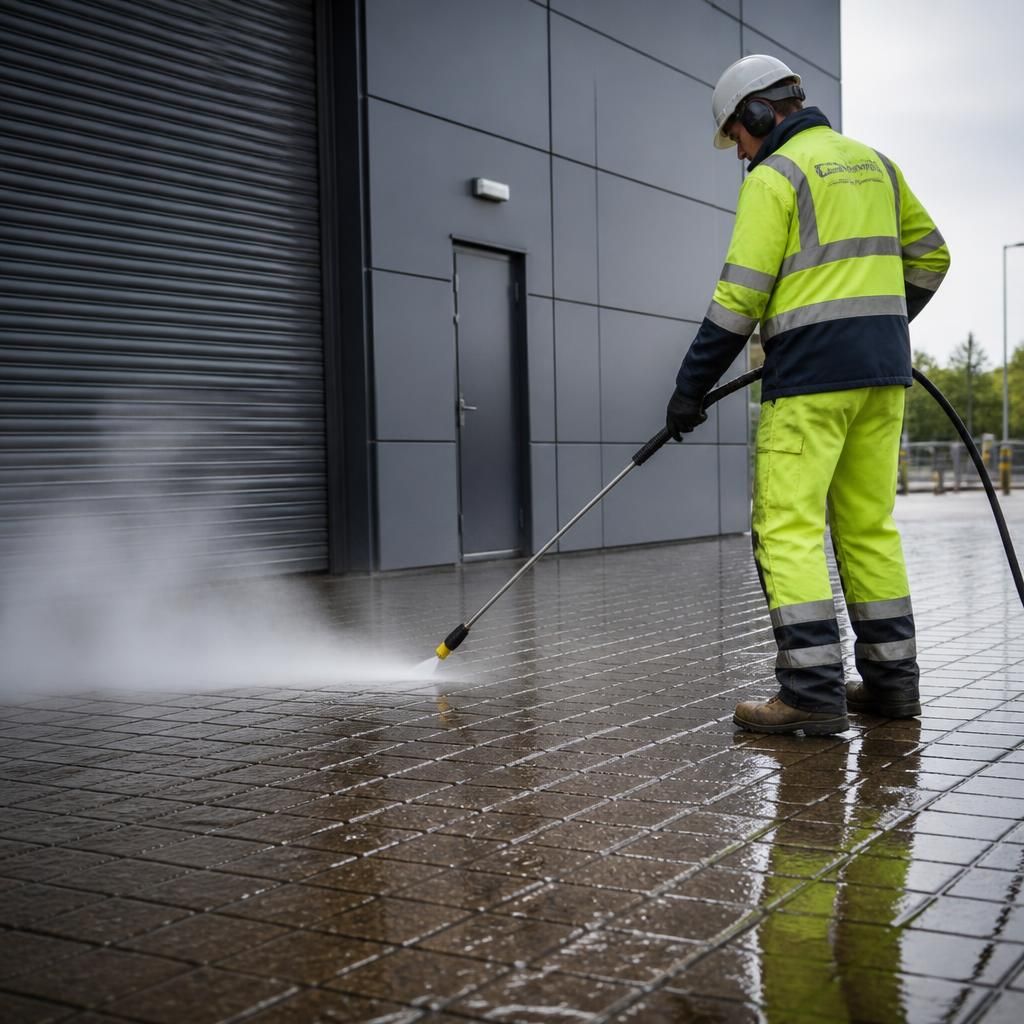
Steam jet washing uses heat to soften and dissolve contamination, while traditional pressure washing relies mainly on the impact and flow of water to dislodge it. This makes steam particularly useful for grease, chewing gum, biological residue and some bonded deposits, often with less water and mechanical force.
Traditional pressure washing is generally faster for removing loose mud, dust, moss and debris from sound concrete, block paving and other robust surfaces. The right choice depends on the substrate, its condition, the type of contamination and the site’s drainage arrangements. A controlled test clean helps confirm the safest and most effective method before larger areas are treated.
Request advice on steam jet or pressure washing
Contact Encanto Exterior Cleaning for advice on whether steam jet washing or traditional pressure washing is more suitable for your commercial exterior. We can assess the surface, contamination and site requirements before recommending an appropriate cleaning method.