
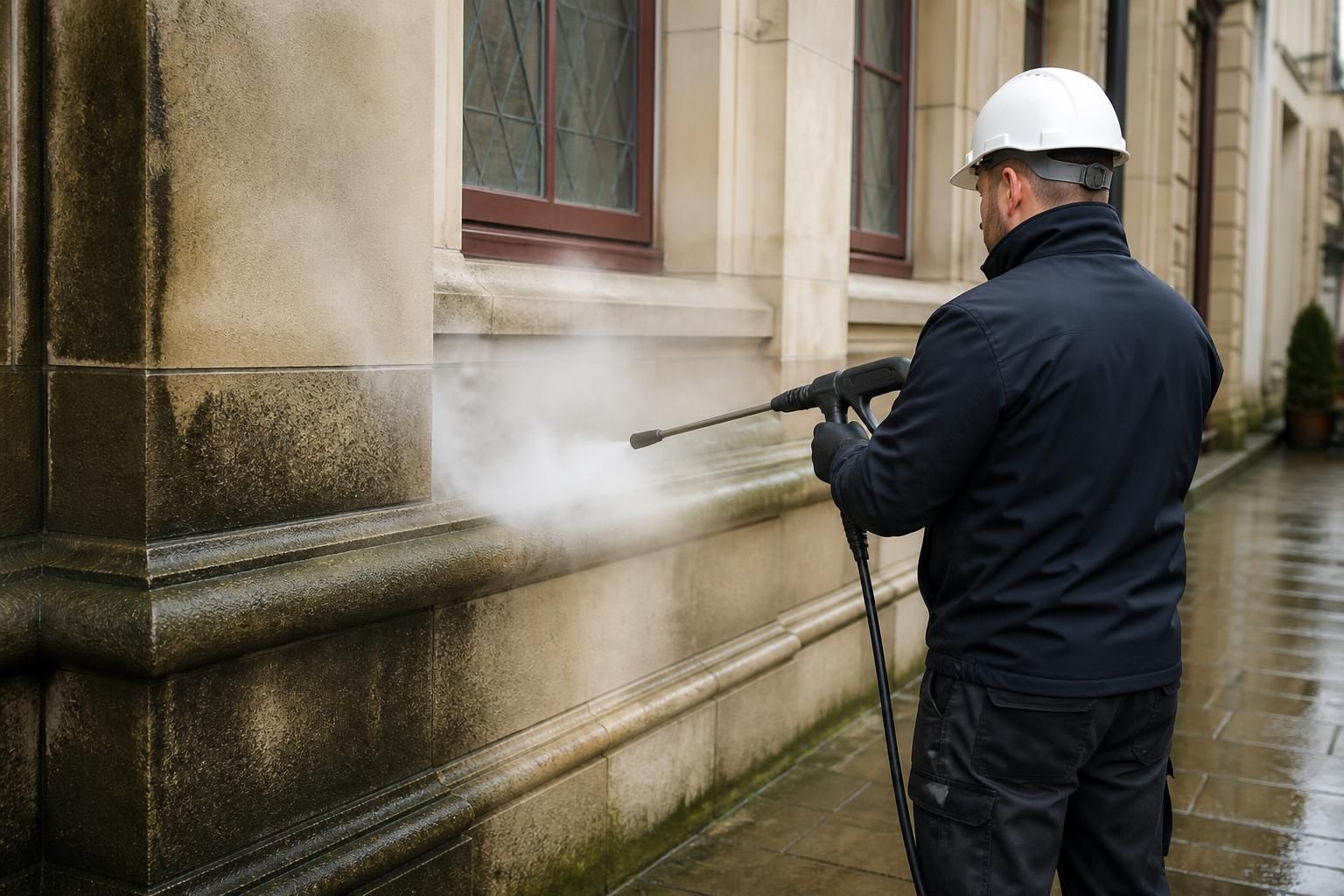
How does steam jet washing compare to traditional pressure washing for cleaning delicate surfaces?
Steam jet washing is generally safer for delicate surfaces because it uses high-temperature steam at lower pressure, reducing the risk of etching, loosening coatings or forcing water into joints. Traditional pressure washing can clean effectively, but requires careful pressure, nozzle and distance control to avoid damaging fragile masonry, painted finishes, render, signage and aged materials.
Steam jet washing is generally the safer option for delicate exterior surfaces because it combines very high-temperature water vapour with substantially lower mechanical pressure than conventional pressure washing. This reduces the risk of etching masonry, lifting paint, loosening pointing, damaging render or forcing water behind cladding and joints. Traditional pressure washing can still be appropriate, but it demands tighter control of pressure, nozzle selection, spray distance, water volume and operator technique.
How the two methods clean
Traditional pressure washing uses a high-volume, pressurised water stream to dislodge dirt, algae, moss, traffic film and other deposits. Its cleaning action is largely mechanical: the force of the water breaks the bond between the contaminant and the surface. This is effective on robust materials, but excessive pressure or an unsuitable nozzle can remove more than the dirt. It may damage the surface itself, particularly where the substrate is aged, friable, porous or already defective.
Steam jet washing uses heated water, often delivered as a steam or low-pressure hot-water stream. Heat softens organic growth, oils, grease, chewing gum, carbon deposits and some coatings, so less physical force is needed. The operator can progressively remove contamination while applying considerably less pressure to the underlying material. Steam cleaning is not simply pressure washing with hotter water; the lower mechanical impact is a key reason it is considered for sensitive surfaces.
Why steam is usually better for delicate surfaces
- Reduced surface erosion: Lower pressure is less likely to abrade soft stone, aged brick, historic masonry or weathered concrete.
- Less risk to coatings: Painted façades, powder-coated panels and protective finishes are less likely to blister, flake or lift when the cleaning method is correctly selected.
- Improved control around joints: A gentler stream reduces the chance of dislodging pointing, sealants, mortar joints and vulnerable interfaces between materials.
- Effective removal of organic deposits: Heat helps break down algae, moss, bird fouling and other biological contamination without relying solely on water force or aggressive chemicals.
- Lower water penetration risk: Using less water and pressure can reduce the likelihood of forcing moisture into cracks, cavities, joints and porous substrates.
Surfaces where the difference is most important
Steam jet washing is often considered for delicate or high-value surfaces such as natural stone, aged brickwork, terracotta, glazed tiles, painted render, architectural detailing, signage and some cladding systems. It can also be useful where a façade has mixed materials that would respond differently to a conventional pressure wash.
For example, a strong jet may remove the surface face from soft brick, enlarge existing defects in render or drive water behind a poorly sealed panel joint. On painted masonry, pressure can expose the substrate by lifting a weak coating. Steam does not eliminate these risks, but its lower impact gives the operator more scope to clean carefully and stop if the material begins to respond adversely.
When traditional pressure washing may still be suitable
Pressure washing remains a practical method for durable surfaces in sound condition, including some concrete yards, robust paving, industrial hardstanding and heavy-duty external areas. It can be faster for removing loose surface dirt over large, resilient areas. The method is not automatically unsuitable for delicate materials; a trained operator may use reduced pressure, a wider fan nozzle, greater working distance and controlled passes. The important point is that the equipment must be adjusted to the surface rather than applying a standard setting across the whole site.
High pressure is particularly unsuitable where there is loose masonry, failed pointing, cracked render, open joints, deteriorated coatings, fragile glazing or evidence of previous water ingress. It may also spread contaminated wash water or drive pollutants into the substrate if the work is not properly contained.
Steam is not risk-free
High-temperature cleaning can still damage sensitive materials if it is used without a proper assessment. Heat may soften certain paints, sealants, plastics, adhesives or older surface treatments. Sudden temperature changes can also stress some materials, while steam entering concealed voids may create moisture problems. Electrical fittings, vulnerable timber, historic finishes and materials of uncertain composition require particular care.
A suitable contractor should inspect the surface first, identify defects and confirm how different materials are joined. A small test area in an inconspicuous location is valuable because it shows whether the surface changes colour, loses its finish, sheds particles or absorbs moisture. The test should be reviewed after drying, as some staining, blooming or coating failure may not be immediately visible.
What determines the safest method
- The type, age, condition and porosity of the substrate.
- The nature and thickness of the contamination.
- Whether the surface has paint, render, sealant, wax, protective coating or historic detailing.
- The condition of joints, pointing, fixings, windows and cladding interfaces.
- The required finish and whether a small amount of weathering or patina should be retained.
- Access, drainage, electrical services and the need to control dirty or contaminated run-off.
In practice, the best results often come from a controlled combination of methods rather than a single setting. Steam may be used on fragile detailing and heavily soiled areas, while a carefully regulated low-pressure wash may be suitable for adjacent robust surfaces. Brushes, extraction, approved detergents or localised spot treatment may also be used where they reduce the need for pressure or heat.
For commercial and industrial premises, the cleaning specification should record the surfaces to be treated, the proposed method, test-cleaning requirements, protection measures and any areas that must be excluded. This creates a clear basis for consistent work across façades, entrances, signage, cladding and external hardstanding. The key comparison is not simply steam against pressure: it is controlled, surface-specific cleaning against an unsuitable level of heat, pressure or water exposure. For delicate surfaces, steam jet washing usually provides the greater margin of safety, provided the equipment and technique are matched to the material.
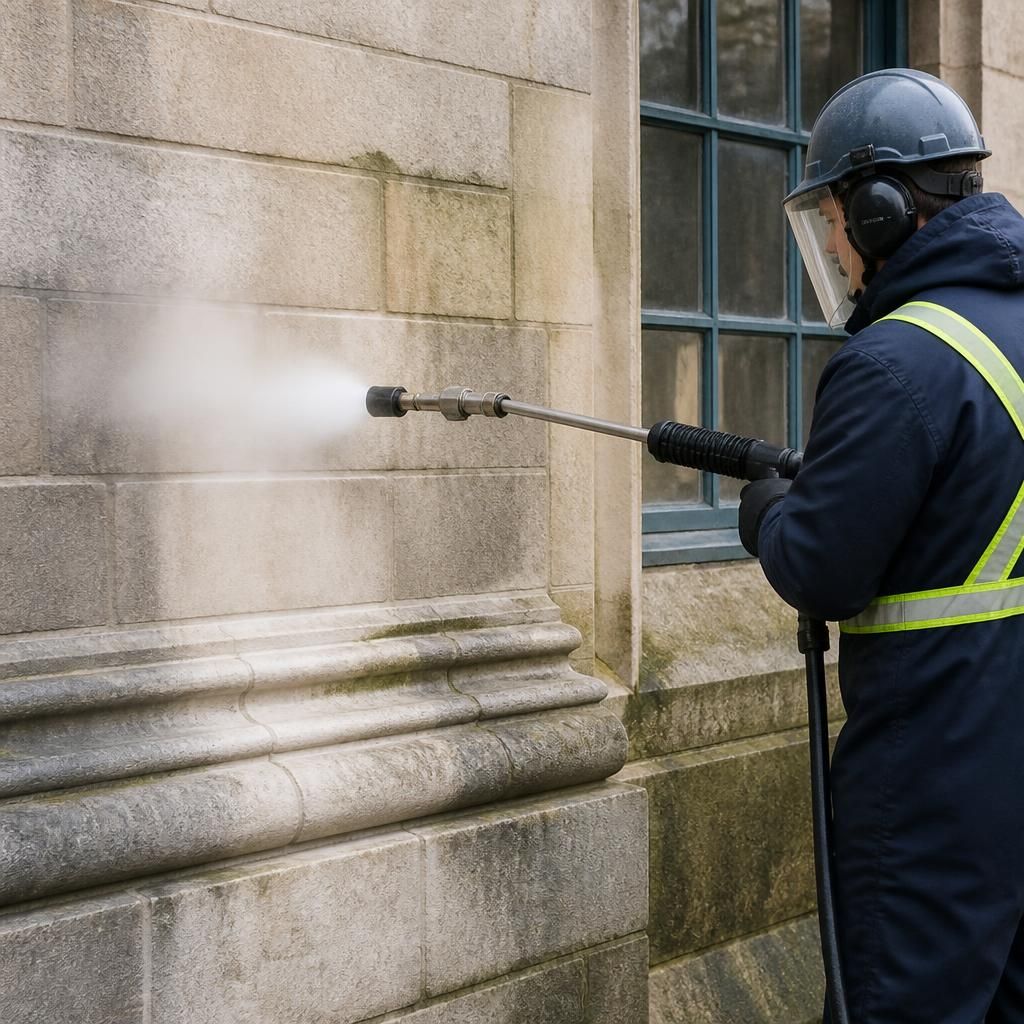
For delicate surfaces, steam jet washing is usually safer than traditional pressure washing because it relies more on heat and less on mechanical force. This reduces the risk of etching soft stone, lifting paint, loosening pointing or forcing water behind joints and cladding.
The surface should still be inspected and test-cleaned first. A professional operator can adjust temperature, pressure, nozzle type and working distance, then check the test area after drying for changes to colour, coating or texture. This is particularly important on aged masonry, painted render, architectural detailing and surfaces with existing cracks or failed joints.