
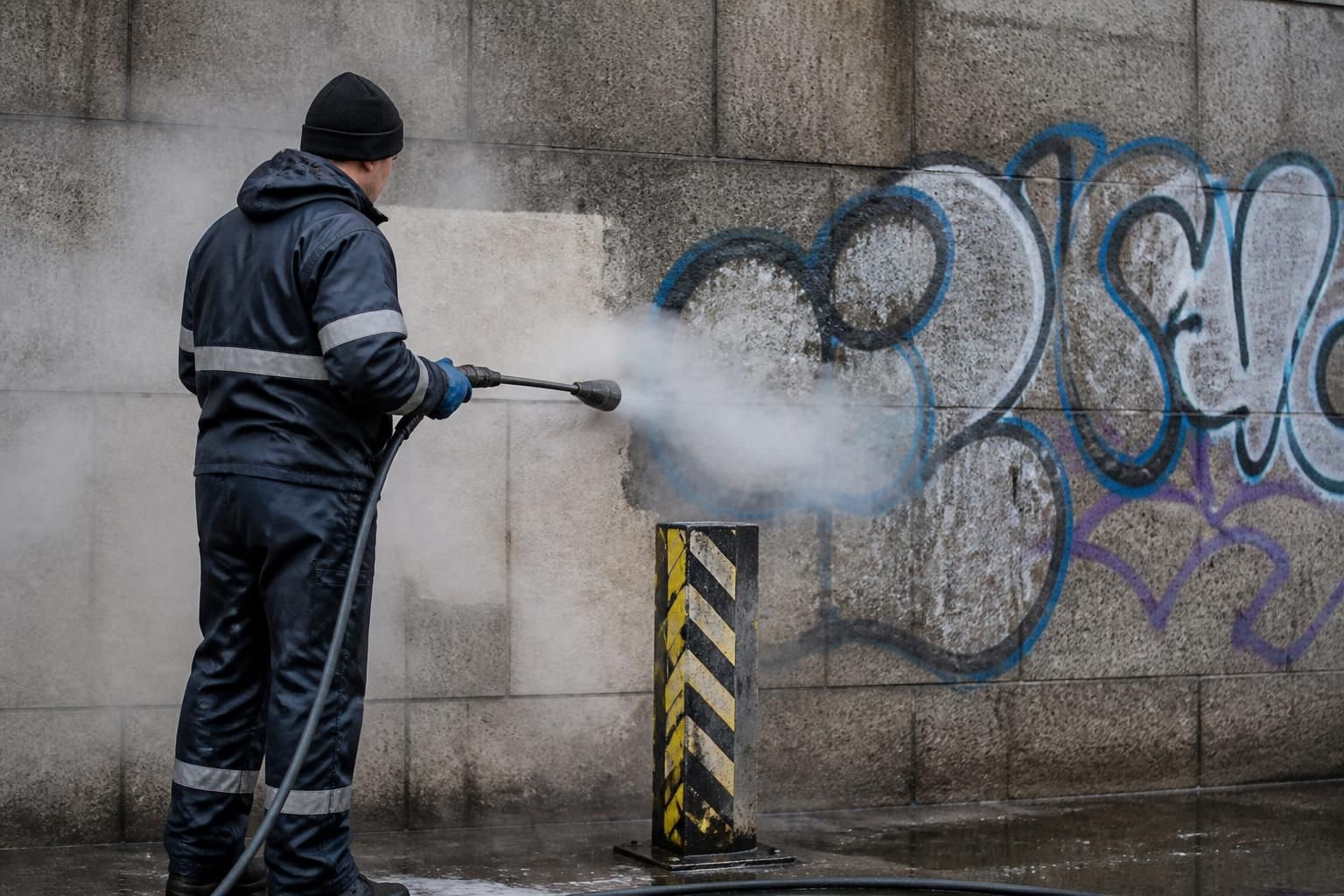
Can steam jet washing remove graffiti from all surfaces?
Steam jet washing can remove graffiti from many exterior surfaces, including masonry, brick, concrete and some metal cladding, but it is not suitable for every material or paint type. The correct method depends on the surface’s porosity, condition and coating, so a professional assessment and small test patch are essential to avoid etching, discolouration or damage.
Steam jet washing can remove graffiti from many exterior surfaces, but it cannot be used safely or effectively on every material, coating or type of paint. The result depends on the surface’s porosity, age, condition and existing finish, as well as the graffiti medium and how long it has been present. A professional inspection and test patch should always be completed before treating the full area.
Steam cleaning uses heated water, often at a controlled pressure, to soften and lift paint, marker ink, adhesive residues and other contaminants. Compared with aggressive high-pressure cleaning or strong chemical treatments, it can reduce the risk of spreading graffiti, driving paint further into porous materials or leaving substantial chemical residues. However, steam is not a universal solution. Incorrect pressure, temperature, nozzle selection or dwell time can still cause surface damage.
Surfaces that are often suitable
Sound brickwork, concrete, natural stone and some rendered or masonry façades can usually be treated with steam jet washing when the operator adjusts the method to the material. Heat helps soften the graffiti, while controlled agitation or a compatible cleaning solution may be used to release the remaining pigment. The approach is particularly useful where the substrate is robust but the surrounding area must be cleaned carefully.
Metal surfaces and some powder-coated or painted cladding may also be suitable, but they require more caution. The coating must be intact, securely bonded and compatible with the proposed temperature and cleaning process. Graffiti removal from coated metal is not simply a matter of applying more heat or pressure: excessive cleaning can dull the finish, expose the underlying metal or create visible differences between treated and untreated panels.
Sealed surfaces are generally easier to clean than highly porous ones because the graffiti remains closer to the surface. Even so, a sealer does not make a material immune to damage. Existing sealants can be aged, uneven or incompatible with steam, and the cleaning process may reveal previous staining or repairs.
Surfaces requiring additional care
Soft or friable masonry, aged brick, weak mortar and weathered stone may be damaged by heat, pressure or repeated passes. The face of a brick can spall or flake if it is already unstable, while mortar joints may erode if the operator concentrates the jet on them. Sandstone, limestone and other absorbent stone can also retain graffiti pigment beneath the surface, meaning that complete removal may require a carefully controlled combination of steam, gentle agitation and a suitable specialist product.
Painted render, acrylic coatings, timber, plastic, signage and decorative finishes need a separate assessment. Steam may soften, blister, stain or strip a coating that was not designed to withstand heat. Timber can absorb moisture and may be marked by uneven cleaning, particularly where the surface is weathered or previously painted. Plastics and composite panels can distort, lose their sheen or show colour changes if exposed to excessive heat.
Glass is not normally damaged by steam alone, but its surrounding sealants, films, printed graphics and edge details may be vulnerable. Care is also needed around window frames, vents, electrical fittings, expansion joints and other areas where water or heat could enter the building fabric.
Why graffiti type matters
Fresh water-based paint and some marker inks may respond well to controlled steam. Older, layered or heavily weathered graffiti can be more difficult because the pigment may have penetrated the substrate or bonded firmly to an existing coating. Aerosol paints, oil-based products, permanent markers, stickers and adhesive residues do not all respond in the same way. A treatment that removes one layer may expose an older layer underneath, so several controlled stages may be needed.
On porous masonry, removing the visible paint may not remove every trace of colour. Trying to achieve a perfectly uniform appearance by increasing pressure can produce a clean but etched patch, which may be more noticeable than the original graffiti. In some cases, the most appropriate outcome is a balanced reduction in staining while preserving the substrate, followed by protective treatment or localised surface repair.
How a professional assessment should work
- Inspect the substrate. The cleaner should identify the material, coating, condition, previous repairs, joints, drainage details and any areas that are loose or defective.
- Identify the graffiti. The paint, ink, adhesive or other marking should be assessed, including its age, thickness and whether it has been applied over earlier coatings.
- Complete a discreet test patch. A small area should be cleaned using controlled temperature, pressure, nozzle distance and, where necessary, a compatible detergent or graffiti-removal product. The result should be checked after drying, not only while the surface is wet.
- Choose containment and collection measures. Removed paint, wash water and cleaning residues must be prevented from entering drains or affecting pedestrians, vehicles, landscaping and neighbouring property. Local environmental and drainage requirements should be considered before work starts.
- Clean progressively. Operators should use the least aggressive effective method, work in manageable sections and stop if the substrate begins to change colour, shed material or show an uneven finish.
Steam jet washing should not be used to conceal existing defects or substitute for repairs. Loose render, failing paint, cracked masonry and damaged pointing may need attention before graffiti removal. If the substrate cannot be cleaned without unacceptable alteration, repainting, panel replacement or a coordinated surface restoration may be more appropriate.
After removal, the area should be rinsed or wiped as appropriate, allowed to dry and inspected in consistent light. A breathable anti-graffiti coating may help future markings remain closer to the surface and make subsequent cleaning easier, but the coating must be compatible with the substrate and the building’s appearance. It should not be applied over damp, unstable or contaminated surfaces.
In practical terms, steam jet washing is a valuable graffiti-removal method for many robust exterior surfaces, particularly where controlled cleaning is preferable to highly abrasive treatment. It is not suitable for every surface, and no responsible contractor should guarantee complete removal before inspecting the substrate and carrying out a test patch. For commercial and industrial premises, the safest specification is one that records the surface condition, identifies the graffiti type, sets out containment arrangements and defines an acceptable visual result before full-scale cleaning begins.
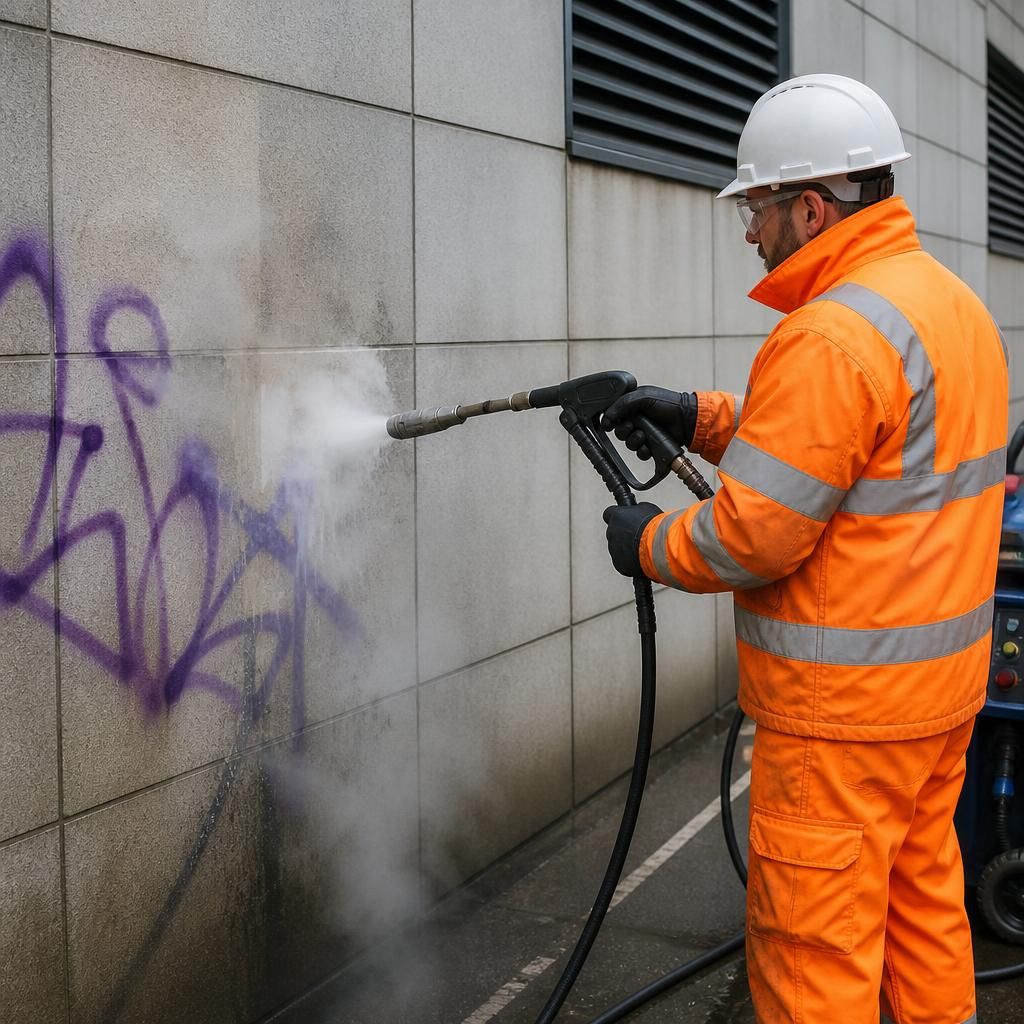
Steam jet washing can remove graffiti from many robust exterior surfaces, but it is not suitable for every material or coating. Porous masonry, painted render, timber, plastic, decorative finishes and coated metal may react differently to heat, moisture and pressure, so the cleaning method must be matched to the substrate.
A professional test patch is essential before full removal. It shows whether the graffiti can be lifted without etching, discolouring or loosening the surface, and allows the operator to set the safest temperature, pressure, nozzle distance and cleaning solution. The test area should be inspected again after drying, as moisture can temporarily hide staining or changes to the finish.