
What types of surfaces can mobile high pressure washing be used on?
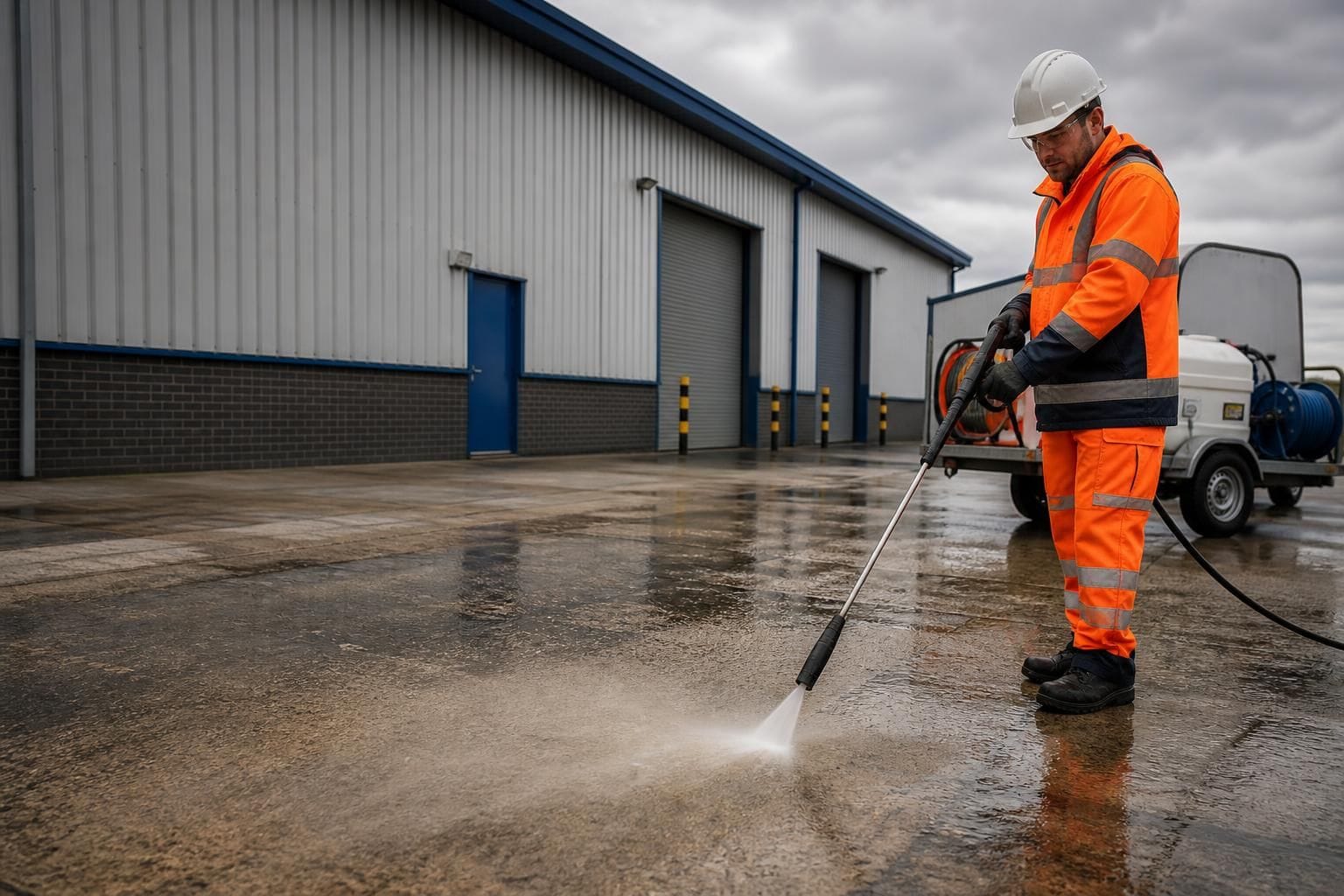
Mobile high pressure washing can be used on durable surfaces such as concrete, block paving, tarmac, brickwork, masonry, building façades, cladding, roofs, loading areas and car parks. The pressure, temperature and cleaning method must be adjusted to suit each material, particularly on painted, coated, aged or more delicate surfaces, to avoid damage.
Mobile high pressure washing can be used on many hard exterior surfaces, including concrete, block paving, tarmac, brickwork, masonry, building façades, cladding, roofs, loading areas and car parks. The correct pressure, water temperature, nozzle, cleaning solution and working distance must be selected for each material. A method suitable for heavily soiled concrete may damage painted metal, aged brickwork or a weathered roof if used without adjustment.
Concrete and reinforced concrete
Concrete is generally well suited to high pressure cleaning because it is hard, porous and able to withstand controlled water pressure. Mobile equipment can remove traffic film, oil residues, algae, moss, dirt, tyre marks and other deposits from car parks, service yards, walkways, steps, loading bays and industrial floors. Heavily soiled areas may require a suitable detergent or hot water treatment before surface cleaning and rinsing.
Care is needed around cracked concrete, damaged joints, exposed aggregate and areas where the surface has begun to break down. Excessive pressure can loosen weak material, widen cracks or force water into joints. Drainage channels and expansion joints should also be checked before cleaning.
Block paving and other paving materials
Block paving, concrete paving slabs and many natural stone surfaces can be cleaned effectively with mobile high pressure washing. It can remove organic growth, ground-in dirt, vehicle deposits and surface staining from pedestrian areas, courtyards, entrances and parking areas. A rotary or surface-cleaning attachment can help provide a more even result across broad paved areas while reducing uncontrolled spray.
Cleaning can disturb jointing sand, particularly where the joints are already eroded or the water pressure is too high. Once the paving has dried, the joints may need to be inspected and reinstated where appropriate. Natural stone requires additional assessment because softer or more porous stones can mark, pit or lose surface finish under an unsuitable cleaning method.
Tarmac and asphalt
Tarmac and asphalt can be cleaned to remove loose dirt, algae, mud, road film and some surface staining. This is useful for car parks, access roads, forecourts and service yards. The cleaning approach must be controlled because aged, porous or poorly bonded asphalt can be vulnerable to surface loss, scarring and aggregate displacement.
Oil and fuel contamination may not be removed by water pressure alone. A compatible degreaser, sufficient dwell time and responsible collection of contaminated wash water may be required. Oil marks that have penetrated deeply into the surface may improve without disappearing completely.
Brickwork, masonry and stone façades
Brick, stone and other masonry can often be cleaned with low-to-moderate pressure, soft-washing techniques or controlled steam cleaning, depending on the type and condition of the surface. These methods can remove atmospheric dirt, algae, moss, biological growth, carbon deposits and some staining from external walls, boundary walls and commercial buildings.
Older brickwork and soft masonry need particular care. High pressure can erode the face of a brick, remove friable mortar, open existing defects or drive water into the wall. The mortar, pointing, age, porosity and previous coatings should be assessed before work begins. A small test area helps confirm that the proposed method will clean the surface without changing its texture or appearance.
Building façades and rendered surfaces
Rendered façades, painted walls and other external wall finishes can be cleaned, but they are not treated in the same way as bare concrete. Lower pressure, controlled application and suitable cleaning agents are normally more appropriate than aggressive blasting. The condition of the render, paint or protective coating should be checked for cracking, flaking, hollow areas and failed repairs.
Water must be kept away from vulnerable openings, electrical fixtures, vents and unsealed joints. Where a façade has a delicate coating or significant biological growth, a soft-washing or steam-cleaning process may provide better control than conventional high pressure washing.
Metal cladding and coated panels
Steel, aluminium and coated cladding panels can be cleaned to remove dust, traffic film, bird deposits, algae and general atmospheric soiling. Mobile equipment is useful for warehouses, retail units, industrial buildings and large commercial façades, particularly where access equipment is required.
The cleaning pressure must be compatible with the coating and panel joints. Abrasive dirt, corroded areas, peeling paint and damaged sealant should not be treated as though they were sound metal. A non-abrasive detergent and controlled rinsing can help protect the finish. Any exposed corrosion or coating failure should be recorded rather than concealed by cleaning.
Roofs and roof coverings
Some roofs can be cleaned using pressure washing, low-pressure treatments or steam, including suitable metal roofing, concrete tiles and certain robust commercial roof coverings. Cleaning may remove moss, algae, dirt and other deposits that affect the appearance and condition of the roof.
Roof cleaning requires an assessment of the covering, age, fixing system, waterproofing details and access arrangements. High pressure can damage tiles, dislodge protective finishes, force water beneath laps or remove weathered material. Fragile, aged or coated roof coverings may be better suited to a lower-pressure method. Gutters, outlets, roof lights and roof-edge details should be protected and checked after cleaning.
Car parks, loading areas and industrial surfaces
Mobile high pressure washing is particularly suitable for large external areas such as car parks, loading bays, warehouse yards, refuse areas, service roads and pedestrian routes. It can clean concrete, paving and suitable tarmac while addressing mud, tyre marks, food residues, organic growth and general industrial soiling.
These locations often require more than a visual clean. Drainage, oil separators, surface water systems and wash-water recovery should be considered before work starts. Contaminated water must be managed in accordance with the site requirements and applicable environmental controls rather than allowed to enter an inappropriate drain.
Surfaces requiring extra caution
High pressure washing is not automatically suitable for every exterior material. Painted timber, soft wood, aged render, fragile stone, deteriorated brickwork, flaking coatings, delicate signage, sealants and damaged joints can all be marked or stripped by excessive pressure. Glass, electrical equipment and vulnerable fixtures should generally be protected and cleaned using methods appropriate to their construction.
- Inspect the surface for cracks, loose coatings, open joints, corrosion and previous repairs.
- Test the proposed pressure, temperature and cleaning solution in an inconspicuous area.
- Use the lowest effective pressure and maintain a suitable distance from the surface.
- Adjust the nozzle, spray pattern and cleaning direction to suit the material.
- Protect doors, windows, vents, lighting, signage, vehicles and sensitive landscaping.
- Check the result while cleaning rather than relying on a single aggressive pass.
The most suitable method depends on both the material and the type of contamination. Mobile high pressure washing is effective for durable surfaces and large commercial areas, while steam cleaning, soft washing or a lower-pressure approach may be more appropriate for delicate, coated or historic surfaces. A proper site assessment ensures the chosen process removes the soiling while preserving the surface, surrounding fixtures and existing protective finishes.
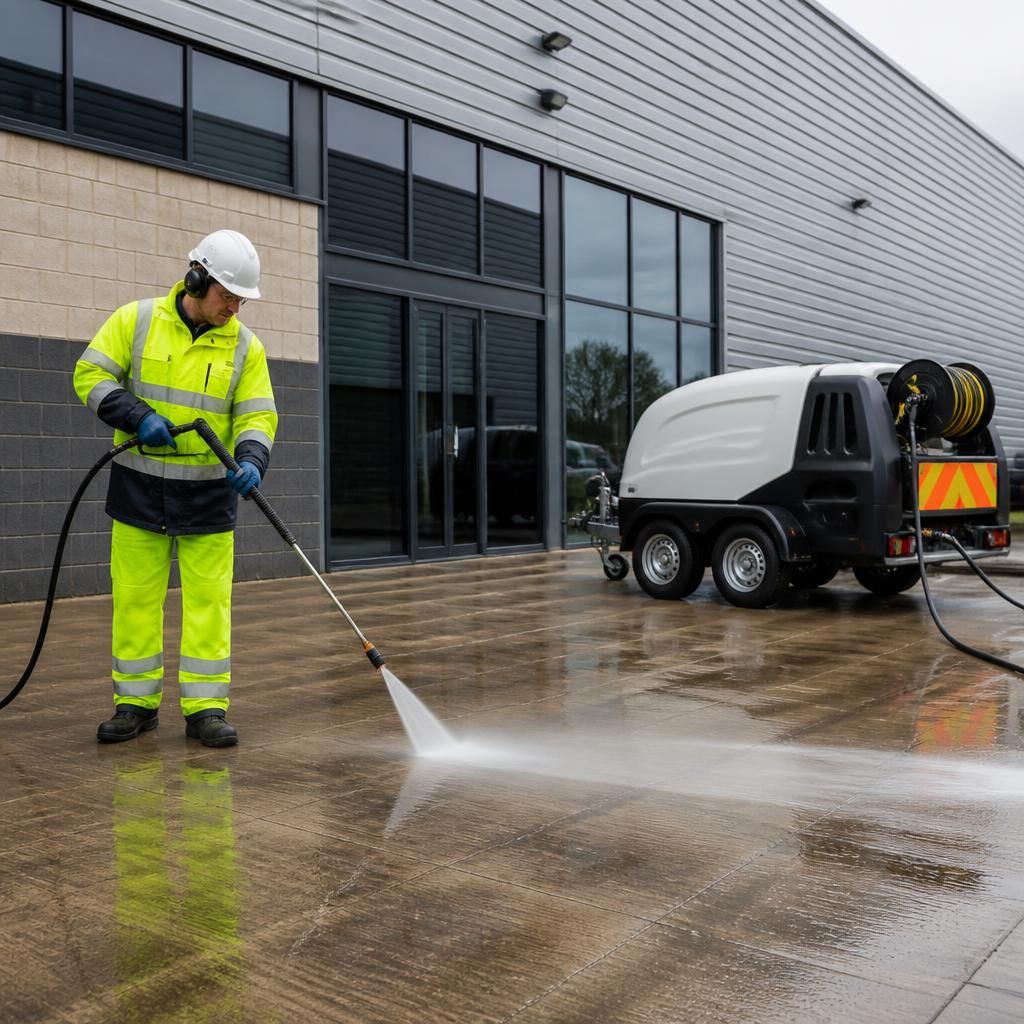
Mobile high pressure washing can clean concrete, paving, tarmac, brickwork, cladding, roofs and other hard exterior surfaces, but the equipment must be adjusted to suit the material. Pressure, water temperature, nozzle type, cleaning solution and working distance all affect the result.
Durable surfaces such as industrial concrete and sound paving can usually tolerate a more intensive clean. Older brickwork, painted façades, coated cladding, natural stone and roof coverings require a gentler approach to avoid removing finishes, damaging joints or forcing water beneath the surface. A test area and condition check should be completed before full-scale cleaning.