
What specific types of surfaces or areas can mobile high pressure washing effectively clean?
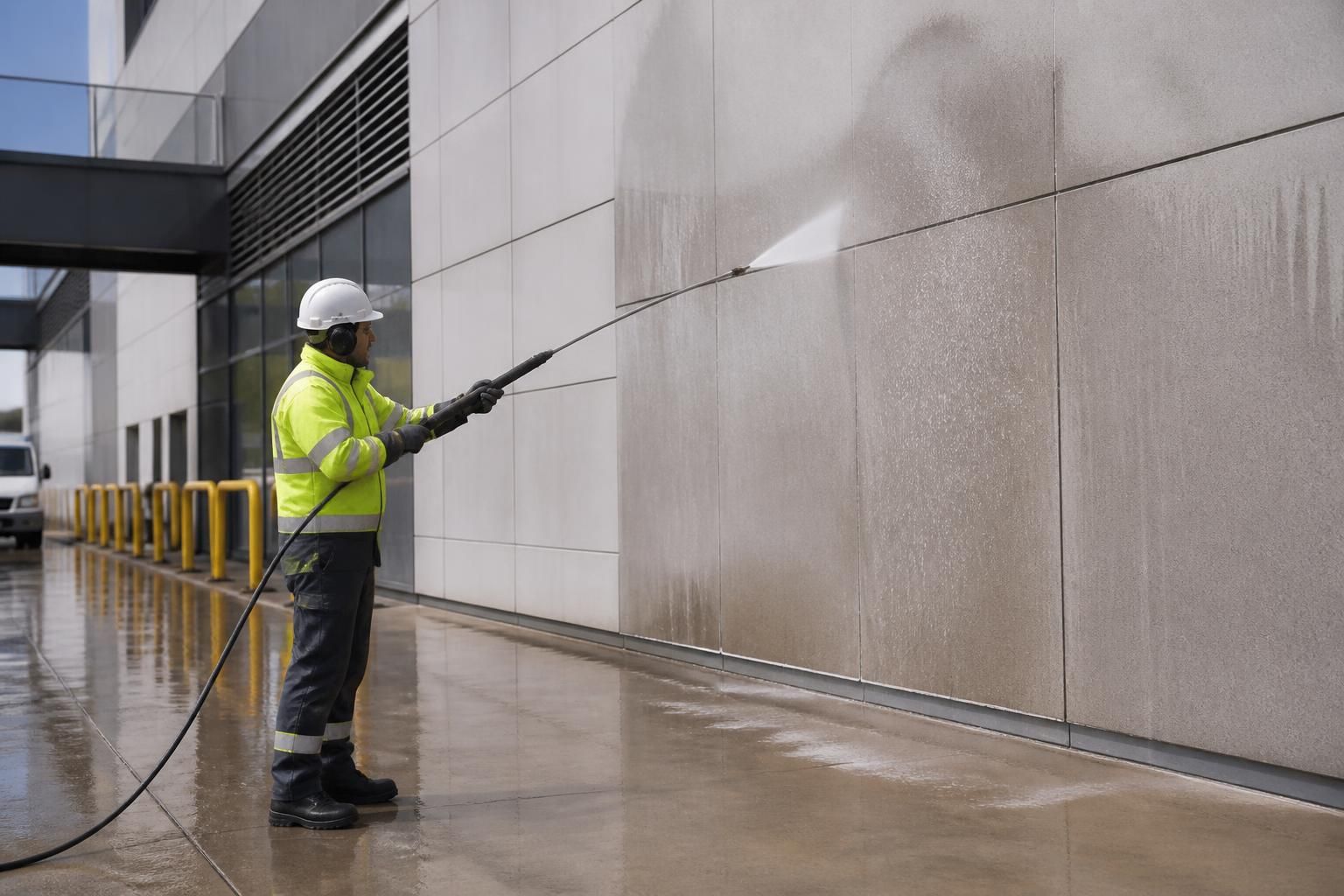
Mobile high pressure washing can effectively clean robust exterior surfaces and large areas, including building façades, brickwork, concrete, paving, car parks, loading bays, roofs, cladding, forecourts and industrial yards. Pressure, temperature and cleaning methods are adjusted to suit the material, so delicate surfaces can be treated safely while heavy dirt, oil, algae, moss and other deposits are removed from commercial premises.
Mobile high pressure washing is effective for cleaning robust exterior surfaces and extensive commercial areas, including building façades, brickwork, concrete, paving, car parks, loading bays, roofs, cladding, forecourts and industrial yards. The operator adjusts water pressure, temperature, flow rate, nozzle selection and cleaning products to suit the material and the type of contamination, allowing heavy deposits to be removed without treating every surface in the same way.
Building façades and elevations: Brick, concrete, stone and other masonry façades can accumulate traffic film, dust, algae, moss, bird fouling and atmospheric staining. Mobile equipment can clean individual elevations or larger multi-building sites, with methods selected according to the age, condition, porosity and finish of the façade. Lower-pressure washing, steam cleaning or a suitable detergent may be preferable where mortar, coatings or weathered materials could be affected by aggressive cleaning.
Brickwork, stone and render: External walls, boundary walls, retaining walls and architectural masonry can often be cleaned effectively. Brick and stone should be assessed before work begins because soft, friable, historic or damaged materials may be vulnerable to excessive pressure. Rendered surfaces and painted finishes also need controlled treatment to avoid lifting coatings, marking the surface or forcing water into cracks and joints.
Concrete and hard standings: Concrete yards, paths, service areas, ramps and entranceways are suitable applications for high pressure washing where the surface is structurally sound. The process can remove embedded soil, tyre marks, algae, moss, general grime and some oil-related contamination. On older concrete, the cleaning approach should account for surface erosion, exposed aggregate, cracking and previous repairs.
Car parks and parking areas: Mobile pressure washing can clean open-air car parks, multi-storey car park decks, access roads, pedestrian routes and parking bays. It is useful for removing traffic film, chewing gum, algae, moss, mud and staining around kerbs and drainage channels. Oil and fuel residues may require a suitable degreasing treatment and controlled collection of wastewater, particularly where drainage leads to a surface water system.
Paving, block paving and slabs: Concrete paving, natural stone, paving blocks and hard landscaping can be cleaned to remove dirt, organic growth and surface staining. Joints and loose blocks require particular care because excessive pressure can displace jointing material or spread sand across the area. After cleaning, the surface may benefit from re-sanding, repairs or an appropriate protective treatment, depending on its condition and intended use.
Roofs and roof-level areas: Mobile equipment can be used on suitable roofs, roof walkways, canopies, gutters and associated access areas to remove moss, algae, dirt and atmospheric deposits. Roof cleaning is not automatically a high-pressure application. Tiles, membranes, coatings, seals and insulation can be damaged by unsuitable pressure or excessive water. A survey should establish the roof construction, safe access arrangements, drainage requirements and the least aggressive effective method.
Cladding and industrial building envelopes: Metal, coated metal, composite, uPVC and certain specialist cladding systems can be cleaned to remove dust, bird fouling, traffic film, algae and general weathering. Cladding panels, joints, seals and protective coatings must be checked before cleaning. A controlled rinse and suitable detergent may be more appropriate than maximum pressure, particularly where panels are aged, perforated, loosely fixed or coated with a delicate finish.
Forecourts, service stations and retail exteriors: Forecourts, pedestrian approaches, service areas, bin stores and external sales or display areas can be cleaned with mobile washing equipment. These locations commonly contain tyre marks, fuel-related residues, gum, food spillages, mud and heavy footfall contamination. Work planning should address public access, vehicle movements, slip hazards, drainage and the safe handling of contaminated wash water.
Industrial yards and operational compounds: Concrete yards, manufacturing sites, depots, logistics compounds, plant areas and storage zones are suitable for mobile high pressure washing when the ground and drainage arrangements are appropriate. Cleaning can target accumulated mud, dust, grease, oil, rubber deposits, process residue and organic growth. Sections may need to be isolated so that cleaning does not interfere with vehicles, machinery, deliveries or other site operations.
Loading bays, ramps and service roads: Loading docks, delivery areas, access ramps and warehouse approaches often require regular cleaning because they receive heavy vehicle use and can collect mud, packaging debris, oil and grime. High pressure washing can reach kerbs, edges, dock levellers and hard-to-access sections, although electrical equipment, door seals and sensitive loading infrastructure must be protected from direct water impact.
Walls, steps and external circulation areas: Steps, walkways, ramps, kerbs, external staircases and communal hard surfaces can be cleaned to remove slip-contributing organic growth and accumulated dirt. The operator should identify uneven surfaces, damaged joints, tactile paving, painted markings and pedestrian routes before work starts. The area should remain controlled until it has been rinsed, checked and made safe for use.
Graffiti and localised staining: Mobile pressure washing can assist with graffiti removal from suitable masonry, concrete, brick and other hard surfaces. The correct method depends on the paint type, substrate, age of the graffiti and whether the surface has a protective coating. Chemicals, steam or lower-pressure techniques may be selected instead of aggressive washing to reduce the risk of a visible shadow, etching or damage to the underlying finish.
Areas requiring a different approach: High pressure washing is not suitable for every material or condition. Unsealed timber, fragile render, loose pointing, cracked coatings, soft stone, damaged roofing, some painted surfaces and vulnerable signage may need soft washing, steam cleaning, manual cleaning or specialist restoration. Glass, vents, electrical fittings, internal areas and surfaces with open joints also require specific controls rather than direct high-pressure treatment.
Before cleaning, the site should be assessed for surface type, contamination, damage, access, nearby people and vehicles, drainage and wastewater controls. A small test area can help confirm the pressure, temperature and detergent combination before wider work begins. This assessment is particularly important on older buildings, coated cladding, roofs, sensitive masonry and areas where staining could be made more visible by uneven cleaning.
Mobile equipment is valuable where the work covers a large footprint or the site has limited fixed water or power facilities, but the equipment itself does not determine the correct method. Effective cleaning comes from matching the washing system to the substrate and contamination, protecting vulnerable features, controlling runoff and leaving the area safe for normal commercial use.
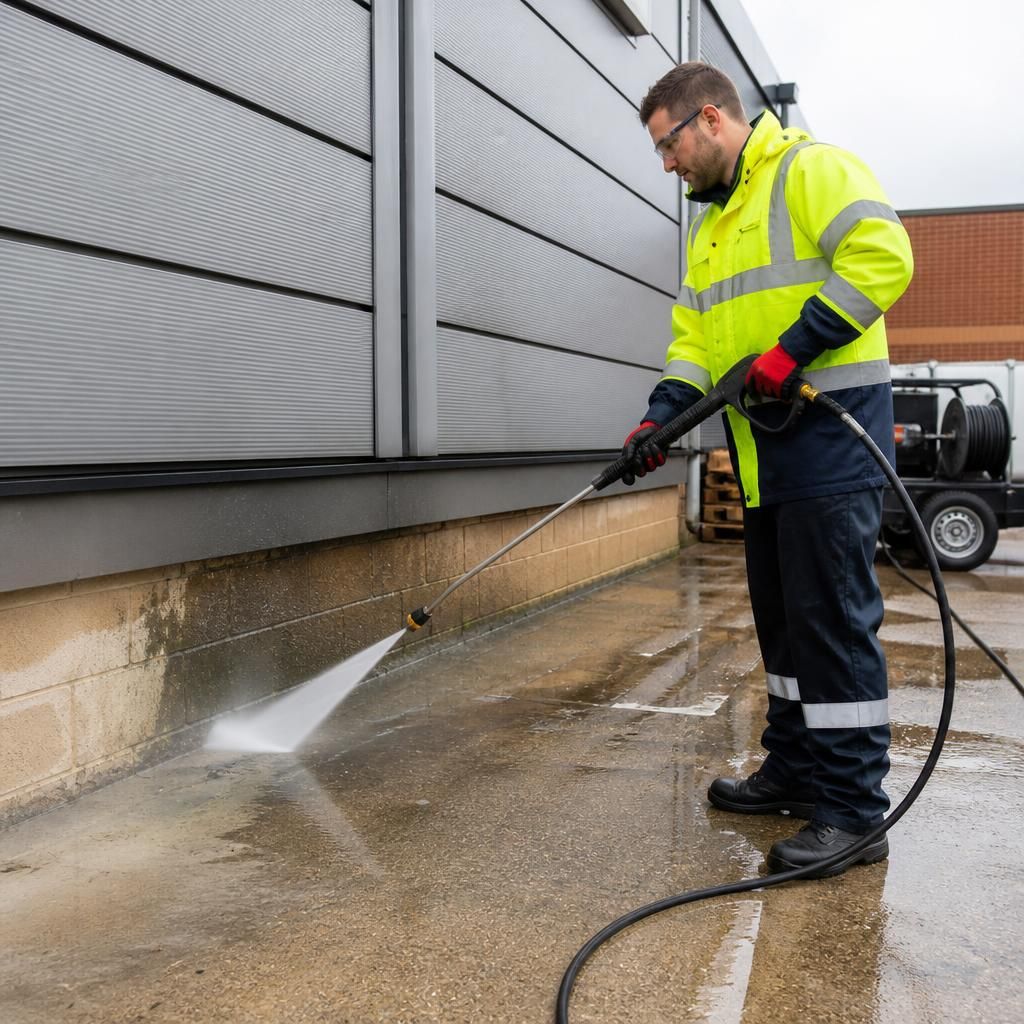
Mobile high pressure washing is suitable for many commercial exterior surfaces, including concrete yards, car parks, paving, loading bays, brickwork, cladding and building façades. The cleaning method must be adjusted to the material and contamination: robust concrete may tolerate higher pressure, while stone, render, coated cladding and older brickwork may require lower pressure, controlled flow or steam cleaning.
A pre-cleaning inspection and small test area help confirm the safest effective approach. This is particularly important for roofs, painted finishes, loose pointing and surfaces with existing cracks or damage, where excessive pressure could remove coatings, displace jointing material or force water into vulnerable areas.