
What safety measures should be considered during mobile high pressure washing operations?
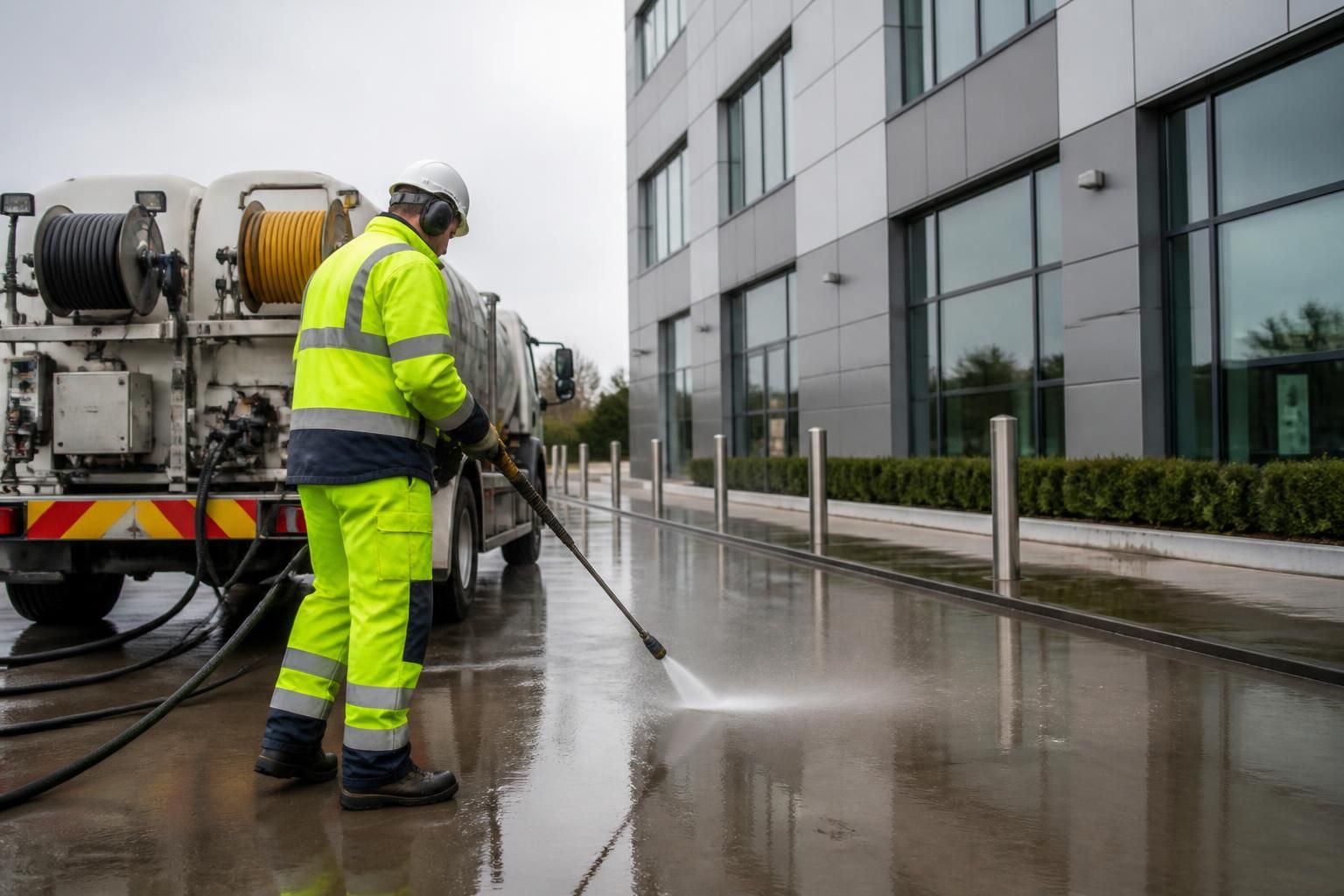
Mobile high pressure washing operations should be controlled through a site risk assessment, trained operators, suitable personal protective equipment (PPE), secure exclusion zones and pre-use checks of the pressure-washing unit, hoses and access equipment. Operators must also control water, spray, noise and debris, protect nearby people and surfaces, and follow safe shutdown and emergency procedures throughout the work.
Safe mobile high pressure washing depends on controlling the water jet, equipment, work area, access arrangements and contaminated run-off before cleaning begins. A suitable risk assessment and method statement should identify the hazards for the site and define the controls, emergency arrangements and responsibilities for everyone involved.
Complete a site assessment before starting. Check the surface, building condition, access routes, overhead services, nearby electrical installations, traffic, pedestrians, drainage and weather conditions. Identify fragile materials, loose masonry, damaged cladding, open edges and areas where water could enter a building or affect plant. The assessment should also consider the cleaning chemicals being used, contaminants such as bird fouling or mould, and whether the work requires work-at-height controls or specialist access equipment.
Where relevant, the work should be planned in line with applicable UK requirements, including the Provision and Use of Work Equipment Regulations (PUWER), the Control of Substances Hazardous to Health (COSHH) Regulations, the Work at Height Regulations and the relevant requirements for personal protective equipment. Equipment used for lifting or access should be inspected and maintained in accordance with its legal requirements and the manufacturer’s instructions.
Use trained and competent operators. High pressure washing is not simply a matter of directing a lance at a surface. Operators need to understand pressure reactions, nozzle selection, surface limitations, hose management, chemical handling, safe distances and emergency shutdown. They should be able to recognise defects in hoses, couplings, trigger guns, lances, pumps and access equipment, and should not use equipment that is damaged or outside its intended purpose.
Wear task-appropriate PPE. Typical protection may include:
- Waterproof protective clothing or coveralls suitable for the chemicals and contaminants present.
- Slip-resistant, waterproof safety footwear with suitable toe and sole protection.
- Gloves selected for the pressure-washing task and any cleaning chemicals in use.
- Eye protection, with a visor or face shield where spray, debris or chemical splash could reach the face.
- Hearing protection where noise levels from the pump, jet or surrounding plant require it.
- Suitable head protection and high-visibility clothing where there is a risk from falling objects, vehicles or site traffic.
- Respiratory protection only where the risk assessment identifies airborne contaminants that cannot be adequately controlled by other means, with appropriate face-fit arrangements where required.
PPE is the final layer of protection, not a substitute for isolating the work area, reducing the pressure where possible or selecting a safer cleaning method.
Establish a secure exclusion zone. Use barriers, cones and clear warning signs to keep pedestrians, visitors and unauthorised workers away from the jet, hose runs, spray drift, falling debris and wet surfaces. The boundary should account for the direction of spray and the possibility of rebound from hard surfaces. A trained banksman or site contact may be needed where the work is beside roads, loading areas, active construction zones or vehicle routes. Do not rely on warning signs alone where people could enter the work area.
Keep hoses routed away from walkways, doorways, stairs and vehicle paths. Protect unavoidable crossings with suitable hose ramps or alternative routing. Maintain clear access to fire exits, emergency equipment, electrical isolation points and other critical routes.
Carry out pre-use equipment checks. Before pressurising the system, inspect the pump, engine, water tank, fuel or power supply, filters, hoses, couplings, lance, trigger gun, nozzle and safety devices. Check for cuts, bulges, abrasion, leaks, loose connections or damaged guards. Confirm that fittings are correctly secured and that the hose is rated for the operating pressure. Test the trigger and emergency stop or isolation controls, and make sure the unit is stable, ventilated and positioned where exhaust fumes cannot enter buildings or enclosed spaces.
Never repair a pressurised hose or loosen a connection while the system is running. Depressurise and isolate the equipment before changing nozzles, clearing blockages, moving the unit or carrying out maintenance. The operator should keep control of the lance and trigger at all times and should never leave a pressurised system unattended.
Control the water jet and pressure reaction. Select the lowest pressure and most suitable nozzle that will achieve the required result. Hold the lance securely with both hands where appropriate, stand in a stable position and allow for kickback when opening the trigger. Do not point the jet at people, animals, vehicles, glazing, vents, electrical equipment or unprotected building openings. High pressure water can penetrate skin and cause serious injection injuries even when the wound appears minor, so any suspected injection injury requires urgent medical assessment.
Keep a safe working distance from the surface and increase it when testing unfamiliar materials. Use a test area to confirm that the pressure, temperature, nozzle and cleaning chemical will not remove coatings, damage joints, force water behind cladding or erode masonry. Do not direct the jet at damaged surfaces, mortar joints or seals unless the method has been specifically assessed.
Manage electricity, access and work at height. Identify electrical supplies, temporary cables, sockets, lighting and plant before introducing water. Keep water and spray away from live electrical equipment, use suitable isolation procedures and obtain advice from a competent person where the status of an installation is uncertain. Do not use electrical equipment in wet conditions unless it is designed, protected and operated for that environment.
For elevated work, select the safest suitable access method and inspect it before use. Secure ladders, platforms, mobile elevating work platforms and other access equipment as required, and prevent tools, hoses and debris from falling. Use edge protection, travel restraint or fall-arrest systems only where they are suitable, correctly installed and covered by a rescue plan. Operators should not work from unstable surfaces or stretch away from an access platform to reach a cleaning area.
Control chemicals, contaminants and run-off. Follow the product safety data sheet and COSHH assessment for any detergent, biocide or degreaser. Store and label products correctly, prevent incompatible substances from mixing, and provide suitable spill controls. Where the work involves bird fouling, sewage residue, mould, algae, oil or other potentially harmful contamination, use appropriate hygiene controls and prevent contaminated spray from reaching people or clean areas.
Plan where the water will go before washing starts. Block or protect drainage points where appropriate, collect contaminated water and use approved disposal arrangements. Prevent detergent, oil, silt and debris from entering surface-water drains, watercourses, soil or neighbouring premises. Use bunding, drain covers, wet vacuums, recovery systems or other controls suited to the site and the type of contamination.
Reduce risks from noise, spray and debris. Consider nearby offices, residents, schools, hospitals and other occupied premises when planning the work. Use screens or temporary protection where spray drift could affect people, vehicles, stock or sensitive equipment. Remove or secure loose items before cleaning, and inspect the area for fragments that could become projectiles. Schedule noisy work in accordance with site rules and local restrictions, and provide hearing protection where required.
Use a controlled operating procedure. Brief all personnel before work begins, confirm communication signals and define who can stop the operation. Start at a low setting, check the test area and increase the operating intensity only when the surface and surrounding conditions are confirmed suitable. Stop immediately if a hose, fitting or access item moves unexpectedly, if a member of the public enters the exclusion zone, if visibility is lost, or if water is affecting electrical systems, interiors or neighbouring property.
At the end of the task, release pressure, isolate the power or fuel supply, drain and secure hoses, remove or store chemicals safely and inspect the equipment for damage. Clear standing water, sludge, debris and trip hazards, remove barriers only when the area is safe, and check that drains, access routes and building entrances are usable. Record defects, incidents, near misses, waste disposal and any changes needed before the next visit.
Maintain emergency arrangements throughout the operation. Operators should know how to stop and isolate the unit, contact the site representative and summon emergency assistance. The plan should cover high pressure injection injuries, chemical splashes, slips, falls, electric shock, hose failure, vehicle interaction and uncontrolled run-off. Do not delay medical treatment for a pressure injection injury or attempt to judge its seriousness from the size of the visible wound.
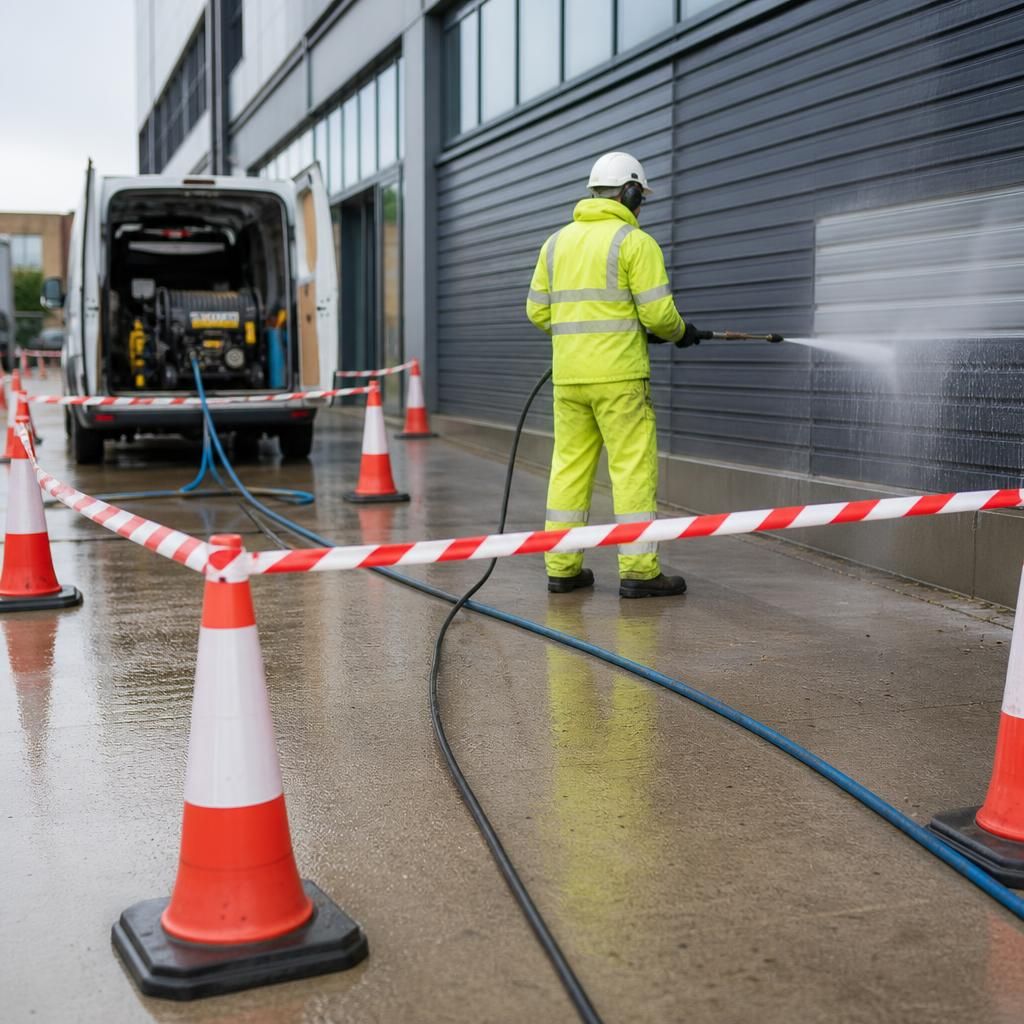
A secure exclusion zone is one of the most important safety controls during mobile high pressure washing. Barriers, cones and warning signs should keep pedestrians, visitors and unauthorised workers away from the water jet, spray mist, hose routes, falling debris and slippery surfaces. The boundary must also account for rebound from hard surfaces and changes in wind direction; signs alone are not sufficient where people could walk into the work area.
Hoses should be routed away from walkways, doorways, stairs and vehicle routes wherever possible. Where crossings cannot be avoided, use suitable hose ramps or alternative routing, while keeping fire exits, electrical isolation points and emergency access clear. A trained banksman or designated site contact can help control people and vehicles when cleaning near loading areas, roads or active work zones.
Operators should stop the equipment immediately if anyone enters the exclusion zone, a hose or fitting moves unexpectedly, visibility is reduced, or spray begins affecting nearby people, electrical equipment or property. This combination of physical separation, active supervision and clear stop-work procedures is more reliable than relying on PPE alone.