
What maintenance practices should be followed after using mobile high pressure washing to ensure long-term cleanliness and surface protection?
After mobile high pressure washing, rinse away any remaining detergent or loosened debris, allow surfaces to dry, and inspect for damaged joints, coatings, blocked drainage or areas needing further treatment. Maintain the result through routine inspections, prompt repairs, appropriate protective treatments and scheduled low-impact cleaning suited to each surface.
Post-wash maintenance should remove remaining detergent and loosened debris, allow the cleaned area to dry fully, identify any defects exposed by cleaning, and establish a routine inspection and cleaning programme. These steps protect façades, cladding, paving, roofs and other external surfaces while helping the cleaned appearance last for longer.
Complete a post-wash inspection
Once the surface has been rinsed and is safe to access, inspect the area systematically rather than relying only on its appearance while wet. Check for:
- remaining detergent, slurry, algae, oil or loosened debris;
- streaking, shading or missed areas that may require localised treatment;
- open joints, cracked sealant, loose pointing, damaged coatings or exposed substrate;
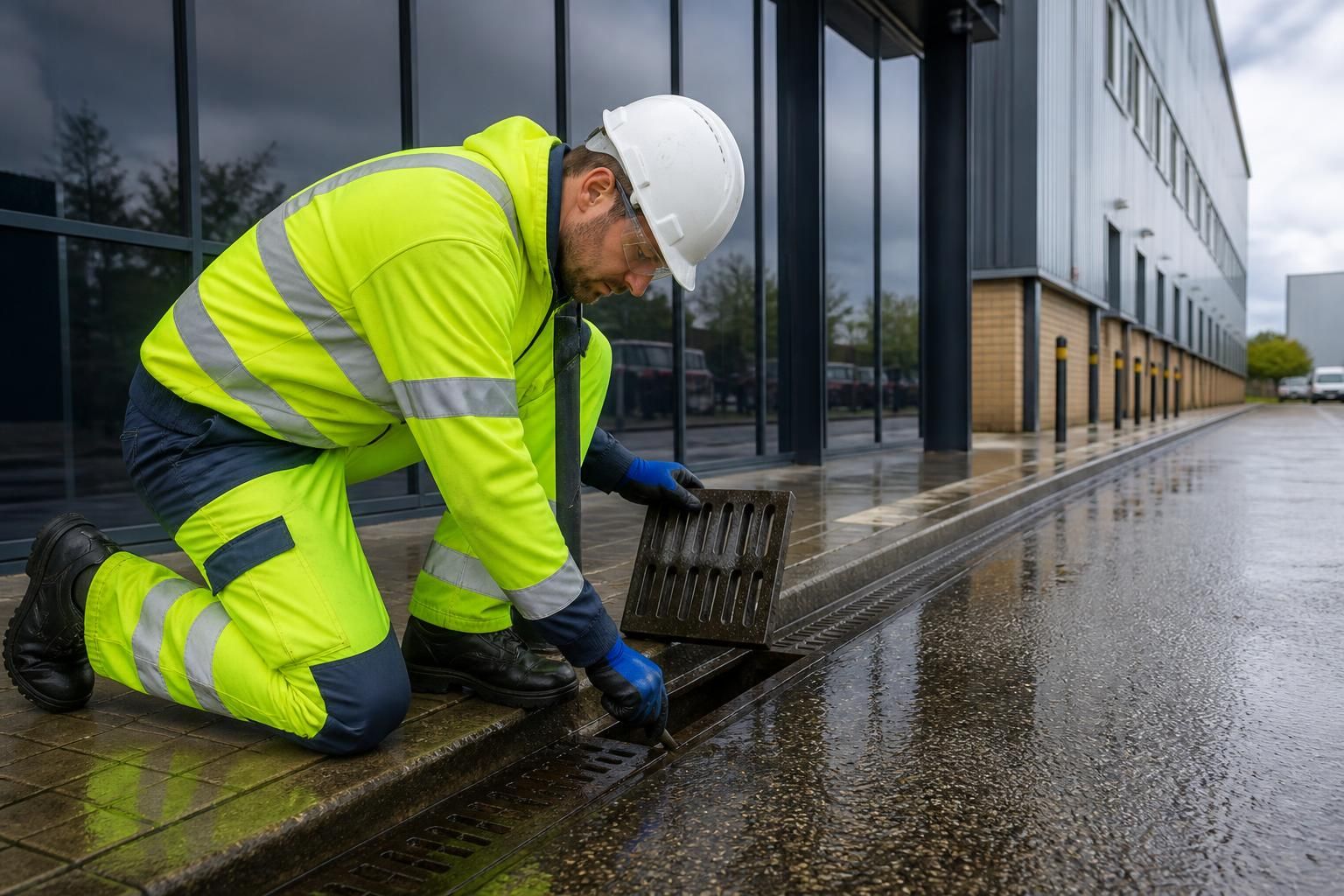
- blocked gullies, drains, channels and downpipes containing wash-off or debris;
- water collecting against thresholds, loading bays, walls or other vulnerable details; and
- graffiti, staining or biological growth that has penetrated the surface and may need a separate treatment.
High pressure washing can make existing defects more visible, particularly where dirt had concealed failed sealant, corroded fixings or deteriorated coatings. Record relevant findings and arrange repairs before water ingress, frost damage or further contamination worsens the problem.
Rinse and dry surfaces correctly
All detergent and loosened contamination should be rinsed away using a method appropriate to the material. Residue left on masonry, paving, cladding or painted surfaces can attract dirt, leave marks or affect subsequent protective treatments. Rinsing should also prevent contaminated water from drying on adjacent windows, doors, vehicles, signage or finished surfaces.
Allow the area to dry naturally where practicable, with suitable ventilation and drainage. Do not apply sealants, coatings or other treatments until the surface and any joints are sufficiently dry for the product being used. Moisture held in porous masonry, concrete or joints can affect adhesion and may trap salts or staining beneath a coating.
Protect vulnerable surfaces after cleaning
Protective treatment should be selected according to the substrate, its exposure and the cause of the contamination. Suitable options may include breathable water-repellent treatments for compatible masonry, protective coatings for specific metals or painted surfaces, and sealants for appropriate paving or concrete. These products are not interchangeable: an unsuitable coating can alter appearance, restrict vapour movement, become slippery or make future cleaning more difficult.
Before applying any treatment, confirm compatibility with the existing finish and test it in an inconspicuous area. Follow the product requirements for preparation, drying conditions, application and future maintenance. Protective treatments reduce the impact of weathering and staining but do not replace routine cleaning or repairs.
Keep drainage and surrounding areas clear
External cleaning can dislodge moss, silt, grit and other material that may collect in drainage systems. Clear gullies, channels, grates and downpipes as part of the handover process, and check that water is flowing away from the building. Where wash water has entered a drainage system, confirm that disposal has followed the agreed environmental controls and site requirements.
Check nearby planting, access routes, loading areas and stored materials for overspray, splash-back or displaced debris. Any temporary protection used during the wash should be removed only after surfaces are clean and dry, and contaminated materials should be handled in accordance with site procedures.
Establish routine inspections
A maintenance plan should reflect the surface, location, exposure and type of soiling. Inspect high-traffic areas, entrances, waste storage points, car parks, loading bays and shaded elevations more frequently than sheltered areas. Look for early signs of:
- new algae, moss, lichen, bird fouling, oil or tyre marks;
- staining beneath leaking gutters, joints or plant equipment;
- surface wear caused by traffic, chemicals, de-icing materials or weather;
- graffiti or other contamination requiring prompt removal; and
- blocked drainage or defects that could cause recurring dampness.
Early, low-impact cleaning is generally preferable to allowing contamination to build up until aggressive treatment is required. Use a method suited to the surface, such as gentle rinsing, soft washing or controlled steam cleaning where appropriate. Avoid repeating high pressure cleaning at settings that are unnecessary for the material, as excessive pressure or poor technique can erode joints, coatings and porous substrates.
Repair the cause of recurring soiling
Repeated staining is often a maintenance issue rather than a cleaning issue alone. Leaking rainwater goods, defective sealant, damaged pointing, poor falls, standing water, nearby exhausts and overflowing waste containers can quickly recontaminate a recently cleaned area. Addressing the source will help preserve the result and reduce the frequency of remedial washing.
Where a building or site has several responsible parties, agree who will inspect the area, report defects, manage drainage and authorise follow-up work. A clear arrangement prevents small issues from remaining unresolved between scheduled cleans.
Maintain suitable records
Keep a record of the areas cleaned, the surface condition, products used, defects identified and any recommendations for follow-up work. Photographs can help compare recurring problem areas and support planned repairs. Records are particularly useful across managed estates, industrial premises and sites where different contractors maintain façades, roofs, paving and drainage.
For commercial and industrial premises, the most effective approach is a planned cycle combining post-wash inspection, prompt repair of defects, drainage checks, surface-appropriate protection and periodic low-impact cleaning. This preserves cleanliness without placing unnecessary stress on the substrate and helps maintain a safe, professional external environment.
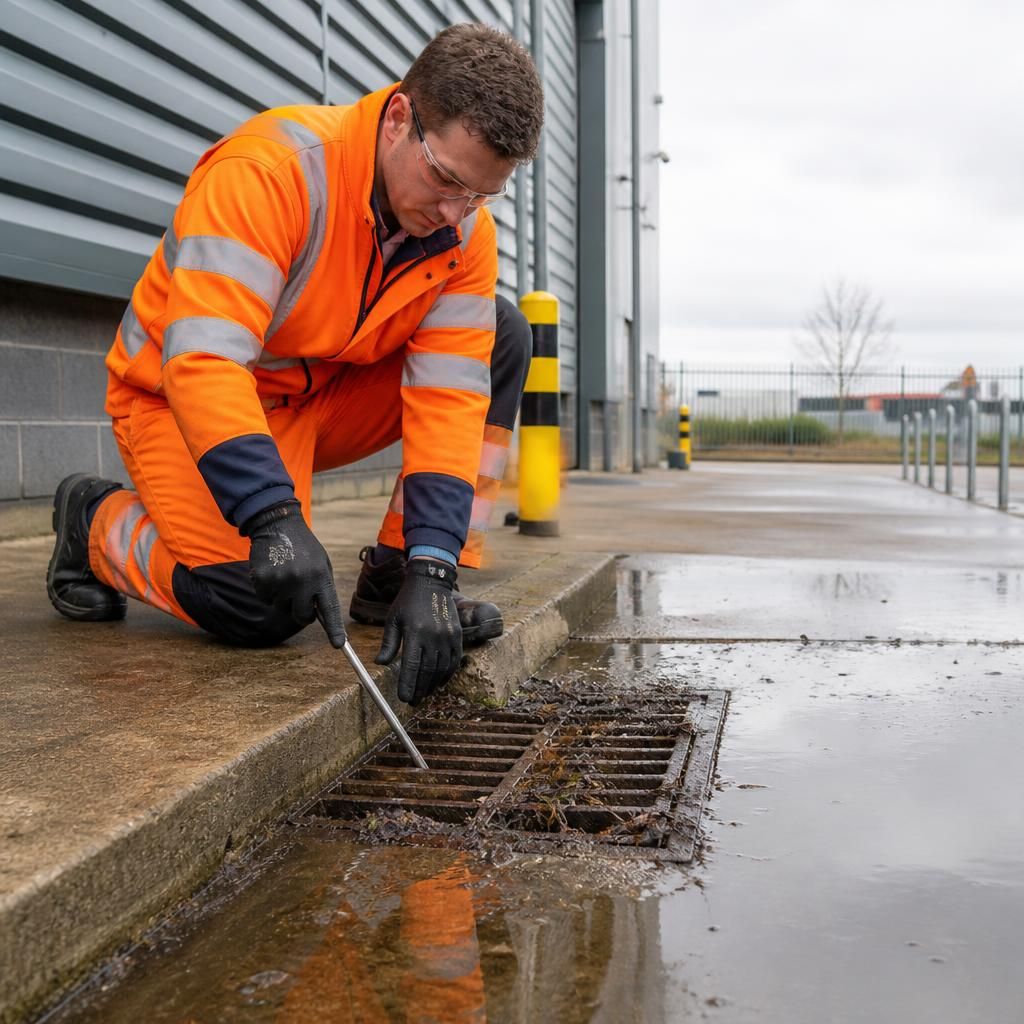
Post-wash drainage checks are essential because mobile high pressure washing can dislodge silt, moss, grit and other debris that may collect in gullies, channels and downpipes. Once cleaning is complete, confirm that water is flowing freely away from the building and that no wash-off is collecting against walls, thresholds, loading bays or other vulnerable areas.
- Clear grates, gullies and channels of loosened debris.
- Check downpipes and surface drains for restricted flow.
- Inspect nearby doors, windows, planting, vehicles and stored materials for splash-back or overspray.
- Make sure contaminated water has been managed according to the site’s environmental procedures.
Recording these checks during handover helps identify defects that could cause recurring staining or dampness. It also ensures that the cleaned area is left safe, dry and ready for normal use.