
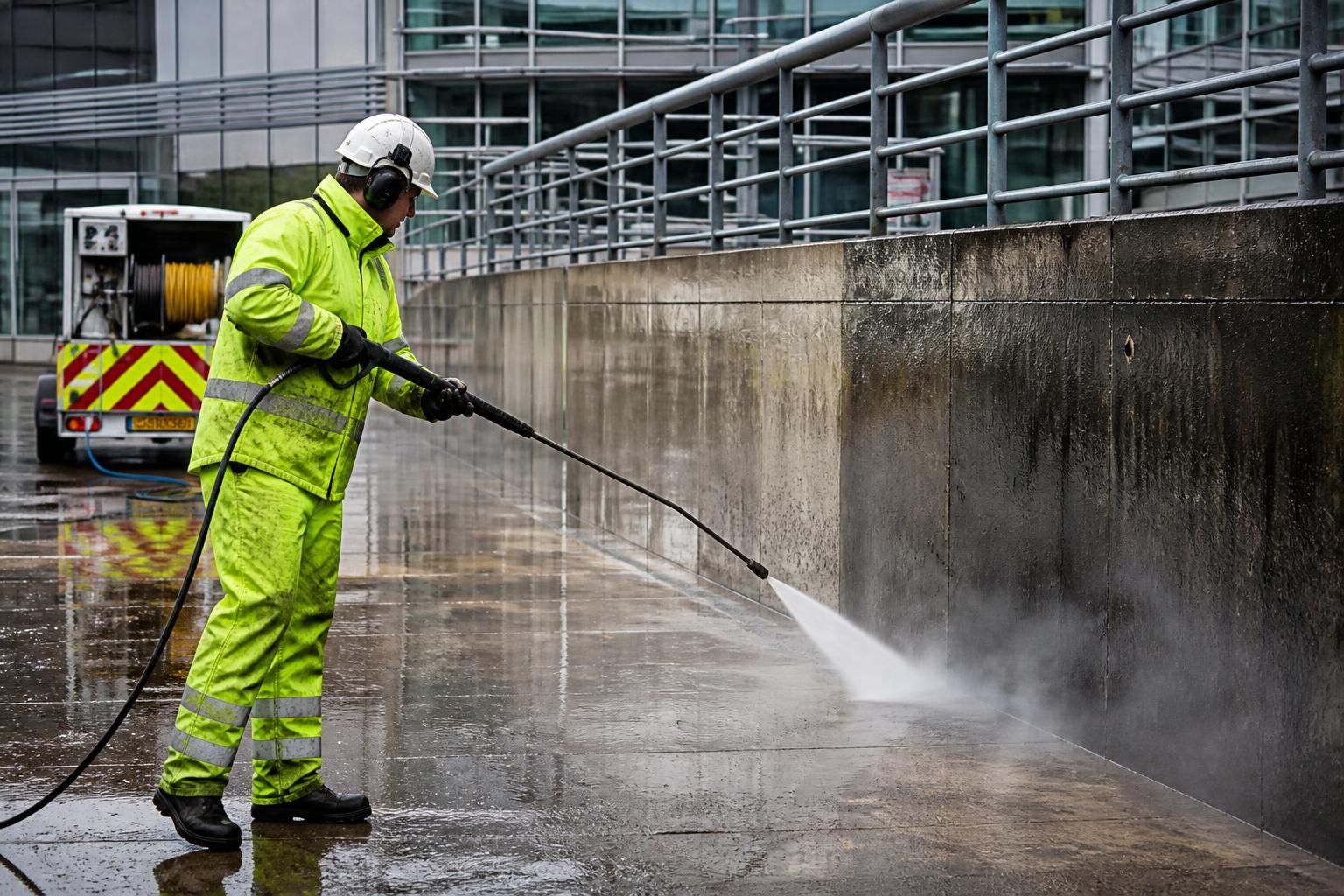
What factors should be considered when choosing the right mobile high pressure washing equipment for specific cleaning tasks?
Choosing mobile high pressure washing equipment depends on the surface, type of contamination, required pressure and water flow, available access, power and water supply, and environmental and safety controls. The system should provide sufficient cleaning performance without damaging the substrate, while its mobility and recovery arrangements suit the site and task.
The right mobile high pressure washing equipment is determined by the surface, contamination, required cleaning rate, site access, available utilities, and controls for safety and wastewater. The system must deliver enough pressure and water flow to remove the contaminant efficiently, but not so much force or heat that it damages the substrate, coatings, joints or surrounding property.
Surface and substrate
Start by identifying exactly what is being cleaned. Concrete, brick, stone, tarmac, metal cladding, render, glass, painted surfaces and roof materials all respond differently to pressure, temperature and chemical treatment. A robust concrete or paved surface may tolerate higher pressure than aged brickwork, soft stone, timber or coated cladding. Porous materials can also absorb water and contaminants, making controlled rinsing and suitable drying time important.
Existing defects must be considered before equipment is selected. Loose pointing, cracked render, failed sealant, flaking paint, corroded metal and damaged roof coverings can be worsened by concentrated water jets. A test area should be completed where the substrate or coating is uncertain, using the lowest effective pressure and an appropriate nozzle distance.
Type and severity of contamination
The equipment should match the material being removed. Dust, soil and loose debris may require a different approach from oil, grease, algae, moss, chewing gum, cement residue, paint or ingrained carbon deposits. Cold water high pressure washing is often suitable for loose dirt and many general surface deposits, while hot water or steam can improve the removal of grease, oils and some organic contaminants. Detergent or specialist treatment may be more appropriate than simply increasing pressure when contamination is bonded to the surface.
Consider whether the deposit must be removed completely, loosened for collection, or treated to prevent regrowth. Graffiti, for example, may require a controlled combination of pressure, temperature and a compatible remover, particularly on porous masonry. Increasing pressure alone can spread contamination, strip coatings or leave visible cleaning marks.
Pressure, water flow and temperature
Pressure determines the force available at the surface, while water flow affects rinsing capacity, cleaning speed and the amount of loosened material that can be carried away. A system with high pressure but insufficient flow may be slow to rinse large façades or paved areas. Conversely, excessive flow can create unnecessary runoff and complicate wastewater recovery.
Choose adjustable equipment rather than relying on a single operating setting. Lower pressure and wider fan patterns are generally more controllable for delicate or coated surfaces, whereas carefully selected higher-pressure settings may be required for heavily soiled concrete. Nozzle type, spray angle, working distance and operator technique are just as important as the machine’s headline pressure rating.
Water temperature should be selected according to the contaminant and substrate. Heated systems can reduce the need for aggressive chemicals when dealing with grease or oily residues, but heat may be unsuitable for certain coatings, sealants, plastics or temperature-sensitive materials. The cleaning plan should specify the operating range and test the result before full production cleaning begins.
Mobility and site access
Mobile equipment must be suitable for the route between the vehicle and the work area. Check entrance widths, gates, gradients, steps, ground conditions, floor loading, pedestrian routes and the distance from the machine to the cleaning point. Compact systems may be preferable in service yards, car parks or enclosed plant areas, while trailer-mounted or vehicle-mounted units can provide greater capacity for extensive external work.
Access equipment may also be needed for façades, roofs, canopies and high-level cladding. In these cases, the cleaning system must work safely with the selected platform, scaffold or other access arrangement, without creating excessive hose weight, trip hazards or instability. Hose length should provide practical reach without causing pressure loss or obstructing site operations.
Water supply, power and operating duration
Confirm whether the site provides a suitable mains water connection and electrical supply. Where these are unavailable or unreliable, a system with an onboard water tank, generator or independent power source may be required. Tank capacity, refilling arrangements and fuel requirements should be assessed against the size and duration of the task.
Water quality can also affect equipment performance. Sediment or poor-quality supply may require filtration to protect pumps, valves and nozzles. For long-duration projects, select equipment that can operate consistently without overheating or repeated interruptions, and ensure that fuel, electrical and ventilation requirements are compatible with the site.
Wastewater and environmental controls
Water use and runoff should be planned before cleaning begins. Where detergents, oils, paint residues, silt or other pollutants may enter surface-water drains, the work may require drain protection, bunding, suction recovery, filtration, temporary storage or approved disposal arrangements. A mobile system with integrated recovery can be more suitable than an unrestricted pressure washer where runoff must be controlled.
Choose detergents and treatments that are appropriate for the substrate and the site’s drainage controls. The product’s safety information should be reviewed, and the cleaning method should avoid unnecessary chemical use. Noise, exhaust emissions, fuel storage and the proximity of neighbouring premises may also influence whether an electric, cold-water, hot-water or steam system is most appropriate.
Safety and operator control
Equipment selection should account for jet force, hot water, electrical risks, chemical exposure, airborne debris, noise, slips and interaction with pedestrians or vehicles. Operators need suitable training, protective equipment and a clear exclusion zone. The machine should have accessible emergency controls, secure hose connections, suitable guards and inspection arrangements.
For work near electrical installations, fragile façades, public areas or traffic routes, control and predictability are more important than maximum output. Adjustable pressure, suitable lance and nozzle options, anti-kickback control and effective hose management can reduce risk. A task-specific risk assessment and method statement should confirm how the equipment will be transported, operated, monitored and removed from site.
Productivity, maintenance and whole-life suitability
Compare equipment by its useful cleaning output rather than pressure alone. The most suitable system should provide consistent results, manageable water consumption, practical setup time and reliable operation throughout the project. Factor in nozzle wear, pump servicing, filters, hoses, fuel or electricity, chemical compatibility and the availability of replacement parts.
For recurring commercial or industrial cleaning, standardising equipment settings and accessories can help maintain consistent results between visits. The final choice should balance cleaning performance with substrate protection, access, recovery, safety and operating cost. A site assessment and controlled test clean are the most reliable ways to confirm that the selected mobile high pressure washing system is suitable before larger-scale work begins.
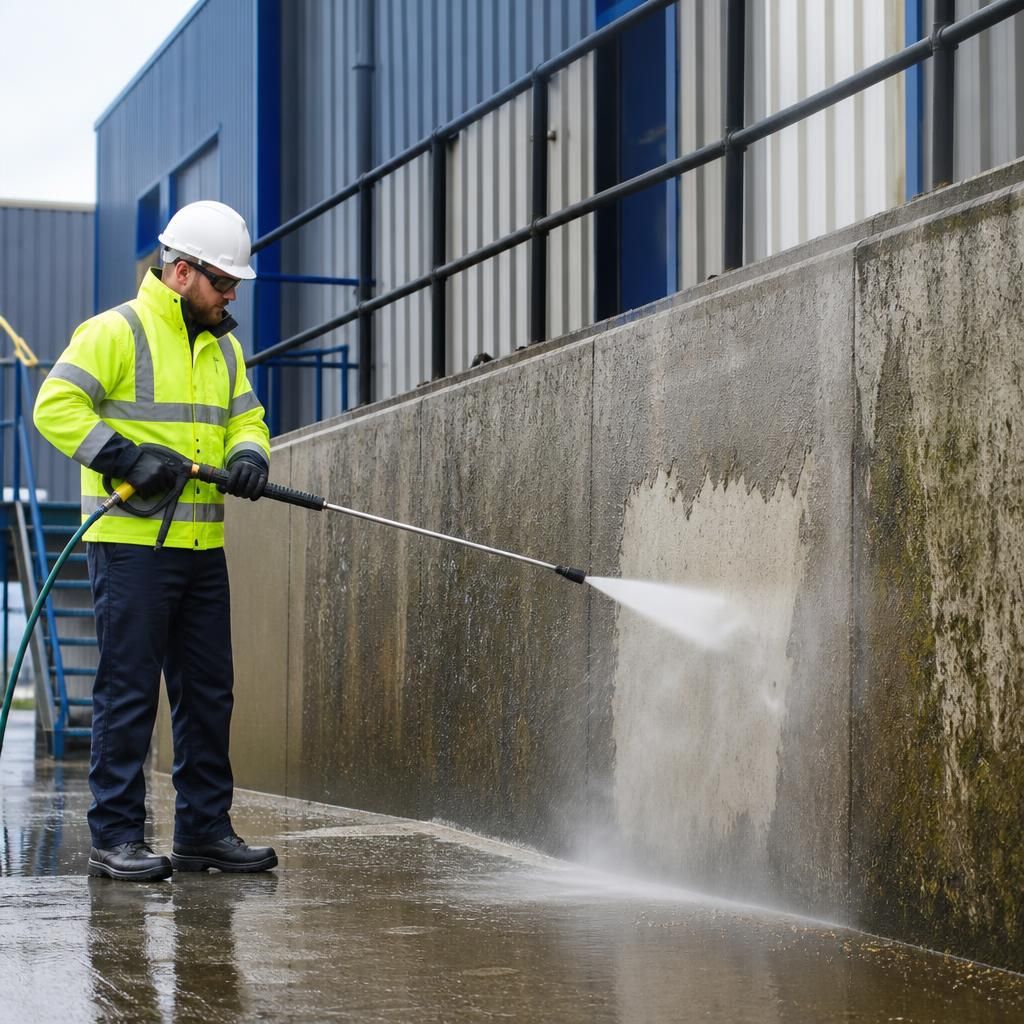
Matching pressure and water flow to the surface is one of the most important decisions when selecting mobile high pressure washing equipment. Pressure provides the cleaning force, while water flow helps rinse away loosened dirt and controls the speed of larger-area cleaning. The correct balance removes contamination efficiently without eroding masonry, lifting coatings or forcing water into joints.
Start with the lowest effective pressure and use a wider spray pattern where the surface is delicate, aged or coated. Higher settings may be suitable for sound concrete or heavily soiled paving, but they should not be applied automatically to brickwork, render, natural stone, cladding or roof materials. Nozzle type, working distance and operator control are equally important, so a small test area should be inspected before full cleaning begins.
Where grease, oil or bonded organic deposits are present, hot water, steam or a compatible treatment may achieve better results than simply increasing pressure. This can protect the substrate, reduce unnecessary water use and make wastewater easier to manage. A task-specific test clean confirms whether the selected equipment and settings provide the required result safely.