
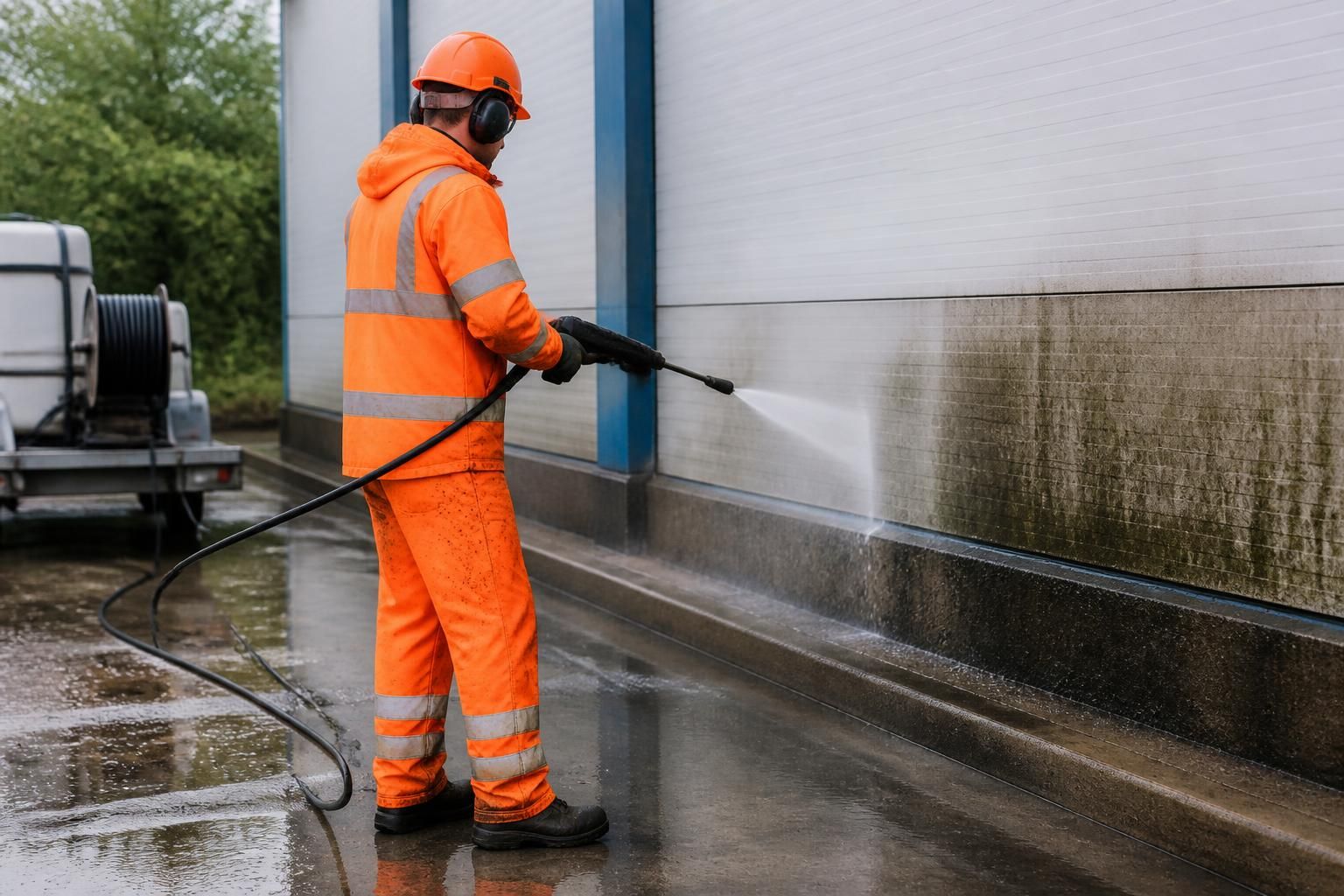
What environmental benefits does mobile high pressure washing offer?
Mobile high pressure washing can reduce environmental impact by using water more efficiently and often requiring fewer cleaning chemicals than conventional methods. Because the equipment is brought to site, operators can target soiling precisely, control run-off and select recovery or treatment measures where wastewater could affect drains, soil or waterways.
Mobile high pressure washing can reduce the environmental impact of commercial and industrial cleaning by using water more precisely, limiting chemical use and enabling wastewater to be managed at the point of cleaning. Its benefits depend on the equipment selected, the operator’s technique, the type of surface and the controls used for run-off, so it should be treated as a managed cleaning process rather than automatically assumed to be environmentally preferable.
More efficient water use
High pressure equipment uses the force of a concentrated water jet to remove dirt, algae, oil residues and other deposits. This can clean hard surfaces effectively without relying on a continuous high-volume flow of water. Mobile systems can also be adjusted to suit the work, with pressure, flow rate, nozzle type and cleaning distance selected according to the surface and level of soiling.
Targeted cleaning helps prevent water being wasted on unaffected areas. For example, an operator can work methodically across a façade, loading bay, car park or item of plant rather than flooding the whole area. Where appropriate, recovery equipment can collect contaminated water instead of allowing it to spread across the site.
Water efficiency is not simply a matter of using the highest possible pressure. Excessive pressure can create unnecessary spray, damage surfaces and increase rework. Experienced operators use the lowest effective pressure and the correct nozzle pattern for the task, which supports both surface protection and responsible water use.
Reduced reliance on cleaning chemicals
Many deposits can be removed through pressure, controlled heat and suitable dwell time without heavy chemical treatment. This is particularly relevant for general dirt, loose organic growth, dust and some forms of surface staining. Reducing chemical use can lower the risk of residues entering drainage systems, soil or nearby watercourses.
Chemicals may still be appropriate for oil, biological growth, efflorescence, graffiti or other difficult contamination. Where they are needed, the cleaning method should use the least aggressive suitable product, apply it only to the affected area and follow the manufacturer’s instructions for dilution, contact time, rinsing and disposal. Chemical selection must also take account of the surface, nearby vegetation, drainage arrangements and site environmental requirements.
Better control of contaminated run-off
Mobile cleaning allows controls to be planned around the actual location and condition of the site. Before work begins, the operator can identify surface drains, interceptors, watercourses, planted areas and vulnerable ground. Drain covers, bunding, temporary barriers, wet vacuums or other recovery measures may be used where run-off could carry oil, silt, paint, detergents or other pollutants.
Recovered wastewater should not be discharged without considering its contents and the receiving drainage system. Depending on the contamination and the site arrangements, it may need to be filtered, treated, collected for appropriate disposal or discharged only with permission and in accordance with applicable requirements. This is especially important when cleaning industrial yards, workshops, fuel areas, construction sites and car parks.
Less disturbance to surrounding areas
Because mobile equipment can be brought directly to the work area, cleaning can often be completed without transporting large items of material to an off-site facility. On-site treatment may reduce handling, temporary storage and the disruption associated with moving contaminated surfaces or equipment elsewhere. It can also allow cleaning to be restricted to the areas that need it, helping avoid unnecessary disturbance to adjacent operations.
Noise, spray and mist still need to be controlled. Appropriate operating times, barriers, suitable nozzles and controlled pressure can reduce nuisance to neighbouring occupiers, pedestrians and site users. Steam or lower-pressure methods may be preferable in sensitive locations, provided they are suitable for the contamination and surface.
Potentially lower energy and material use
Efficient cleaning can reduce the need for repeated visits, abrasive treatments, repainting or premature replacement of surfaces. Removing damaging contaminants from cladding, paving, roofs and other external assets may support longer maintenance intervals, although cleaning should never be used as a substitute for repairing defective materials or drainage.
Energy performance varies between systems. Hot-water and steam equipment require fuel or electricity to heat the water, while cold-water systems may use less energy but require different operating conditions. The most responsible choice is the system that achieves the required result with an appropriate combination of water, energy, chemicals, time and recovery measures. Unnecessary over-cleaning can offset the environmental benefit of an otherwise efficient method.
How to maximise the environmental benefit
- Inspect the surface and identify the type of contamination before choosing pressure, temperature, flow rate and cleaning agents.
- Use the lowest effective water flow and pressure, rather than automatically selecting the most powerful setting.
- Protect drains, soil, planting and watercourses before work starts, and plan how wastewater will be contained or recovered.
- Use biodegradable or lower-impact products only where they are suitable for the contamination and compatible with the surface.
- Prevent chemical overspray and keep application limited to the areas requiring treatment.
- Check whether collected wastewater requires filtration, treatment, testing or controlled disposal.
- Schedule work to reduce disruption, avoid heavy rainfall where run-off could be difficult to control and protect nearby occupants and wildlife.
- Record the method used and any environmental controls so that future maintenance can be planned more efficiently.
For commercial and industrial premises, the main environmental advantage is therefore control. A mobile high pressure washing system can combine precise water delivery, selective chemical use and on-site run-off management, but the result depends on competent assessment and operation. Before cleaning begins, the site’s drainage, contamination risks, surface condition and wastewater arrangements should be reviewed so the method is both effective and environmentally responsible.
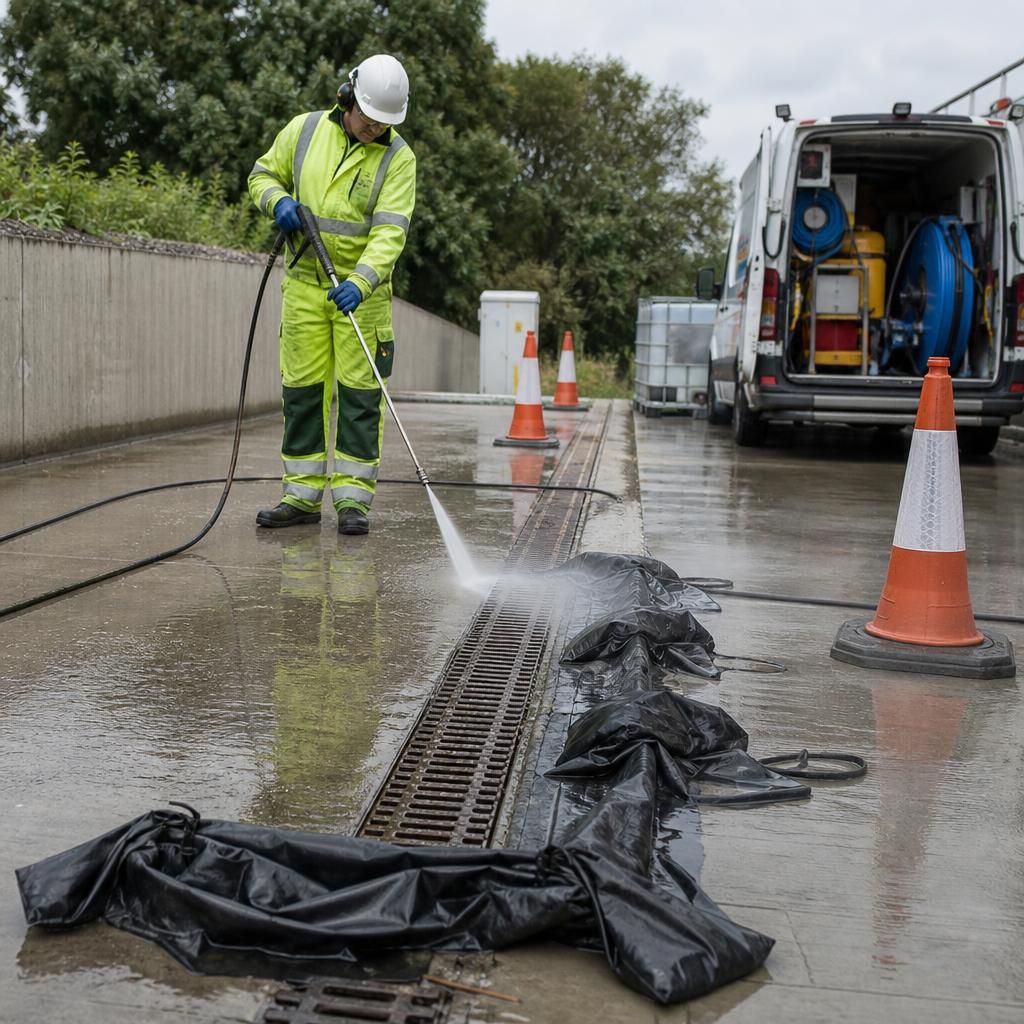
One of the main environmental benefits of mobile high pressure washing is better control of contaminated run-off. Because the equipment is brought to the work area, drains, planted areas and nearby watercourses can be assessed and protected before cleaning starts.
Where dirt, oil, silt, paint or detergents may enter drainage systems, operators can use drain covers, temporary barriers, wet vacuums or other recovery measures to contain the wastewater. It can then be filtered, treated, collected or disposed of appropriately, depending on its contents and the site’s drainage arrangements. This approach helps prevent pollutants spreading across industrial yards, car parks, loading areas and other commercial surfaces.
Discuss Environmentally Responsible Mobile High Pressure Washing
Discuss your site’s environmental requirements with our team before work begins, including water use, chemical selection and wastewater controls. We can help plan a mobile high pressure washing approach suited to your surfaces, drainage arrangements and contamination risks.