
What are the environmental considerations and benefits of using mobile high pressure washing compared to traditional methods?
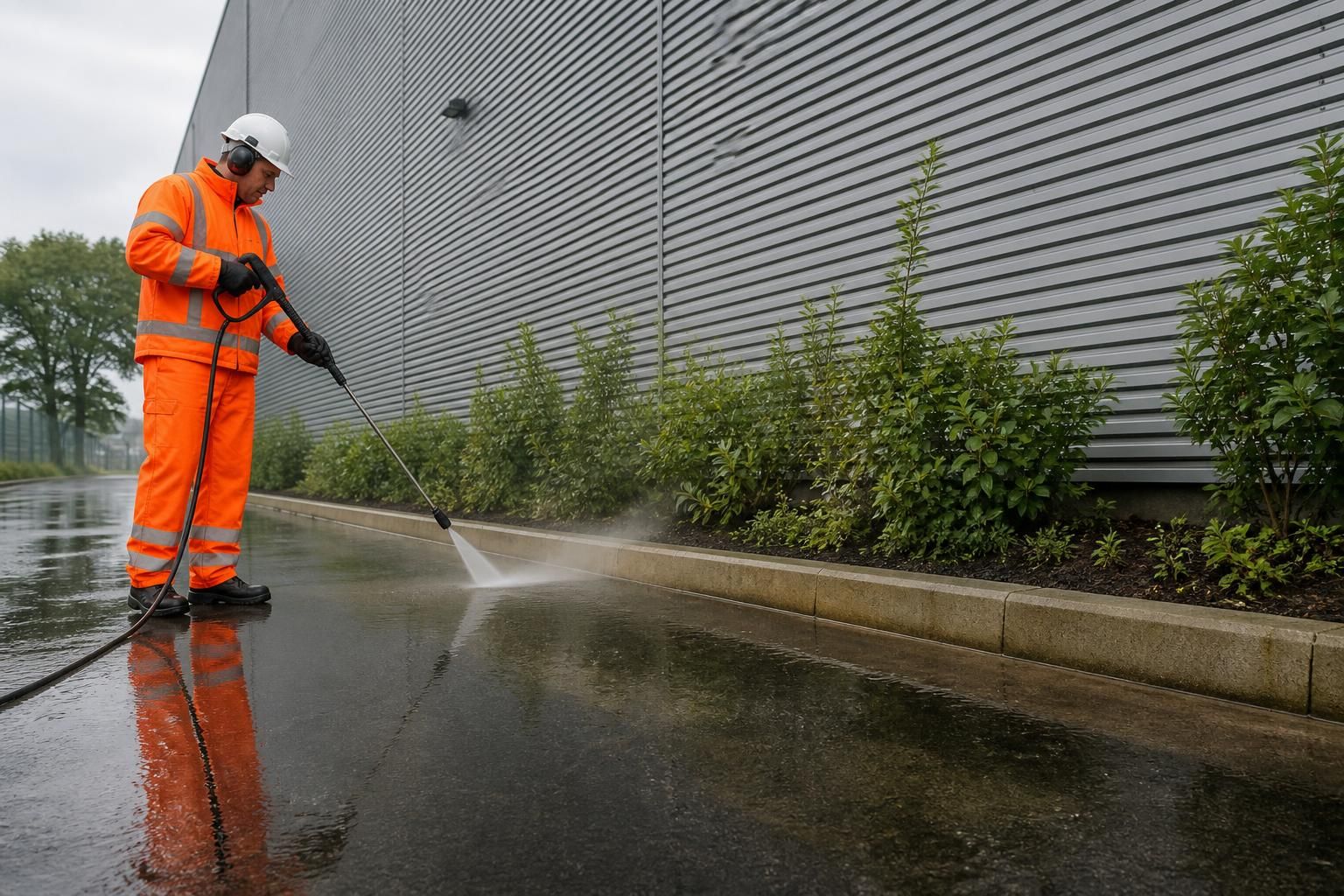
Mobile high pressure washing can reduce water use, chemical dependence and transport-related emissions compared with traditional cleaning methods, while delivering effective results across large or difficult-to-access areas. Environmental considerations include controlling runoff, recovering wastewater where required, selecting suitable detergents and using efficient equipment to minimise energy consumption and protect surrounding land and watercourses.
Mobile high pressure washing can have a lower environmental impact than traditional cleaning methods when the equipment is correctly selected and operated. It uses pressurised water to remove dirt, oil, algae, coatings and other contamination efficiently, which can reduce water consumption, reliance on harsh chemicals, transport requirements and repeat cleaning. The main environmental responsibilities are managing water use, controlling contaminated runoff, limiting fuel and energy consumption, and disposing of wastewater lawfully.
Reduced water consumption
Pressure increases the cleaning force of each volume of water, allowing operators to remove contamination more efficiently than low-pressure rinsing or some manual methods. Mobile systems can also be configured with flow controls, adjustable pressure and specialist nozzles so that water is matched to the surface and the type of soiling. This avoids using excessive water on areas that only require light cleaning.
Water efficiency depends on the equipment and the operator’s technique. Holding a lance too close to a surface, using an unnecessarily high flow rate or repeatedly washing the same area can increase consumption without improving the result. A competent contractor should assess the surface first and use the lowest effective pressure, flow and cleaning time.
Lower dependence on cleaning chemicals
High pressure and hot water can loosen and remove many types of dirt without relying on large quantities of detergents, solvents or degreasers. This is particularly useful for general dust, moss, algae, mud, loose paint and surface deposits. Where a detergent is necessary, using it as a targeted pre-treatment can be more environmentally responsible than applying chemicals across an entire area.
Chemicals should still be selected according to the contamination, surface and drainage conditions. Biodegradable does not mean harmless in every situation, and even approved products can affect aquatic environments if they enter surface water untreated. Operators should follow the product instructions, prevent overspray, use the minimum effective concentration and keep chemicals away from drains and watercourses unless discharge has been properly assessed.
Reduced transport and site disruption
Because mobile equipment is brought directly to the premises, it can reduce the need to move items to an off-site cleaning facility. This may lower vehicle movements, handling and associated fuel use, particularly when cleaning large façades, industrial yards, roofs, cladding or car parks in place. Completing several related tasks during one planned visit can also avoid unnecessary return journeys.
Mobile equipment is not automatically low-emission. Diesel- or petrol-powered machinery produces exhaust emissions, and transporting a heavy unit to site still has an environmental cost. The overall impact can be reduced by planning the work efficiently, selecting equipment suitable for the task, avoiding unnecessary idling and using electric or lower-emission systems where the site conditions and required performance allow.
Runoff and wastewater control
The most important environmental consideration is what happens to the water after it leaves the surface. Washing can mobilise oil, fuel, heavy metals, paint residues, cement, detergents, biological growth and other pollutants. Allowing this water to flow into a surface-water drain, stream, river or unprotected ground can cause pollution and may breach drainage or environmental requirements.
Before work begins, the drainage layout and likely contaminants should be assessed. Suitable controls may include drain covers, bunding, temporary barriers, vacuum recovery, silt filtration, collection tanks and controlled discharge to the foul-water system where permission is available. Recovered water may require treatment or disposal by an authorised provider. It should never be discharged simply because it appears clear.
- Identify nearby drains, watercourses, soft landscaping and environmentally sensitive areas.
- Prevent dirty water from leaving the work zone wherever contamination is likely.
- Separate clean rainwater from contaminated wash water where practical.
- Recover, filter, store or dispose of wastewater in accordance with the site plan and applicable requirements.
- Keep records of chemicals used, waste removed and any agreed discharge arrangements.
On industrial sites, the correct method may involve a site-specific environmental risk assessment and consultation with the site operator or drainage authority. Cleaning around fuel storage, workshops, manufacturing areas and loading bays requires particular care because residues can be hazardous even when they are not immediately visible.
Protecting surfaces can extend their service life
Careful cleaning can remove corrosive deposits, oil, salts, algae and other contamination that contributes to surface deterioration. Maintaining façades, cladding, roofs, paving and concrete may help preserve the existing asset and reduce the need for premature repair, replacement or repainting. Extending the service life of a structure can avoid the materials, transport and waste associated with more extensive works.
This benefit depends on using the correct pressure, temperature, nozzle, distance and cleaning agent. Excessive pressure can strip protective coatings, damage pointing, open concrete surfaces or force water behind cladding and roofing details. A pre-clean inspection, test area and method statement help ensure that environmental benefits are not cancelled out by avoidable surface damage.
Noise, energy and local air quality
Pressure washing can create noise from pumps, engines, water impact and vacuum recovery equipment. Work near offices, residential areas, schools or healthcare premises should be scheduled sensitively and managed in line with site requirements. Electric equipment can reduce local exhaust emissions and may be preferable for enclosed or poorly ventilated areas, although its environmental advantage depends on the electricity source and the equipment’s capacity.
Hot-water systems generally use more energy than cold-water systems, but heat can improve cleaning efficiency and reduce the need for chemicals or prolonged washing. The appropriate choice should be based on the contamination rather than using heated water as standard. Well-maintained pumps, correctly sized machinery and efficient operating practices help limit fuel and electricity use.
How mobile high pressure washing compares with traditional methods
Traditional methods can include manual scrubbing, hose washing, fixed wash bays, abrasive cleaning, chemical-only treatments or transporting removable items elsewhere. Each has circumstances in which it is appropriate, but environmental performance varies. Manual cleaning may use less energy for a small area but can require more time, water or chemical application on extensive contamination. Abrasive methods can generate dust and spent media, while chemical-only cleaning may create additional storage, handling and wastewater concerns. A fixed facility may provide strong containment but can require extra transport and handling.
Mobile high pressure washing offers a practical balance when the work is planned around the site’s drainage, access and contamination risks. It is not the greenest option in every situation: low-pressure cleaning may be sufficient for delicate surfaces, dry methods may be preferable for certain dusts, and specialist containment may be essential where pollutants are present. The most sustainable method is the one that achieves the required standard with the least effective use of water, energy, chemicals and materials while preventing pollution.
For commercial and industrial work, environmental controls should be agreed before cleaning starts. The scope should identify the surfaces, contamination, water source, drainage arrangements, recovery requirements, chemical controls, access equipment and waste route. This allows the cleaning method to deliver the operational result while protecting surrounding land, drainage systems, watercourses and the condition of the property.
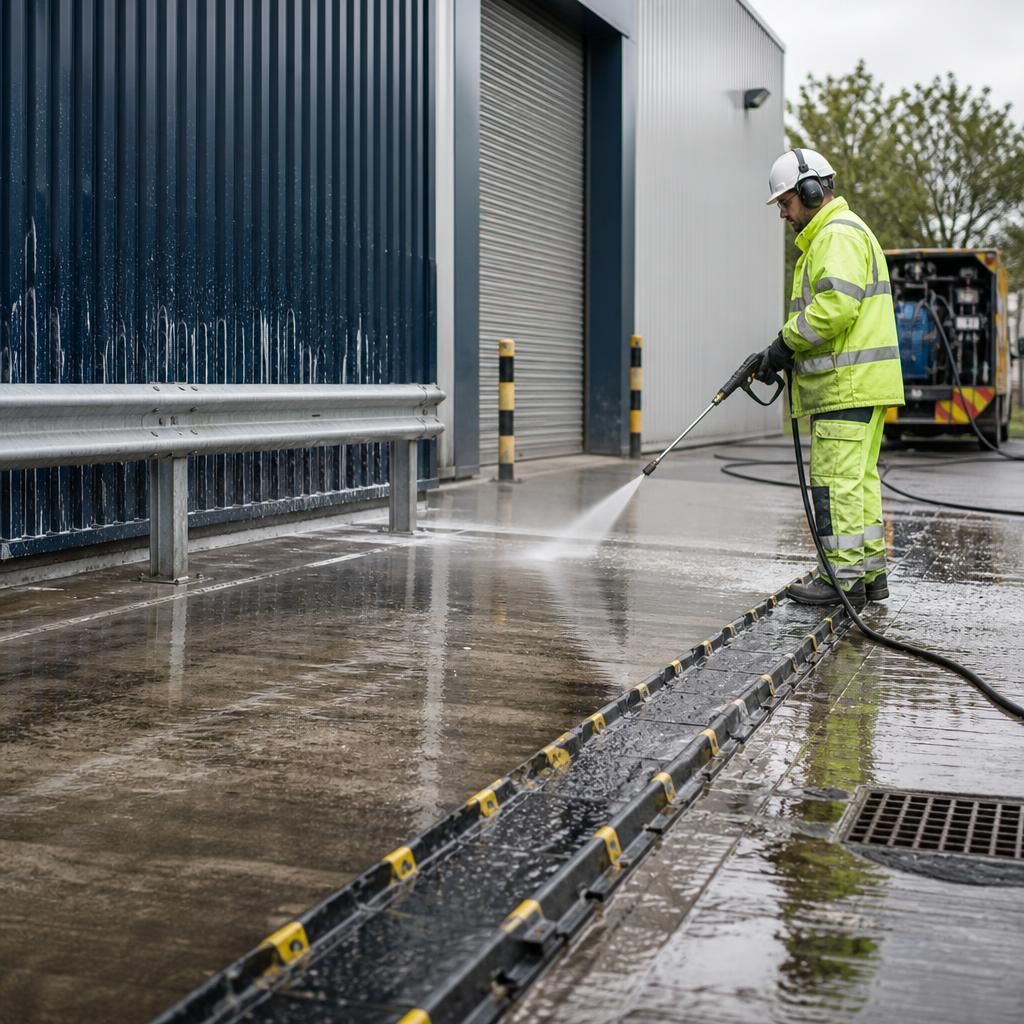
Mobile high pressure washing can reduce environmental impact by using pressurised water efficiently at the premises, rather than relying on extensive manual scrubbing, repeated hose washing or transporting items to an off-site facility. The equipment can be adjusted to match the surface and contamination, helping limit unnecessary water use, chemical application, fuel consumption and vehicle movements.
Environmental protection still depends on proper wastewater control. Washing can mobilise oil, detergents, paint residue, silt and other pollutants, so drains and nearby watercourses should be identified before work begins. Drain covers, bunding, filtration and vacuum recovery may be required to prevent contaminated water entering the wrong drainage system. Water should only be discharged where the arrangement is permitted, with recovered wastewater treated or removed through an appropriate waste route.