
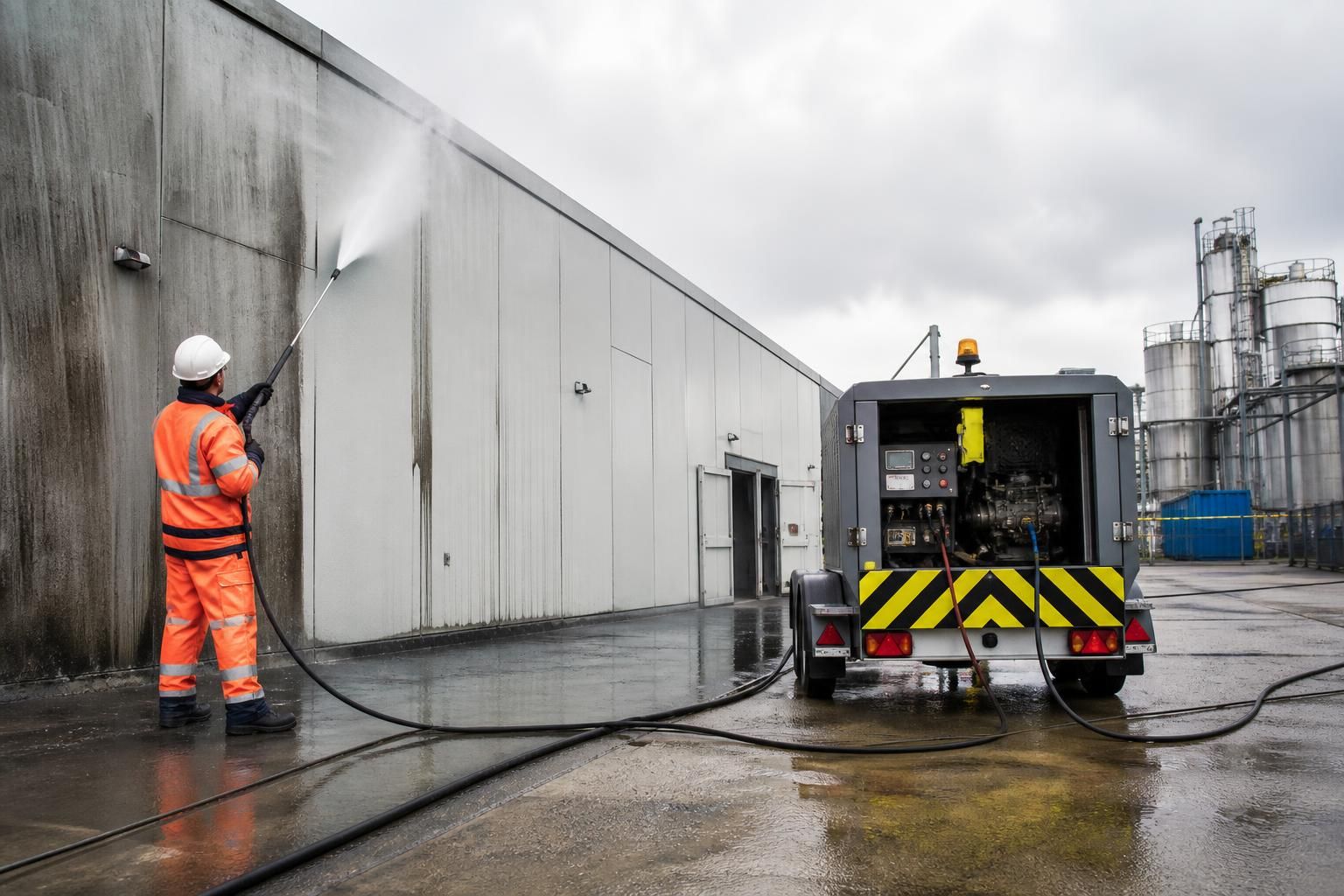
What are the advantages of using mobile high pressure washing for industrial sites?
Mobile high pressure washing gives industrial sites fast, flexible and controlled cleaning without relying on fixed on-site equipment. It can improve access, reduce disruption and remove built-up dirt, oil, coatings and other contaminants from large or difficult-to-reach areas while supporting safer, more efficient site maintenance.
Mobile high pressure washing gives industrial sites a flexible, efficient way to remove dirt, oil, grease, algae, coatings and other contaminants from buildings, structures, plant areas and hard surfaces. Because the equipment can be brought directly to the work area, it is suitable for large, dispersed or difficult-to-access sites where fixed cleaning systems would be impractical.
Key advantages include:
- Greater access across large sites: Mobile equipment can be transported to façades, loading bays, service yards, car parks, roofs, warehouses, plant areas and remote sections of a site. Long hoses and suitable access equipment can help reach elevated or restricted areas without relocating permanent machinery.
- Faster removal of heavy contamination: The combination of controlled water pressure, flow rate and, where appropriate, heated water can break down embedded oil, grease, mud, traffic film and industrial residue more quickly than low-pressure or manual cleaning. This can make a substantial difference on high-traffic surfaces and areas affected by repeated contamination.
- Reduced operational disruption: Cleaning can often be planned around production schedules, deliveries, vehicle movements and site occupancy. A mobile contractor can work in defined sections, isolate active areas and move between locations as required, helping the site remain operational while maintenance takes place.
- Versatility across materials: Professional operators can adjust pressure, temperature, nozzle selection and cleaning agents to suit the substrate. This allows the same mobile service to be used for suitable masonry, concrete, paving, cladding, metalwork, industrial flooring and external plant areas, while reducing the risk of using excessive force on vulnerable surfaces.
- Improved control over the cleaning process: Mobile systems allow the operator to select the appropriate combination of pressure and water flow for each task. Lower pressure may be appropriate for delicate façades or painted finishes, while more powerful settings may be required for robust concrete or heavily soiled yards. This controlled approach is more reliable than applying the same method across every surface.
- Effective cleaning of difficult contamination: Heated high pressure water can soften oils, grease and some organic deposits, reducing the need for aggressive chemicals. Specialist attachments and treatments may also assist with chewing gum, tyre marks, graffiti residue, moss and accumulated deposits, subject to a survey of the surface and contamination.
- Potentially lower overall maintenance costs: Regular cleaning removes contaminants that can contribute to staining, slip hazards, blocked drainage and deterioration of external finishes. Preventative maintenance can reduce the need for more intensive remedial work and help preserve the condition of hardstanding, façades, access routes and site assets. The actual cost depends on the area, contamination, access, water recovery requirements and frequency of service.
- Better health and safety conditions: Removing oil, algae, mud and other deposits can improve traction and reduce slip risks in yards, walkways, ramps and loading areas. Cleaning also helps maintain clearer access routes and more presentable working conditions. A suitable method statement, risk assessment, exclusion zone and traffic management plan remain essential, particularly where high-pressure water, plant, vehicles or work at height are involved.
- Reduced need for manual scrubbing: High pressure water can cover broad areas and remove contamination from textured surfaces, joints and recesses that are labour-intensive to clean by hand. Manual work may still be required for edges, detailed areas or sensitive finishes, but the overall process can be more consistent and less physically demanding.
- Suitable for planned and responsive work: Mobile services can support scheduled deep cleaning, seasonal maintenance, preparation before repairs or painting, and responsive cleaning following spills or construction activity. This flexibility is valuable for property managers, contractors and industrial operators managing several buildings or sites.
- More efficient use of water and cleaning products when properly managed: An experienced operator can match the pressure, flow and cleaning method to the task rather than relying on unnecessarily large volumes of water or chemicals. Where site conditions require it, wastewater can be contained, collected and directed for appropriate disposal in line with environmental requirements.
- Professional appearance and asset presentation: Clean façades, cladding, entrances, car parks and service yards contribute to a well-maintained site. This is important for industrial premises receiving visitors, contractors, deliveries or inspections, as well as for property managers responsible for maintaining the appearance and condition of commercial estates.
The main benefit is not simply the pressure produced by the machine; it is the operator’s ability to select and control the right cleaning system for the surface and contamination. Excessive pressure, unsuitable nozzles, poor access planning or incorrect chemicals can damage coatings, force water into vulnerable areas or spread contaminated runoff. A professional assessment should therefore consider the substrate, drainage, nearby electrical equipment, traffic, work-at-height requirements and any restrictions on wastewater discharge before work begins.
For industrial sites, mobile high pressure washing is most effective when incorporated into a planned maintenance programme. Cleaning frequencies should reflect the site’s exposure to traffic film, oil, dust, weather, algae, production residue and construction activity. Combining routine washing with inspections of drainage, joints, coatings and damaged surfaces helps identify problems early and supports longer-term protection of the site.
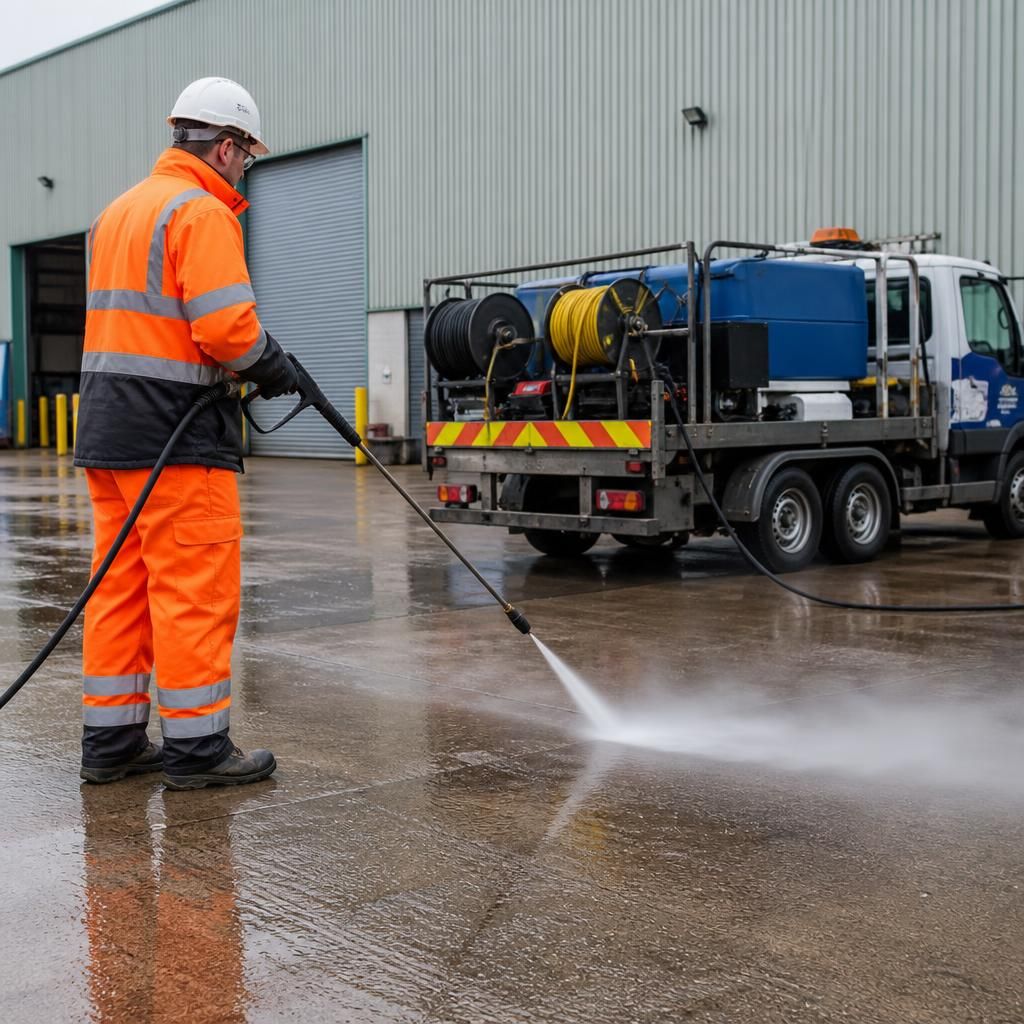
One of the main advantages of mobile high pressure washing on an industrial site is that the equipment can be taken directly to the area requiring attention. This is particularly useful where buildings, loading bays, service yards, car parks and plant areas are spread across a large site or where fixed cleaning equipment would be impractical. Long hoses and suitable access equipment can also help operators reach elevated or restricted areas without moving permanent machinery.
Because the work can be organised in sections, cleaning may be scheduled around production, deliveries, vehicle movements and site occupancy. This helps reduce disruption while still allowing heavily soiled surfaces, oil deposits, mud, algae and traffic film to be removed efficiently. Before work begins, the cleaning method should be matched to the surface, access conditions, drainage and any nearby equipment to maintain control and protect the site.