
How does mobile high pressure washing ensure safety and minimise potential damage to surfaces?
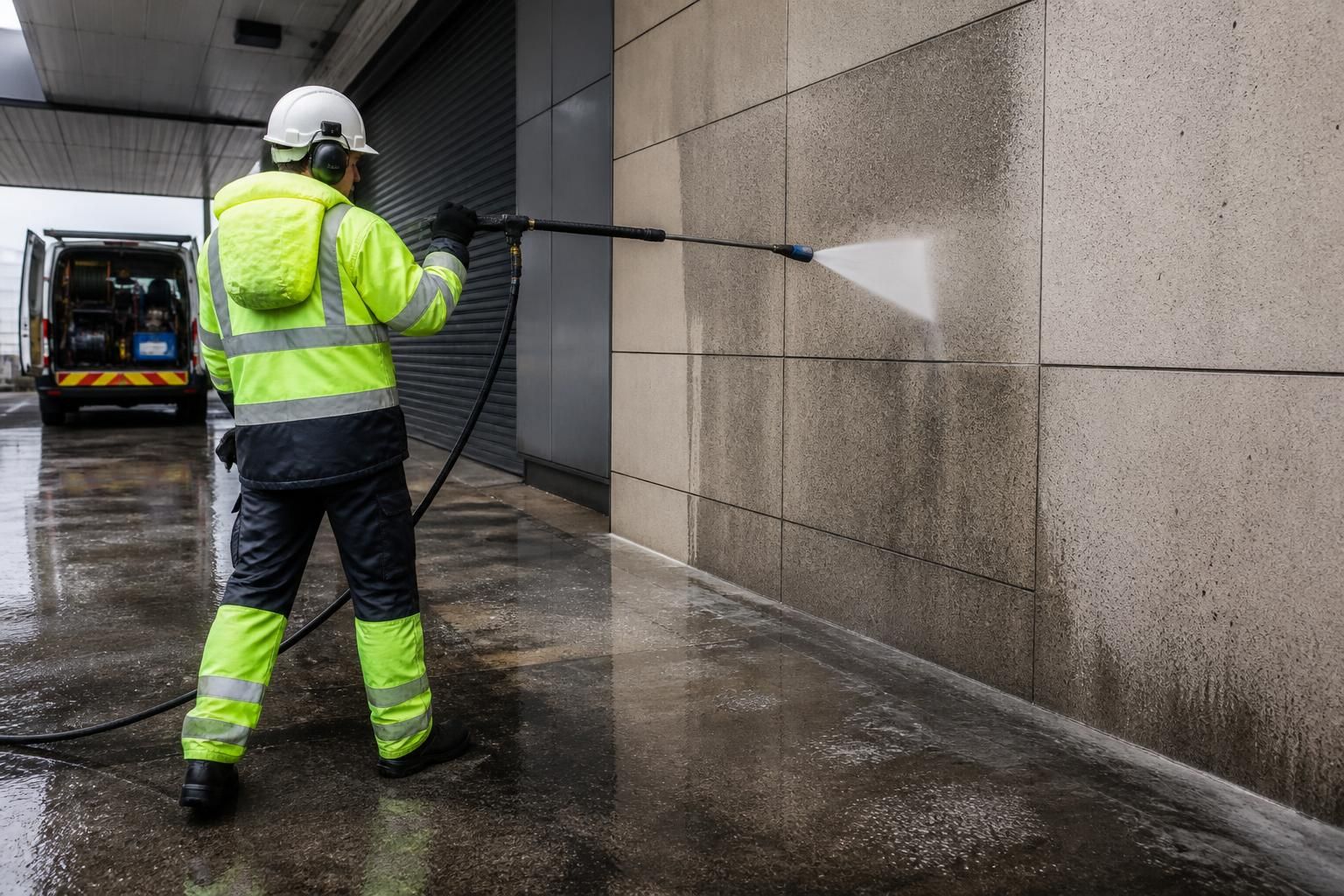
Mobile high pressure washing improves safety by using controlled pressure, flow, temperature and nozzle selection suited to each surface, with trained operators assessing the area before work begins. This reduces the risk of surface erosion, staining, water ingress and damage to coatings while controlled access, runoff management and appropriate protective measures help protect people, property and surrounding areas.
Mobile high pressure washing ensures safer, lower-risk cleaning by allowing the operator to adjust pressure, water flow, temperature, nozzle type and working distance to suit the surface and the conditions on site. Before cleaning begins, the area is assessed for fragile materials, defective finishes, access hazards, electrical equipment, drainage routes and potential water ingress. This controlled approach removes contamination effectively without treating every surface with the same level of force.
Surface assessment comes first. The operator identifies the material, its condition and any existing defects before selecting the cleaning method. Brickwork, concrete, paving, metal cladding, painted surfaces, render, stone, roofs and masonry can all respond differently to water pressure and heat. Loose pointing, cracked render, failing paint, corroded metal, open joints and damaged sealants may require a reduced-pressure method, steam cleaning or an alternative treatment rather than direct high pressure.
A small test area is often cleaned before the main work starts. This confirms whether the chosen pressure, temperature, nozzle and cleaning solution are suitable, and shows whether the surface has a coating, staining pattern or defect that may not have been apparent during the initial inspection. The result can then be reviewed before proceeding across a larger façade, car park, roof or industrial surface.
- Pressure is matched to the substrate. Higher pressure may be appropriate for robust concrete or heavy deposits, while lower pressure is generally more suitable for painted finishes, delicate masonry, cladding and areas with vulnerable joints.
- Water flow is controlled. Effective cleaning depends on more than pressure. Adjusting the flow can help carry loosened dirt away while limiting splashback, overspray and unnecessary water exposure.
- Nozzles are selected carefully. A wide fan pattern distributes the force over a larger area, whereas a narrow or rotating jet concentrates it. Concentrated jets require particular care around joints, edges, sealants and damaged finishes.
- Working distance and angle are managed. Holding the lance too close or directing water into joints, vents and openings can cause avoidable damage. Operators maintain a suitable distance and angle for the material being cleaned.
- Temperature is considered. Heated water or steam can improve the removal of grease, oil, biological growth and some coatings, but heat must be controlled around plastics, delicate paint, sealants and temperature-sensitive materials.
Controlled application reduces common forms of damage. Excessive or poorly directed pressure can erode soft masonry, remove pointing, mark concrete, lift paint, damage protective coatings or drive water behind cladding and into building fabric. A staged cleaning process reduces these risks. Operators normally work in manageable sections, observe the surface response and alter the settings if the substrate begins to change colour, shed material or show signs of distress.
Particular care is needed around windows, doors, vents, service penetrations, roof details, expansion joints and façade interfaces. These areas may not be designed to withstand direct water impact. Where necessary, they are protected, avoided or cleaned using a lower-pressure technique. Water-sensitive equipment, sockets, lighting, signage and stored materials should also be covered, isolated or moved before work starts.
Safety controls protect people as well as property. High pressure water can cause serious injury, detach surface material and create slippery ground conditions. A competent operator uses suitable personal protective equipment, including eye and face protection, gloves, protective footwear and clothing appropriate to the task. The work area should be clearly controlled so pedestrians, site staff and vehicles cannot enter the spray zone or be struck by debris and loosened contamination.
- Access equipment, ladders and platforms are selected and used according to the height, reach and condition of the work area.
- Hoses and cables are routed to reduce trip hazards and are kept away from moving vehicles where practicable.
- Operators check for overhead services, fragile roof areas, unstable materials and restricted access before positioning equipment.
- Traffic routes, entrances and pedestrian areas are managed so cleaning does not create an avoidable collision or slip risk.
- Where chemicals are required, they are selected for the contamination and substrate, handled in accordance with their instructions and prevented from contacting incompatible materials.
Water management is an important part of damage prevention. Runoff can carry silt, oil, paint residue, detergents and biological contamination into drains, landscaped areas or watercourses. Before washing starts, drainage points and discharge routes are identified. Runoff may need to be contained, filtered, collected or directed to an appropriate disposal point. This also prevents dirty water from drying back onto nearby façades, paving or vehicles and reduces the risk of staining.
Water ingress is controlled by avoiding direct spraying into openings and by protecting vulnerable details. On roofs and façades, the operator considers the direction of overlaps, laps, joints and seals rather than simply directing water at the most heavily soiled area. Internal signs of damp, known defects or previous leaks should be reported before cleaning, since washing cannot correct a failed seal or damaged building component.
Mobile equipment can support this level of control because the cleaning system is brought to the work area and configured for the task, rather than relying on a fixed setting or a one-size-fits-all process. The equipment may be positioned to improve hose management, reach difficult areas and keep the operator at a safer working distance. Mobility does not remove the need for planning: vehicle positioning, ground loading, fuel or power sources, water supply, access routes and emergency arrangements still need to be assessed.
After cleaning, the surface should be inspected for consistent results, remaining deposits, exposed defects and any signs of coating or substrate damage. Drain covers, protective sheeting and temporary barriers should be removed only when the area is safe and runoff has been managed. Any pre-existing or newly exposed defects, such as loose pointing, failed sealant or damaged paint, should be recorded so that remedial work can be planned separately.
The safest mobile high pressure washing process is therefore based on controlled energy and informed decision-making, not maximum pressure. A site-specific assessment, test cleaning, correctly adjusted equipment, competent operation, controlled access and responsible runoff management allow commercial and industrial surfaces to be cleaned thoroughly while protecting people, building fabric, finishes and surrounding areas.
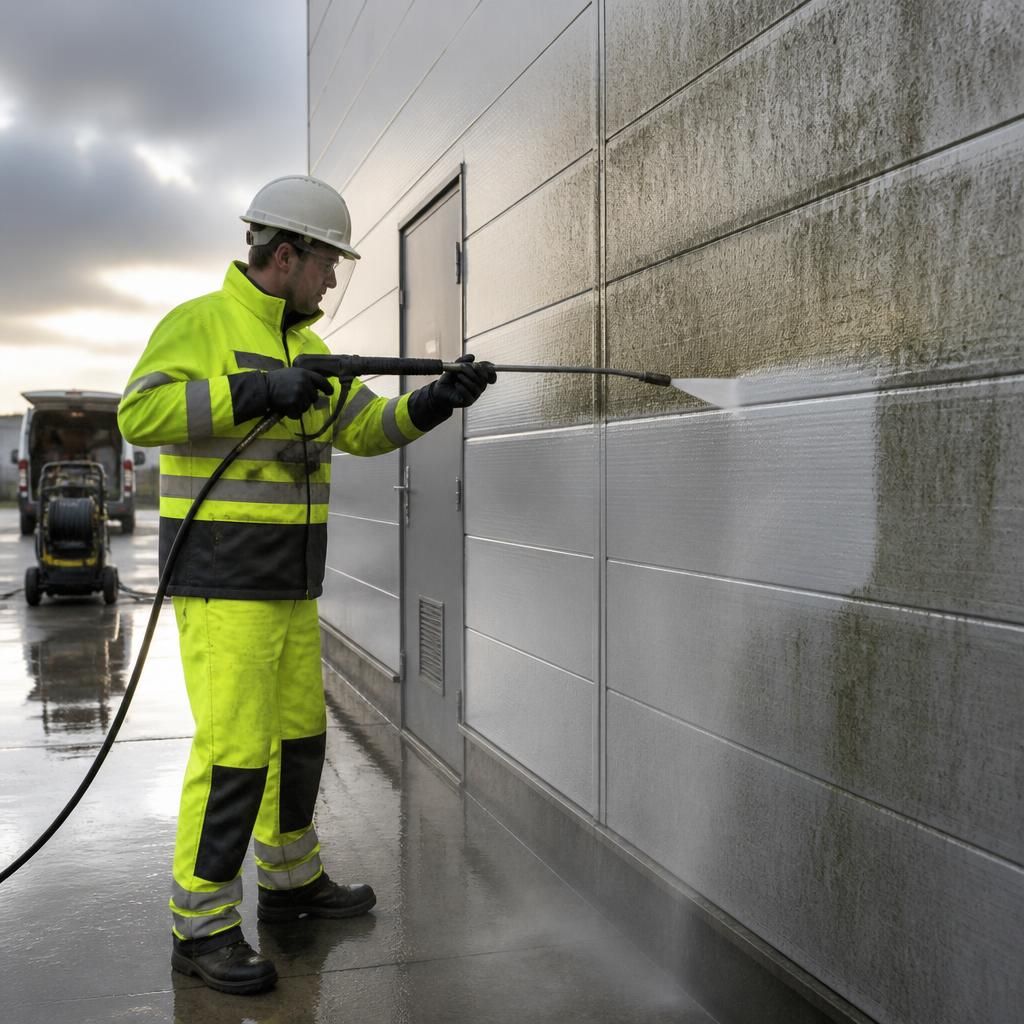
Mobile high pressure washing minimises surface damage by using a controlled, test-led cleaning process rather than applying maximum pressure across the entire area. The operator first identifies the substrate and its condition, then adjusts the pressure, water flow, temperature, nozzle pattern and working distance to suit the surface.
A small test area is cleaned before the main work begins. This shows whether the chosen settings could affect paint, pointing, sealants, coatings or delicate masonry. If the surface shows distress, the method can be changed immediately—for example, by reducing pressure, widening the spray pattern, increasing the working distance or using steam cleaning instead. This approach is particularly important on façades, cladding, roofs and surfaces with existing defects.
Arrange a Safe Mobile High Pressure Washing Assessment
Arrange a site-specific mobile high pressure washing assessment to identify surface risks, access requirements and suitable cleaning settings before work begins. Contact Encanto Exterior Cleaning to plan a safe, controlled cleaning process for your commercial or industrial site.