
How does mobile high pressure washing compare to traditional pressure washing methods in terms of performance and efficiency?
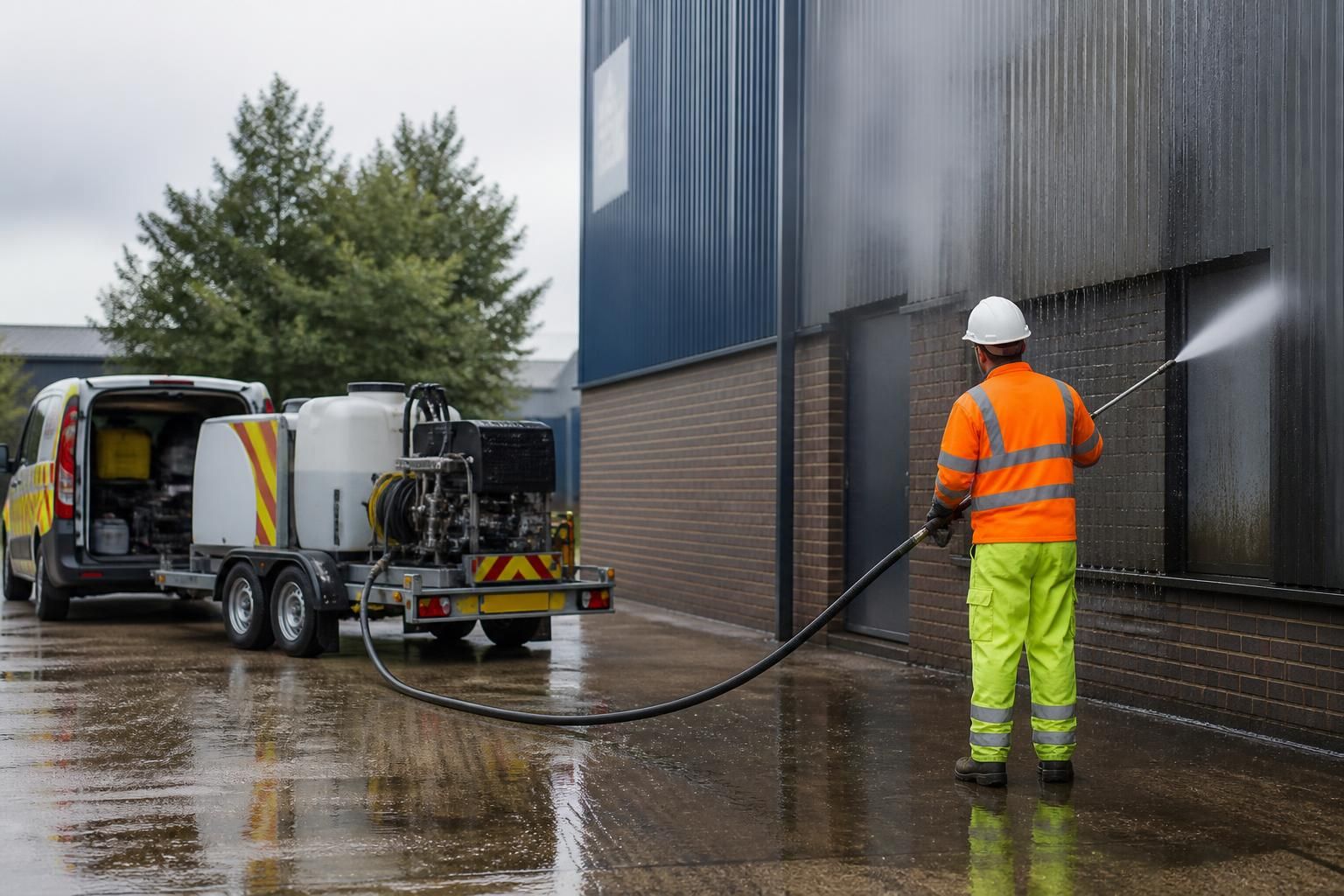
Mobile high pressure washing generally delivers faster, more consistent results than traditional pressure washing because specialist equipment, water supply and power are brought directly to the site. It can reduce setup time, labour and disruption while providing greater control over pressure and temperature, although the best method still depends on the surface, contamination and access conditions.
Mobile high pressure washing usually provides better performance and operational efficiency than traditional pressure washing when cleaning large, remote or difficult-to-access commercial sites. A mobile system brings the pressure washer, water supply, power source, hoses and access equipment to the work area, reducing preparation time and allowing cleaning to continue where fixed utilities are limited. However, the most suitable method depends on the surface, type of contamination, site access and the level of control required.
Performance is influenced by more than pressure alone. Mobile equipment can be configured for different cleaning requirements, including high-pressure water, hot water, steam cleaning and carefully controlled flow rates. This allows the operator to match the process to the material and contamination rather than relying on one setting for every surface.
- Hard, heavily soiled surfaces: High pressure can remove oil residues, mud, algae, atmospheric dirt and construction debris from suitable concrete, paving and industrial surfaces.
- Grease and oily contamination: Heated water can soften and break down residues more effectively than cold-water equipment, often reducing the need for prolonged mechanical scrubbing or chemical treatment.
- Delicate or weathered materials: Lower pressure, controlled temperature and suitable nozzles can reduce the risk of etching, coating failure, water ingress and surface erosion.
- Elevated areas: Access equipment and extended cleaning systems can help treat façades, cladding, roofs and other high-level surfaces without depending entirely on temporary site facilities.
Traditional pressure washing may use a fixed tap, a standard hose connection and a portable electric or petrol-powered machine. This can be effective for smaller areas with reliable water and power supplies. On a commercial or industrial site, however, the operator may need to work around restricted hose lengths, insufficient water flow, limited electrical capacity or shared site access. These constraints can interrupt the work and make it harder to maintain consistent cleaning conditions.
Mobile systems can improve efficiency in several practical ways:
- Reduced setup: Self-contained equipment can be positioned close to the work area, limiting the need to install long temporary hose runs or locate multiple utility connections.
- Fewer interruptions: An onboard water supply and independent power source can support cleaning where site services are unavailable, unreliable or needed for other operations.
- More consistent output: Correctly specified equipment helps maintain suitable pressure, flow and temperature across a large area, supporting a more even finish.
- Better deployment: A mobile unit can move between buildings, elevations, loading areas, car parks and other zones without rebuilding the system at each location.
- Reduced disruption: Faster preparation and organised work zones can shorten the period during which entrances, vehicle routes or operational areas need to be restricted.
Labour efficiency also depends on the cleaning method. High pressure can remove contamination over broad areas more quickly than hand brushing or basic hose washing, particularly on concrete, paving and robust industrial surfaces. Hot water or steam may further reduce cleaning time where deposits are bonded or greasy. The result is not simply a faster wash; it can also mean less manual agitation, fewer repeat passes and a more predictable work programme.
Mobile high pressure washing can support better water management, but it should not be assumed that every mobile system uses less water than every traditional machine. Consumption depends on the pump, nozzle, operating pressure, flow rate, contamination and cleaning technique. Experienced operators select the lowest effective flow and pressure, avoid unnecessary overspray and use recovery or containment measures where dirty water could enter drains or the surrounding environment.
Safety and surface protection are important parts of the performance comparison. Excessive pressure can damage pointing, coatings, sealants, timber, soft masonry and vulnerable cladding, regardless of whether the equipment is mobile or fixed. Before work begins, the surface should be assessed for condition, previous treatments, joints, electrical fittings, drainage points and areas where water could penetrate. Test cleaning helps confirm the appropriate pressure, temperature, nozzle and distance.
Mobile equipment can improve control because the operator has access to a wider range of settings and attachments, but that flexibility requires competent operation. The cleaning team should manage hose routes, overspray, pedestrian and vehicle movements, electrical hazards, working at height, noise and wastewater. On active commercial sites, the method statement and work sequence should be coordinated with the client’s site requirements.
Traditional methods may still be preferable in some situations. A small, accessible area with a suitable water supply may not justify bringing a self-contained mobile unit to site. Low-pressure washing, soft washing, hand cleaning or specialist chemical treatment may also be more appropriate where high pressure could damage the substrate or where contamination requires a different treatment process. Mobile high pressure washing is therefore most effective when the equipment is selected for the task rather than used as a universal solution.
For commercial and industrial projects, the fairest comparison should consider the complete operation rather than the machine’s advertised pressure. Assess the time required for mobilisation and setup, water and power availability, cleaning rate, labour involvement, access requirements, wastewater controls, surface risk and the disruption caused to the site. When these factors are reviewed together, mobile high pressure washing commonly offers the stronger combination of performance, flexibility and efficiency for large-scale or logistically challenging work.
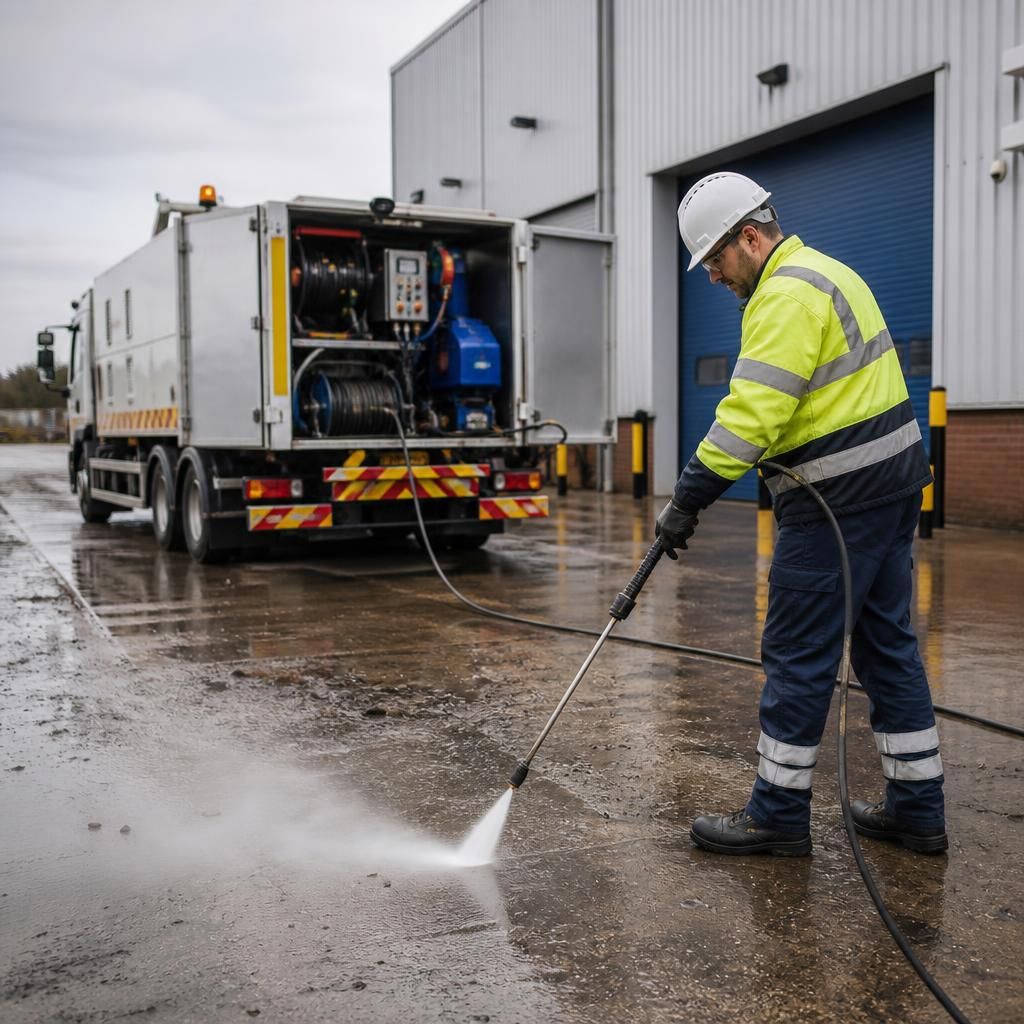
Mobile high pressure washing improves efficiency by bringing the water supply, power source, pump and hoses directly to the work area. This reduces reliance on fixed site utilities and helps maintain a consistent cleaning process across large or difficult-to-access premises.
For commercial and industrial work, this can mean fewer setup delays, less hose relocation and fewer interruptions caused by limited water flow or shared electrical supplies. The operator can move between façades, loading areas, car parks and other zones while keeping the equipment configured for the required pressure, flow and temperature. The result is often a more predictable programme with less disruption to normal site operations.