
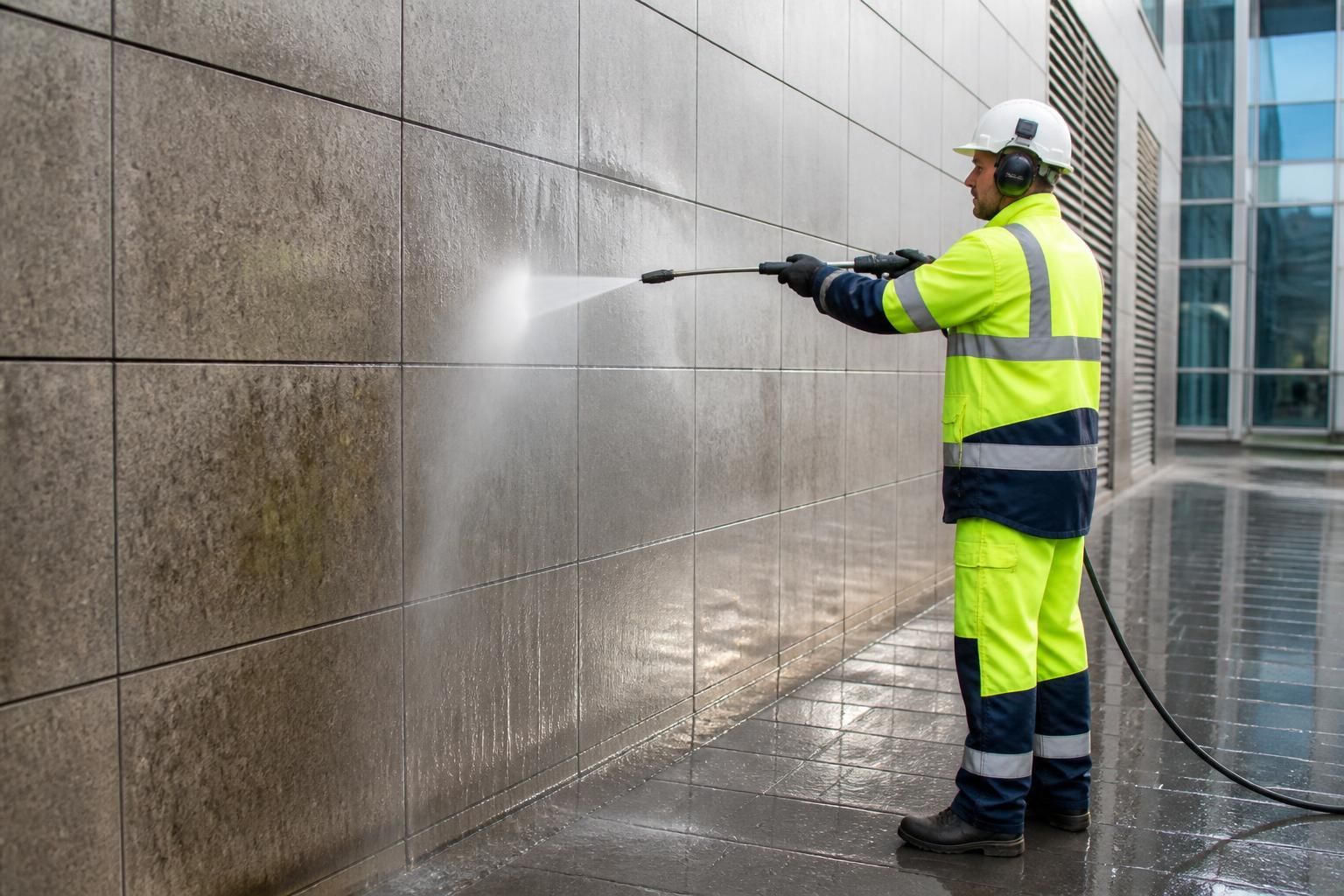
How does high pressure cleaning impact the longevity and maintenance of building surfaces compared to regular cleaning methods?
High pressure cleaning can extend the service life of building surfaces by removing damaging dirt, algae, pollutants, oil and loose coatings more thoroughly than many regular cleaning methods. When the pressure, water temperature, nozzle and technique are matched to the material, it reduces maintenance requirements and helps identify surface defects early without causing avoidable damage.
High pressure cleaning can extend the service life of building surfaces by removing contaminants that retain moisture, encourage biological growth, cause staining or contribute to surface deterioration. Compared with routine brushing, low-pressure rinsing or basic detergent cleaning, it can provide a deeper clean in less accessible areas. Its effect on longevity depends on using the correct pressure, water flow, temperature, nozzle, cleaning agent and technique for the material being treated. Excessive or poorly controlled pressure can shorten a surface’s life rather than extend it.
Building exteriors are exposed to traffic film, airborne pollution, algae, moss, bird deposits, oil, de-icing residue and general weathering. These contaminants are not merely cosmetic. Algae and moss can hold moisture against surfaces, organic growth can enter joints and textured finishes, and oil or chemical deposits can gradually affect concrete, paving and other porous materials. Dirt can also conceal cracking, failed sealant, blocked drainage routes, corrosion and loose coatings. Removing these deposits allows defects to be identified and addressed before they develop into more disruptive maintenance issues.
Regular cleaning methods still have an important role. Manual brushing, mopping, low-pressure washing and detergent application are often suitable for lightly soiled areas, delicate finishes and surfaces where water must be tightly controlled. They may, however, leave embedded dirt, biological growth, traffic film or residues in pores, joints and textured profiles. Repeatedly cleaning only the visible surface can allow contamination to return quickly and may require more frequent intervention.
High pressure cleaning works by combining water pressure and flow with the correct impact and coverage for the surface. The water breaks the bond between the contaminant and the substrate, while the operator controls the spray pattern to lift and remove the material rather than simply move it across the surface. Where appropriate, hot water, steam or a compatible cleaning solution can improve removal of grease, oil, chewing gum, coatings and biological contamination without relying solely on increased pressure.
The main ways controlled high pressure cleaning supports longer surface life are:
- Reducing moisture retention: Removing moss, algae, lichen and compacted dirt helps surfaces dry more effectively and can reduce persistent damp conditions.
- Limiting contamination-related deterioration: Oil, pollutants and chemical residues can affect porous surfaces, joints and protective finishes if they remain in place.
- Protecting drainage and access areas: Clearing deposits from paving, car parks, loading areas and drainage channels can help prevent standing water and associated surface damage.
- Preparing surfaces for repairs or coatings: Paint, sealants and protective treatments generally perform better when applied to a clean, sound and suitably prepared substrate.
- Making defects visible: A clean façade, roof, wall or paved area is easier to inspect for cracks, failed pointing, corrosion, loose render, damaged sealant and areas of water ingress.
- Supporting planned maintenance: Regular, properly specified cleaning can prevent contamination from becoming heavily bonded and more difficult or costly to remove.
The comparison with regular cleaning is therefore not simply a matter of greater pressure producing a better result. High pressure equipment can remove contamination that routine methods cannot, but the equipment must be used selectively. A soft or aged surface may need low-pressure application with a suitable detergent, followed by gentle rinsing. A robust concrete car park may tolerate a more intensive treatment, particularly where oil, tyre marks or ingrained dirt are present. Using the same setting across an entire site can create avoidable damage.
Surface condition is as important as surface type. Sound concrete, suitably finished paving, many masonry surfaces and some durable cladding systems can often be cleaned effectively when the method is assessed in advance. Older brickwork, friable mortar, rendered finishes, painted surfaces, timber, some natural stones and deteriorated coatings may be marked, etched, displaced or stripped by excessive pressure. Joints, seals, vents, electrical fittings, door thresholds and vulnerable façade details also require particular care. High pressure should not be used to compensate for an unsuitable chemical, blocked nozzle or insufficient preparation.
A professional assessment normally considers the material, age, condition, existing coating, level and type of contamination, nearby occupants, drainage arrangements and the consequences of water entering the building. A small test area can confirm whether the selected pressure, nozzle and cleaning solution produce the required result without damaging the substrate. Operators should also identify areas where water, dirt or cleaning agents could enter doors, air intakes, service ducts or neighbouring premises.
Pressure is only one part of the specification. A wide fan nozzle distributes force more gently than a narrow jet, while excessive proximity can concentrate impact even at a moderate machine setting. Water flow, operator movement, spray angle and dwell time all affect the result. Hot water or steam may remove grease and biological contamination with less mechanical force, although temperature-sensitive materials and coatings must be assessed first. Detergents should be compatible with the surface and managed so that residues do not remain or enter unsuitable drainage systems.
Cleaning frequency should be based on the site’s exposure and use rather than an arbitrary timetable. Building façades near busy roads, shaded elevations, coastal or industrial environments, food premises, loading areas and heavily trafficked car parks may accumulate contamination more quickly than sheltered surfaces. Inspections can identify when cleaning is needed before deposits become firmly bonded. Planned maintenance is generally more controlled than waiting until staining, moss, oil or graffiti has become extensive.
High pressure cleaning can also reduce future maintenance work when followed by the right remedial measures. For example, removing growth may reveal failed pointing that needs repair; cleaning a car park may identify damaged joints or drainage problems; and façade cleaning may show that a coating has reached the end of its serviceable condition. Cleaning alone does not correct structural defects, water ingress, corrosion or failing sealants. These issues should be recorded and repaired as part of the wider maintenance plan.
There are practical limits to the longevity benefit. Cleaning cannot restore material that has already eroded, reverse cracking or replace a failed protective system. Aggressive cleaning can remove the surface layer of concrete, open pores, strip paint, damage mortar or drive water behind cladding. It may also leave temporary marks where different areas have weathered at different rates. For this reason, the aim should be controlled contaminant removal with the least aggressive method that achieves a consistent result.
For commercial and industrial properties, the most effective approach is usually a documented, material-specific cleaning plan. This should record the areas cleaned, observed defects, chosen method, test results, access requirements, water management arrangements and any follow-up repairs. Before-and-after inspections help confirm that contamination has been removed without compromising the substrate and provide useful information for future maintenance visits.
In summary, high pressure cleaning can improve building surface longevity and reduce maintenance demands when it removes damaging contamination without causing mechanical or chemical damage. It offers greater cleaning capability than many regular methods, particularly on large, porous or heavily soiled areas, but it is not automatically the safest or most suitable option. Correct assessment, controlled equipment settings, appropriate access and follow-up inspection determine whether the result is genuine preventative maintenance or simply short-term cosmetic improvement.
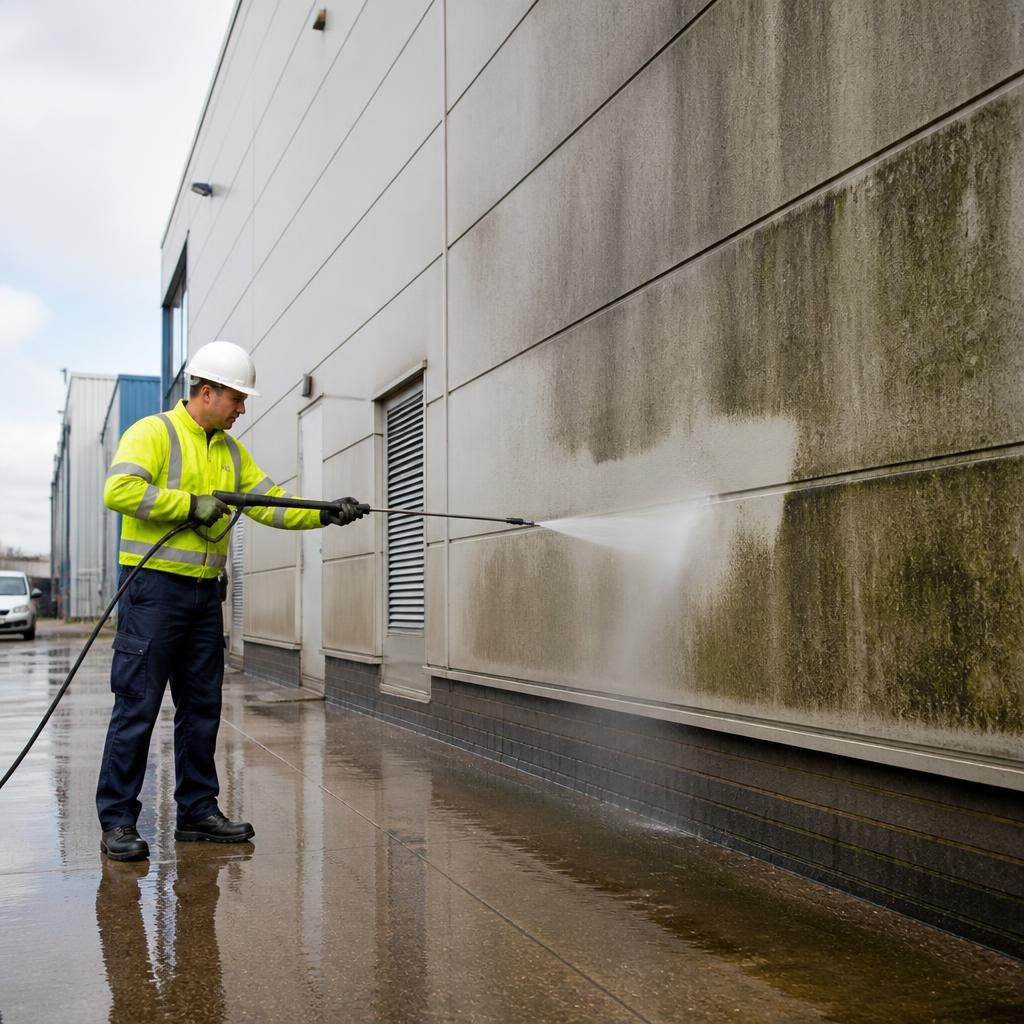
Controlled high pressure cleaning can extend the useful life of building surfaces by removing moisture-retaining growth, oil, traffic film and embedded dirt before these contaminants contribute to deterioration. Unlike a basic rinse or manual clean, the correct combination of pressure, water flow, nozzle and temperature can clean pores, joints and textured finishes more thoroughly without relying on excessive force.
The method must be matched to the material and its condition. Robust concrete and suitably finished paving may tolerate stronger cleaning, while aged brickwork, render, painted surfaces, timber, natural stone and deteriorated coatings may require low pressure, a compatible detergent or steam cleaning. A test area and post-clean inspection help confirm that contamination has been removed while the substrate, joints and protective finishes remain intact.