
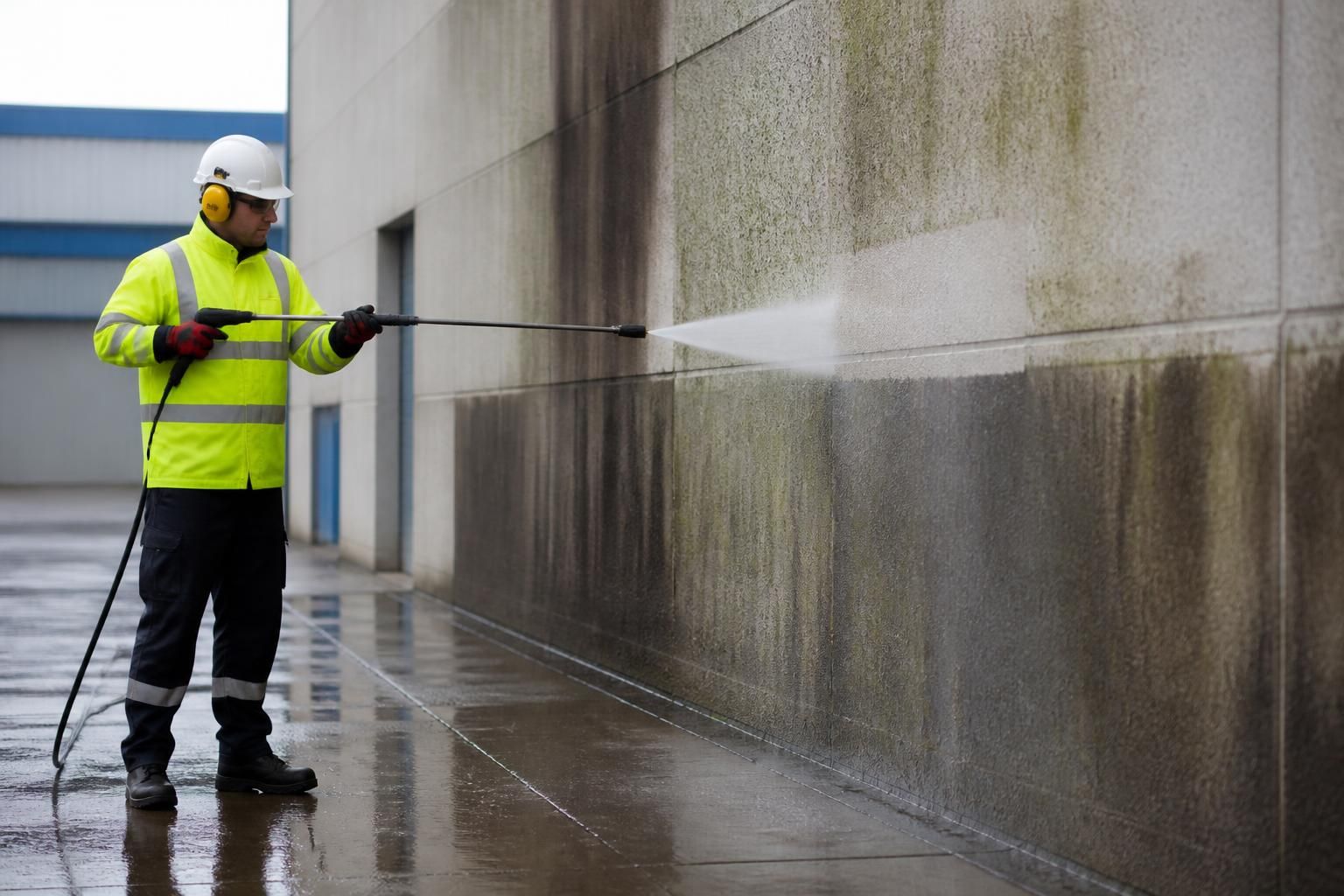
How does high pressure cleaning compare to other cleaning methods in terms of efficacy and safety?
High pressure cleaning is highly effective for removing ingrained dirt, algae, oil, loose coatings and other deposits from durable surfaces, but it carries greater risk of surface damage, water ingress and overspray than gentler methods. Steam cleaning, soft washing and manual cleaning can be safer for delicate materials or controlled areas, so the most suitable method depends on the surface, contamination and surrounding environment.
High pressure cleaning is generally the most effective method for removing firmly bonded dirt, algae, moss, oil, loose coatings and other deposits from durable exterior surfaces. It is also the method with the greatest potential to cause damage if the pressure, water flow, nozzle, distance or cleaning angle is unsuitable. Steam cleaning, soft washing, chemical treatment and manual cleaning can provide a safer or more controlled alternative where the surface is delicate, water-sensitive or easily damaged.
The correct comparison is not simply which method is strongest. A professional assessment considers the material, the type of contamination, the condition of the surface, nearby features and the required finish. In many commercial projects, the best result comes from combining methods rather than using high pressure across the entire site.
How high pressure cleaning performs
High pressure cleaning uses a concentrated stream of water to break the bond between contamination and the surface. It is particularly effective on robust materials such as concrete, hard paving, some masonry, metalwork and suitable cladding. It can remove:
- Compacted soil, traffic film and general atmospheric dirt
- Algae, moss and organic growth from appropriate hard surfaces
- Oil and other residues when used with a suitable detergent and recovery process
- Loose paint, coatings, cement deposits and construction debris
- Graffiti, where the substrate and coating system can tolerate the selected treatment
Its main advantage is mechanical cleaning power. It can cover large areas efficiently and often produces an immediate visual improvement without relying solely on strong chemicals. However, a clean appearance does not necessarily mean that all biological growth has been treated at its root. On some surfaces, a compatible biocide or follow-up treatment is needed to reduce rapid regrowth.
Comparison with steam cleaning
Steam cleaning uses heated water, usually at lower pressure than conventional high pressure washing. Heat helps soften grease, chewing gum, oil, biological deposits and some coatings, while the lower mechanical force can reduce the risk of etching or dislodging fragile material. Steam is often useful around entrances, pedestrian areas, façades, street furniture and locations where water use or overspray must be controlled.
Steam can be safer for some sensitive surfaces, but it is not automatically risk-free. Heat may affect certain paints, sealants, plastics, jointing materials or historic finishes. It can also create a burn hazard and may not provide enough mechanical force for deeply compacted dirt on hard concrete. The equipment and technique must therefore be matched to the material and contamination.
Comparison with soft washing
Soft washing relies primarily on a carefully selected cleaning solution and gentle rinsing rather than high mechanical pressure. It is often suitable for rendered façades, painted surfaces, roof coverings, delicate masonry and areas where high pressure could drive water beneath joints or finishes. The solution breaks down organic contamination, after which it is rinsed away at a controlled pressure.
This approach can reduce the risk of surface erosion, watermarking, damaged pointing and water ingress. Its effectiveness depends on correct chemical selection, dilution, dwell time and thorough rinsing. Poorly controlled chemical use can harm plants, metals, coatings, drainage systems or aquatic environments, so protection, containment and recovery remain essential. Soft washing may also require more time for treatment to work and may not remove hard, bonded deposits or loose coatings as quickly as direct pressure.
Comparison with manual and chemical cleaning
Manual brushing, scraping and wiping provide the highest level of local control and are useful for small areas, delicate details, joints, signage and surfaces close to vulnerable fixtures. They create little overspray and can be safer where water penetration is a concern. Their limitations are slower progress, greater labour input and reduced effectiveness against extensive or heavily compacted contamination.
Chemical cleaning can dissolve or loosen oil, paint, mineral deposits, organic growth and other contaminants that water alone may not remove. It can therefore reduce the pressure required. The safety of this method depends on the product, substrate and surrounding environment. Chemicals must not be allowed to enter surface water or drainage systems without appropriate controls, and residues must be neutralised or recovered where necessary.
Abrasive cleaning, including specialist blasting techniques, can remove very stubborn coatings and corrosion, but it is more aggressive than water-based cleaning. It can alter the profile of masonry, remove the surface of softer materials, generate dust and affect nearby people or equipment. It should only be considered after less aggressive options have been assessed.
Safety and surface risk
High pressure cleaning presents risks from water injection injuries, flying debris, slippery surfaces, electrical contact, falls, noise, vehicle movements and uncontrolled spray. It can also damage the substrate by removing pointing, opening cracks, stripping protective coatings, exposing aggregate or forcing water behind cladding and façade elements.
Steam and chemical methods have different hazards. Steam creates hot-water and burn risks, while chemicals can cause skin, eye and respiratory irritation and may react with incompatible materials. Manual methods generally reduce spray and equipment hazards but still involve slips, access equipment, sharp tools and repetitive handling. No method is inherently safe without a suitable site assessment, competent operators and appropriate controls.
Before work begins, the cleaning team should confirm:
- The substrate, finish, age, condition and any previous repairs
- The type and depth of contamination, including whether it is biological, oily, mineral or coating-related
- Nearby doors, vents, windows, electrical equipment, vehicles, landscaping and pedestrian routes
- Drainage arrangements, water recovery requirements and the risk of contaminated run-off
- Safe access, exclusion zones, signage, personal protective equipment and emergency arrangements
Testing a small, inconspicuous area is an important part of method selection. It shows whether the chosen pressure, temperature, chemical, nozzle and working distance provide adequate cleaning without changing the colour, texture or integrity of the surface. The test should be assessed after the area has dried, as some damage or staining is not immediately apparent.
Which method is most effective?
High pressure is usually preferred for large, durable areas with heavy surface deposits where rapid mechanical removal is required. Steam is often preferable for grease, gum and controlled cleaning near public areas. Soft washing is generally more appropriate for organic growth on delicate or coated materials. Manual cleaning is best for precision work and vulnerable details, while chemical or abrasive treatments may be reserved for specific contaminants that resist water-based cleaning.
Safety should be judged by the complete process, not just the equipment label. A lower-pressure method can still be unsafe if chemicals are poorly managed or hot water is used without adequate controls. Conversely, high pressure can be used safely when the operator selects a compatible setting, keeps the spray away from vulnerable details, controls run-off and protects people and property.
For commercial and industrial premises, the most reliable approach is a documented, surface-specific cleaning plan. This normally includes a site survey, test area, method statement, risk assessment, protection of adjacent assets, controlled application and a final inspection. Where appropriate, high pressure cleaning may be combined with steam, soft washing, detergents or manual finishing to achieve the required standard while limiting unnecessary force and reducing the likelihood of repeat damage.
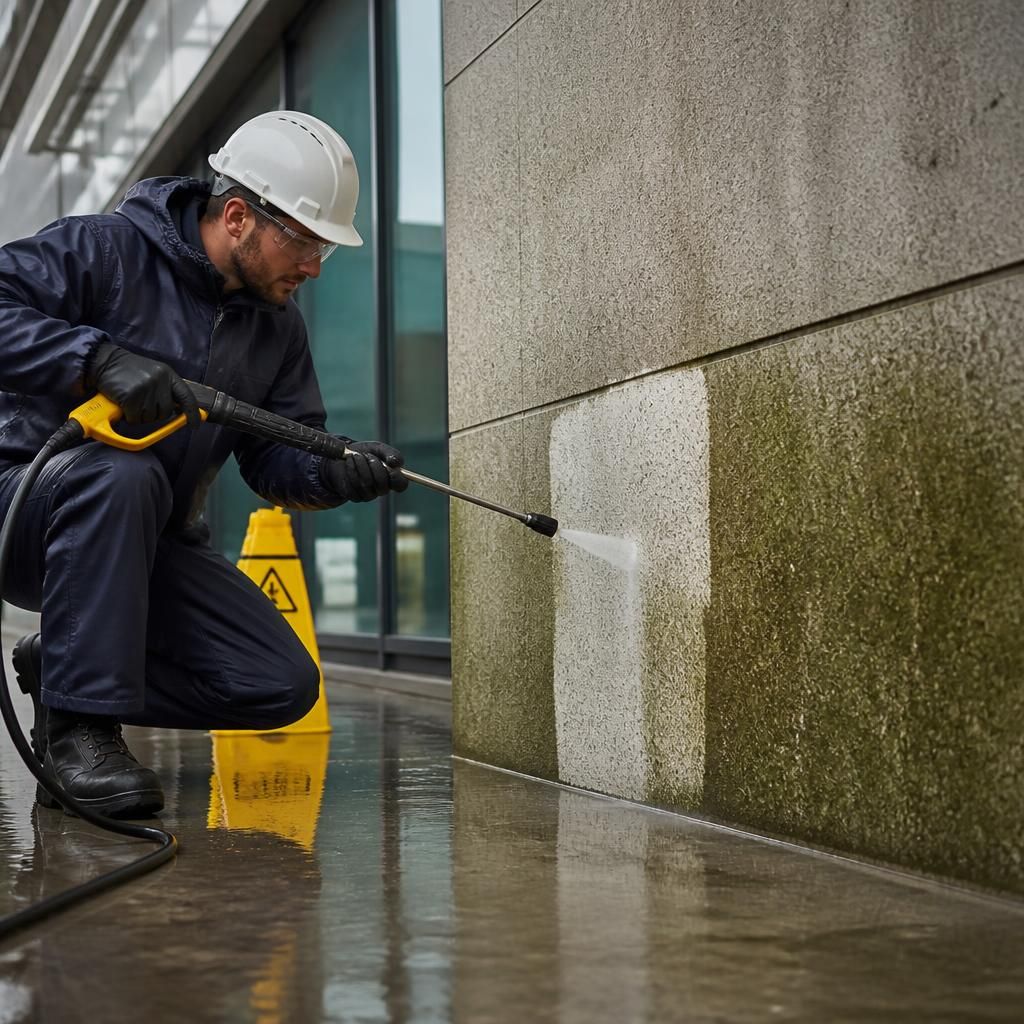
Choosing between high pressure cleaning, steam cleaning and soft washing depends on the surface, contamination and surrounding risks. A small test area is the most reliable way to confirm that the selected pressure, temperature, chemical treatment and working distance will clean effectively without changing the surface finish.
The test should be carried out in an inconspicuous location and inspected both immediately and after drying. This helps identify problems such as etching, colour change, damaged pointing, coating failure, water ingress or chemical staining that may not be visible while the surface is wet. It also shows whether a gentler method can achieve the required result, reducing the need for unnecessary pressure.
For commercial premises, method selection should also account for nearby doors, vents, electrical equipment, vehicles, planting, pedestrians and drainage. High pressure may be appropriate for durable concrete or hard paving, while steam, soft washing or manual cleaning may provide better control around delicate finishes and vulnerable details.
Arrange a Site Assessment for the Right Cleaning Method
Arrange a site assessment to identify the most effective and safest cleaning method for your surfaces, contamination and surrounding environment. We will recommend a suitable approach and confirm any access, protection and run-off controls required.