
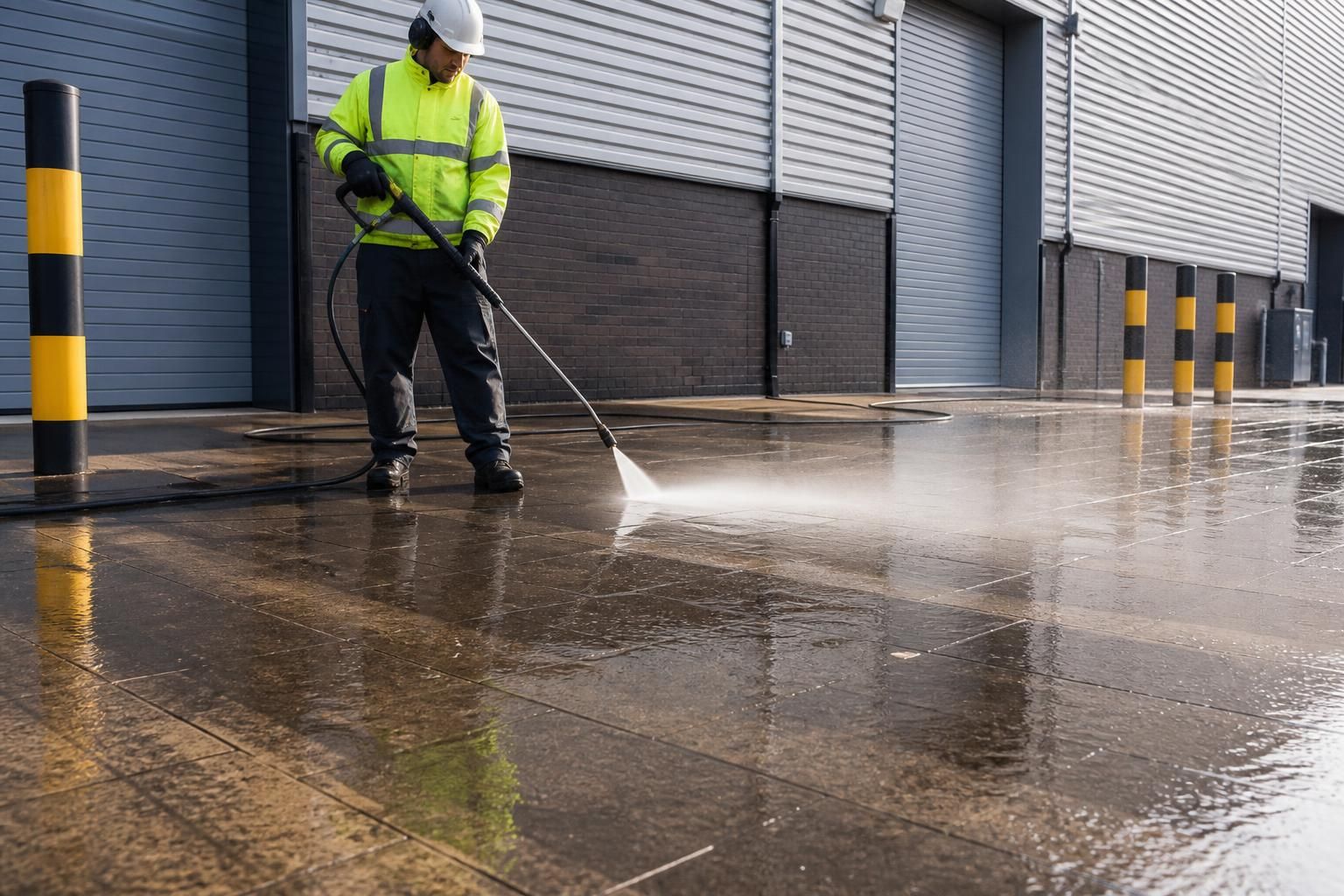
How do high pressure cleaning techniques differ from traditional cleaning methods and what benefits do they offer?
High pressure cleaning uses controlled water pressure, flow and specialist nozzles to remove embedded dirt, algae, coatings and contaminants, whereas traditional cleaning relies mainly on manual scrubbing, low-pressure washing and chemical products. When correctly specified for the surface, it provides faster, more thorough cleaning with less manual effort, reduced chemical use and a consistent finish across large commercial and industrial areas.
High pressure cleaning uses controlled water pressure, flow rate, temperature and specialist nozzles to remove contamination from a surface, while traditional cleaning usually depends on manual brushing, wiping, low-pressure rinsing and chemical detergents. The main difference is how the cleaning energy is applied. High pressure cleaning transfers more mechanical force to the surface, allowing embedded dirt, algae, moss, loose coatings, traffic film and some graffiti residues to be removed more quickly and consistently across large commercial and industrial areas.
Traditional cleaning remains useful for light contamination, small areas and surfaces that could be damaged by concentrated water impact. It may involve a brush, mop, scraper, detergent, hose or low-pressure washer. These methods can be appropriate where a surface needs gentle handling, where water must be tightly controlled or where a contaminant is best dissolved rather than dislodged. However, manual methods generally require more direct labour and can produce an uneven result when large façades, paved areas, roofs or cladding systems are involved.
High pressure cleaning is not simply a matter of using the highest available pressure. A competent contractor selects a suitable pressure, flow, nozzle pattern, spray distance and working angle for the material and contamination. Rotary surface cleaners, fan jets, adjustable lances, telescopic equipment and specialist access systems may be used to distribute the cleaning action safely and evenly. Water temperature and cleaning agents can also be adjusted where this improves performance without placing unnecessary stress on the surface.
The principal benefits compared with traditional methods include:
- Faster removal over large areas: Water impact can lift and flush away contamination more efficiently than repeated manual scrubbing. This is particularly valuable for car parks, pedestrian areas, loading bays, concrete yards, façades and extensive cladding.
- Deeper cleaning: Correctly applied pressure can reach textured concrete, joints, recesses and porous paving where surface wiping may only remove loose or visible dirt. It can help expose the underlying condition of a surface so that defects, staining or required repairs are easier to identify.
- Less reliance on chemicals: Mechanical cleaning often removes a significant amount of contamination using water alone or with a carefully selected treatment. Reducing chemical use can simplify rinsing, protect compatible surfaces and support responsible management of wastewater, although some biological growth, oil, paint or specialist staining still requires an appropriate detergent or treatment.
- More consistent results: Suitable equipment and a systematic pattern of work help produce an even finish. This is more controllable than relying on different operators applying varying amounts of manual effort across a large site.
- Reduced physical effort: Operators do not need to scrub every section by hand. This can make demanding commercial cleaning work more practical, provided the lance, hose management, access equipment and protective controls are used correctly.
- Improved presentation and maintenance: Removing algae, moss, traffic film, chewing gum residue, loose dirt and other deposits can restore a cleaner appearance and reduce conditions that contribute to slippery walkways or accelerated surface deterioration.
High pressure cleaning can also be more cost-effective over the full scope of a project. The relevant comparison is not only the hourly charge for equipment or labour. A proper assessment considers preparation, access, cleaning time, chemical consumption, water recovery, disposal requirements, traffic management and any follow-up treatment. On a large site, the faster coverage and reduced manual labour may provide a practical advantage. Ongoing maintenance cleaning can also prevent heavy build-up that would otherwise require more intensive restoration work.
There are important differences in how each method affects different materials. Concrete, block paving, robust masonry, industrial floors and some hard-wearing cladding systems are often suitable for pressure cleaning when the equipment is correctly set. A low-pressure or soft-washing approach may be preferable for painted finishes, delicate render, aged mortar, weathered stone, timber, certain roof coverings and surfaces with vulnerable joints or coatings. Glass, seals, electrical components and fragile architectural details require particular care. High pressure can force water behind cladding, damage pointing, strip protective finishes, dislodge aggregate or worsen an existing defect if the method is poorly specified.
Traditional methods may therefore be safer for isolated marks, sensitive materials, indoor edges, small fixtures and areas close to vulnerable openings. In some cases, the most effective approach is a combination of methods: pre-treatment to loosen biological or oily contamination, controlled pressure washing to remove the residue, and a lower-pressure rinse to protect the finished surface. Steam cleaning may be selected where heat helps break down grease, chewing gum or biological deposits, while specialist abrasive or non-abrasive techniques may be considered for certain coatings or graffiti. The method should follow the material assessment rather than be chosen solely by the equipment available.
Safety is another important distinction. The force of high pressure water can injure people, damage property and propel debris. Before work begins, the area should be inspected, access and exclusion zones established, nearby pedestrians and vehicles protected, and sensitive equipment isolated or covered. Operators need suitable personal protective equipment, secure footing, appropriate access equipment and clear communication with the site contact. Water and run-off must also be managed so that contaminated discharge does not enter unsuitable drains, watercourses or neighbouring premises. Traditional cleaning normally involves fewer high-energy hazards, but it can still present risks from chemicals, slips, manual handling, work at height and contaminated surfaces.
The environmental benefit of high pressure cleaning is not automatic. Efficient equipment can reduce the need for detergents and avoid the volume of disposable materials associated with some manual processes, but water consumption, energy use and contaminated run-off must be controlled. Using the lowest effective setting, avoiding unnecessary passes, selecting biodegradable or surface-compatible products and recovering or directing wastewater appropriately are all part of responsible practice. A traditional method is not necessarily more sustainable if it requires extensive chemical use, repeated visits or large quantities of disposable cleaning materials.
For commercial and industrial premises, the most suitable method is decided after considering the material, type and age of contamination, area size, access, drainage, surrounding activity, surface condition and the required finish. High pressure cleaning generally offers the greatest advantage where deposits are firmly bonded, areas are extensive and the surface can tolerate controlled water impact. Traditional or low-pressure techniques remain valuable where precision and surface protection are more important than rapid coverage. A site-specific assessment ensures that the selected technique delivers effective cleaning without exchanging short-term appearance for avoidable surface damage or future maintenance problems.
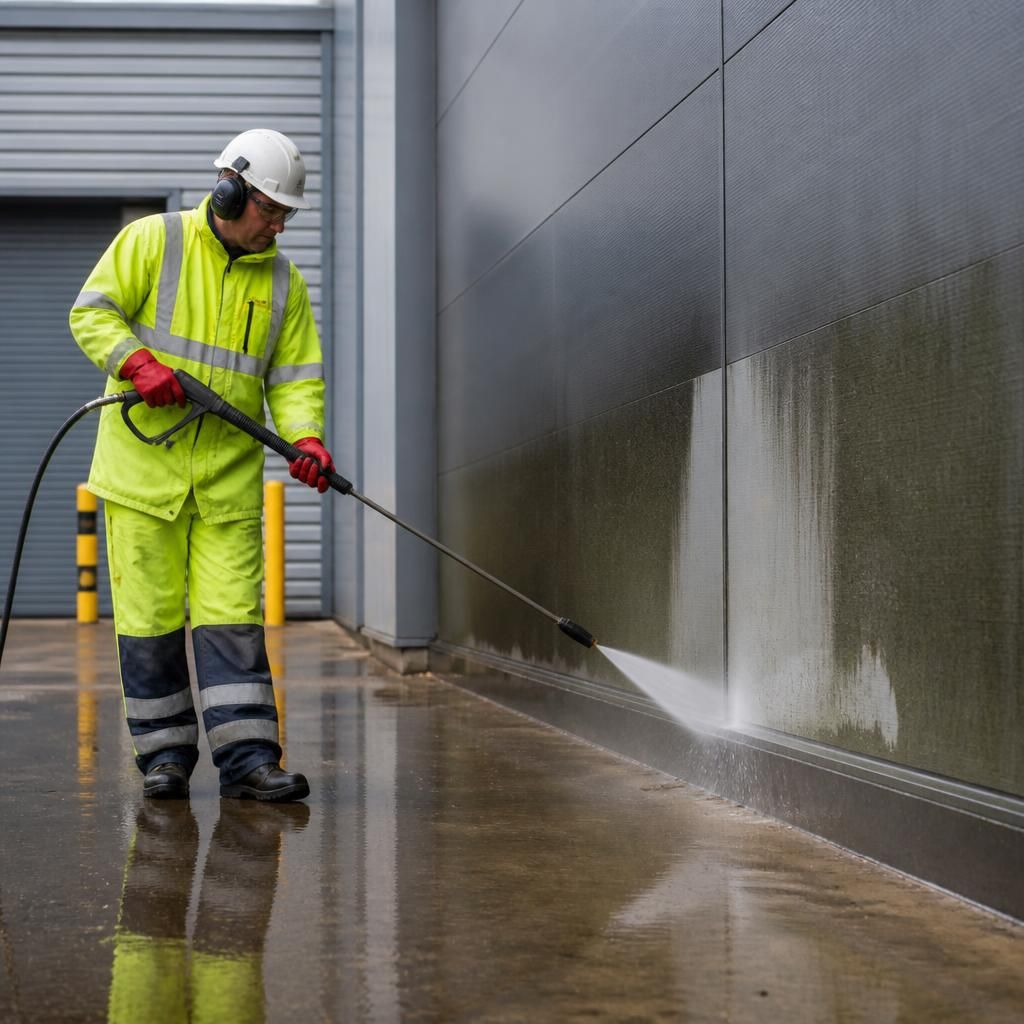
High pressure cleaning differs from traditional cleaning by using controlled water impact, flow and specialist nozzles to remove contamination rather than relying mainly on manual scrubbing or detergent. This makes it particularly effective for large areas of concrete, paving, industrial floors and durable cladding where dirt, algae, moss and traffic film are firmly bonded.
The pressure should never be set to maximum automatically. The cleaning method must be matched to the surface, its condition and the type of contamination. A suitable nozzle, spray distance and working angle can provide faster, more even results while reducing the risk of damaged pointing, stripped coatings, surface erosion or water penetration. Traditional or low-pressure cleaning remains the safer choice for delicate finishes, vulnerable joints and isolated areas requiring greater precision.