
What types of surfaces can benefit most from high pressure washing services?
High pressure washing services benefit durable, hard surfaces that accumulate ingrained dirt, algae, oil, traffic film and other deposits, including concrete, block paving, tarmac, brickwork, masonry, cladding, façades, roofs and industrial floors. The correct pressure, temperature and cleaning method must be selected for each material to remove contamination without causing surface damage.
The surfaces that benefit most from high pressure washing services are durable, non-porous or semi-porous materials with ingrained contamination that cannot be removed effectively by routine cleaning. Common examples include concrete, block paving, tarmac, brickwork, masonry, building façades, cladding, roofs and industrial flooring. The pressure, water temperature, nozzle, cleaning solution and working distance must be adjusted to suit the material so that dirt is removed without damaging the surface.
Concrete and concrete paving
Concrete is particularly suitable for high pressure washing because its hard, textured surface commonly traps mud, algae, moss, oil, tyre marks, traffic film and general atmospheric soiling. Cleaning can improve the appearance of service yards, loading areas, walkways, steps, car parks and commercial forecourts. It can also help reveal surface defects, damaged joints or drainage problems that may otherwise be hidden beneath deposits.
Older, weathered or poorly finished concrete still requires care. Excessive pressure can erode the surface, expose aggregate or create visible cleaning marks. A controlled approach, often using a surface-cleaning attachment on larger horizontal areas, helps produce a more even result.
Block paving and concrete slabs
Block paving benefits from pressure washing where dirt, algae, moss and weeds have accumulated in the joints or across the surface. This is useful for paths, communal areas, courtyards, driveways, car parks and pedestrian access routes. Cleaning can remove the contamination that makes paving look neglected and may create slippery conditions when wet.
Operatives must take account of loose or damaged blocks, fragile jointing material and the condition of the surrounding drainage. Washing can displace jointing sand, so re-sanding or other remedial work may be appropriate after the surface has dried. Where paving has a decorative finish, a lower-impact method may be preferable to aggressive pressure.
Tarmac and asphalt
Tarmac and asphalt areas, including roads, yards, car parks and access routes, can benefit from pressure washing to remove mud, organic growth, traffic film and some surface staining. It is often most effective as part of planned grounds or estate maintenance, particularly where accumulated dirt affects the appearance or safe use of a site.
These materials are less resistant to heat and pressure than concrete. Excessive cleaning can loosen aggregate, disturb the binder or worsen existing defects. Oil and fuel contamination may also require a suitable degreasing treatment and controlled wastewater collection rather than pressure alone.
Brickwork and masonry
Sound, well-maintained brickwork and robust masonry can respond well to carefully controlled pressure washing. Typical applications include boundary walls, retaining walls, paving, hard-standing areas and selected parts of commercial buildings. Cleaning may remove algae, moss, surface dirt, bird fouling and atmospheric deposits.
Brick and stone are porous, so the condition and age of the material are important. High pressure can damage soft bricks, erode mortar joints, remove the face of a brick or drive water into the structure. Weathered masonry, historic façades, friable mortar and delicate stone may require low-pressure washing, steam cleaning or a specialist conservation method instead.
Building façades and rendered surfaces
Façades made from robust brick, concrete, stone or suitable render can benefit from professional washing where they have developed staining from pollution, algae, traffic emissions or weathering. Cleaning is commonly used on offices, retail premises, warehouses, apartment blocks, public buildings and industrial units.
Façade cleaning needs a survey before work begins. Render can be cracked, hollow, painted, insulated or poorly bonded, and pressure may force water behind the finish or remove coatings. Windows, seals, vents, electrical fittings and vulnerable architectural details must also be protected. The cleaning method should therefore be selected after identifying the substrate and the type of contamination, rather than treating every façade in the same way.
Metal cladding and composite panels
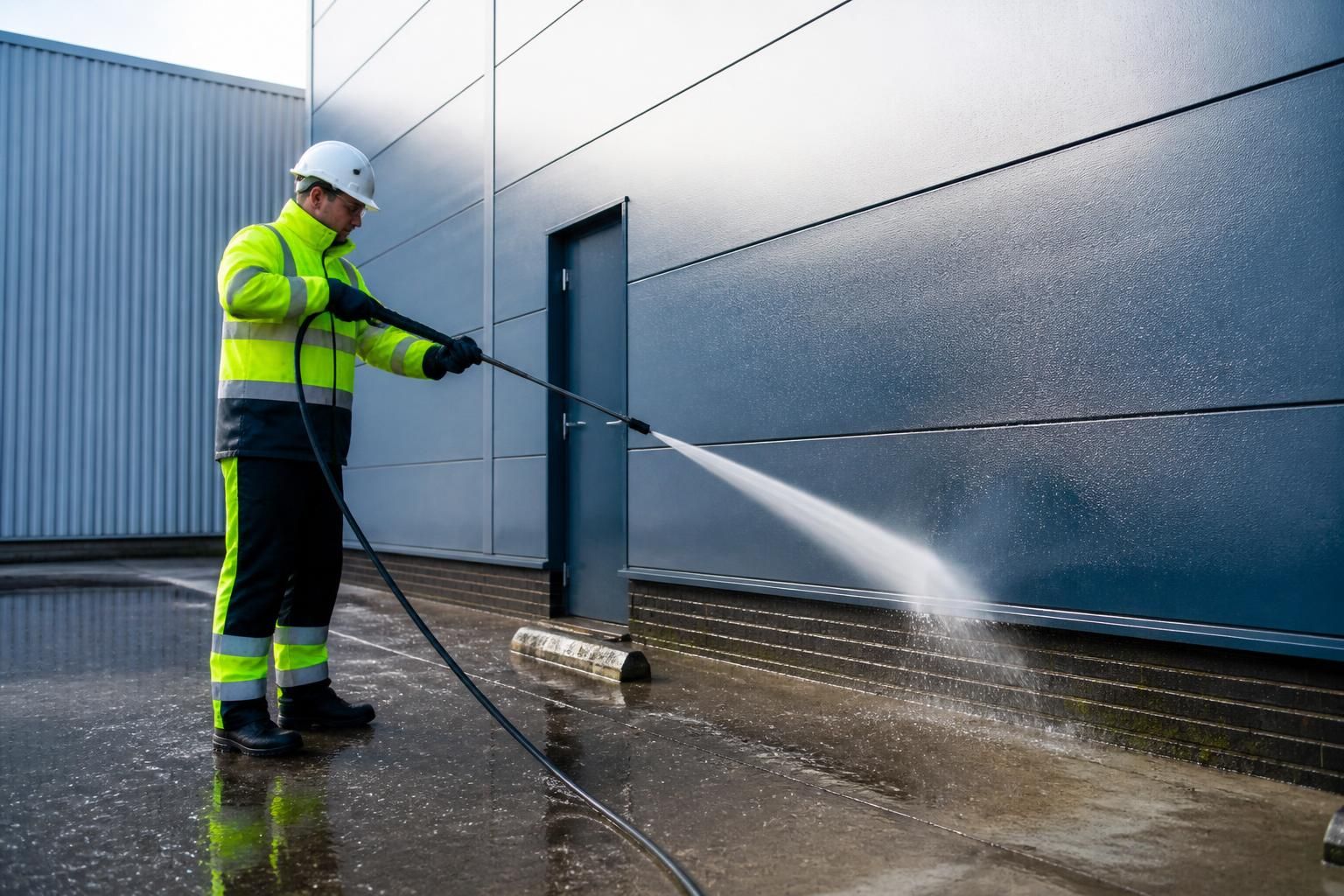
Powder-coated, painted and otherwise durable cladding can benefit from controlled pressure washing to remove dust, bird fouling, algae, traffic film and industrial deposits. This is relevant to warehouses, distribution centres, manufacturing premises, retail units and other large commercial buildings where manual cleaning would be slow or inconsistent.
The condition of the coating is critical. High pressure can lift damaged paint, force water behind joints or affect seals and fixings. Cleaning solutions must be compatible with the coating and should be rinsed thoroughly where required. Panels with chalking, corrosion, delamination or failed sealant may need repair before cleaning.
Roofs and associated surfaces
Some roofs benefit from pressure washing to remove moss, algae, lichen, bird fouling and accumulated environmental debris. Suitable applications may include robust concrete tiles, certain metal roofing systems and other roof coverings that have been assessed as structurally sound.
Roof cleaning presents additional risks to both the surface and the operatives. Pressure can dislodge tiles, damage protective finishes or drive water beneath laps and flashings. Fragile, aged or porous tiles may be better suited to soft washing or steam cleaning. Safe access, fall protection, weather conditions, drainage and the containment of run-off must all be considered before work starts.
Industrial floors and hard-standing areas
Industrial concrete floors, workshops, depots, service yards and loading bays often benefit from high pressure washing because they collect rubber marks, oil residues, grease, mud, dust and process-related contamination. Cleaning can support routine housekeeping and help maintain clearer, more usable working areas.
Where oil, chemicals or other controlled substances are present, pressure washing should be combined with an appropriate cleaning agent and wastewater management plan. Drains and discharge points must be identified in advance, and contaminated water should not be allowed to enter surface-water systems without suitable controls.
Car parks, paths and external communal areas
High pressure washing is well suited to hard-surfaced car parks, pedestrian paths, steps, courtyards and communal paved areas. These locations commonly accumulate algae, moss, chewing gum, dirt, tyre marks and general traffic contamination. Cleaning can address both appearance and surface slipperiness, although it does not replace inspection, repairs or an ongoing maintenance programme.
Areas open to pedestrians and vehicles should be assessed for trip hazards, loose paving, damaged kerbs, blocked drainage and deteriorated markings before cleaning. Work planning should also account for access restrictions, signage, run-off and the time needed for surfaces to dry safely.
Surfaces that need a different approach
High pressure washing is not automatically suitable for every exterior material. Unsealed timber, soft or friable stone, aged mortar, damaged render, delicate coatings, some roof coverings and surfaces with concealed defects may be harmed by direct pressure. Glass, electrical equipment, sensitive seals and certain composite materials also require protection or an alternative method.
Steam cleaning, low-pressure washing, soft washing, manual cleaning or specialist treatment may be more appropriate where the surface is fragile or the contamination is chemically bonded. The choice should be based on the substrate, its condition, the type of deposit, the required finish and the environmental controls needed for the project.
How the correct surface treatment is selected
- Inspect the material, age, finish, joints, coatings and visible defects.
- Identify whether the contamination is organic growth, oil, grease, traffic film, pollution, paint, rust or another deposit.
- Use a small test area to confirm that the proposed pressure, temperature, nozzle and cleaning solution are suitable.
- Protect windows, doors, vents, electrical components, landscaping and drainage points.
- Control run-off and collect or manage wastewater where contamination or site conditions require it.
- Allow the surface to dry before assessing the final result or applying jointing material, protective treatment or a new coating.
In practice, the best candidates for high pressure washing are robust commercial and industrial surfaces with substantial, accessible contamination. A professional assessment remains important because the same material can respond differently depending on age, construction, coatings, previous repairs and current condition. Correct method selection protects the surface while delivering a consistent clean across large areas.
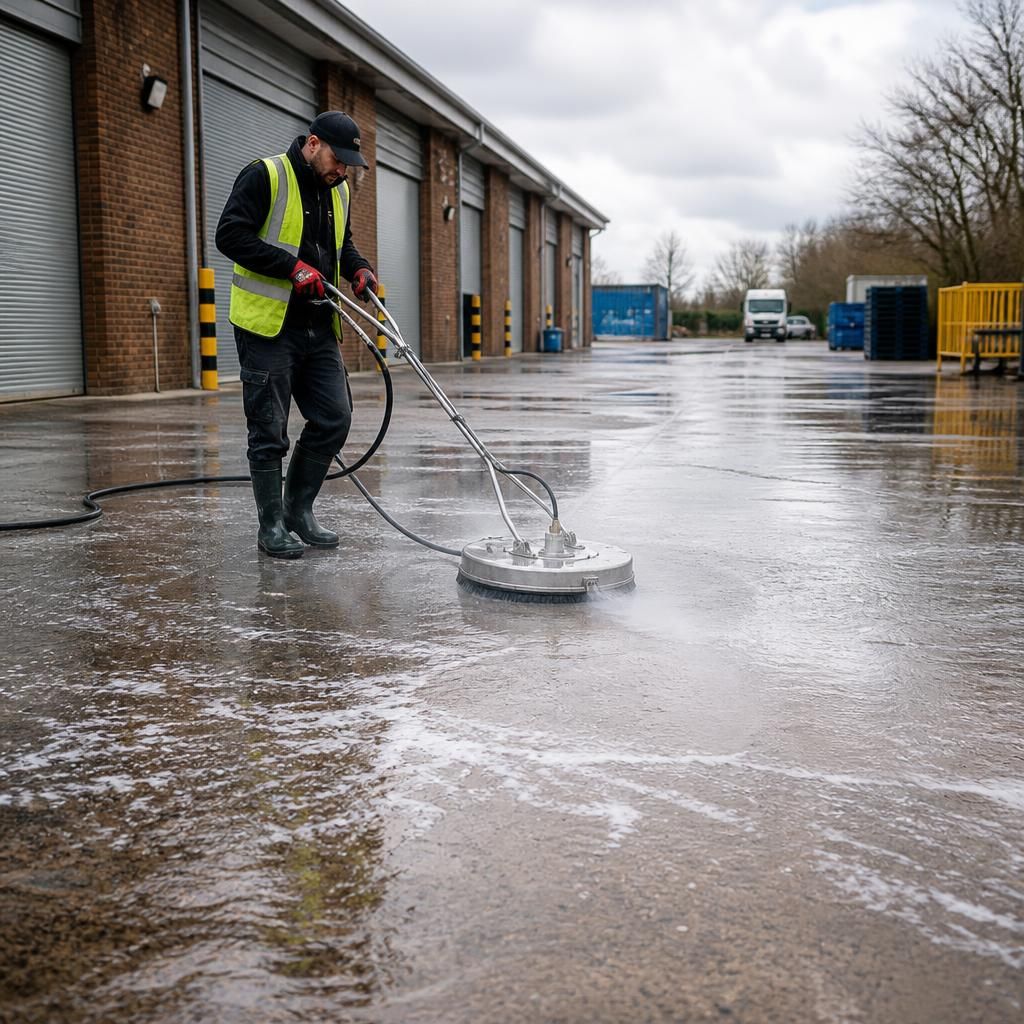
Concrete car parks, service yards and other hard-standing areas are among the best candidates for high pressure washing because their durable surfaces hold mud, algae, tyre marks, oil residues and traffic film. Professional cleaning can improve appearance and help reduce slippery organic growth, provided the surface and drainage are assessed first.
Pressure must still be controlled. Excessive force can erode weathered concrete, disturb joints or spread contaminated water towards surface drains. A suitable nozzle, working distance and surface-cleaning attachment help produce an even finish across large areas, while degreasing and wastewater controls may be needed where oil, fuel or process residues are present.