
What surfaces are suitable for high pressure washing?
High pressure washing is generally suitable for durable surfaces such as concrete, block paving, brickwork, tarmac, stone, metal cladding and some hard-wearing render. More delicate materials, including timber, soft brick, aged masonry and painted or coated surfaces, require lower pressure, controlled techniques or an alternative cleaning method to prevent damage.
High pressure washing is most suitable for hard, durable surfaces that can withstand controlled water pressure without becoming etched, dislodged or saturated. Common examples include concrete, block paving, brickwork, natural stone, tarmac, metal cladding and some hard-wearing renders. The correct method still depends on the surface’s age, condition, finish and previous treatments; high pressure should never be selected on material type alone.
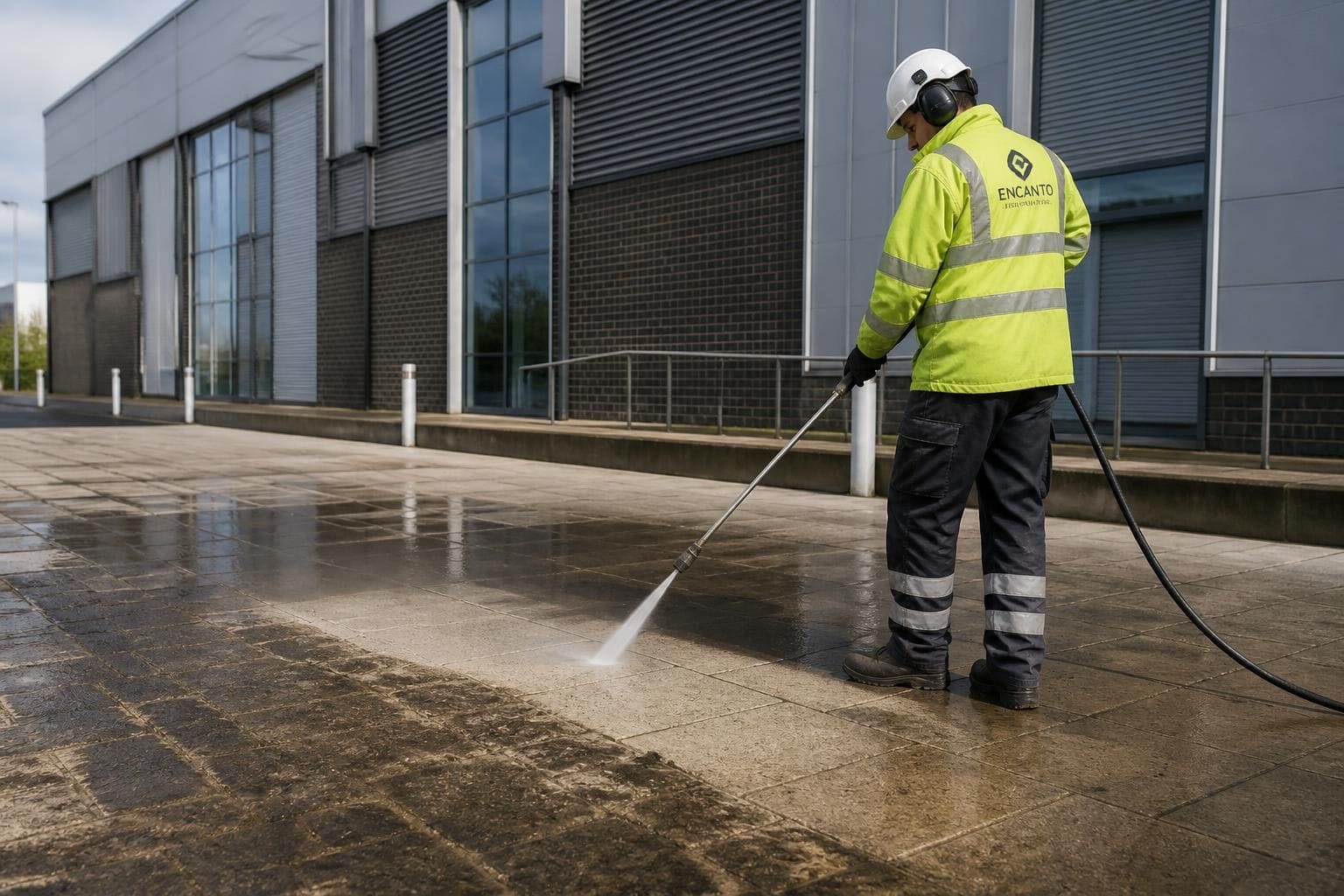
Pressure washing works by using concentrated water to remove dirt, algae, moss, oil residues, loose coatings and other surface contamination. The cleaning result is influenced by more than pressure. Water temperature, nozzle selection, distance from the surface, flow rate, cleaning agents and the operator’s technique all affect the outcome. A lower pressure applied correctly is often safer and more effective than using excessive pressure.
Surfaces commonly suitable for high pressure washing include:
- Concrete: Concrete yards, pathways, loading areas, steps, car parks and service areas generally tolerate pressure washing well. Care is needed around cracked, spalled or weak concrete, where water can enlarge existing damage or remove the upper surface.
- Block paving and paving slabs: Pressure washing can remove embedded dirt, organic growth and surface staining from many types of paving. Joints may be disturbed, particularly where the sand is already loose, so the area may require jointing material to be replaced after cleaning.
- Brickwork: Sound, modern brickwork can often be cleaned using controlled pressure. Older, softer or weathered bricks may be vulnerable to surface erosion, known as spalling, and may need a gentler approach such as steam cleaning or a low-pressure system.
- Natural stone: Durable stone paving, steps and external hardstanding can often be pressure washed, but stone varies considerably. Granite and some dense sandstone are generally more resistant than soft, friable or heavily weathered stone. The stone’s porosity and finish should be assessed before work begins.
- Tarmac and asphalt: These surfaces can usually be cleaned to remove general traffic dirt, organic growth and some surface deposits. Excessive pressure or heat can loosen aggregate, mark the binder or damage repairs, especially on aged or degraded areas.
- Metal cladding: Coated and uncoated metal panels may be suitable for controlled washing, particularly when removing dust, bird fouling and general atmospheric soiling. Joints, seals, vents and damaged coatings require particular care to prevent water ingress or lifting of the finish.
- Hard-wearing render: Some sound, well-bonded external renders can be washed at low or moderate pressure. Loose, hollow, cracked or poorly adhered render should not be treated aggressively because the water can remove sections of the finish.
Materials requiring caution or an alternative method
Timber is not automatically suitable for high pressure washing. Excessive pressure can raise the grain, create furrows, force water into joints and strip paint, stain or protective treatments. Decking, timber cladding and external joinery are normally assessed for a lower-pressure wash or a different cleaning process.
Older brick, soft stone, historic masonry and lime-based materials can be damaged by concentrated water. Pressure may remove the face of a brick or stone, open the surface and accelerate deterioration. Listed, historic or architecturally significant façades should be assessed carefully, with the cleaning method agreed in line with the material and any conservation requirements.
Painted, powder-coated, resin-bound or otherwise sealed surfaces also need a controlled approach. Washing can lift failing paint, expose unprotected material or create visible differences between cleaned and uncleaned areas. Graffiti, oil and other stains may require a compatible cleaning chemical, steam treatment or specialist poultice rather than increased pressure.
High pressure washing is generally unsuitable for fragile glass, damaged pointing, loose coatings, deteriorated masonry and surfaces with open cracks or exposed reinforcement. It should also be used cautiously near electrical equipment, ventilation openings, door thresholds and building interfaces. These areas may need shielding, isolation or hand cleaning.
How suitability is assessed
- The surface is identified, including its construction, coating, sealant and age where this information is available.
- Existing defects such as cracks, loose sections, failed joints, corrosion, delamination and water-sensitive areas are recorded.
- A small, discreet test area is cleaned using the least aggressive practical setting. The result is checked for colour change, etching, fibre damage, coating loss and water penetration.
- The method is adjusted by changing the pressure, nozzle, spray pattern, working distance, temperature or cleaning agent rather than simply increasing force.
- Adjacent surfaces, openings, vehicles, landscaping and drainage routes are protected before full cleaning starts.
A test clean is particularly important where different materials meet, such as brick beside render, paving beside resin-bound surfacing, or metal cladding beside painted frames. It confirms that the cleaning method is appropriate and helps establish whether staining is on the surface or has penetrated the material.
For commercial and industrial premises, the condition of the substrate is as important as the material itself. A relatively durable surface may still be unsuitable for high pressure washing if it has been neglected, repaired poorly or weakened by frost, traffic or chemical exposure. Cleaning should also be planned around drainage and waste-water controls so that removed contaminants do not enter surface-water systems.
Where high pressure washing is not appropriate, a lower-pressure wash, soft washing, steam cleaning, rotary surface cleaning or manual treatment may provide better control. The objective is to remove the contamination while preserving the surface, its coating, its joints and any underlying structure. A competent assessment before cleaning is therefore the best way to achieve a consistent result without causing avoidable damage.
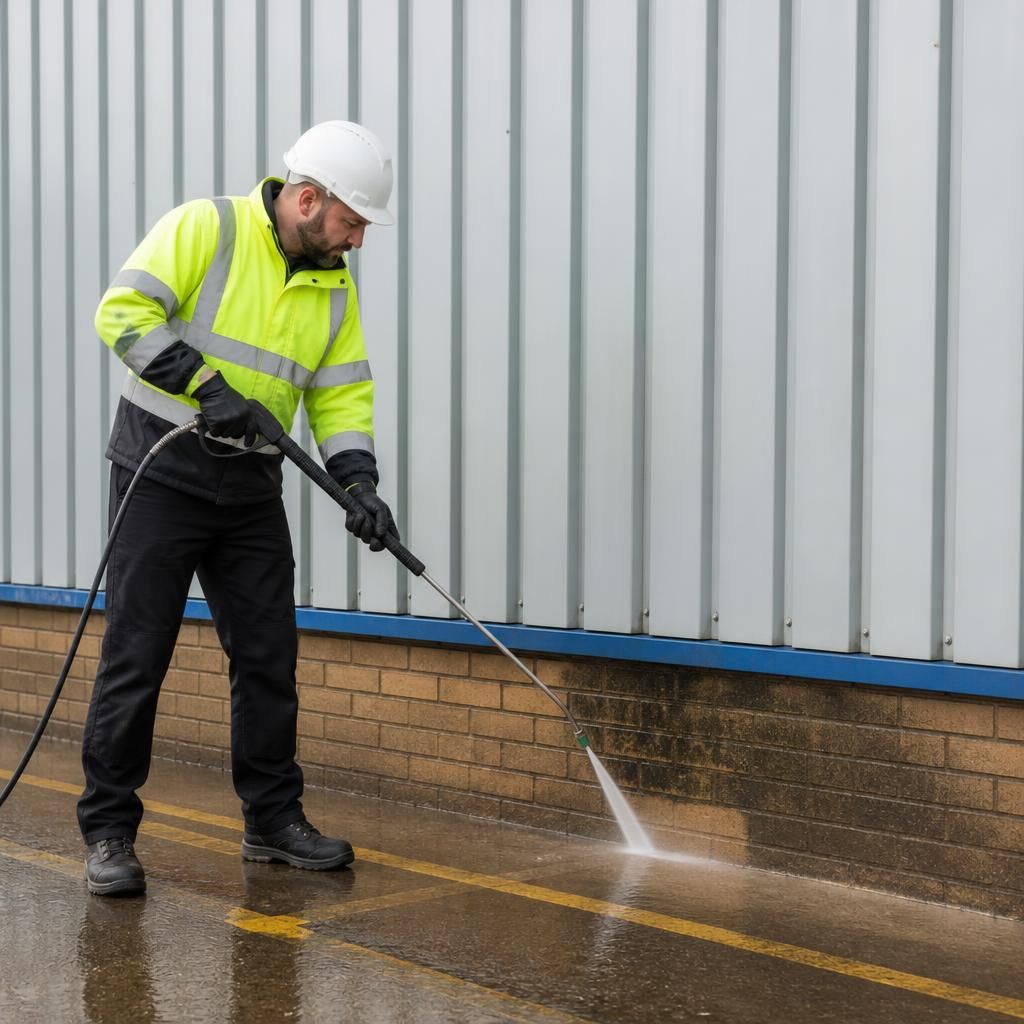
A test clean is the safest way to confirm whether a surface is suitable for high pressure washing. The operative applies the least aggressive practical setting to a discreet area, then checks for etching, colour change, coating loss, fibre damage, loose joints or water penetration before proceeding.
This assessment is particularly important where materials meet, such as brickwork beside render, paving beside resin-bound surfacing, or metal cladding beside painted frames. If the test shows that pressure could damage the substrate or finish, the method can be adjusted using a wider spray pattern, greater working distance, lower pressure, steam, a compatible cleaning agent or manual treatment.
Arrange a professional surface suitability assessment
Arrange a professional surface suitability assessment before cleaning to confirm the safest and most effective method for your building or site. Contact Encanto Exterior Cleaning to discuss your requirements across Birmingham, the West Midlands or the UK.