
What safety measures are in place to protect both the operatives and the environment during high pressure washing?
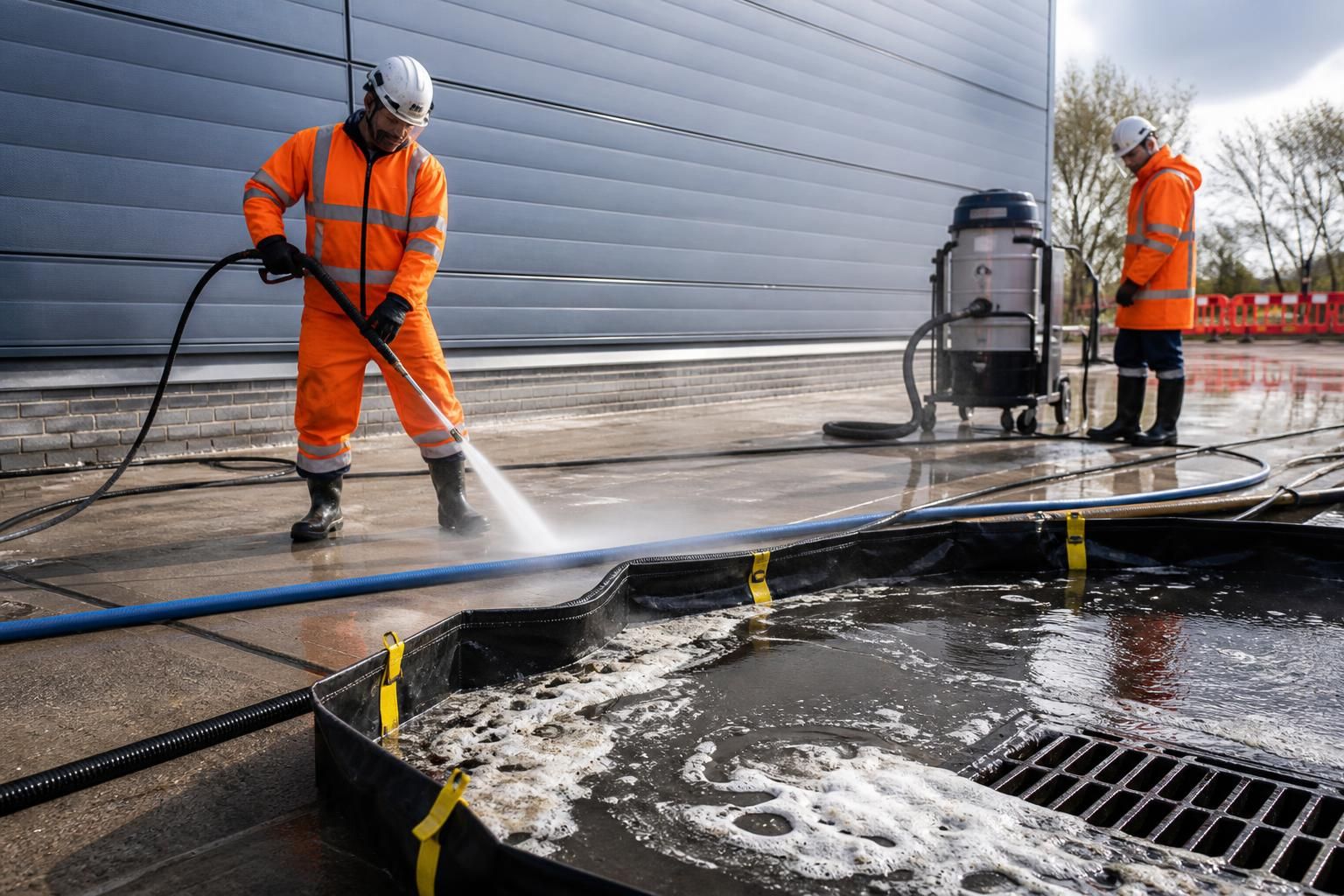
High pressure washing is managed through site-specific risk assessments, method statements, trained operatives, suitable PPE and controlled exclusion zones to protect people, property and equipment. Environmental measures include selecting appropriate detergents, preventing contaminated run-off from entering drains or watercourses, and collecting or disposing of wastewater responsibly.
High pressure washing is controlled through a site-specific risk assessment, method statement, trained operatives, suitable personal protective equipment (PPE), controlled work areas and responsible wastewater management. These measures reduce the risk of injury, protect the building and surrounding property, and prevent detergents, sediment or contaminated water from entering drains, soil or watercourses.
Site assessment and method statements
Before work starts, the team assesses the areas to be cleaned and identifies hazards such as pedestrians, moving vehicles, fragile surfaces, overhead services, low-level electrical equipment, restricted access, uneven ground, work at height and nearby drainage. The findings are recorded in a risk assessment and method statement, which sets out the cleaning method, equipment, access arrangements, required PPE, exclusion zones, emergency procedures and environmental controls.
The assessment also considers the material being cleaned. Pressure, temperature, nozzle selection and cleaning products must be suitable for the surface. Using excessive pressure or the wrong technique can damage pointing, coatings, timber, asphalt, masonry or cladding. A controlled test area may be used to confirm that the proposed process is effective without causing surface damage.
Protecting operatives
High pressure water can cause serious injury through direct contact, ricochet or flying debris. Operatives therefore use PPE appropriate to the task, which may include waterproof protective clothing, gloves, safety footwear with suitable grip, eye or face protection, hearing protection and head protection. Respiratory protection may also be required when using particular chemicals or when the assessment identifies a risk from airborne contaminants.
Operatives are instructed never to point a lance at another person and to maintain control of the hose and trigger at all times. They keep a stable stance, avoid working beyond a safe reach and do not place hands or feet in front of a pressurised nozzle. Equipment is depressurised before nozzles, hoses or fittings are changed, and the water supply is isolated before maintenance or fault finding.
Where detergents, biocides or other treatments are used, the relevant product information and Control of Substances Hazardous to Health (COSHH) requirements are followed. Products are stored securely, diluted as instructed and handled with the correct PPE. Operatives are also briefed on safe mixing, spill response and first-aid arrangements. Chemicals are never mixed unless the manufacturer specifically permits it.
Equipment and access controls
Pressure washers, hoses, lances, couplings and electrical supplies are checked before use. The team looks for damaged insulation, leaks, worn connections, loose fittings and defective safety controls. Hoses are routed to reduce trip hazards and protected where they cross access routes. Equipment is operated within its designed pressure and temperature limits, with regular maintenance and inspection records retained where appropriate.
Electrical equipment is kept away from standing water wherever practicable, and suitable supplies and residual current protection are used for the working conditions. Fuel-powered machines are positioned to provide adequate ventilation and to prevent exhaust gases accumulating in enclosed areas.
Work at height is planned separately rather than relying on unsafe ladder use. Suitable access equipment, such as mobile elevating work platforms, scaffolding or other approved systems, is selected according to the height, surface and site conditions. Access equipment is used by competent operatives, positioned on stable ground and segregated from vehicles and pedestrians. Weather conditions, particularly wind, rain, ice and lightning, are monitored because they can affect stability, visibility and control of the equipment.
Exclusion zones and protection of the site
Barriers, cones, signage and, where necessary, a dedicated banksman are used to keep people away from the spray, hoses, plant and falling debris. The size of the exclusion zone depends on the pressure, nozzle, height of the work, surrounding activities and likelihood of splash or rebound. Vehicle movements may be managed through a traffic plan, temporary route changes or timed work periods.
Doors, vents, air-conditioning intakes, electrical cabinets, signage, fragile fittings and other vulnerable features are protected or isolated before cleaning. Windows and entrances are checked to reduce the risk of water ingress. The team also considers neighbouring properties and public areas so that spray, noise and debris are controlled beyond the immediate work zone.
Preventing environmental pollution
Environmental protection begins with using the least aggressive effective method. Pressure, temperature, flow rate and detergents are selected to avoid unnecessary water use and to limit damage to coatings, pointing, vegetation and surrounding surfaces. Biodegradable or lower-impact products may be selected where they are suitable for the contamination and surface, but biodegradable does not mean that a product can be discharged without control.
Before washing, drains are identified and the likely route of run-off is assessed. Drain covers, bunds, drain mats, temporary barriers, wet vacuums, pumps or collection systems may be used to stop contaminated water entering surface-water drains or nearby watercourses. Particular care is taken where the work could mobilise oil, fuel, paint, heavy sediment, biological growth, cement residue, algae or other pollutants.
Wastewater is collected, contained and handled according to its contents and the site arrangements. It may be filtered, settled, removed by vacuum equipment or transferred for appropriate disposal. It is not released to a drain, watercourse or ground without confirming that the discharge is permitted and suitable. Where a client has specific drainage, trade-effluent or environmental requirements, these are incorporated into the method statement before work begins.
Run-off controls are inspected during the cleaning operation rather than left unattended. If containment fails, an unexpected pollutant is encountered or water begins travelling towards an unprotected drain, work is paused and the issue is contained and reported. Spill kits and suitable response materials are kept available where the assessment identifies a spill risk.
Monitoring and handover
The responsible operative monitors the work area throughout the job, checking barriers, hose routes, access equipment, spray drift, drainage controls and changing site conditions. Any change to the work area or method is reviewed before proceeding. On completion, equipment and waste are removed, drains and surrounding areas are checked, and temporary protection is taken away only when it is safe to do so.
These controls work together: competent planning protects people, correct equipment settings protect surfaces, exclusion zones protect others on site, and controlled run-off protects the drainage system and wider environment. For complex sites, the required arrangements can be confirmed during the pre-start planning stage so that access, drainage, traffic management and wastewater disposal are agreed before cleaning begins.
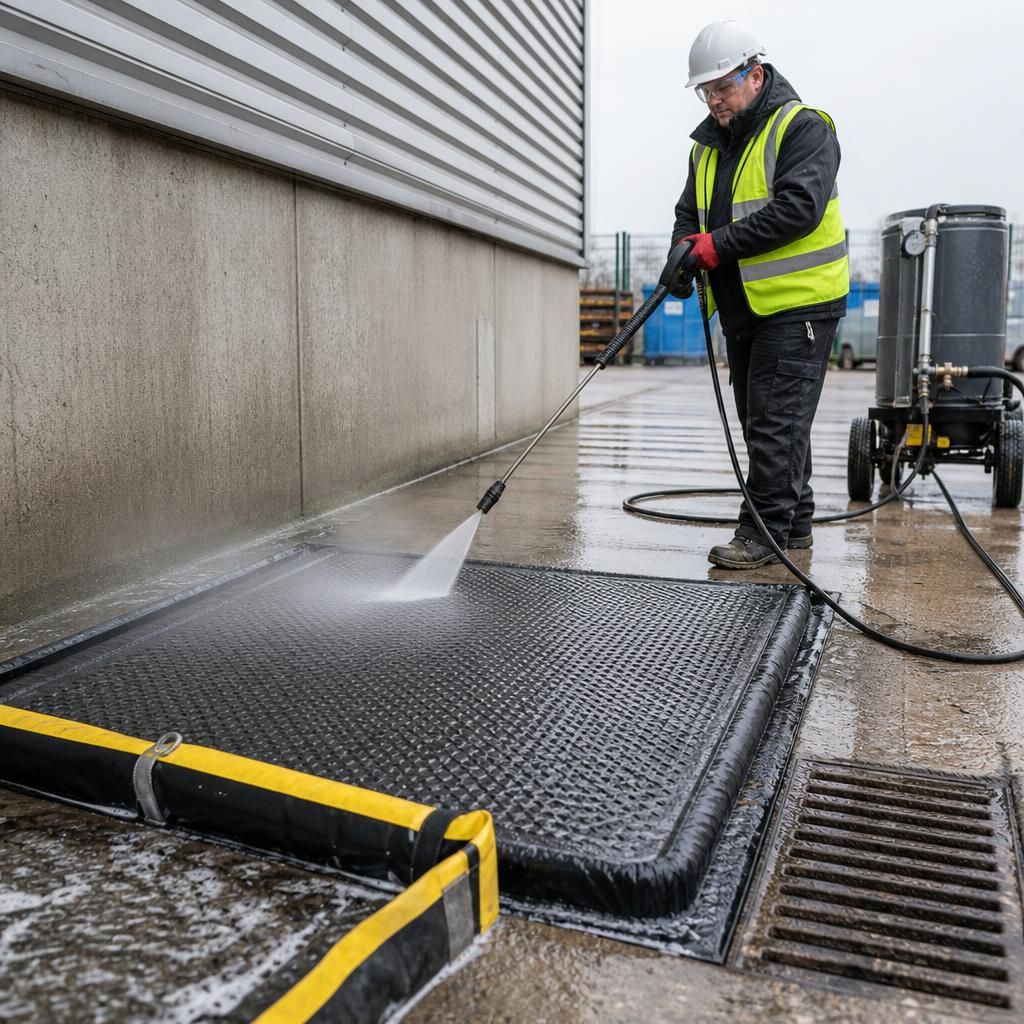
Run-off control is a key safety measure during high pressure washing because cleaning water can carry sediment, oil, chemicals and biological growth into drains or watercourses. Before work begins, the team identifies drainage routes and uses suitable controls, such as drain mats, temporary bunds, barriers, wet vacuums or collection systems, to contain contaminated water.
Wastewater is monitored throughout the cleaning process rather than left unattended. If containment is disturbed or unexpected pollution is found, work is paused while the water is contained and the issue is assessed. Collected water is then filtered, removed or disposed of in line with its contents and the agreed site requirements.