
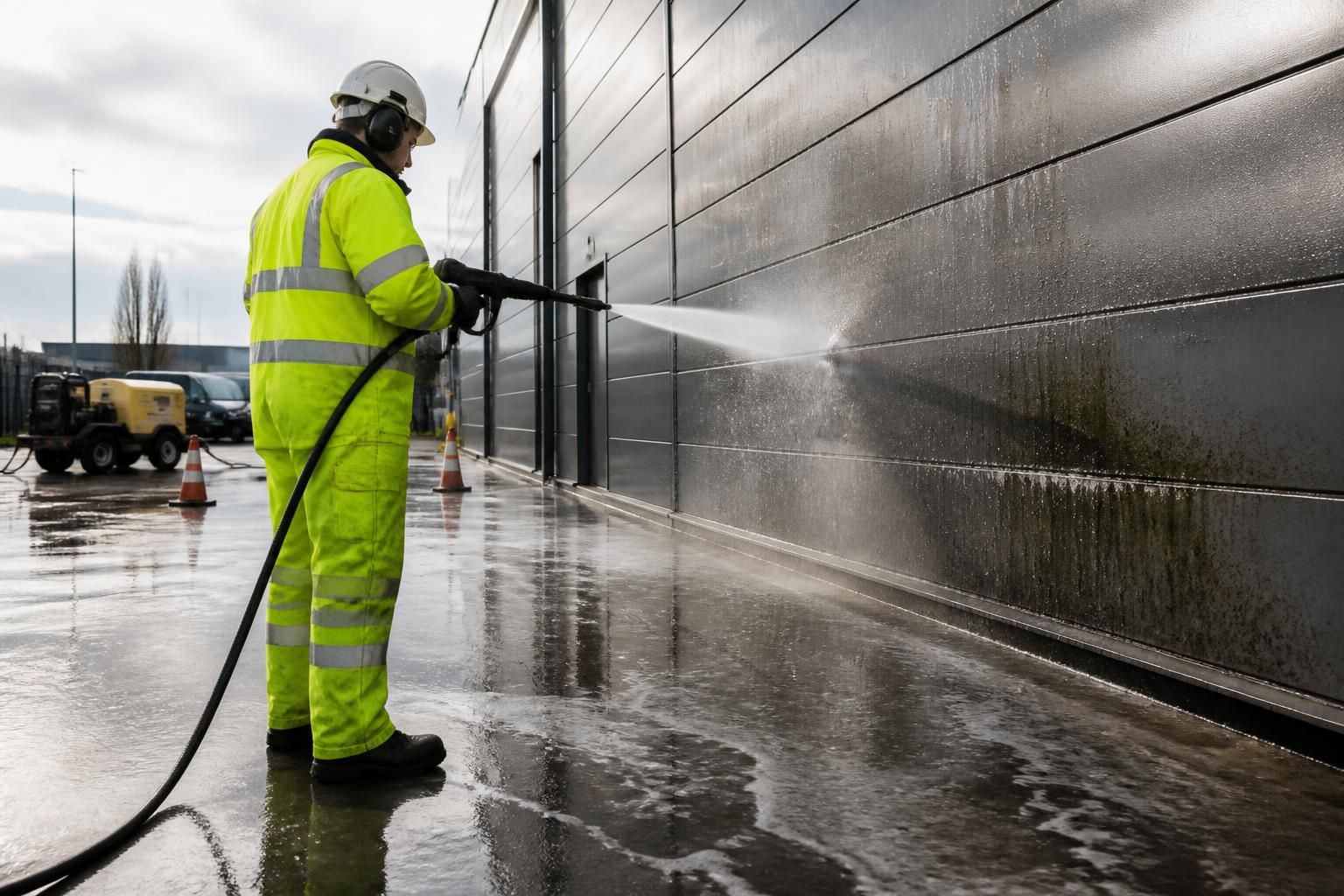
What qualifications or accreditations do the high pressure washing operatives possess to ensure quality and safety?
Our high pressure washing operatives receive documented training in pressure-washing techniques, COSHH, risk assessment, PPE and safe equipment use, with additional IPAF or PASMA training where powered access or tower systems are required. Competence is supported by site-specific briefings, method statements and ongoing supervision, helping ensure work is carried out safely, compliantly and to the required cleaning standard.
Our high pressure washing operatives are trained in the safe use of pressure-washing equipment, cleaning techniques, COSHH, risk assessment, personal protective equipment (PPE) and site-specific working procedures. Where a project involves powered access or temporary work-at-height equipment, the relevant operatives also hold appropriate IPAF or PASMA training, as required by the equipment and task. Competence is supported by method statements, site briefings, supervision and ongoing review rather than relying on a qualification alone.
High pressure washing can involve significant water pressure, electrical equipment, chemicals, traffic movements, contaminated surfaces and work at height. Operatives therefore need to understand both the cleaning process and the risks created by the surrounding site. Before work begins, the team reviews the surface, access arrangements, drainage, nearby people and vehicles, sensitive materials and any environmental controls needed. These findings are recorded in the relevant risk assessment and method statement.
Training and competence typically cover:
- Pressure-washing equipment: safe start-up and shut-down, nozzle selection, operating pressures, hose management, equipment checks and controlled cleaning techniques.
- Surface and material awareness: recognising when excessive pressure, heat or an unsuitable cleaning product could damage masonry, coatings, cladding, paving, render, joints or other finishes.
- COSHH: understanding chemical hazards, product labels and safety data sheets, correct dilution, storage, application, spill response and disposal requirements.
- Risk assessment: identifying hazards such as sprayback, flying debris, slips, unstable surfaces, hidden services, electrical risks, traffic and public access, then applying suitable controls.
- PPE: selecting and correctly using waterproof protective clothing, gloves, eye and face protection, hearing protection, safety footwear, respiratory protection where required and any task-specific equipment.
- Environmental controls: preventing contaminated water, detergents, silt, paint residue or debris from entering unsuitable drains or watercourses, and following the agreed wastewater and waste-handling arrangements.
- Emergency procedures: responding to equipment failure, chemical splashes, injuries, spills, loss of containment and changing weather or site conditions.
For access-related work, IPAF training is relevant where powered access equipment such as mobile elevating work platforms is used. PASMA training is relevant where operatives assemble, alter, inspect or use mobile access towers. These are equipment-specific competencies; they do not replace the requirement for a task-specific risk assessment, suitable rescue arrangements, correct equipment selection and safe supervision.
All equipment is checked before use and removed from service if it is damaged or does not operate correctly. Hoses, lance assemblies, electrical connections, guards, safety devices and access equipment are inspected in line with the manufacturer’s instructions and the needs of the site. Operatives are expected to report defects rather than improvise repairs or continue using unsafe equipment.
Quality control is also part of safe working. The operative confirms the agreed cleaning specification, carries out a test clean where appropriate and checks the result as the work progresses. This helps identify whether the selected pressure, temperature, nozzle, distance and cleaning agent are suitable before the process is extended across a larger area. It also provides an opportunity to protect fragile finishes and avoid unnecessary water or chemical use.
Before mobilisation, clients can request the relevant compliance information for the planned works, which may include operative training records, insurance details, risk assessments, method statements, COSHH assessments, equipment inspection records and waste-transfer documentation where applicable. The exact documents depend on the site, the equipment being used and the scope of work.
Accreditation alone does not guarantee a safe or satisfactory clean. The important combination is appropriately trained operatives, suitable and maintained equipment, competent supervision, clear documentation and controls that match the actual site conditions. If the work changes—for example, if access becomes more difficult, the surface proves more fragile or contaminated wastewater requires additional control—the method is reviewed before cleaning continues.
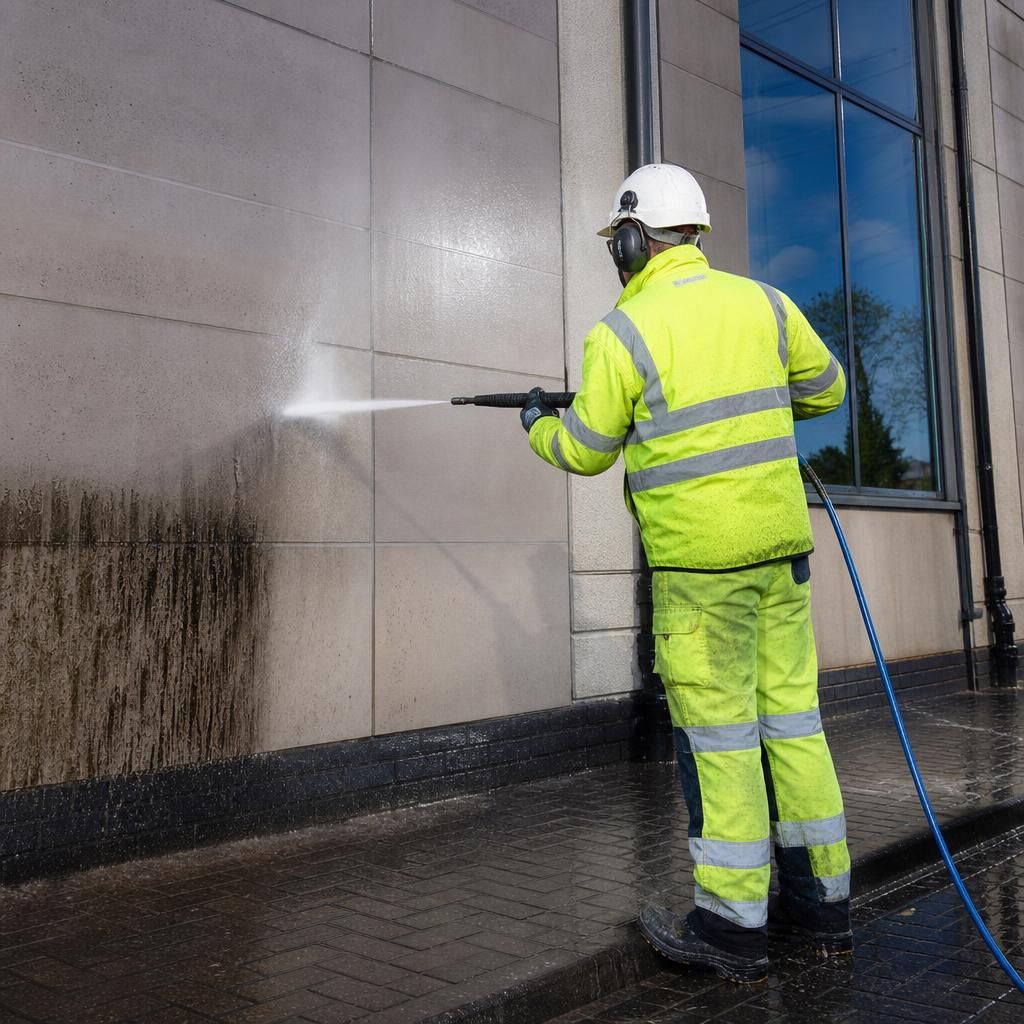
High pressure washing qualifications support safe equipment use, but competence also depends on training that matches the work, site conditions and access arrangements. Operatives receive instruction in pressure control, surface protection, COSHH, risk assessment, PPE, equipment checks and environmental controls before carrying out the task.
Where the work requires powered access or mobile access towers, the relevant operatives hold appropriate IPAF or PASMA training for the equipment involved. These qualifications are supported by site-specific briefings, method statements, supervision and pre-use inspections, helping ensure that cleaning is completed safely without relying on accreditation alone.