
What maintenance is required for high pressure washing equipment?
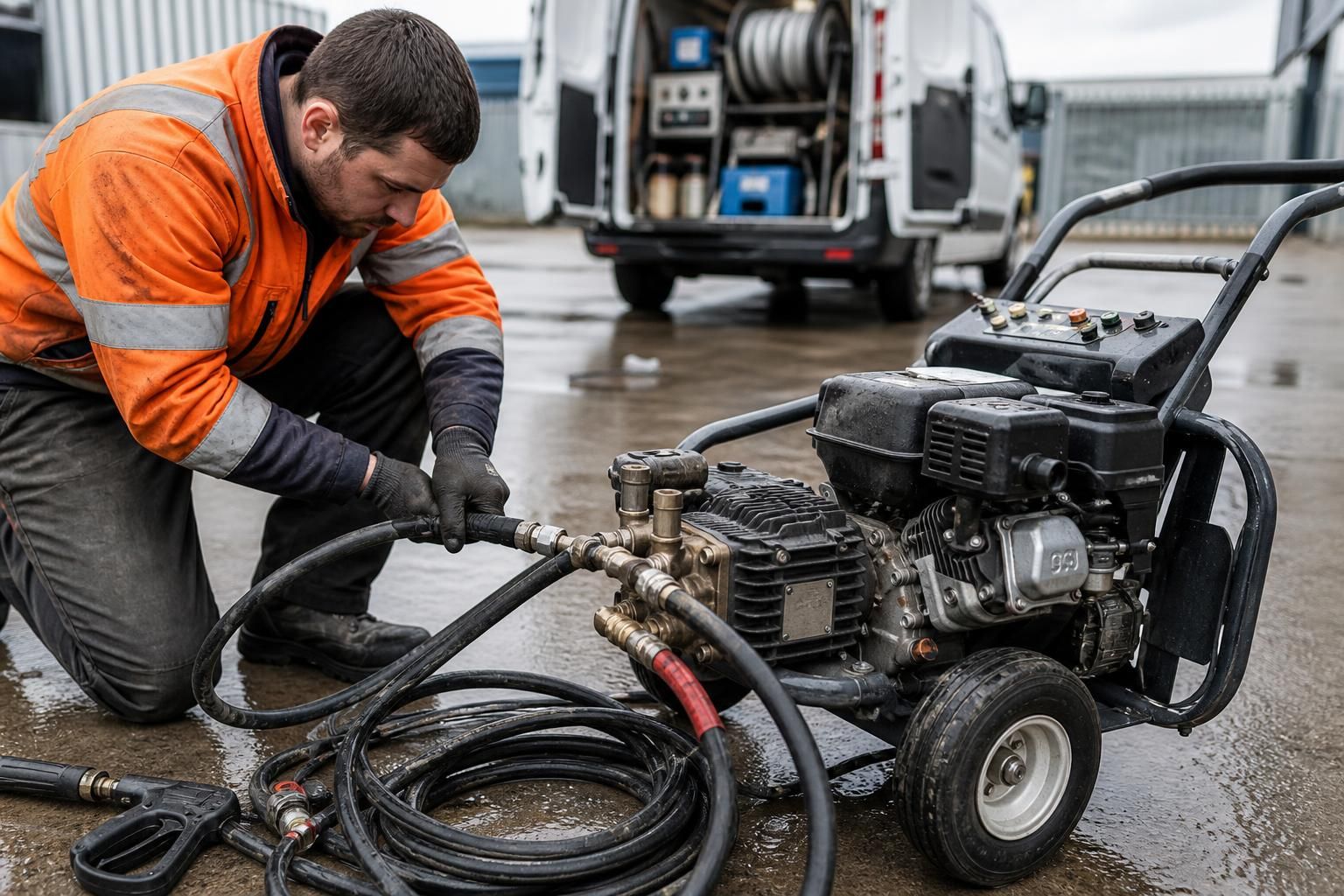
High pressure washing equipment requires regular inspection, cleaning, servicing and safety checks to keep pumps, hoses, nozzles, fuel systems and electrical components working reliably. Commercial equipment should be maintained according to the manufacturer’s instructions, with faults repaired promptly and detailed service records kept.
High pressure washing equipment requires routine inspection, cleaning, servicing and safety checks to keep pumps, hoses, nozzles, fuel systems and electrical components reliable. Commercial equipment should be maintained in line with the manufacturer’s instructions, with defects taken out of service and repaired by a competent person. Maintenance records should also be kept so that faults, servicing and replacement parts can be traced.
Pre-use inspections
Before each use, the operative should check the machine and its accessories for visible damage, leaks or loose connections. This inspection should include:
- the pump, motor, engine and frame for damage, unusual noises or signs of overheating;
- high-pressure hoses for cuts, abrasions, kinks, bulges, exposed reinforcement or damaged end fittings;
- trigger guns, lances, couplings and seals for wear or leakage;
- nozzles for blockage, distortion or excessive wear;
- water inlet hoses, filters and connections for restrictions or leaks;
- electrical leads, plugs, switches and residual current protection on electrically powered equipment;
- fuel tanks, oil levels and fuel lines on petrol or diesel machines; and
- guards, wheels, handles, covers and other protective components.
Hoses and fittings must be rated for the machine’s operating pressure and should never be repaired with unsuitable tape, clamps or makeshift connections. A damaged high-pressure hose can fail violently, so it should be replaced rather than temporarily patched.
Cleaning after operation
After use, the machine should be shut down safely and the pressure released before any disconnection, cleaning or adjustment. Removing residual pressure protects the operative and reduces strain on seals, couplings and valves.
The exterior should be cleaned of dirt, detergent residue and debris, particularly around cooling vents, controls and engine components. Water should not be directed into electrical housings, air intakes or other areas that are not designed to get wet. The inlet filter should be checked and cleaned so that grit does not reach the pump. Nozzles, lances and couplings should be rinsed, inspected and stored where they cannot be damaged.
Where the equipment uses detergents or chemical products, the dosing system and lines should be flushed in accordance with the manufacturer’s instructions. Residue can block injectors, damage seals or affect the next cleaning application. Hoses should be drained where practical and coiled without tight bends.
Pump and pressure system maintenance
The pump is one of the most important service items on a pressure washer. Its oil level and condition should be checked where the pump is oil-filled, and oil should be changed according to the manufacturer’s service schedule. Leaking seals, unstable pressure, excessive vibration, air in the system or unusual pump noise can indicate wear or a restriction in the water supply.
Pressure regulators, unloader valves, relief valves and gauges should be inspected and tested as part of planned servicing. These components control operating pressure and help prevent unsafe pressure build-up. They should not be adjusted beyond the machine’s specified limits. A qualified technician should investigate pressure fluctuations rather than repeatedly increasing the setting.
Nozzles wear gradually, even when they appear intact. A worn nozzle can alter the spray pattern, reduce cleaning control and place additional demand on the pump. Nozzles should be cleaned with the correct tool and replaced when they no longer produce the specified pattern. They should never be cleared with a sharp object that could change the orifice.
Engine, fuel and electrical checks
Petrol and diesel machines need the engine oil, air filter, fuel system and cooling system maintained in accordance with the manufacturer’s instructions. Fuel should be stored correctly and stale or contaminated fuel should not be used. Leaks, damaged fuel lines and exhaust problems require prompt attention. Engines must be operated in well-ventilated areas because exhaust gases can be dangerous.
Electrical machines require inspection of cables, plugs, switches, extension leads and protective devices. Leads should be kept away from standing water, sharp edges, traffic routes and hot surfaces. Electrical repairs and testing should be carried out by a suitably competent person. Equipment with exposed conductors, damaged insulation, repeated tripping or signs of water ingress should be isolated until it has been examined.
Planned servicing and storage
Routine operator checks do not replace planned servicing. Servicing intervals should be based on the manufacturer’s instructions, the hours of use, the operating environment and the demands placed on the equipment. Heavy commercial use, abrasive water, dusty sites and frequent transport can increase wear.
Planned servicing may include replacing pump oil, filters, seals and worn couplings; checking pressure and flow; testing safety devices; inspecting the frame and hose reel; and examining the engine or electrical system. Repairs should use compatible parts and should be completed before the machine returns to service.
Equipment should be stored securely in a clean, dry and frost-protected area. Water left inside pumps, hoses or valves can freeze and cause serious damage. If a machine is likely to be exposed to freezing conditions, it should be drained or protected using the method specified by the manufacturer. Hoses, lances and nozzles should be stored without sharp bends, crushing or unnecessary exposure to sunlight and chemicals.
Maintenance records and safe working practices
For commercial work, records should identify the equipment, inspection date, defects found, action taken, parts replaced and the person who completed the work. A clear system helps prevent a damaged hose or unreliable machine being returned to service and supports responsible equipment management.
Maintenance must only be carried out when the machine is switched off, isolated from its power source where applicable, depressurised and cool enough to handle safely. Operatives should follow the risk assessment and manufacturer’s instructions and should not remove guards or bypass safety devices. If a fault affects pressure control, electrical safety, fuel integrity, structural condition or hose safety, the equipment should be withdrawn from use until inspected and repaired by a competent person.
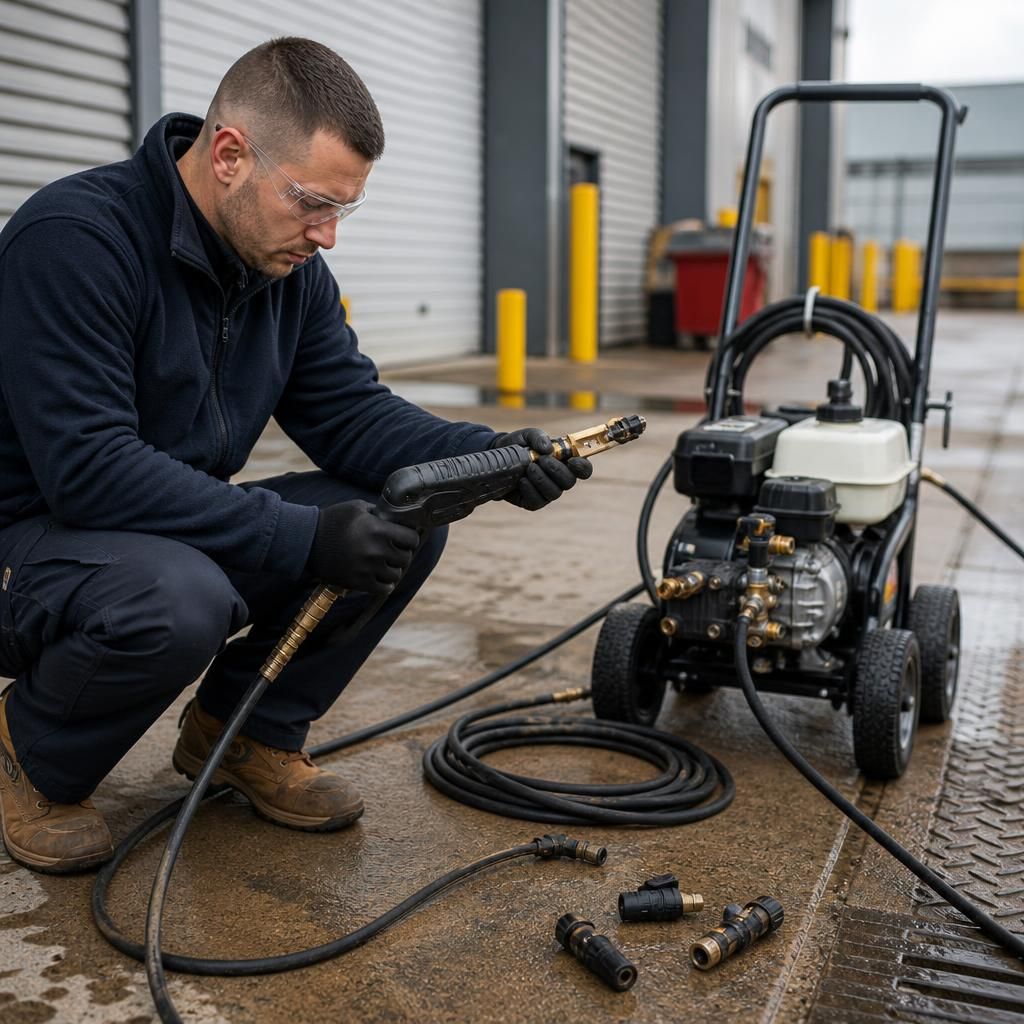
Pre-use inspection is a vital part of high pressure washing equipment maintenance because hose, coupling and trigger-gun defects can create immediate safety risks. Before starting work, the operative should check for cuts, abrasions, kinks, bulges, leaks, damaged seals and loose connections, as well as confirming that hoses and fittings are rated for the machine’s operating pressure.
Any damaged hose or accessory should be isolated and replaced with a compatible component rather than patched with tape or makeshift clamps. After use, the machine should be switched off, depressurised and cleaned before hoses, lances and nozzles are rinsed, drained where practical and stored without tight bends, crushing or exposure to chemicals. These simple checks help prevent pressure loss, equipment damage and hose failure during commercial cleaning work.