
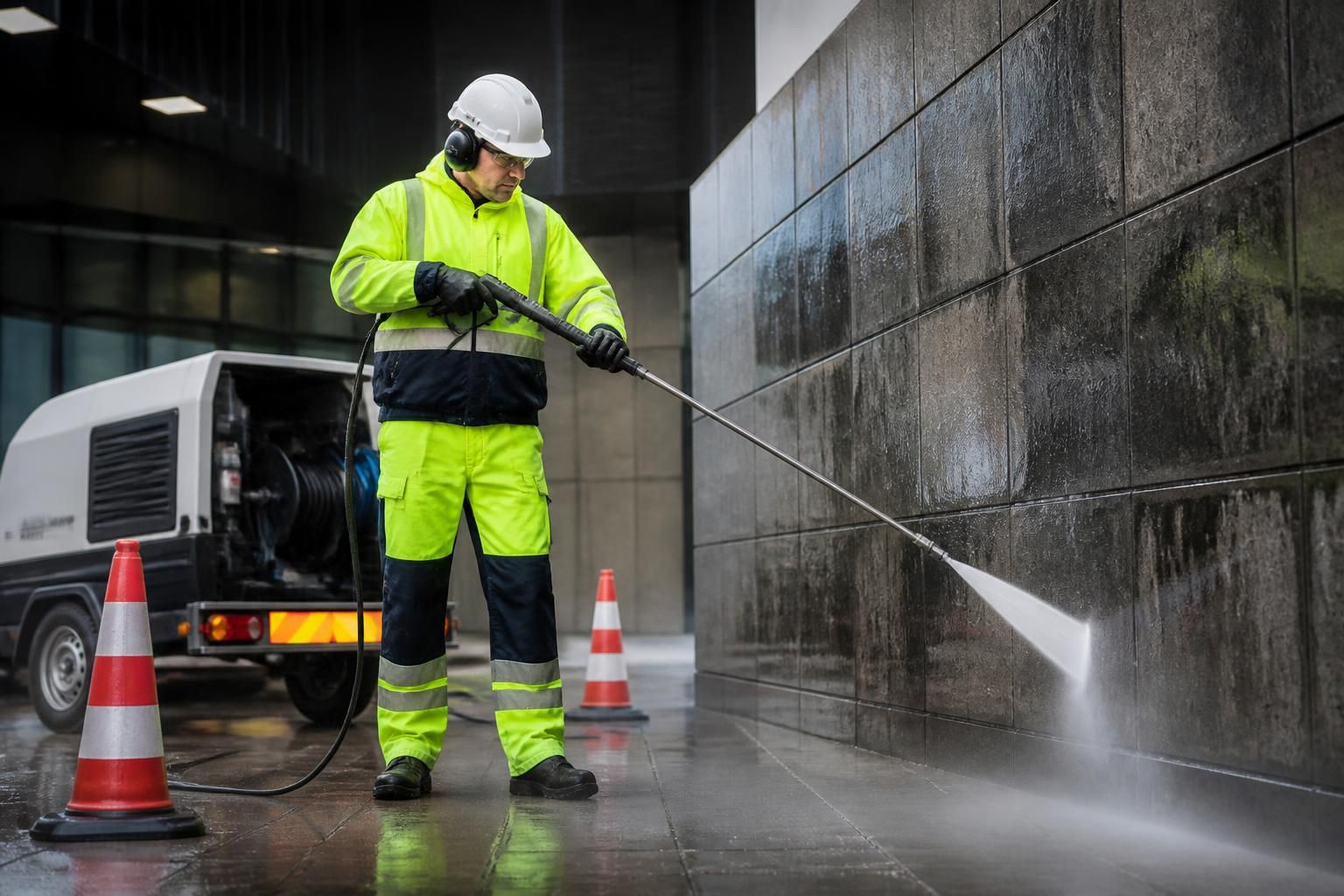
What are the safety precautions to consider when using high pressure washing equipment?
Safe use of high pressure washing equipment requires trained operatives, suitable personal protective equipment (PPE), pre-use equipment checks and effective control of the work area. Operators must also manage water, electrical hazards, debris, noise and spray carefully to protect people, surfaces, property and the environment.
Safe use of high pressure washing equipment depends on competent operatives, a documented risk assessment, suitable personal protective equipment (PPE), pre-use checks and effective control of the work area. High pressure water can cause serious injection injuries, eye damage, slips, electrical hazards, surface damage and uncontrolled spray, so it must be treated as potentially hazardous equipment rather than ordinary cleaning machinery.
Use trained and competent operatives
Only operatives who have been trained to use the specific pressure washer, lance, hose system and access equipment should carry out the work. They should understand the operating instructions, pressure controls, nozzle selection, chemical handling, emergency procedures and the risks associated with the surface being cleaned. Supervisors should confirm that the planned method is suitable for the site and that operatives can stop the work if conditions become unsafe.
A site-specific risk assessment and method statement should identify hazards such as pedestrians, vehicles, fragile surfaces, overhead services, confined areas, working at height, contaminated deposits, wastewater, weather conditions and nearby electrical equipment. The control measures should be explained to everyone involved before work starts and reviewed if the site conditions change.
Wear appropriate PPE
PPE should be selected according to the pressure, equipment, cleaning chemicals and contaminants present. It commonly includes:
- Water-resistant protective clothing or suitable waterproof workwear to reduce exposure to spray and contaminated water.
- Safety footwear with slip-resistant soles and suitable toe protection.
- Eye protection or a full face shield to guard against ricocheting debris, droplets and chemical splashes.
- Water-resistant gloves that provide an appropriate grip and protection from the cleaning solution being used.
- Hearing protection where noise levels from the pump, water impact or surrounding plant require it.
- Suitable respiratory protection where the process could generate hazardous mist or expose operatives to harmful substances, subject to the relevant assessment.
- Head protection and high-visibility clothing where required by the site rules or surrounding vehicle movements.
PPE does not replace safe working methods. Gloves, for example, do not make it safe to direct the lance at a person or to handle a pressurised hose incorrectly.
Inspect the equipment before starting
The pressure washer, hoses, couplings, trigger gun, lance, nozzles, guards and electrical connections should be checked before each task. Look for cuts, abrasion, bulges, leaks, loose fittings, damaged insulation and signs of overheating. Confirm that couplings are correctly secured and that safety locks or trigger controls operate properly.
Do not use damaged hoses, improvised connectors or equipment that is leaking under pressure. Defective items should be isolated, labelled and repaired or replaced by a competent person. Operatives should also check that the water supply is adequate, filters are clear and the machine is positioned on a stable surface with sufficient ventilation where applicable.
Never connect or disconnect a hose, nozzle or accessory while the system is pressurised. Release the pressure in accordance with the manufacturer’s instructions and switch off or isolate the equipment before making adjustments.
Control the spray and pressure
The lance should be held securely with both hands where the equipment design requires it, with a stable stance and a clear escape route. Start at a lower pressure or with a wider spray pattern where practical, then increase the setting only when the surface and cleaning objective have been confirmed. The nozzle should be kept directed towards the work area and never towards people, animals, vehicles or unprotected equipment.
High pressure spray can dislodge masonry, coatings, glass fragments, rust, paint and other debris. Operatives should work methodically, avoid sudden movements and maintain a safe distance appropriate to the equipment and surface. They should never place hands, feet or any part of the body in front of the nozzle to test the spray or clear a blockage.
Even when an injury appears minor, a high pressure injection injury requires urgent medical assessment. Water or contaminated material can enter beneath the skin through a very small wound and cause serious internal damage. The incident should be reported, and the injured person should tell medical staff that a high pressure injection may have occurred.
Establish an exclusion zone
The work area should be separated from pedestrians, visitors and unauthorised staff using barriers, cones, warning signs or a banksman where necessary. The exclusion zone should account for overspray, ricocheting debris, hose movement and the possibility of falling material from the surface being cleaned.
Where cleaning takes place near roads, loading areas or car parks, vehicle and pedestrian routes should be planned and controlled. A suitable traffic management arrangement may be needed, including a banksman or temporary closure. Doors, windows and building entrances should be protected or temporarily restricted where spray could enter the premises.
Work should stop if members of the public enter the exclusion zone, visibility becomes inadequate or the operative can no longer control the spray and surrounding hazards.
Manage slips, trips and falling objects
Water, silt, algae and cleaning residues can make hard surfaces extremely slippery. Hoses should be routed to minimise trip hazards and protected from vehicle movement where they cross access routes. Standing water should be removed or controlled, and wet areas should remain cordoned off until they are safe for use.
Before cleaning elevated façades, roofs or structures, assess the risk of loose materials falling. Use suitable barriers, debris controls and safe work positioning. Do not direct spray beneath loose roof coverings, damaged cladding, unstable masonry or other materials unless the method has been specifically assessed.
Control electrical and service hazards
Water and electricity must be kept separate. Identify electrical supplies, sockets, lighting, cables, plant and other services before work begins. Electrical equipment in the spray area should be isolated, protected or removed where possible, and outdoor electrical connections should be suitable for the conditions. Residual current protection and inspection arrangements should be used where required by the equipment and site assessment.
Operatives should not use electrical pressure washing equipment in unsuitable wet conditions or with damaged cables and plugs. Petrol or diesel-powered equipment must be used with adequate ventilation because exhaust gases can accumulate in enclosed or poorly ventilated areas. Never operate combustion equipment in a confined space unless the arrangement has been specifically designed and assessed for safe ventilation.
Take additional precautions with chemicals and contaminants
Cleaning chemicals should be selected and diluted in line with the product instructions and the relevant COSHH assessment. Operatives should understand the required PPE, safe storage, spill response, first aid and disposal arrangements. Chemicals should never be mixed unless the manufacturer specifically permits it, as incompatible products can release harmful gases or generate dangerous reactions.
Where the surface may contain bird fouling, mould, sewage residue, oils, lead-based coatings or other hazardous contamination, the risk assessment should determine the appropriate containment, PPE, hygiene and waste controls. Do not use high pressure washing in a way that creates uncontrolled contaminated mist or spreads hazardous material to adjacent areas.
Use safe access arrangements
High pressure washing from ladders, roofs, mobile elevated work platforms or other elevated positions requires separate planning. The reaction force from the lance, wet surfaces and hose movement can affect balance, so the operative must have a stable platform and suitable fall protection where required. Access equipment should be inspected, set up on suitable ground and operated only by people with the relevant competence.
Do not overreach from a ladder or use the water jet to reposition yourself. If the required reach or pressure makes the position unstable, stop and use a safer access method. Overhead power lines and other services must be identified and kept at a safe distance.
Consider weather and site conditions
Wind can carry spray, chemicals and debris beyond the planned work area, while rain, ice and poor light can increase slip and visibility risks. Very hot or cold conditions can also affect equipment, hoses and operative safety. The supervisor should monitor conditions and pause the work when wind, lightning, visibility, temperature or ground conditions prevent effective control.
Control wastewater and protect the environment
Wash water should be contained, collected or directed to an approved drainage arrangement in accordance with the site assessment and local requirements. Prevent dirty water, detergents, oils, paint residues and other pollutants from entering surface water drains, watercourses or unprotected ground. Drain covers, bunding, wet vacuums, silt controls and temporary collection systems may be appropriate, depending on the work.
Operatives should know where wastewater is allowed to go and should stop the process if containment fails. Wastewater and removed material must be handled and disposed of through the correct route rather than discharged indiscriminately.
Follow safe shutdown and emergency procedures
At the end of the task, the equipment should be switched off, isolated and depressurised before it is moved, cleaned or stored. Hoses should be drained, coiled without sharp bends and checked for damage. Nozzles and accessories should be stored securely, and chemicals should be returned to labelled storage.
The site should have clear procedures for responding to injection injuries, chemical splashes, electric shock, equipment failure, spills, fire and uncontrolled wastewater. Emergency access must remain clear, and operatives should know how to contact the site representative and emergency services. Recording defects, near misses and incidents helps prevent the same hazard recurring on future cleaning projects.
For commercial and industrial work, these controls should be confirmed during the site briefing and monitored throughout the operation. A properly planned high pressure washing method protects operatives, other site users, buildings, equipment and drainage systems while allowing the cleaning work to be completed in a controlled manner.
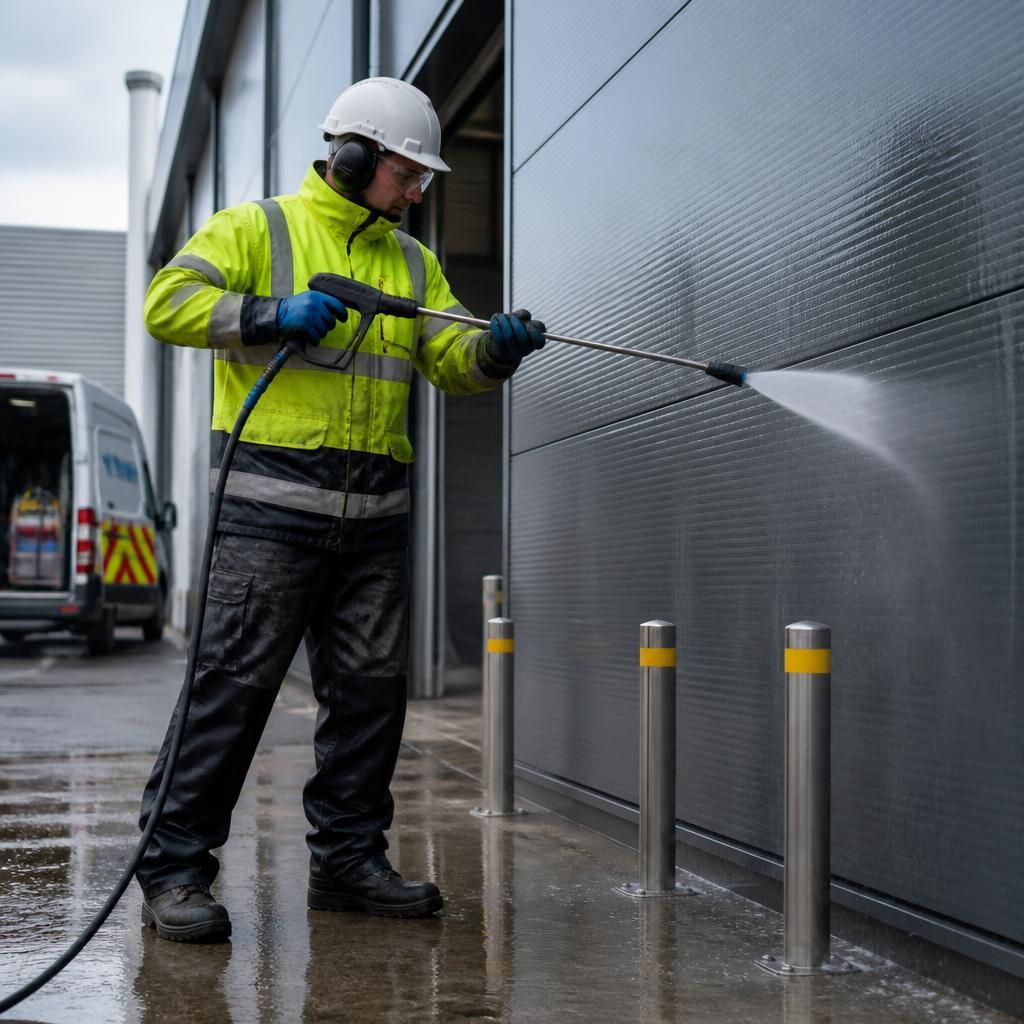
Personal protective equipment (PPE) is an essential control when using high pressure washing equipment, but it must be combined with safe operating procedures. Protective clothing, slip-resistant safety footwear, suitable gloves and eye or face protection help reduce exposure to pressurised water, ricocheting debris, contaminated spray and cleaning chemicals.
The correct PPE depends on the equipment, pressure, substances being removed and conditions on site. Hearing protection may be required near loud pumps or machinery, while respiratory protection should only be selected following an assessment of airborne mist or hazardous contamination. PPE must be inspected before use and replaced if damaged or contaminated.
PPE cannot prevent every type of injury. Operatives must keep the lance pointed away from people, maintain a controlled stance and never use their hands to test the spray or clear a blockage. Any suspected high pressure injection injury requires urgent medical assessment, even if the skin wound appears small.