
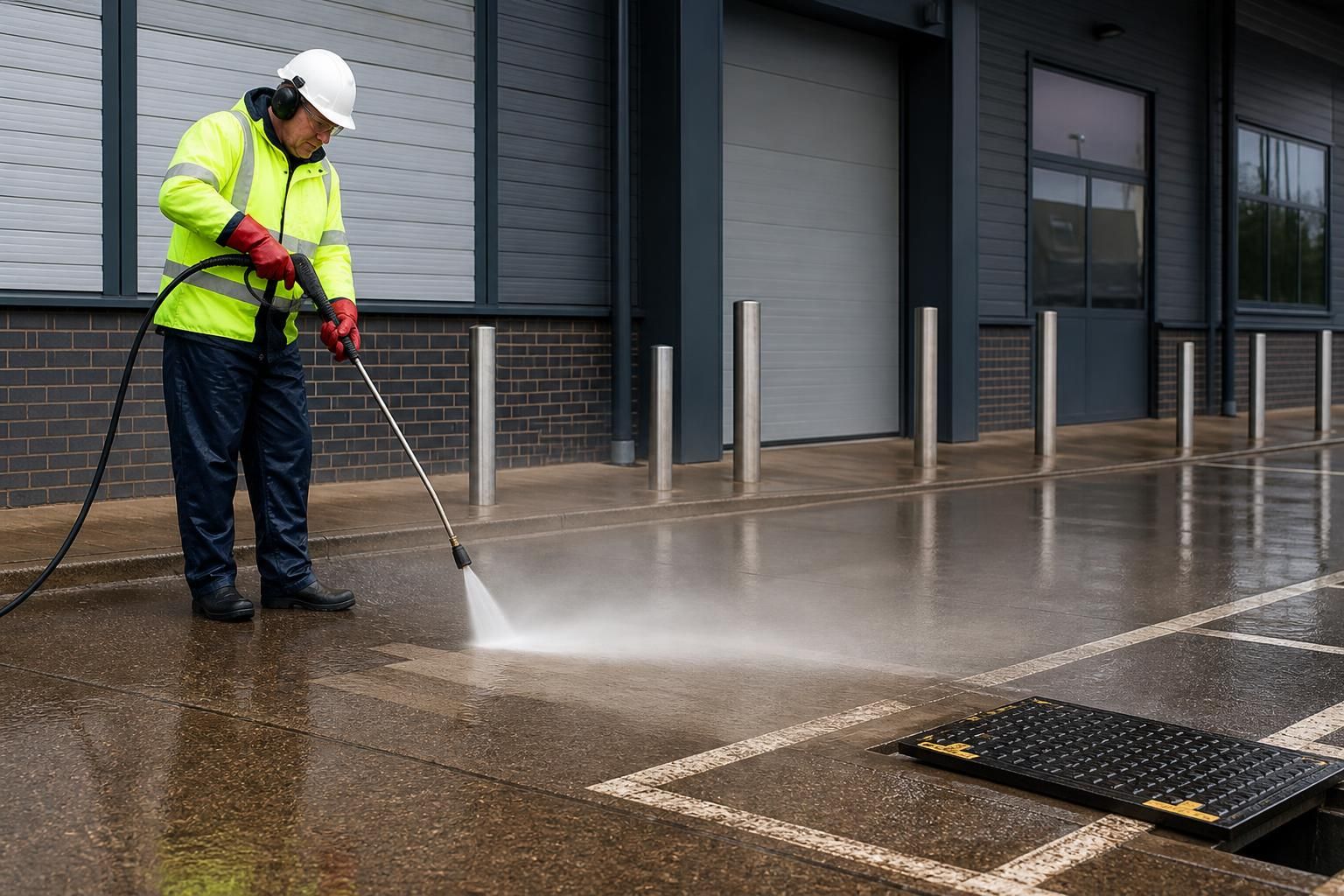
How does high pressure washing compare to other cleaning methods in terms of environmental impact?
High pressure washing can have a lower environmental impact than abrasive cleaning or chemical-intensive methods because it often removes dirt with less detergent and without disposable media. Its footprint still depends on water and energy use, pressure settings, equipment efficiency and responsible wastewater capture and disposal, so it must be carefully controlled.
High pressure washing can have a lower environmental impact than abrasive cleaning and chemical-intensive methods because it can remove contamination with water alone, without disposable blasting media or large quantities of detergents. However, it is not automatically the most sustainable option. Its environmental performance depends on the pressure selected, water and energy consumption, the condition of the surface, the cleaning products used and how wastewater is contained, treated and disposed of.
Compared with chemical cleaning, high pressure washing can significantly reduce the need for biocides, solvents, degreasers and other treatment products. This is particularly useful when removing general dirt, dust, mud, algae, moss and some surface deposits from hard external areas. Using less chemical product reduces the risk of residues entering soil or drainage systems and reduces the resources associated with manufacturing, transporting and storing those products.
Chemical cleaning is sometimes appropriate where contamination cannot be removed safely with water pressure alone. For example, oil, certain paints and biological growth may require a carefully selected treatment. In these cases, the environmental impact is controlled by using the least aggressive effective product, following the manufacturer’s instructions, preventing overspray and collecting the resulting wastewater. Pressure washing should not be used as a reason to avoid necessary treatment where doing so could damage the surface or spread contamination.
Compared with abrasive methods, water-based pressure washing does not normally generate spent grit, crushed glass or other disposable blasting media. Abrasive cleaning can be effective for heavy coatings and corrosion, but it may create substantial solid waste and can remove part of the underlying surface if poorly controlled. High pressure washing is often a more suitable option for routine façade, paving, cladding and car park cleaning where the objective is to remove contamination rather than strip the substrate.
Abrasive cleaning may still be the correct method for particular industrial or restoration work. The more sustainable choice is therefore determined by the condition and material of the surface, the type of contamination and the finish required. Selecting an unnecessarily aggressive method can increase waste, energy use and the likelihood of remedial work.
Compared with steam cleaning and lower-pressure washing, high pressure washing may remove deposits quickly, but it can use more water or energy depending on the equipment and operating conditions. Steam cleaning uses heated water and can reduce the need for detergents in some applications, although heating water requires energy. Lower-pressure or soft washing can be more appropriate for delicate surfaces and may reduce the risk of physical damage, but it often relies on cleaning agents that must be managed responsibly.
The most environmentally appropriate technique is selected after assessing the surface and contamination. Pressure should not be higher than necessary, and water flow, temperature and cleaning time should be adjusted to achieve the required result without unnecessary resource use. Efficient equipment, well-maintained pumps, suitable nozzles and correct operator technique can all help prevent wasted water and energy.
Water use is an important part of the comparison. Pressure washing does not eliminate water consumption, and a poorly planned project can use more water than necessary. Responsible practice includes pre-inspecting the area, removing loose debris before washing, using targeted application rather than indiscriminate spraying, and stopping work where water is running beyond the controlled cleaning zone. Reusing water may be possible on some projects, but this depends on the contaminants present and the filtration or treatment available.
Wastewater management often determines the overall environmental impact. Run-off from façades, roofs, loading areas, car parks and industrial surfaces may contain silt, oils, detergents, paint particles, biological material or other pollutants. It should not be allowed to enter surface-water drains or watercourses without appropriate assessment. Depending on the site, wastewater may be contained with drain covers, bunding, wet vacuums or recovery systems, then filtered, treated or removed for lawful disposal. The method must reflect the contamination risk and local drainage arrangements.
Operatives should also consider secondary impacts, including noise, spray drift, disturbance to neighbouring premises and the risk of damaging coatings, pointing, sealants or drainage infrastructure. Surface damage can create additional environmental cost because materials may need to be replaced or repaired. Correct pressure, nozzle selection, stand-off distance and test cleaning help prevent this. Sensitive areas should be protected before work starts, and any chemical use should be recorded and controlled in accordance with the relevant safety and environmental requirements.
For commercial and industrial premises, a lower-impact cleaning plan normally includes:
- identifying the contamination and surface before choosing the method;
- using water pressure, temperature and flow settings that are no more intensive than necessary;
- avoiding detergents unless they provide a clear cleaning benefit;
- using biodegradable or task-appropriate products where treatment is required, without assuming that a product is harmless simply because it is labelled biodegradable;
- protecting drains, soil, planted areas and nearby watercourses from polluted run-off;
- recovering and disposing of wastewater and solid debris through suitable, lawful routes;
- maintaining equipment to prevent leaks, inefficient operation and avoidable fuel or electricity consumption; and
- keeping records of the cleaning method, products used, waste recovered and disposal arrangements.
Overall, high pressure washing is often a lower-waste and lower-chemical alternative to abrasive or chemical-intensive cleaning, particularly for routine external maintenance. Its environmental advantage is only achieved when the equipment is operated efficiently, the surface is not over-cleaned and wastewater is properly controlled. A site-specific assessment should therefore guide the choice between high pressure, steam, soft washing, manual cleaning and abrasive techniques rather than treating one method as universally greener.
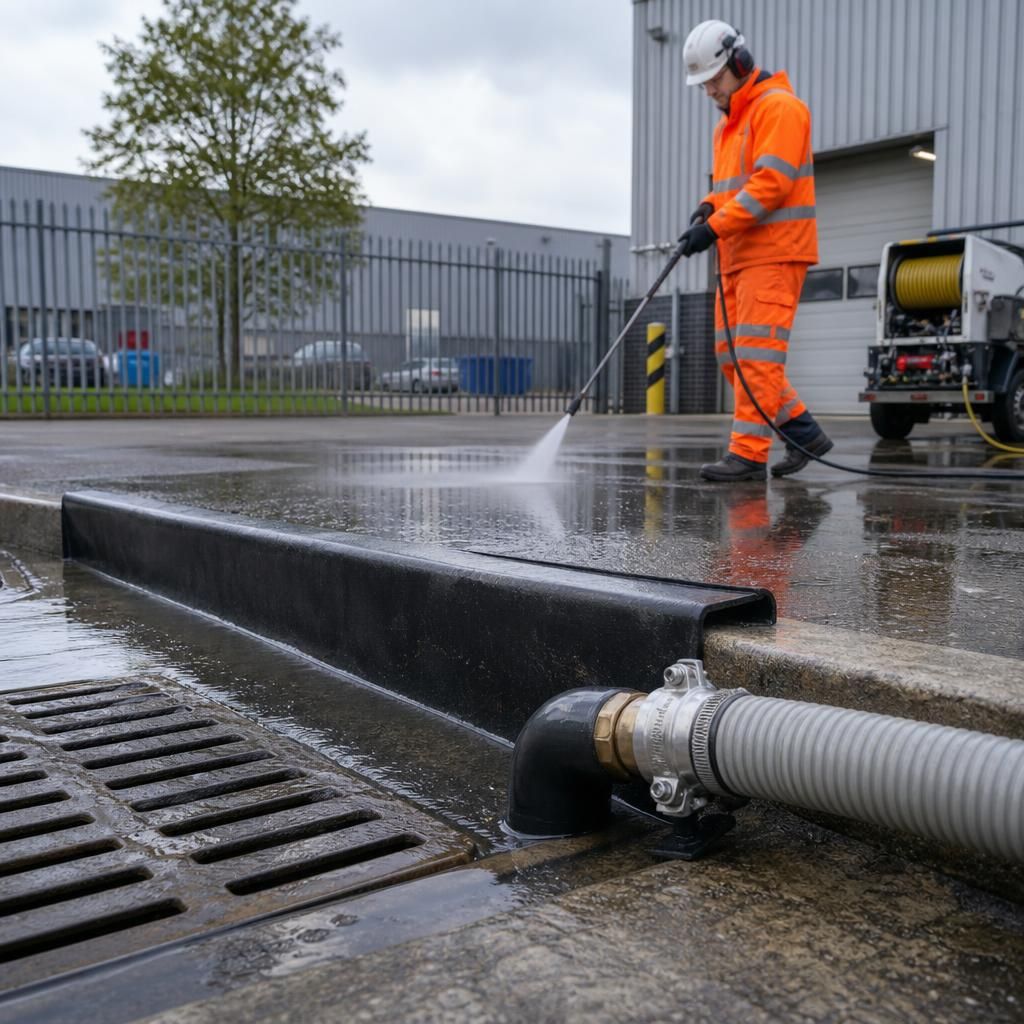
High pressure washing has the lowest environmental impact when polluted wastewater is contained and managed correctly. Run-off from car parks, roofs, loading areas and industrial surfaces can carry oil, silt, paint particles, detergents and biological material into drainage systems. Before cleaning begins, the drainage layout and contamination risk should be assessed so suitable controls, such as drain covers, bunding, wet vacuums or recovery equipment, can be put in place.
Recovered water should be filtered, treated or removed through a lawful disposal route appropriate to its contents. This control is essential because using less detergent or abrasive media does not make a cleaning process environmentally responsible if contaminated run-off is allowed to enter surface-water drains or nearby ground.